 Blaine Siding
 New Roof Installation Built for Lynden's Climate
A new roof in Lynden has to do more than look good going on. Between the wind-driven rain that comes off the Strait, the salt air drifting inland from Blaine and the coast, and a moss season that can run most of the year in the shade of mature trees, a roof here is under near-constant low-grade stress. Most of the roofs we get called out to replace didn't fail because the shingles wore out on schedule — they failed early because something underneath wasn't installed to handle this specific climate. A correct installation accounts for that from the first layer down, not just the shingles on top.
This page covers what a new roof installation for a Lynden-area home actually needs to hold up, what a correct job looks like step by step, and what to check for when you're hiring someone to do it.
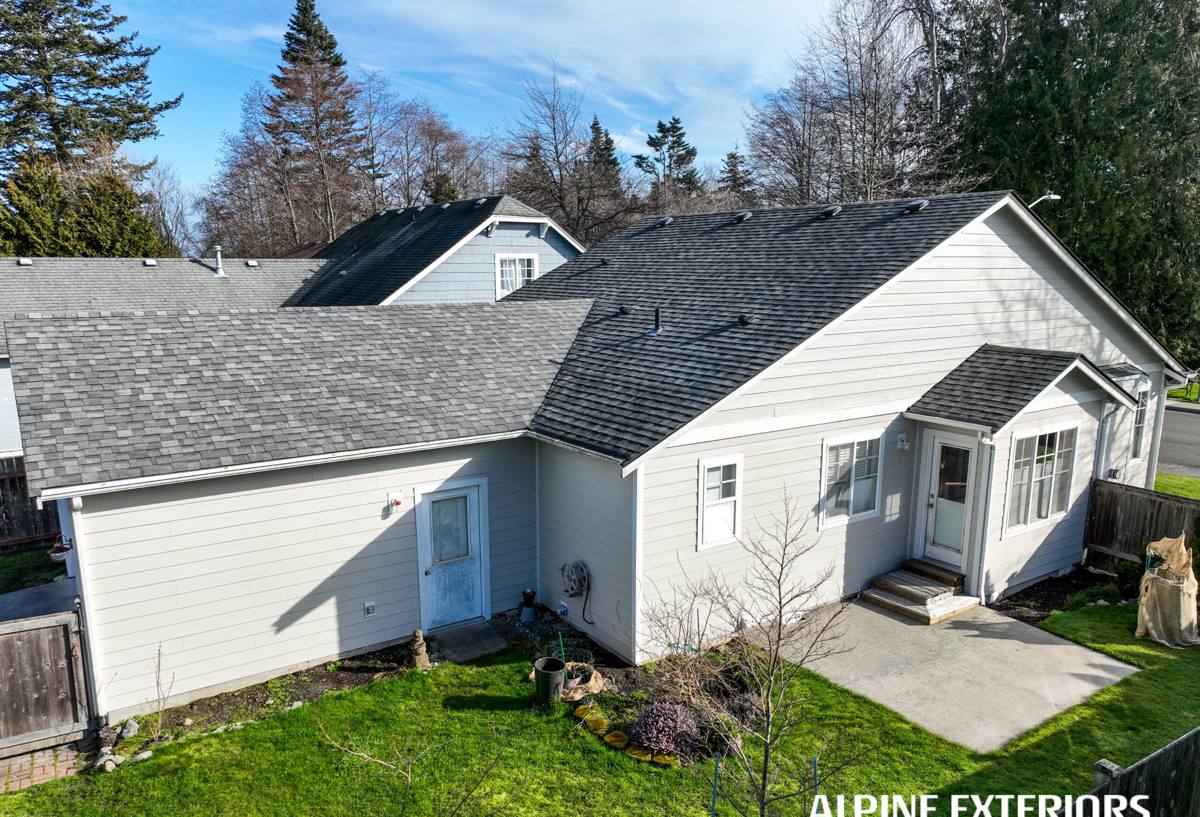
What Whatcom County Weather Does to a Roof
Moss and Organic Growth
Lynden sits inland enough to get plenty of tree cover and shade, and shaded roof sections stay damp far longer after a rain than sections that get direct sun. That moisture retention is exactly what moss needs. Left alone, moss doesn't just sit on top of shingles — it works under tabs and granules, holds water against the roof deck, and accelerates granule loss. A roof that isn't detailed with moss in mind (proper slope, clean valleys, zinc or copper strips where appropriate) will grow moss again within a season or two of a cleaning, no matter how new the shingles are.
Salt-Laden Air
Being this close to the coast means salt air reaches inland further than people expect, especially during winter storms. Salt accelerates corrosion on exposed metal — flashing, fasteners, vent housings, gutter hardware. A roof spec that's fine forty miles inland can corrode noticeably faster here if the metal components weren't chosen with that exposure in mind.
Sustained, Wind-Driven Rain
This isn't an area of quick, heavy downpours followed by dry sun — it's long stretches of steady rain, often pushed sideways by wind. That pattern tests roof details that a drier climate never stresses: valley construction, step flashing at walls and chimneys, and underlayment at eaves and low-slope sections. Water doesn't need to be falling hard to find a weak seam; it just needs time, and this climate gives it plenty.
Signs Your Lynden Home Needs a New Roof, Not a Repair
Not every problem roof needs full replacement. But there's a point where patching becomes more expensive than starting over, and it's usually reached earlier here than in drier climates because of the moisture and moss factors above. Signs it's time to talk replacement instead of repair include:
- Granule loss heavy enough that you can see bare or shiny patches across multiple slopes, not just one spot
- Moss regrowth returning within one season of a professional cleaning, especially in shaded valleys
- Soft spots or sag in the roof deck when walked on, which usually means the sheathing underneath is already wet
- Daylight or water staining visible in the attic along the ridge, valleys, or around penetrations
- Shingles curling, cracking, or losing their tab seal on a roof that's past 18-20 years old
- Rusted or failing flashing at chimneys, walls, and skylights that's beyond a simple flashing repair
If you're only seeing one or two of these on a roof that's otherwise sound, a targeted repair is often the honest answer. We'll tell you that when it's true — replacement is a bigger job and a bigger cost, and it should only happen when the roof actually calls for it.
What a Correct New Roof Installation Actually Involves
The visible shingles are the smallest part of what makes a roof last in this climate. The layers underneath, and how the details are handled, matter more.
Tear-Off and Deck Inspection
A full tear-off lets us actually see the roof deck, which a roof-over never does. Any sheathing that's soft, delaminated, or water-stained gets identified and replaced before anything new goes down — installing new roofing over a compromised deck just hides a problem that will resurface.
Underlayment
Given how much sustained rain this area gets, we don't treat underlayment as a formality. Ice-and-water shield or a comparable self-adhered membrane goes at eaves, valleys, and around penetrations — the areas most likely to see standing or driven water — with synthetic underlayment across the rest of the deck.
Flashing
Flashing is where most leaks actually start, and it's where salt-air corrosion does the most damage over time. We use flashing metals and fasteners selected for coastal exposure at chimneys, sidewalls, valleys, and any roof-to-wall transition, installed as step flashing rather than caulked-in-place shortcuts.
Ventilation
A roof deck that can't breathe traps moisture from inside the house against the underside of the sheathing — which, combined with our damp climate, is a direct path to rot and mold. Balanced intake and exhaust ventilation is part of a correct installation, not an upsell.
Material Selection for Moss and Moisture
Where it fits the home and budget, we'll discuss algae-resistant shingle lines and metal roofing options that shed moisture and resist moss better than standard products. This is a conversation about trade-offs — appearance, cost, maintenance — not a sales pitch for one product over another.
| Roofing Material | Moss/Moisture Performance | Typical Lifespan | Maintenance |
|---|---|---|---|
| Standard asphalt shingle | Moderate; benefits from algae-resistant granules | 18-25 years | Periodic moss removal, gutter checks |
| Algae-resistant asphalt shingle | Better resistance to moss/algae streaking | 20-30 years | Lower moss maintenance than standard |
| Standing seam metal | Sheds water and moss buildup well due to slick surface and slope | 40-plus years | Low; occasional fastener/seam check |
| Composite/synthetic shingle | Good moisture resistance, varies by product | 30-50 years | Low to moderate |
Our Installation Process
1. On-Site Assessment
We walk the roof, check the attic for existing moisture or ventilation issues, and look at how water actually moves across the property — slope, tree cover, gutter condition — since that tells us as much as the roof itself.
2. Straightforward Proposal
You get a written scope covering materials, underlayment, flashing approach, and ventilation plan, with pricing that reflects what your roof specifically needs — not a generic package.
3. Tear-Off and Deck Repair
Old roofing comes off, the deck gets inspected, and any damaged sheathing is replaced before we move forward.
4. Underlayment, Flashing, and Roofing Installation
Installed in the order and detail described above, with particular attention to valleys, penetrations, and wall transitions — the places this climate tests hardest.
5. Final Walkthrough
We walk the finished roof with you, cover care and moss-prevention basics specific to your property, and make sure the cleanup is complete.
Why Local Experience in Lynden and Blaine Matters
A crew that's worked roofs across Whatcom County knows which valleys on which lot orientations tend to hold moss, which older Lynden-area homes have ventilation that was never adequate to begin with, and which flashing details actually hold up against this coastal exposure over the years — not just on paper. That's knowledge you only get from doing the work here repeatedly, not from a general roofing checklist written for a different climate. It also means we're not guessing at permit requirements, disposal logistics, or the practical realities of scheduling around this area's rain patterns.
Cost Factors to Expect
Every roof is priced on its own specifics, but the main drivers we walk homeowners through are consistent:
| Factor | Why It Matters |
|---|---|
| Roof size and number of slopes/valleys | More area and complexity means more material and labor |
| Deck condition found at tear-off | Rotted or soft sheathing adds repair cost before roofing can go on |
| Material choice | Standard asphalt, algae-resistant shingle, metal, and composite options span a wide cost and lifespan range |
| Flashing and ventilation scope | Chimneys, skylights, and inadequate existing ventilation add labor and material |
| Access and pitch | Steep roofs or tight lot access affect labor time and equipment needs |
We'll walk through these line by line during the estimate so you know exactly what's driving the number, rather than handing you a flat quote with no explanation.
After Installation: Keeping a New Roof Performing in This Climate
A correctly installed roof still benefits from a little ongoing attention here, especially with moss pressure being what it is. A simple annual routine goes a long way:
- Check valleys and shaded slopes for early moss growth each fall before it spreads
- Keep gutters clear so water isn't backing up under the roof edge during heavy rain
- Trim back overhanging branches that keep sections of roof shaded and damp longer than necessary
- Have flashing and fasteners visually checked every few years for early signs of corrosion
- Confirm attic ventilation isn't blocked by insulation or storage after any attic work
None of this replaces a correct installation — it just protects the investment once it's in place.
If you're weighing a repair against a full replacement, or just want an honest read on where your roof stands, we're glad to come take a look. The estimate is free, there's no pressure attached to it, and you can use the form below to get started.