 Blaine Siding
 Why Siding in the Nooksack Area Has to Work Harder
Homes in and around Nooksack deal with a specific combination of weather that most siding products were never built to handle for the long haul. Whatcom County sits close enough to the Salish Sea that salt-laden air reaches inland on a regular basis, and that salt air accelerates corrosion on fasteners, trim, and anything with exposed metal. Add in the driving rain that comes through with fall and winter storm systems — rain that hits siding at an angle, not just straight down — and you've got a wall assembly that needs real drainage, not just a water-resistant surface.
Then there's moss. Whatcom County's damp season runs long, and north-facing walls, shaded elevations, and anything under overhanging trees can stay wet for weeks at a stretch. Moss and algae don't just look bad — they hold moisture against the siding surface, which is exactly the condition that causes rot in wood-based products and breaks down the caulking and finish on lower-grade materials over time.
None of this means Nooksack is an unusually harsh place to build. It means the siding and the installation both have to be matched to the climate instead of treated as an afterthought. That's the whole reason we've built our business around one product installed correctly, rather than offering several options and hoping one of them holds up.
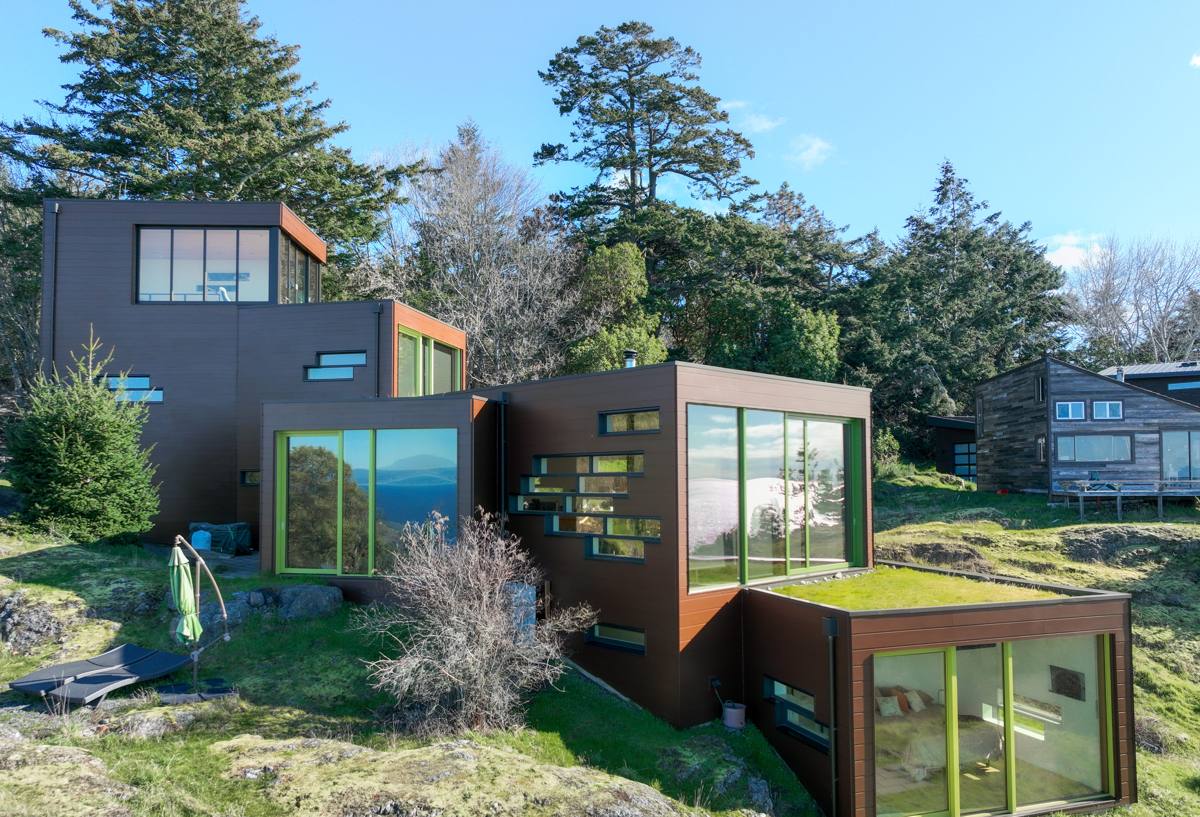
Why We Install Only James Hardie Fiber Cement
We don't sell vinyl, LP SmartSide, Cemplank, Allura, primed spruce, or cedar. That's a deliberate decision, not a supply limitation, and it's worth explaining honestly rather than just asserting it.
Wood siding — cedar or primed spruce — looks good and can perform well, but it needs ongoing maintenance to survive a wet climate: repainting or restaining on a cycle, caulking that has to be checked every year, and vigilance about anywhere water can sit against the wood. In a region with a moss season as long as ours, that maintenance burden is real, not theoretical.
Vinyl siding is low-maintenance and inexpensive, but it's a thin plastic product that can crack in a hard cold snap, warp near heat sources, and fade unevenly over years of UV exposure. It also doesn't take paint, so once the color goes, your only fix is replacement.
LP SmartSide, Cemplank, and Allura are all reasonable engineered products, and we're not going to claim otherwise. Where they differ from James Hardie, in our experience, comes down to moisture behavior at cut edges and seams, the consistency of factory finishes over time, and how forgiving the material is when installation details are slightly off — which happens on every job site eventually. James Hardie's fiber cement is non-combustible, doesn't swell or delaminate the way wood-based composites can when water gets into a cut edge, and its ColorPlus factory finish is baked on and warrantied against fading — no repainting cycle required. Hardie also builds a specific HZ5 product line engineered for climates with higher moisture exposure, which describes the Pacific Northwest well.
We standardized on one product so we could get genuinely good at installing it — every crew member knows the fastening specs, the clearances, and the flashing details cold, instead of switching methods between four different materials.
What Hardie Gets Right for This Climate
Fiber cement resists moisture absorption far better than wood or wood-composite products, holds paint and factory finish longer, and doesn't provide the food source that moss and mildew use on some wood surfaces. It's also heavy and rigid enough to resist the wind-driven rain that comes through Whatcom County in winter storms without flexing at the seams.
What a Correct James Hardie Installation Actually Involves
Hardie siding is only as good as the installation behind it. The material is engineered to perform for decades, but that engineering assumes the crew follows the manufacturer's specifications exactly — and on a lot of jobs, it doesn't get followed.
The Details That Matter Most in a Wet Climate
- A ventilated rain screen gap behind the siding so any water that gets past the surface can drain and dry instead of sitting against the sheathing
- Correct fastener type and pattern — hot-dip galvanized or stainless nails, driven at the right depth and spacing, not overdriven (which cracks the board's fiber cement edge)
- Proper clearance from grade, roofing, decks, and walkways so splash-back from driving rain doesn't wick moisture into the bottom edge of the siding
- Correctly lapped and integrated weather-resistant barrier behind the siding, with flashing at every window, door, and penetration shingled to shed water downward
- Factory-cut and factory-primed edges wherever possible, with any field cuts sealed per Hardie's specification before installation
- Caulking only where Hardie specifies it — over-caulking seams that are designed to move or drain can trap water instead of releasing it
Where We See Mistakes Locally
The most common problems we find on homes with underperforming siding aren't material failures — they're installation shortcuts. Nail guns set too hot and overdriven into the board. Missing or improperly lapped flashing above windows. Siding installed tight against the ground or a deck surface with no clearance. Skipped rain screen furring on walls that face prevailing weather. Every one of these is avoidable, and every one of them shows up faster in a climate that stays wet as long as ours does.
James Hardie Product Lines We Install
Hardie makes several product profiles, and the right one depends on the home's architecture, the elevation's weather exposure, and the look the homeowner wants.
| Product | Best Used For | Appearance |
|---|---|---|
| HardiePlank Lap Siding | Most homes; the standard horizontal siding profile | Traditional lap look, smooth or woodgrain texture |
| HardiePanel Vertical Siding | Accent walls, gables, modern or farmhouse-style homes | Clean vertical lines, often paired with battens |
| HardieShingle Siding | Craftsman and cottage-style homes, accent gables | Staggered or straight-edge shingle profile |
| HardieTrim Boards | Corners, window and door surrounds, fascia | Crisp, paintable trim that resists rot at edges |
All of these are available in Hardie's ColorPlus factory-finish palette, which comes with a longer, more consistent finish warranty than field-applied paint because the coating is baked on under controlled conditions rather than applied on-site in variable weather.
How Our Process Works, Start to Finish
- On-site assessment. We walk the home, check the current siding and sheathing condition, note moisture-prone areas (shaded walls, low clearance points, past leak history), and measure for material.
- Written estimate and product selection. We go over profile, color, and trim options and give you a clear scope and price before any work starts.
- Tear-off and sheathing inspection. Removing the old siding lets us actually see the wall — rot, soft sheathing, or old moisture damage gets addressed before new siding ever goes up, not covered over.
- Weather-resistant barrier and rain screen installation. This is the layer that does the real work of managing moisture; we install it to spec, not just as a formality.
- Flashing at every penetration. Windows, doors, vents, and any other wall penetration get properly lapped flashing before siding closes over them.
- Hardie siding installation to manufacturer fastening, clearance, and joint specifications.
- Trim, caulking, and final detailing done per Hardie's guidelines — not more, not less.
- Final walkthrough with the homeowner before we consider the job done.
What Affects the Cost of a Nooksack-Area Siding Project
Every home is different, and we won't quote a number without seeing the house, but these are the factors that move a price up or down:
| Factor | Why It Matters |
|---|---|
| Home size and number of stories | More square footage and taller walls mean more material and more labor/access time |
| Condition of existing sheathing | Rot or moisture damage found during tear-off has to be repaired before new siding goes on |
| Siding profile and trim complexity | Vertical accents, shingle sections, and detailed trim take more labor than a straightforward lap job |
| Color and finish choice | Factory ColorPlus finishes are priced differently than primed boards intended for field painting |
| Site access | Tight lots, steep grades, or limited staging space can add time to tear-off and material handling |
Caring for Hardie Siding After Installation
Part of what makes James Hardie a good fit for this climate is how little upkeep it needs compared to wood — but "low-maintenance" isn't "no-maintenance." A short annual routine keeps it performing the way it's supposed to.
- Rinse the siding once or twice a year, especially on shaded or north-facing walls, to keep moss and algae from getting established
- Keep gutters clear so overflow doesn't run down the siding face repeatedly
- Trim back shrubs and trees that keep a wall section shaded and damp
- Check caulking at trim joints and penetrations every year or two and have any cracked or missing caulk redone
- Watch for any impact damage (a dropped ladder, a thrown rock from mowing) and get chips repaired promptly so water can't get behind the finish
Why Hiring a Crew That Already Works This Area Matters
A siding crew that mostly works drier inland climates can install Hardie board correctly on paper and still miss the details that matter here — rain screen ventilation, fastener corrosion resistance near salt air, or scheduling around the wettest stretches of the year so the wall assembly isn't closed in wet. A crew that regularly works Whatcom County and the greater Blaine area already knows which elevations take the worst weather, which fastener specs hold up against salt exposure, and how to sequence a tear-off so a home isn't left exposed during a stretch of driving rain. That local pattern-recognition is the difference between siding that looks right on installation day and siding that's still performing correctly in fifteen years.
If you're weighing a siding project on a Nooksack-area home, we're happy to come take a look, walk you through what your specific walls need, and put together a straightforward, no-pressure estimate — just fill out the form below.