 Blaine Siding
 Why Grandview's Exposure Matters More Than the Rest of Blaine
Grandview sits close enough to the water and open farmland that homes here take a different kind of beating than siding in a more sheltered part of Whatcom County. Salt-laden air moves in off the strait, wind-driven rain hits siding at an angle instead of just falling straight down, and the long gray stretch from fall through spring keeps north-facing walls damp for weeks at a time. That combination is hard on paint, hard on seams, and hard on any siding material that isn't built to shed water and resist rot at the edges.
None of this means Grandview is an extreme climate. It means the margin for error in a siding installation is smaller than it looks. A product that performs fine in a dry inland town can fail early here if the material itself or the installation cuts corners on flashing, gapping, or finish. That's the lens we use on every job in this area: what does this wall actually face, and does the siding and the install match it.
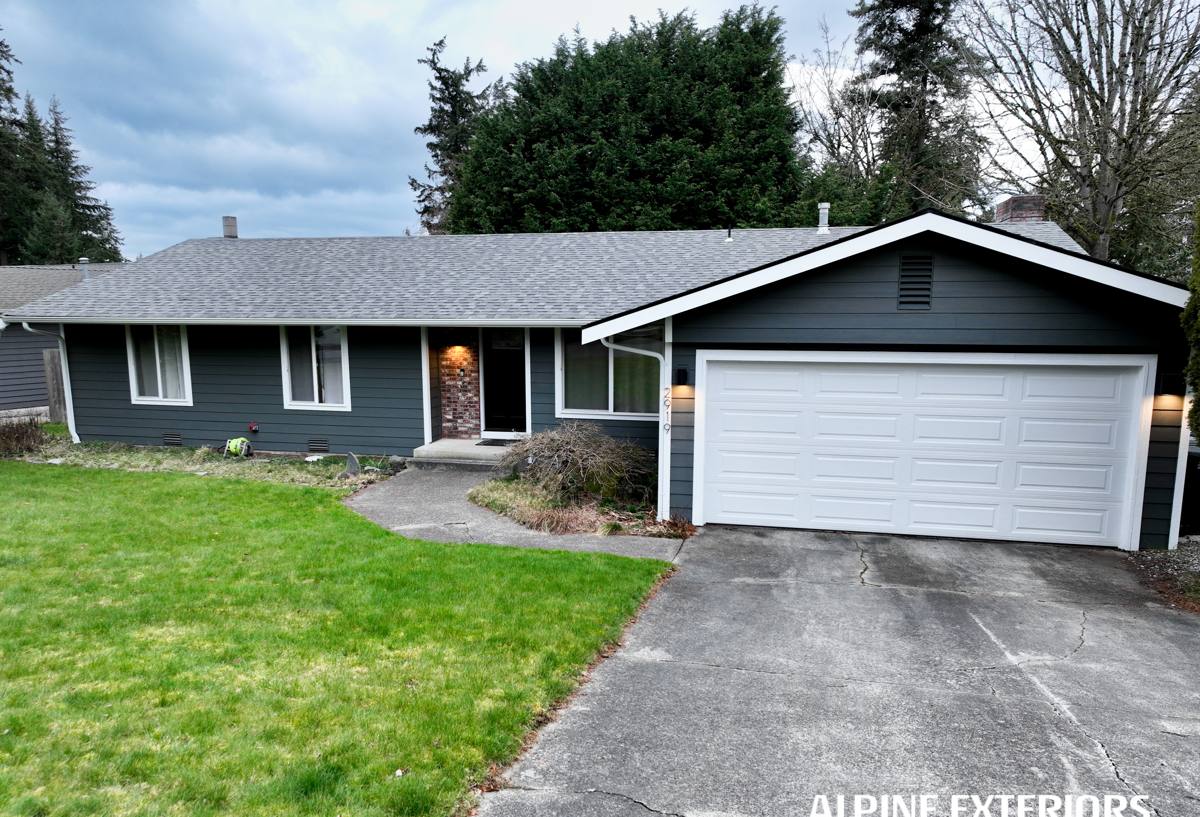
What Salt Air, Driving Rain, and Moss Season Actually Do to Siding
Salt air
Airborne salt accelerates corrosion on fasteners, trim flashing, and any exposed metal. It also breaks down cheaper paint finishes faster than inland UV exposure alone would, which is why chalking and fading show up sooner on homes closer to the water.
Driving rain
Wind-driven rain doesn't just wet the surface of the siding — it gets pushed sideways into laps, butt joints, and anywhere caulk has shrunk or cracked. Over years, that's how water finds its way behind the cladding and into sheathing, especially on walls that take the brunt of southwest storms.
Moss season
Whatcom County's wet season runs long, and shaded or north-facing walls can stay damp for much of it. Moss and algae take hold wherever moisture sits, and on the wrong substrate that constant dampness feeds rot at butt joints and bottom edges long before it's visible from the ground.
Put those three together and you get the real design problem for Grandview siding: a material that won't absorb water, a finish that holds its color and seals against salt exposure, and an installation that keeps water moving down and away from the wall instead of trapping it.
Why We Standardized on James Hardie for Jobs Like This
We install James Hardie fiber cement exclusively — we don't offer vinyl, LP SmartSide, Cemplank, Allura, or bare wood siding, and we're upfront about why. Hardie's fiber cement is non-combustible and dimensionally stable, meaning it doesn't expand, contract, warp, or absorb water the way wood-based or vinyl products can. The ColorPlus factory finish is baked on under controlled conditions rather than field-painted, which matters directly for a place like Grandview where salt exposure is hard on any coating applied on-site.
Hardie also builds region-specific product lines engineered for different climate exposures. For the Pacific Northwest, that means a formulation designed around sustained moisture and cooler, wetter conditions rather than a one-size-fits-all board. That's a meaningful difference from generic fiber cement, which is manufactured to a broader spec and doesn't account for the specific stress a coastal Whatcom County wall sees over a 30-year lifespan.
We're not going to pretend other products don't work anywhere — they have their place. But once we saw the failure patterns on lower-cost siding in wet, salt-exposed conditions around here, we stopped installing anything else. Hardie's transferable warranty and track record of holding up when installed to spec are why it's the only thing that goes on a house we work on.
What a Correct Fiber Cement Installation Involves
The material is only half the equation. A huge share of siding failures we get called out to inspect trace back to installation shortcuts, not the product itself. On a proper Hardie install, that means:
- Weather-resistant barrier installed and lapped correctly before any siding goes up, with all penetrations sealed
- Rainscreen or proper drainage gap where the wall assembly calls for it, so water that gets behind the cladding can drain and dry
- Flashing at every window, door, and roofline intersection — not caulk used as a substitute for flashing
- Correct fastener type, spacing, and depth per Hardie's published fastening schedule
- Proper clearance at the bottom of the siding from grade, decks, and roof lines to prevent wicking
- Factory-cut and factory-primed edges kept intact; field cuts sealed per manufacturer spec
- Caulking only at the joints Hardie specifies, with a product rated for the exposure
Skip any one of these and the siding can still look fine for a year or two before problems show up — which is exactly why so many bad installs get discovered only after the damage is already behind the wall.
Our Process on a Grandview Project
- On-site assessment. We walk the exterior, check current siding and trim condition, look at grading and drainage around the foundation, and note any moisture damage already present.
- Scope and product selection. We go over the right Hardie product line, plank exposure, and ColorPlus color for the home, and explain what's driving each recommendation.
- Written estimate. A clear, itemized quote — no vague allowances, no pressure to sign that day.
- Prep and tear-off. Old siding comes off, sheathing gets inspected for hidden rot before anything new goes up. We don't cover over problems.
- Weather barrier and flashing. This stage is where most long-term performance is decided, and we don't rush it.
- Installation. Hardie boards installed to manufacturer fastening and clearance specs, with attention to every transition, corner, and penetration.
- Final walkthrough. We go over the finished work with the homeowner and address anything before we consider the job done.
Fiber Cement vs. the Alternatives Homeowners Ask About
| Material | Moisture Behavior | Finish Durability | Typical Lifespan |
|---|---|---|---|
| James Hardie Fiber Cement | Doesn't absorb water or rot; dimensionally stable | Factory-baked ColorPlus finish, resists chalking and fading | 30+ years with correct install and maintenance |
| Vinyl | Doesn't rot, but can warp or crack in temperature swings and impact | Color molded through material but fades and becomes brittle with UV/salt exposure over time | 20-30 years, often less in harsh exposure |
| LP SmartSide / Wood-Based | Engineered wood strand product; vulnerable to swelling and rot if moisture gets past the finish | Field or factory finish, but edges and cuts need diligent sealing | Variable; heavily dependent on installation quality and moisture exposure |
| Primed Spruce / Cedar | Natural wood; absorbs moisture readily without vigilant maintenance | Requires repainting/staining on a regular cycle | Highly variable; shortest in wet coastal exposure without upkeep |
What Drives Cost on a Job Like This
| Factor | Why It Matters |
|---|---|
| Home size and wall complexity | More corners, dormers, and trim details mean more labor and cut waste |
| Current siding removal | Tear-off and disposal of old material adds time, especially with hidden damage |
| Sheathing repair | Rot found during tear-off has to be fixed before new siding goes on — this is common on older Whatcom County homes |
| Hardie product line and profile | Plank width, texture, and ColorPlus color selection affect material cost |
| Trim and accessory work | Fascia, soffit, and window trim often get replaced or upgraded alongside siding |
We don't quote off square footage alone — a walkthrough is what actually tells us what a house needs.
Signs Your Current Siding Is Already Behind
- Persistent moss or algae streaking on north-facing or shaded walls
- Soft spots or visible warping near the bottom courses or around window trim
- Paint that's chalking, peeling, or fading noticeably faster on the side facing prevailing wind
- Caulk lines that have cracked, shrunk, or pulled away from joints
- Visible gaps or separation at corner boards and trim
- Musty smell or discoloration on interior walls that back up to exterior siding
Any one of these on its own isn't necessarily an emergency, but a few together usually mean water has already found a way behind the siding.
Why It Matters That We Already Work This Area
A crew that regularly works Grandview and the surrounding Blaine area already knows how the wind and rain hit these lots differently than more sheltered parts of the county, what the older housing stock in the area tends to have behind the siding, and how to sequence a job around the wet season instead of getting caught mid-project. That familiarity shows up in small decisions — where to add extra flashing attention, which walls need the most careful drainage detailing — that a crew unfamiliar with the local exposure might not think to prioritize.
It also means we're not guessing at what Whatcom County's coastal exposure does to a wall over time. We've seen it, and we build the installation around it.
Get a Straight Answer for Your Home
If you're weighing a siding replacement in Grandview or elsewhere around Blaine, we're happy to take a look and give you an honest read on what your home actually needs — no pressure, no inflated scope. Fill out the form below for a free estimate.