 Blaine Siding
 Everson-Area Homes Face a Specific Climate Problem
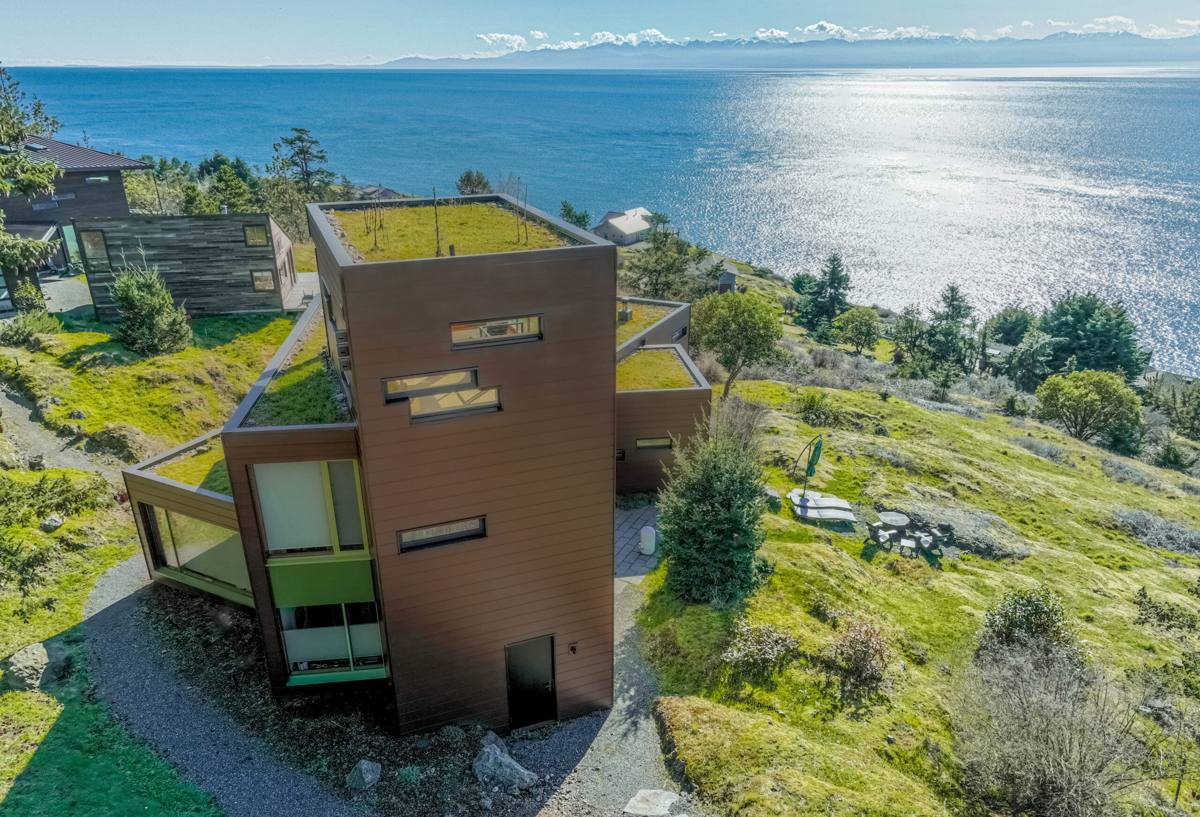
Homes in and around Everson, close to Blaine and the rest of Whatcom County, sit under a weather pattern that's harder on exterior siding than most homeowners realize. It's not one big storm that causes damage out here — it's the steady combination of salt-laden air moving in off the water, long stretches of driving rain that hits siding sideways instead of straight down, and a moss season that can run half the year in shaded, north-facing spots. Individually, none of these is dramatic. Together, over ten or fifteen years, they're exactly what wears out the wrong siding product and exposes sloppy installation work.
This page is about one job done right in this one area: installing James Hardie fiber cement siding on Everson-area homes near Blaine, in a way that actually accounts for the climate instead of just matching whatever code minimum allows.
What This Climate Actually Does to Siding
Salt Air
Proximity to Puget Sound and the Strait of Georgia means airborne salt is a real factor for exterior materials in this part of Whatcom County. Salt air accelerates corrosion on exposed metal fasteners and trim, and it breaks down cheap paint finishes faster than an inland climate would. A finish that's rated for general Pacific Northwest weather isn't automatically rated for a coastal-adjacent one.
Driving Rain
Wind-driven rain doesn't just run down a wall — it gets pushed sideways and upward into laps, seams, and penetrations. Siding systems that rely on caulk alone to keep water out, rather than a proper drainage plane behind the cladding, tend to fail here faster than they would in a drier climate. Water that gets behind siding and has nowhere to drain is the single biggest cause of rot we see on older homes in this area.
Moss Season
Shaded, north- and west-facing walls in this region can stay damp for months at a time. Moss and algae take hold on any surface that holds moisture, and once established, they hold even more moisture against the wall — a cycle that's especially hard on wood-based and wood-composite siding products.
Why James Hardie Fits This Climate
We install James Hardie fiber cement siding exclusively, and in an area like this, the reasons are practical rather than promotional.
It's Not Wood-Based
Fiber cement is made from cement, sand, and cellulose fibers — it doesn't swell, rot, or feed moss the way wood or wood-composite siding can when it stays damp. That matters directly on the shaded walls common on wooded Everson-area lots.
HZ5 Engineering
James Hardie makes region-specific HZ product lines engineered for different moisture and freeze conditions across the country. For the Pacific Northwest, that means a formulation built around sustained damp exposure rather than a one-size-fits-all product. It's a meaningful difference from a generic fiber cement board that wasn't engineered with this climate zone in mind.
ColorPlus Factory Finish
James Hardie's ColorPlus finish is baked on in a controlled factory environment and backed by its own finish warranty, which holds up better against salt air and UV exposure than field-applied paint. On a coastal-adjacent property, the finish is often the first thing to show wear — this is where the difference between a factory finish and a job-site paint job shows up soonest.
James Hardie in This Climate: The Short Version
| Climate Factor | What It Does to Siding | How Hardie's System Addresses It |
|---|---|---|
| Salt air | Corrodes exposed fasteners, fades weak finishes | Factory ColorPlus finish, correct corrosion-resistant fastener specs |
| Driving rain | Pushes water into laps and seams | Correct rain-screen/drainage detailing behind the board |
| Extended moss season | Feeds on organic, moisture-holding surfaces | Non-organic cement composition doesn't feed moss growth |
| Freeze-thaw swings | Cracks brittle or poorly cured materials | HZ product engineering rated for regional moisture/freeze exposure |
What a Correct Installation Actually Involves
The product is only half the equation. In this climate, installation quality determines whether siding lasts fifteen years or fifty.
Drainage Plane, Not Just Caulk
A correctly installed rain-screen or drainage plane behind the siding gives any water that does get past the surface a path to drain and dry out, instead of sitting against the sheathing. This is the single most important detail on a home facing sustained wind-driven rain.
Flashing at Every Penetration
Windows, doors, hose bibs, light fixtures, and any other wall penetration need proper flashing integrated with the water-resistive barrier — not just a bead of caulk around the trim. Caulk is a backup, not a strategy.
Fastener Choice and Placement
Corrosion-resistant fasteners, installed at Hardie's specified locations and depths, matter more here than in a drier inland climate. Over-driven or incorrectly placed fasteners are a common cause of premature siding failure, and they're avoidable with a crew that follows spec instead of rushing.
Clearances
Proper ground clearance and gaps at decks, patios, and roof lines keep siding from sitting in standing moisture. This sounds basic, but it's one of the most frequently skipped details on lower-cost installs.
What We Commonly Find on Existing Everson-Area Siding
- Moss and algae buildup on north- and west-facing walls, especially under tree cover
- Caulk that's cracked or pulled away at seams and trim, with no drainage plane behind it to back it up
- Corroded or rust-streaking fasteners on older installations
- Soft or delaminating spots at the bottom courses, near grade or deck ledgers, where water collects
- Faded or chalky finish on the sun- and wind-exposed sides of the home
None of these are unusual for the climate — they're what happens over time when a siding system wasn't built or installed with driving rain and moss exposure in mind.
Our Process on Everson-Area Projects
1. On-Site Assessment
We look at the current siding condition, wall orientation (which walls get the most driving rain and shade), existing moisture damage, and trim/window details before quoting anything.
2. Tear-Off and Sheathing Check
Old siding comes off and we check the sheathing underneath for rot or soft spots before anything new goes up. This is where hidden moisture damage from a prior install typically shows up.
3. Drainage Plane and Flashing
We install the water-resistive barrier, drainage plane, and flashing details at every penetration before a single piece of Hardie board goes on.
4. Hardie Installation to Spec
Boards, fasteners, and clearances go in following James Hardie's published installation guidelines — not shortcuts that happen to look fine on install day but fail in year three.
5. Final Inspection
We walk the finished job specifically checking seams, trim, and penetrations — the spots where this climate does the most damage over time.
Cost Factors for a Project in This Area
| Factor | Why It Matters Here |
|---|---|
| Home size and wall complexity | More corners, gables, and trim mean more labor and flashing detail work |
| Condition of existing sheathing | Moisture damage found during tear-off adds repair scope before new siding goes on |
| Access and site conditions | Wooded or sloped Everson-area lots can affect equipment access and staging |
| Board profile and finish selection | Lap width, texture, and ColorPlus color options affect material cost |
| Existing moss/moisture remediation | Heavily affected walls may need extra prep before new siding is installed |
We give straight, itemized estimates rather than a flat per-square-foot number, because the condition of what's underneath the old siding often matters more to the final price than the siding itself.
Why a Crew That Already Works This Area Matters
A siding crew that regularly works Blaine, Everson, and the rest of Whatcom County already knows which wall orientations take the worst weather, what moss and moisture damage typically looks like on homes out here, and how to detail flashing for driving rain instead of copying a spec sheet written for a drier region. That local pattern recognition is the difference between a siding job that looks right on install day and one that's still performing correctly a decade later.
A Simple Maintenance Checklist for This Climate
- Rinse moss and algae off shaded walls before it has a chance to establish and hold moisture
- Check caulk lines at trim and penetrations annually, even on newer siding
- Keep gutters clear so overflow doesn't run down and sit against siding
- Trim back vegetation that keeps walls shaded and damp longer than necessary
- Inspect fastener heads periodically for rust streaking, especially on walls facing prevailing wind
Getting an Honest Look at Your Siding
If you're dealing with moss, fading, soft spots, or siding that's simply aged out on a home near Everson or Blaine, we're glad to take a look and tell you plainly what we find — no pressure, no inflated scope. Reach out for a free estimate and we'll walk the property, explain what's going on, and give you a straight answer on what it would take to do the job right.