 Blaine Siding
 Ferndale's Climate Is Hard on an Unprotected Deck
Ferndale sits in the same weather system that shapes everything we build near Blaine and the rest of Whatcom County: salt-laden air off the water, long stretches of driving rain, and a moss season that can run most of the year on shaded, north-facing structures. A deck built the same way you'd build one in a dry inland climate will show it fast — soft spots at the ledger, green film on the boards by the second winter, corroded fasteners bleeding rust streaks down the framing. None of that is inevitable. It's a sign the deck wasn't detailed for where it actually sits.
A deck that's built correctly for this area holds up because every layer — footings, framing, fasteners, decking, and drainage — is chosen and installed with moisture and salt exposure in mind from the start, not patched after the fact.
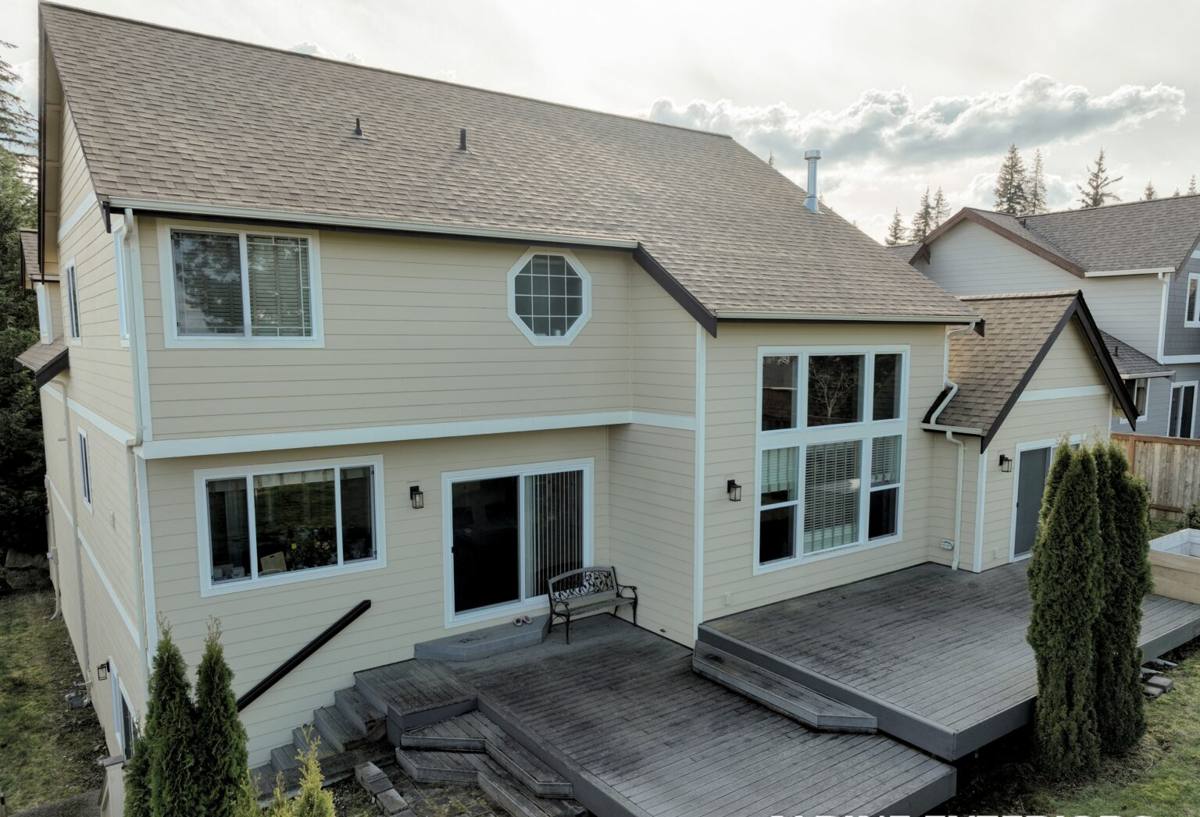
What a Correctly Built Deck Needs Here
Footings and Framing
Footings need to be sized and set to the frost depth and soil conditions that actually apply on the site, not a generic assumption. Whatcom County's clay-heavy soils in many areas hold water longer after our rain events, which matters for how footings drain and how posts are protected where they meet concrete. Framing lumber should be rated for ground contact where it's close to grade or shielded from airflow, and every cut end and drilled hole in treated lumber should get field-applied sealant — the factory treatment doesn't protect wood once you cut into it.
Ledger Board and Flashing
The ledger board — where the deck attaches to the house — is the single most common failure point on decks in this climate. Driving, wind-blown rain gets pushed sideways into gaps that would stay dry in calmer weather. Correct flashing means a continuous metal flashing over the ledger, self-adhering waterproof membrane behind it, and a gap or drainage detail between the ledger and the siding so water that does get in has somewhere to go besides the framing. Skipping or shortcutting this detail is the most common cause of hidden rot we find when we're called out to repair someone else's deck.
Fasteners and Hardware
Salt air corrodes standard hardware faster than most homeowners expect, especially on decks with any exposure to marine airflow. Structural connectors, joist hangers, and fasteners should be stainless steel or a heavy-duty coated fastener rated for treated lumber contact — not the mixed hardware bin option. Mismatched metals in contact with each other also accelerate corrosion, so the connector, the fastener, and the treated lumber chemical treatment all need to be compatible.
Choosing a Decking Material for This Climate
The decking surface is the part everyone sees, and it's also the part that fights moss and algae growth directly. There isn't a single right answer — it's a trade-off between upfront cost, maintenance commitment, and how the material behaves wet.
| Material | Moss/Algae Resistance | Maintenance | Notes for This Climate |
|---|---|---|---|
| Cedar | Moderate — needs help | Annual cleaning and periodic sealing | Natural look many owners want, but shaded areas grow moss quickly without upkeep |
| Pressure-treated pine | Low without maintenance | Regular cleaning, sealing every 1–2 years | Cost-effective, but the least forgiving material if maintenance slips |
| Composite (capped) | Good | Occasional washing | Textured composites resist moss better than smooth boards; still needs airflow underneath |
| PVC decking | Best | Low | Highest upfront cost, most consistent performance in constant damp shade |
Board spacing matters as much as the material itself. Gaps that are too tight trap moisture and debris between boards, which is exactly what moss needs to take hold. We space and orient boards to shed water and dry out between rain events, which in this climate is most of the year.
Drainage, Airflow, and Moss Control
Most of the moss problems we see on Ferndale decks trace back to trapped moisture, not the decking material alone. A few structural decisions make the biggest difference:
- Enough clearance under the deck for air to actually move, not just technically meet a minimum
- Grading or drainage away from posts and footings so water doesn't pool against them
- Gaps at the house-side and outer edges of the decking to let trapped water escape instead of sitting against the ledger
- Orientation and, where practical, sun exposure factored into the design for shaded, north-facing yards where moss pressure is highest
None of these cost much to get right during construction. All of them are expensive and disruptive to fix after the deck is built.
Permits and Code Basics in Whatcom County
Most new decks and many significant deck replacements in this area require a permit, and inspections typically cover footings before they're covered, framing before decking goes down, and guardrail and stair details at final. Setback requirements, guardrail height, baluster spacing, and stair rise/run are all governed by code and checked, not optional design choices. We handle the permit submittal and coordinate inspections as part of the build so you're not the one tracking down inspectors or paperwork. If your deck is attached to a home near a slope, easement, or shoreline buffer, that can affect what's allowed — worth confirming before design work goes too far rather than after.
Our Deck Building Process
- Site visit: We look at drainage, sun/shade exposure, soil, and how the deck will tie into the house before talking materials.
- Design and material selection: We walk through the trade-offs above based on your budget, how much upkeep you want to do, and how the space will be used.
- Permitting: We prepare and submit what the county requires and schedule inspections around the build, not around convenience.
- Construction: Footings, framing, flashing, and decking, in that order, with the details above built in rather than added later.
- Final walkthrough: We go over the finished deck with you, including what maintenance it actually needs and on what schedule.
What Drives the Cost
Every deck is priced on its own specifics, but a few factors move the number more than others. This is meant to help you think through your own project, not to promise a figure before we've seen the site.
| Factor | Why It Matters | Cost Impact |
|---|---|---|
| Height above grade | More height means more structural framing, railing, and often stairs | Medium–High |
| Decking material | Pressure-treated, cedar, composite, and PVC span a wide cost range | High |
| Site access and slope | Difficult access or sloped yards increase footing and labor complexity | Medium |
| Footing conditions | Poor or wet soil can require deeper or additional footings | Medium |
| Attached vs. freestanding | Attached decks need ledger flashing work; freestanding decks need their own full support | Low–Medium |
| Railing and stair detail | Custom railing, multiple stair runs, or built-in seating add labor | Medium |
Maintenance Checklist for a Ferndale Deck
A well-built deck still needs some seasonal attention in this climate. This is the short list we give owners after a build:
- Sweep debris out from between boards regularly — trapped leaves and needles hold moisture and feed moss
- Check shaded and north-facing sections for early moss growth before it spreads
- Inspect the ledger flashing and house connection once a year for gaps or wear
- Tighten or replace any hardware showing rust or corrosion promptly, before it spreads to surrounding wood
- Reseal wood decking on the schedule appropriate to the product — more often in shaded, wet areas
- Keep the space underneath the deck clear so airflow and drainage aren't blocked by stored items
- Check stair stringers and guardrail posts periodically for movement or softness
Why a Crew That Already Works Ferndale Matters
None of the detailing above is exotic — it's standard good practice. The difference is whether a contractor treats it as standard or treats it as optional. A crew that works Ferndale and the rest of Whatcom County regularly has already seen what happens to decks that skip flashing details, use the wrong hardware, or ignore drainage, because we're often the ones called back to fix it years later. That's not a guess about the climate — it's a pattern we see repeatedly on decks that weren't built for salt air, driving rain, and a long moss season from day one. Building it right the first time costs less than fixing it twice.
If you're planning a new deck or replacing one that's showing its age, we're happy to take a look and talk through what makes sense for your yard, your budget, and this climate. Use the form below to request a free, no-pressure estimate.