 Blaine Siding
 Roof Repair Built for Life Near Dakota Creek
Homes along Dakota Creek sit in one of the wetter, shadier corners of Blaine. The creek corridor holds moisture in the air longer than open lots nearby, tree cover keeps roofs damp well after a storm clears, and the salt air drifting up from Semiahmoo Bay and Drayton Harbor speeds up corrosion on anything metal. None of that is a reason to panic about your roof — but it does mean a repair here has to account for things a roofer working a dry, open lot elsewhere in Whatcom County might not think twice about.
We've worked enough roofs in this pocket of Blaine to know the difference between a shingle that's just dirty and one that's actually failing, and between a real flashing leak and a condensation problem that only looks like one. That distinction is what decides whether you need a modest spot repair or a section replacement — and getting it wrong in either direction costs you money or, worse, buys you a repeat leak next winter.
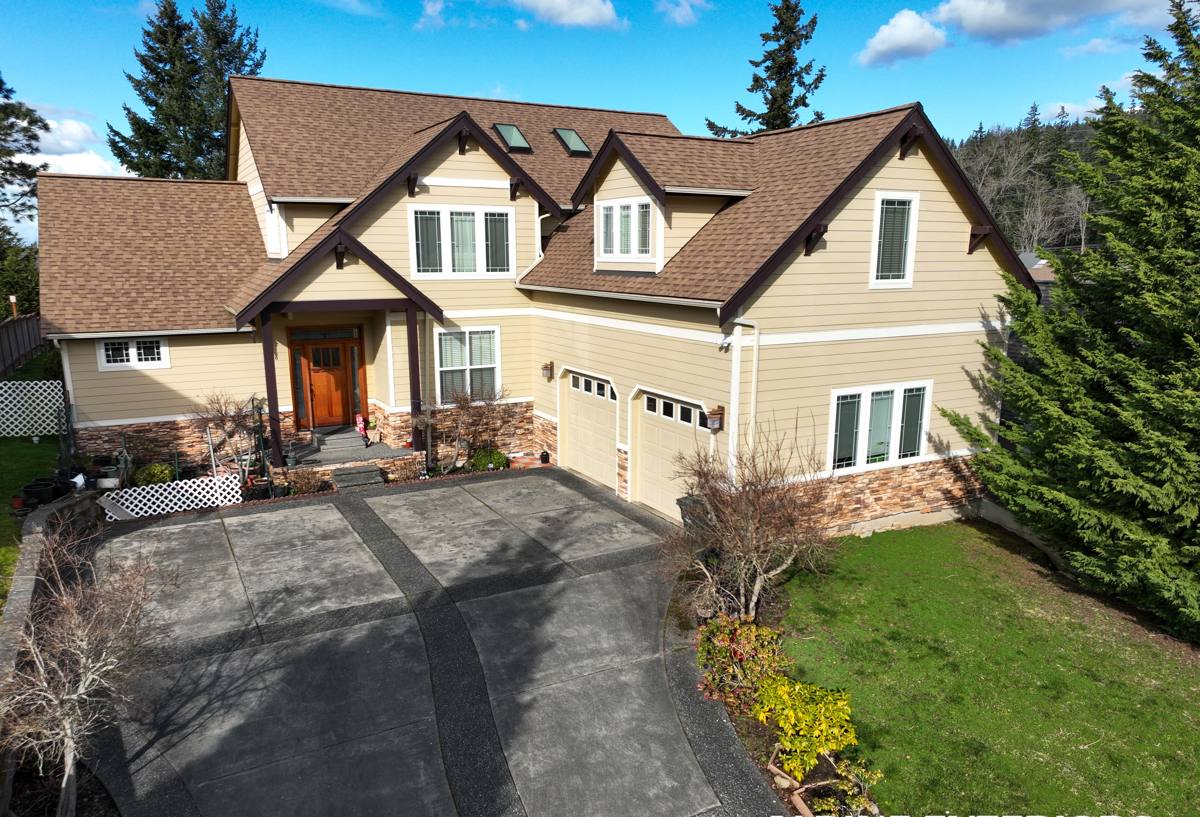
Why the Climate Here Is Harder on Roofs
Salt Air and Metal Fatigue
Blaine's proximity to the water means airborne salt reaches roofs even several blocks inland. Salt accelerates corrosion on exposed fasteners, drip edge, flashing, and any metal roofing components. A nail that would last decades in a dry inland climate can start rusting and backing out years sooner here, and rust stains bleeding down a roof slope are one of the more common "why is this happening" calls we get from homeowners near the creek.
Driving Rain and Wind Direction
Storms coming off the Strait of Georgia and Boundary Bay tend to push rain sideways, not just straight down. That matters because a roof can look fine and still leak if flashing, step flashing at wall intersections, or vent boots weren't detailed to handle wind-driven rain. Water finds the path of least resistance, and on a lot of older Blaine roofs that path is a flashing detail that was adequate for calm weather but never really tested by a proper Pacific storm.
A Long Moss Season
Shade from mature trees along the creek, combined with Whatcom County's damp shoulder seasons, gives moss and lichen a much longer window to establish than they'd get on a sunny, exposed roof. Moss isn't just cosmetic — it holds water against the roofing surface, lifts shingle edges as it grows, and traps debris that clogs valleys and gutters. Left alone through a few wet seasons, moss growth turns a simple maintenance issue into an actual repair issue.
Common Roof Problems We Find in This Neighborhood
- Moss and lichen colonies holding moisture against shingles, especially on north-facing and shaded slopes
- Corroded or backed-out fasteners from salt air exposure, showing up as rust streaks or loose flashing
- Wind-driven rain intrusion at step flashing, chimney flashing, and roof-to-wall transitions
- Clogged valleys and gutters from needle and leaf litter, causing water to back up under shingles
- Soft or rotted decking at penetrations like vents and skylights, where a minor leak went unnoticed under shade cover
- Granule loss and shingle brittleness accelerated by repeated cycles of damp shade and occasional hard freezes
What a Correct Repair Actually Involves
A roof repair done right starts before anyone touches a shingle. We look at the whole system, not just the spot where a stain showed up inside the house, because water travels — a ceiling stain in one room is often the result of a flashing failure several feet away, following a rafter or the underside of the decking before it shows itself.
Diagnosis Before Anything Else
We trace a leak to its actual source, check the attic or roof deck for moisture and rot, and look at the surrounding flashing, underlayment, and shingle condition — not just the immediate area. A patch over the visible symptom without finding the real source is the single most common reason a "repaired" roof leaks again the following winter.
Matching Materials and Methods
Whenever possible we match the existing shingle type, profile, and, where it matters for weathering, color, so a repair blends in rather than standing out as an obvious patch. Flashing gets replaced with new material sized and formed for the actual roof-to-wall or roof-to-penetration detail — not just caulked over the old piece, since caulk is a maintenance item, not a repair.
Decking and Structure
If we find soft or rotted decking under a leak, that section gets replaced before anything goes back down. Shingling over compromised decking looks fine for a season or two and then fails again, usually worse than before.
Our Repair Process
- Inspection and photos. We get on the roof, or use a pole camera where access or safety requires it, and document the actual condition rather than just the reported symptom.
- Written scope and price. You get a clear explanation of what's failing, what we recommend, and why — including if the honest answer is "this is minor, here's how to keep an eye on it" rather than a repair.
- The repair itself. Matched materials, flashing details built for wind-driven rain, and fasteners suited to a salt-air environment.
- Cleanup and debris check. Gutters and valleys near the repair get cleared so the fix isn't undermined by the same debris that contributed to the original problem.
- Follow-up. We tell you what to watch for through the next wet season and stand behind the work we did.
Repair, Moss Treatment, or Partial Reroof — Which Do You Need?
Not every roof problem near Dakota Creek calls for the same fix. Here's roughly how we think through it:
| Situation | Typical Approach | What Drives the Cost |
|---|---|---|
| Isolated leak, sound roof overall | Targeted spot repair (flashing, boot, or shingle section) | Access, number of penetrations affected, decking condition |
| Moss coverage but shingles still sound underneath | Careful moss removal plus gutter and valley clearing | Roof pitch, extent of coverage, whether treatment or full removal is needed |
| Multiple leaks, aging roof, widespread granule loss | Partial reroof of the affected slope(s) | Square footage, number of layers to remove, decking repairs found underneath |
| Roof near end of expected life, repairs becoming frequent | Full reroof discussion | Material choice, roof complexity, current layer count |
Broadly speaking, straightforward spot repairs run from a couple hundred dollars up to around a thousand; moss removal and gutter or valley work depends heavily on roof size and access; partial reroofing on a single slope typically moves into the low thousands. We'll always tell you honestly which category your roof falls into before we quote anything, and we won't upsell a spot repair into a reroof conversation unless the roof actually calls for it.
Signs You Should Have a Roof Looked At Now
- Visible moss or lichen patches, especially on shaded slopes
- Rust streaks running down from flashing or fasteners
- Granules collecting in gutters or at downspout outlets
- Any ceiling stain, even a small one, appearing after a windy rainstorm
- Shingles that look curled, cracked, or lifted at the edges
- Daylight visible through the roof deck from inside the attic
- Gutters or valleys that overflow during moderate rain
If any of these sound familiar, it's worth getting eyes on the roof before the next storm system rolls in off the water.
Materials and Standards We Hold To
We use flashing metals and fasteners rated for coastal exposure rather than standard-grade hardware, because standard hardware is exactly what tends to fail early in Blaine's salt air. On underlayment and ice-and-water shield at eaves and valleys, we install to the manufacturer's cold-weather and high-moisture specifications rather than the bare minimum — those details cost little at repair time and are the difference between a fix that holds through several wet seasons and one that doesn't.
We're generally cautious about caulk-only or sealant-only "repairs" as a long-term fix. Sealant has its place as a finishing detail over proper flashing work, but relying on it alone to stop wind-driven rain is a maintenance item that needs regular attention, not a repair — and we'll tell you plainly if that's what a prior patch on your roof actually was.
Attic Ventilation and Moisture
In a damp, shaded microclimate like Dakota Creek, what happens under the roof deck matters almost as much as what happens on top of it. Poor attic ventilation traps warm, moist air against the underside of the decking, which can cause rot, mold, and even shorten shingle life from below — sometimes mimicking the symptoms of a roof leak when the real problem is condensation rather than an actual breach. Part of a proper repair diagnosis is checking that soffit and ridge or gable ventilation is actually functioning, not just present, since blocked insulation or debris-clogged soffit vents are common in older homes and easy to miss from a quick look.
Moss Season Is a Maintenance Problem, Not Just a Repair Problem
Because tree cover along the creek keeps roofs shaded and damp for much of the year, moss will come back after removal unless something changes. We're upfront about the trade-offs: zinc or copper control strips can help slow regrowth on future work but aren't a substitute for keeping gutters and valleys clear, and trimming back overhanging branches where it's practical does more for a roof's long-term health than any product applied to the shingles themselves. If your roof is a repeat moss offender, we'll talk through a realistic maintenance interval rather than just billing you for the same removal job every year or two.
Why Local Experience With Dakota Creek Homes Matters
A crew that mostly works dry, open, inland roofs will size up a Dakota Creek roof the same way — and miss the things that actually matter here: how far moss has undermined a shaded slope, whether flashing was ever detailed for wind-driven rain instead of straight-down rain, and how much salt-air corrosion has already happened to fasteners that still look fine from the ground. We work roofs in this part of Blaine and greater Whatcom County regularly enough to know what's normal wear for this microclimate and what's an early warning sign.
We also plan around the weather here rather than fighting it — scheduling repair work between rain systems, properly protecting exposed decking if weather turns mid-job, and never leaving a partial tear-off open to a storm coming off the water.
Get an Honest Look at Your Roof
If you're dealing with a leak, visible moss, or just want a straight answer on what condition your roof is really in, we're glad to come take a look. The estimate is free, there's no pressure to book anything on the spot, and you'll get a clear explanation of what we find — including if the honest answer is that your roof doesn't need us yet.