 Blaine Siding
 Roofing in Dakota Creek Isn't the Same Job as Roofing Inland
Dakota Creek sits close enough to the water and to open farmland that homes here take a different kind of beating than a roof twenty miles inland. Salt-laden air off the Strait of Georgia and Semiahmoo Bay works its way into fasteners, flashing, and any metal component that isn't rated for it. Add Whatcom County's long, wet winters and the moss season that seems to start earlier every year, and you've got a roofing environment that punishes shortcuts. A roof installed the way it would be in Spokane or even Seattle's east side often underperforms out here — not because the materials are bad, but because the details that matter in a marine climate get skipped.
This page covers what a correctly installed new roof looks like for a Dakota Creek home, what our process involves from tear-off to final inspection, and what to actually look for when you're comparing bids for a job this size.
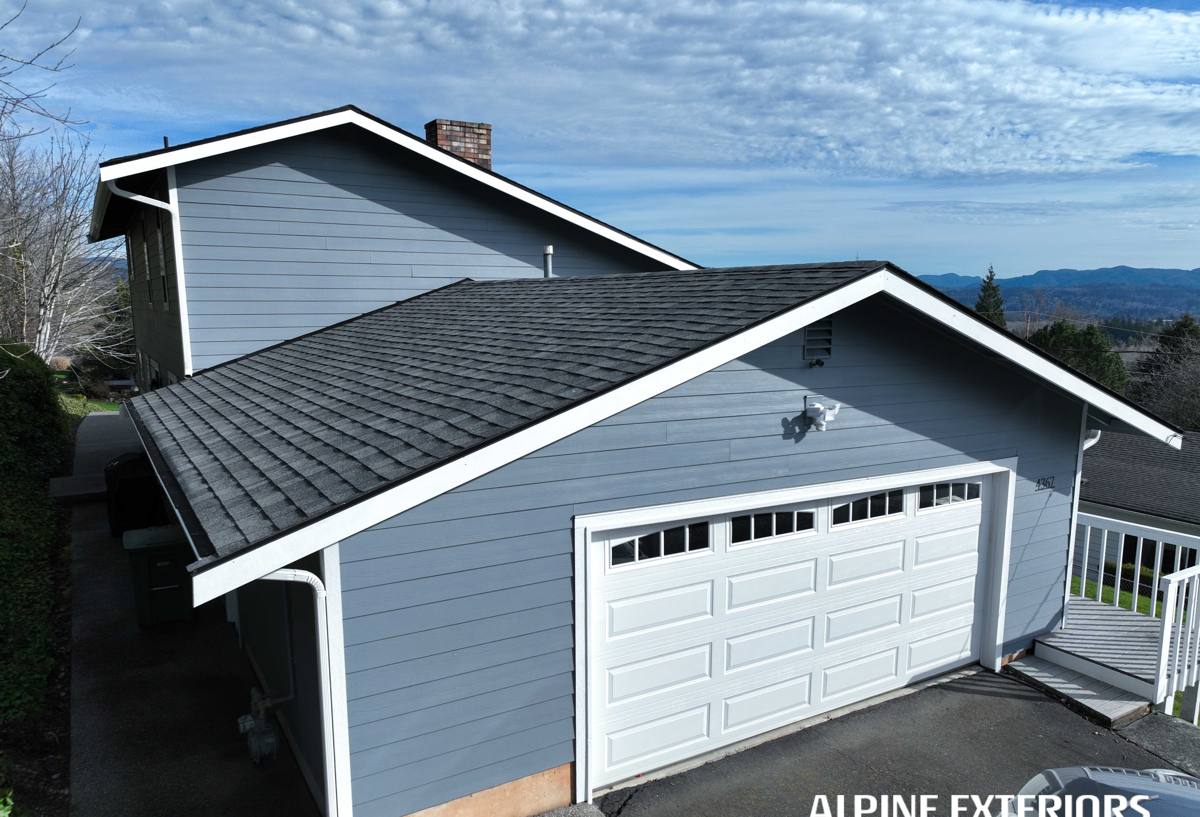
What Dakota Creek's Climate Does to a Roof
Salt Air and Corrosion
Homes within a few miles of the coast see accelerated corrosion on anything metal — nails, flashing, vents, gutter hangers. Standard electro-galvanized fasteners can start showing rust streaks in a handful of years out here. It's a slow problem until it isn't: a corroded fastener loses its grip on the shingle or panel, and that's how you get lifted edges and leaks that show up somewhere you never expected.
Driving Rain
Whatcom County storms often come in sideways off the water, which means rain doesn't just fall on a roof — it gets pushed up under laps, into vents, and around anything that penetrates the deck. A roof that's watertight in a straight-down rain can still leak under wind-driven rain if the underlayment, flashing laps, and vent boots weren't installed with that in mind.
Moss and Moisture Retention
The tree cover and humidity around Dakota Creek create long moss seasons — moss doesn't just sit on top of shingles, it holds moisture against the roofing material and works its way under tabs and shakes, lifting them over time. North-facing slopes and shaded sections are the usual starting point, and once moss gets established it accelerates every other problem: it holds water longer, it stresses fasteners, and it shortens the effective life of the roofing material underneath it.
What a Correct New Roof Install Actually Involves
A new roof is more than laying shingles or panels on plywood. In a climate like this, the components most homeowners never see are what determine whether the roof holds up for its full rated life.
- Full tear-off, not overlay: Roofing over an existing layer traps moisture and hides deck damage. We tear down to the deck so nothing is hidden underneath.
- Deck inspection and repair: Any soft, delaminated, or water-stained sheathing gets replaced before anything new goes down. Roofing over bad decking just buys you a second failure.
- Ice-and-water shield at vulnerable points: Eaves, valleys, and around penetrations get self-adhering waterproof membrane, not just felt, because these are the spots wind-driven rain and ice attack first.
- Synthetic underlayment across the field: A durable synthetic underlayment gives a second line of defense that holds up better than old-style felt in a wet climate.
- Corrosion-resistant fasteners and flashing: Given the salt air near Dakota Creek, we don't use bare-minimum fasteners. Stainless or coated hardware and properly matched flashing metal cost more up front and save you a re-roof down the line.
- Proper ventilation: Balanced intake and exhaust ventilation keeps the attic dry and temperature-stable, which protects the deck and the shingles from the inside as much as the roofing protects from the outside.
- Valley and penetration detailing: Valleys, pipe boots, and chimney flashing are where the majority of roof leaks start. These get built up in layers, not caulked as an afterthought.
Roofing Material Options for This Area
| Material | How It Handles Salt Air & Rain | Moss Resistance | Typical Lifespan |
|---|---|---|---|
| Architectural asphalt shingle | Good, with proper fasteners and flashing | Moderate — benefits from zinc/copper strips | 25–30 years |
| Standing seam metal | Excellent when properly coated and fastened | High — sheds moisture quickly | 40–50+ years |
| Cedar shake | Requires diligent maintenance near salt air | Low — needs regular treatment and cleaning | 20–30 years with upkeep |
| Synthetic/composite shingle | Good — resists corrosion inherently | Moderate to high depending on product | 30–50 years |
There isn't a single "right" material for every Dakota Creek home — it depends on your home's style, your budget, and how much maintenance you want to take on. What matters more than the brand name is whether the installation accounts for this area's conditions. A premium shingle installed with the wrong fasteners will underperform a mid-range shingle installed correctly.
A Note on Cedar Shake
Cedar shake has a strong look and a long history in this region, but it's honest to say it demands more upkeep near the coast than asphalt or metal. Salt air accelerates weathering, and shaded, moss-prone areas need more frequent cleaning and treatment to keep shake performing well. We'll install it if that's what you want for your home, but we'll also tell you upfront what the maintenance schedule looks like so there are no surprises.
Our Process for a Dakota Creek Roof Replacement
- On-site inspection and estimate: We walk the roof, check the attic for ventilation and moisture issues, and give you an honest read on what's needed — not just what's sellable.
- Material selection: We go over the trade-offs for your home specifically — sun exposure, tree cover, roof pitch, and how close you are to the water.
- Scheduling around the weather: Whatcom County's wet season makes timing matter. We plan installs to minimize the days your deck is exposed and monitor forecasts closely once tear-off starts.
- Tear-off and deck inspection: Old roofing comes off, the deck gets inspected, and any damaged sheathing is replaced before we move forward.
- Waterproofing and underlayment: Ice-and-water shield at critical points, synthetic underlayment across the field.
- Installation: Roofing material, flashing, and ventilation components go in per manufacturer specification and best practice for coastal exposure.
- Final walkthrough: We inspect the completed roof with you, clean up the site thoroughly, and make sure you understand what maintenance, if any, your new roof needs going forward.
Why Local Experience with Dakota Creek Homes Matters
A crew that only occasionally works this close to the water can miss the details that matter here — the right fastener spec, the flashing metal that won't corrode, the ventilation balance that keeps moss and moisture from ganging up on a roof from both sides. We work Blaine and the surrounding Whatcom County communities regularly, which means we're not guessing at how this climate treats a roof — we're seeing the results of past installs and adjusting for what actually holds up.
That local pattern recognition also shows up in smaller ways: knowing which streets tend to have more tree cover and heavier moss buildup, understanding how a roof's orientation relative to the water affects wind-driven rain exposure, and having a feel for how quickly a given material weathers in this specific microclimate versus a roofing spec sheet written for a national average.
Signs Your Dakota Creek Home May Need a New Roof
- Shingles that are cupping, curling, or missing granules in large patches
- Moss buildup that keeps returning within a season or two of cleaning
- Daylight visible through the roof deck from inside the attic
- Soft or spongy spots when walking the roof
- Rust staining around flashing, vents, or fasteners
- Interior water stains on ceilings, especially after a wind-driven rain event
- A roof approaching or past its material's expected lifespan
Not every one of these means you need a full replacement — some are repair-level issues. Part of an honest estimate is telling you which situation you're actually in before any work is proposed.
What Drives Cost on a New Roof
Every home is different, but the factors that most affect price are consistent: roof size and pitch, the number of valleys and penetrations, whether deck repair is needed, the material chosen, and how much of the old roofing has to be removed and disposed of. A steep, cut-up roof with several dormers costs more to do correctly than a simple gable roof of the same square footage, regardless of material. We'll break down where your estimate's cost is coming from rather than handing you a single number with no explanation.
Get an Honest Look at Your Roof
If your Dakota Creek home's roof is showing wear, growing moss it shouldn't, or is simply old enough that you're wondering if it's time, we're glad to come take a look. We'll give you a straight assessment — repair, replace, or wait — and if it's time for a new roof, a clear estimate with no pressure attached. Reach out using the form below to schedule a free inspection.