 Blaine Siding
 Why Metal Roofs in Dakota Creek Face a Different Set of Problems
Homes along Dakota Creek sit close enough to the water that salt-laden marine air is part of daily life, not an occasional event. Add Whatcom County's driving winter rain and a moss season that can run eight months out of the year, and you've got a roofing environment that punishes shortcuts. Metal roofing can handle all three of those conditions extremely well — but only when it's spec'd and installed with this specific climate in mind. A metal roof detailed the way it would be in a dry inland town won't perform the same way two blocks from the water.
This page is about metal roofing specifically for Dakota Creek homes — what the salt, the rain, and the moss actually do to a roof over time, what a correct installation looks like here, and what to expect when you hire a crew that already knows this stretch of Blaine.
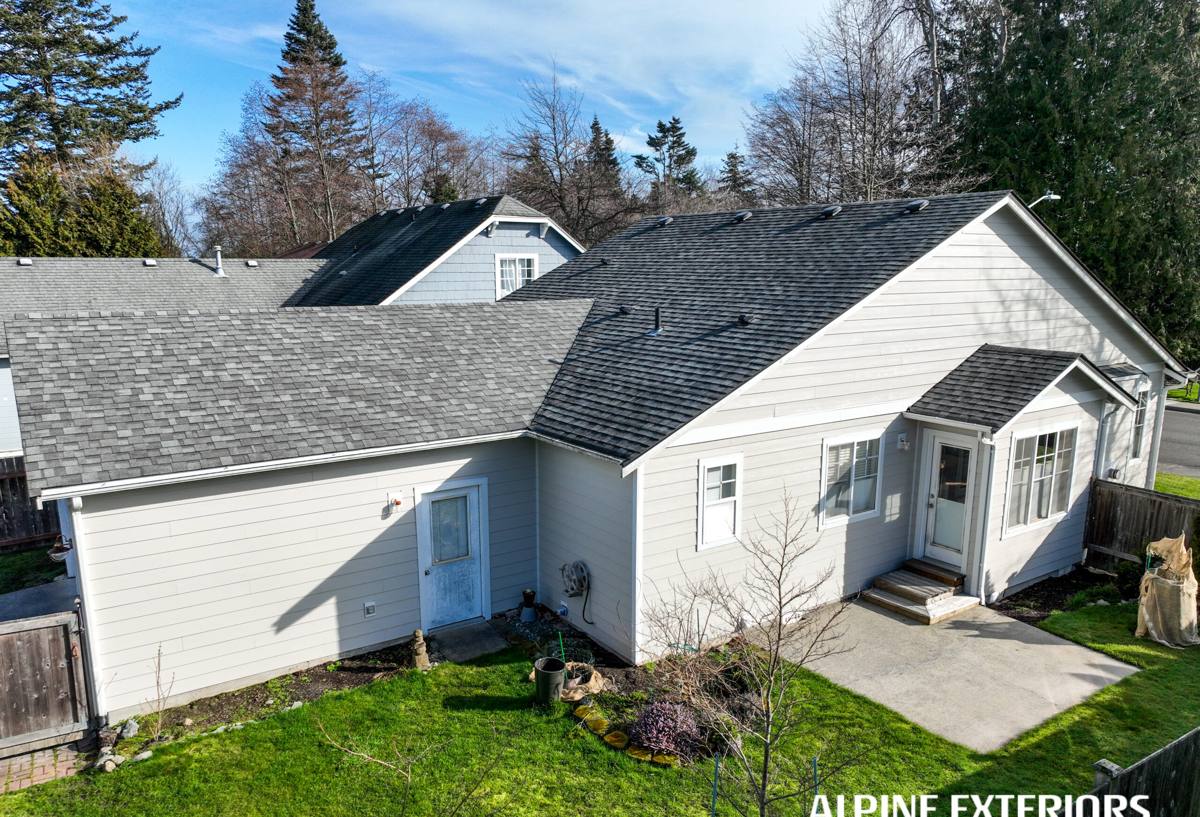
What Salt Air Actually Does to a Metal Roof
Salt air isn't just "a little corrosion, eventually." It's a constant, low-level chemical process that targets the weakest points in a metal roofing system first — exposed fasteners, cut edges, scratched coatings, and dissimilar metals in contact with each other. A roof that's fine for ten years in a dry climate can show fastener bleed, edge rust, or coating breakdown in half that time near the water if it wasn't built for it.
The Failure Points We Watch For
In our experience working this area, the same handful of details separate a metal roof that ages gracefully from one that starts showing rust streaks within a few winters:
- Exposed fastener heads with worn or under-torqued neoprene washers
- Cut panel edges left unsealed or unpainted at hips, valleys, and rakes
- Galvanized flashing paired with a different metal type, causing galvanic corrosion
- Panel seams or laps that weren't sealed correctly before closing
- Ridge and vent penetrations without proper storm collars or boots rated for coastal exposure
Building a Metal Roof That's Actually Right for This Climate
Fasteners and Flashing
For exposed-fastener panels, we use coastal-rated fasteners with sealing washers designed to hold up under repeated wet-dry cycling, not the general-purpose fasteners sold for inland installs. All flashing metal is matched or isolated to avoid galvanic reaction with the panel material, and cut edges get sealed rather than left bare. On standing seam systems, concealed fasteners largely remove this vulnerability, which is one reason we lean toward standing seam for homes with direct water exposure.
Underlayment as the Backup Plan
No roof covering is a perfect seal forever, especially with wind-driven rain coming off the water at an angle instead of falling straight down. We install a synthetic, high-temp underlayment as a continuous secondary barrier, with self-adhered ice-and-water membrane at eaves, valleys, and any low-slope transitions where wind-driven rain is most likely to find a way in. This is the layer that protects your decking if any single point on the metal ever underperforms.
Panel Profile and Material Choice
Not every metal roofing product is built the same, and the right choice depends on your roof's exposure, budget, and how much long-term maintenance you're willing to do.
| Option | Salt Air Performance | Maintenance | Typical Use Case |
|---|---|---|---|
| Standing seam steel | Very good — concealed fasteners, fewer failure points | Low | Full re-roofs, homes with direct water exposure |
| Exposed-fastener steel | Good, if fasteners are coastal-rated and maintained | Moderate — check fasteners periodically | Budget-conscious re-roofs, outbuildings |
| Aluminum panels | Excellent — naturally corrosion-resistant, no rust | Low | Homes closest to the water or with the highest salt exposure |
| Galvalume-coated steel | Good — strong corrosion resistance if coating stays intact | Low to moderate | Most standard installs where cost matters |
Aluminum costs more up front but never rusts, which matters most for the homes sitting closest to the tide flats. Galvalume steel is a solid middle ground for the rest of Dakota Creek, and standing seam in either material gives you the fewest long-term maintenance headaches regardless of budget tier.
Moss Season and Metal: A Different Problem Than Shingles
One real advantage of metal roofing in this climate: moss can't root into it the way it roots into the surface texture of asphalt shingles or wood shakes. That doesn't mean metal is moss-proof. Debris and organic buildup can still collect in valleys, behind chimneys, and along low-slope sections where water moves slowly, and moss can grow on top of that debris layer even if it's not attacking the panel itself. Left long enough, that trapped moisture is what eventually causes coating breakdown and staining, not the moss directly.
Zinc or copper strips near the ridge are a common preventive measure — rain washing over them carries trace amounts downhill and discourages growth on the panels below. It's a reasonable add for a home with heavy tree cover, though it works best paired with keeping gutters and valleys clear rather than as a stand-alone fix.
Our Metal Roofing Process for Dakota Creek Homes
- Roof and structure assessment — we check the existing deck, ventilation, and any signs of moisture damage before recommending a system.
- Tear-off or overlay decision — some metal systems can go over existing shingles if the deck and code allow it; we'll tell you honestly whether that's right for your roof or whether a tear-off is the better long-term move.
- Deck repair — any soft or water-damaged sheathing gets replaced before anything else goes down.
- Underlayment installation — synthetic underlayment across the field, ice-and-water membrane at all vulnerable transitions.
- Panel installation — panels run and fastened to spec for your chosen profile, with attention to consistent spacing and alignment.
- Flashing and penetrations — valleys, chimneys, vents, and skylights get flashed and sealed for coastal-grade wind-driven rain, not just standard rainfall.
- Ridge, venting, and trim — ridge caps and ventilation are finished to keep the attic dry and properly ventilated, which also protects the underside of the panels.
- Final walkthrough and cleanup — magnetic sweep for stray fasteners, full site cleanup, and a walkthrough of what was done.
What Drives the Cost of a Metal Roof in This Area
Metal roofing costs more up front than asphalt shingles, but the range within "metal roofing" itself is wide. The biggest swing factors we see on Dakota Creek homes:
| Factor | Why It Matters Here |
|---|---|
| Panel type (exposed-fastener vs. standing seam) | Standing seam costs more but removes most of the fastener-corrosion risk that salt air creates |
| Material (steel vs. aluminum) | Aluminum costs more but has no rust risk, which matters more the closer you are to the water |
| Roof complexity | Valleys, dormers, and multiple penetrations mean more flashing work, which is where coastal roofs most often fail if done wrong |
| Tear-off vs. overlay | Tear-off costs more but lets us inspect and repair the deck, which matters on older homes with any history of moisture issues |
| Access and pitch | Steep or hard-to-access roofs take longer and require more safety setup |
Maintenance That Actually Matters for Coastal Metal Roofs
Metal roofing is low-maintenance compared to most alternatives, but "low" isn't "none." A little attention twice a year goes a long way toward hitting the full lifespan of the system:
- Clear valleys and gutters of debris before the fall rains start
- Check fastener heads on exposed-fastener roofs every year or two for backing out or washer wear
- Look for streaking or dulling near cut edges, flashing, and any dissimilar-metal contact points
- Trim back overhanging branches to reduce debris buildup and moss-friendly shade
- After major windstorms, do a quick visual check for lifted flashing or displaced ridge caps
Why Hiring a Crew That Already Works Dakota Creek Matters
A lot of roofing problems in this area aren't installation mistakes in the obvious sense — the panels are on, the roof looks fine — they're detail choices that only show their cost five or ten years out, once salt has had time to work on an under-spec'd fastener or an unsealed cut edge. A crew that's worked Blaine's coastline regularly knows which details are worth the extra cost here and which are optional inland. That includes knowing how Whatcom County and City of Blaine permitting and inspection expectations apply to a re-roof, and how to detail transitions so wind-driven rain off the water doesn't find the one weak point in the system.
We're not going to tell you metal roofing is the only right answer for every home, or that every metal system is interchangeable — the honest answer depends on your roof's exposure, your budget, and how it's currently built. What we will do is walk your specific roof, tell you plainly what it needs, and explain the trade-offs between the options instead of pushing whichever product carries the best margin.
If you're weighing metal roofing for a home in Dakota Creek, we're happy to take a look and give you a straight, no-pressure estimate — fill out the form below and we'll get back to you.