 Blaine Siding
 Point Roberts Windows Work Harder Than Most
Point Roberts sits on its own peninsula at the southern tip of Whatcom County, with water on three sides and Canada in between it and the rest of the mainland. That location is part of what makes it a special place to own a home — and it's also why windows here take more punishment than windows almost anywhere else in the county. Salt-laden air off the water, wind-driven rain that comes in sideways during winter storms, and a long, shaded moss season all work against an ordinary window installation, year after year.
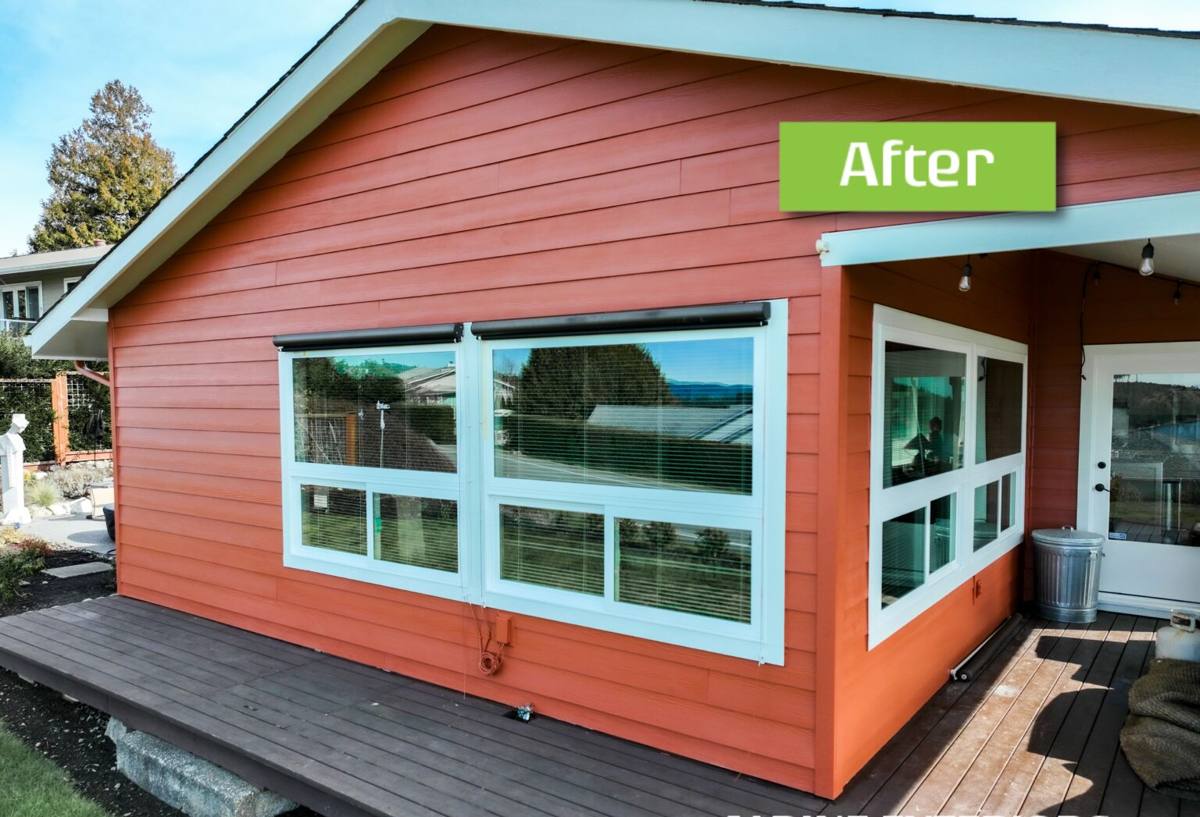
When we talk about "custom windows" for a Point Roberts home, we don't mean a fancier catalog option. We mean windows sized, specified, and installed to hold up against the specific conditions of this stretch of shoreline, not a generic set of assumptions that might work fine twenty miles inland.
What the Local Climate Actually Does to Windows
Salt Air and Corrosion
Homes close to the water pick up airborne salt that settles on hardware, screens, and any exposed metal. Over time, lower-grade hardware pits and stiffens, locks get harder to turn, and aluminum components can corrode or discolor. It's slow, quiet damage — which is exactly why it usually gets ignored until a window won't latch or a screen frame crumbles at the corners.
Driving Rain and Wind
Open exposure to wind off the water means rain doesn't just fall here — it gets pushed sideways into wall assemblies and window openings during storms. A window that would perform fine in a sheltered, inland spot can leak at Point Roberts if the flashing, sill pan, and sealant details aren't built to handle wind-driven water rather than just vertical rainfall.
Moss Season and Shade
A lot of lots here carry heavy tree cover, and shade combined with the region's long wet season keeps wood trim, sills, and even vinyl cladding damp for extended stretches. That's exactly the environment moss and mildew favor. On windows, it shows up as dark streaking on sills, soft spots developing in wood trim, and weatherstripping that stays perpetually damp and starts to break down early.
What "Correct" Actually Means for a Window Job Here
A window replacement that's correct for Point Roberts conditions isn't just about picking a good window off a shelf. It comes down to a handful of details that matter more here than they would in a drier, more sheltered part of Whatcom County:
- Frame and hardware materials chosen for salt exposure, not just cost
- Flashing and sill pan details built for wind-driven rain, not just gravity drainage
- Glazing and gas-fill specs matched to the amount of sun (or shade) the opening actually gets
- Sealant and house wrap integration done in the right order, not just caulked over gaps afterward
- Trim materials and finishes that can tolerate sustained dampness during moss season without softening
Choosing the Right Frame Material
Frame material is one of the first decisions, and it's worth more thought here than in a typical inland install. The table below reflects how each common option actually holds up under salt air and sustained moisture, based on what we see in the field:
| Material | Salt/Moisture Behavior | Maintenance | Typical Lifespan |
|---|---|---|---|
| Vinyl | Handles salt air well; won't corrode or rot | Low — occasional cleaning | 20–30 years |
| Fiberglass | Very stable in moisture and salt; minimal expansion/contraction | Low | 30+ years |
| Wood-clad | Good if cladding and flashing are done right; exposed wood is vulnerable | Moderate to high — finish and caulk checks needed | 20–30 years with upkeep |
| Bare aluminum | Prone to pitting and corrosion near salt water over time | Moderate | Varies widely with exposure |
We don't push one material on every home. A wood-clad window can look great on the right house, but if it's in a fully exposed, salt-heavy spot, we'll say so up front rather than let a homeowner find out five years in that the cladding seams need attention every season. That's a maintenance-burden conversation, not a knock on the product — it's about matching the material to where the house actually sits.
Glazing and Gas Fill
Most custom window jobs here go with dual-pane, low-E glass with an argon or krypton gas fill between the panes. Low-E coatings help control heat loss during our cold, damp winters and reduce glare and fading on the sun-exposed side of a house. On homes with a lot of tree shade — common in the moss-prone parts of Point Roberts — condensation resistance matters just as much as insulation value, since shaded, damp air sitting against a cold pane is what drives interior condensation and, eventually, wood rot at the sill.
Installation Details That Actually Prevent Leaks
Most window failures we get called out to inspect aren't failures of the window itself — they're failures in how the opening was flashed and sealed. In a driving-rain environment like this one, a handful of steps make the difference between a window that lasts decades and one that starts leaking within a few wet seasons:
- Remove the old window and inspect the rough opening for hidden rot or prior water damage before anything new goes in
- Install a sloped sill pan so any water that gets past the window sheds outward, not into the wall
- Integrate flashing tape and house wrap in the correct shingle-lap order so water is always directed down and out
- Set the window plumb, level, and square, then shim and fasten per the manufacturer's specs — not just "close enough"
- Seal the interior air barrier separately from the exterior water barrier — sealing only one side is a common shortcut that traps moisture
- Finish exterior trim and caulking with materials rated for continuous damp exposure
Skipping or rushing any one of these steps is usually invisible on install day and only shows up as a stain, soft trim, or a musty smell a year or two later — right when it's harder to trace back to the cause.
Our Process for a Point Roberts Window Project
The steps themselves aren't unusual, but the sequencing and communication matter more here because of how isolated the community is:
- On-site assessment: we look at existing window condition, framing, exposure direction, and any signs of past moisture issues
- Measurement and specification: exact sizing plus material and glazing recommendations based on that specific opening's sun and wind exposure
- Ordering: we build in realistic lead times, accounting for the extra logistics of getting materials to Point Roberts
- Scheduling: installation days are planned around weather windows, since wind-driven rain during an open install is the enemy
- Installation: removal, opening inspection, flashing, setting, sealing, and trim finish work as outlined above
- Walkthrough: we go over operation, hardware care, and what to watch for given the local climate
Why Hiring a Crew That Already Works Point Roberts Matters
Point Roberts is a U.S. exclave — reaching it by land means crossing an international border in both directions. That's not a small detail for a construction project. A crew that hasn't planned for it can show up short a material delivery, lose a day to border logistics, or simply treat the job like any other Whatcom County address and miss how much tougher the exposure really is here.
A contractor who already works this area on a regular basis has that logistics figured out — permitting through Whatcom County, realistic scheduling around crossing times and weather, and a track record of specifying materials that actually hold up against this particular combination of salt air, wind-driven rain, and shade-driven moss growth. That's less about convenience and more about the job being done right the first time, since a callback for a leaking window on Point Roberts costs everyone more time than it would almost anywhere else.
Keeping New Windows Performing in This Climate
A well-installed window still benefits from a bit of seasonal attention in this environment. A short annual routine goes a long way:
- Rinse salt residue off exterior frames and hardware a few times a year, especially after storms
- Check and lubricate locks and hinges annually so salt-related stiffness doesn't set in unnoticed
- Clear debris and moss from sills and tracks before it holds moisture against the frame
- Inspect exterior caulking each fall before the wet season sets in, and touch up anything that's cracked or pulled away
- Watch for condensation between panes, which signals a failed seal rather than a cleaning issue
- Trim back vegetation that's shading a window enough to keep it damp most of the day
What Affects the Cost of a Custom Window Project
Every home is different, so we won't quote a number without seeing the openings, but these are the factors that typically move the price up or down:
| Factor | Why It Matters |
|---|---|
| Frame material | Fiberglass and quality vinyl cost more upfront than bare aluminum but need far less upkeep in salt air |
| Opening condition | Hidden rot or framing damage found during removal adds repair work before the new window goes in |
| Number and size of openings | Larger or custom-shaped windows require more precise fabrication and installation time |
| Glazing package | Triple-pane or specialty low-E coatings cost more but can be worth it on highly exposed or shaded walls |
| Access and logistics | Site access and material delivery to Point Roberts factor into scheduling and labor time |
Get a Straight Answer for Your Home
Every house on this peninsula sits a little differently — some face open water and wind directly, others sit under heavy tree cover and deal more with shade and moss than with driving rain. A good window plan accounts for which of those situations your home is actually in, not a one-size-fits-all spec sheet. If you're weighing a window replacement or repair on Point Roberts, we're happy to take a look and give you a straightforward assessment — no pressure, no upsell, just what your home actually needs. Fill out the form below to schedule a free estimate.