 Blaine Siding
 Building Decks That Actually Hold Up in Sumas
Sumas sits in a low agricultural valley at the far edge of Whatcom County, right against the Canadian border, and that setting comes with a specific set of building challenges. The valley holds moisture longer than higher ground, morning fog is common for a good part of the year, and winter rain arrives in long, steady stretches rather than quick showers. A deck built without that in mind will look fine for a season or two and then start telling on itself — soft spots near the house, black streaks on the boards, fasteners bleeding rust, railings that wobble because a post base never drained right.
We build custom decks for homeowners throughout Whatcom County, and Sumas jobs get the same attention to moisture management that our coastal work does, adjusted for the valley's own conditions: higher humidity, slower-drying ground, and a longer moss season on any surface that doesn't get much direct sun. The goal on every project is the same — a deck that still looks and performs like new after five, ten, fifteen winters, not just the first one.
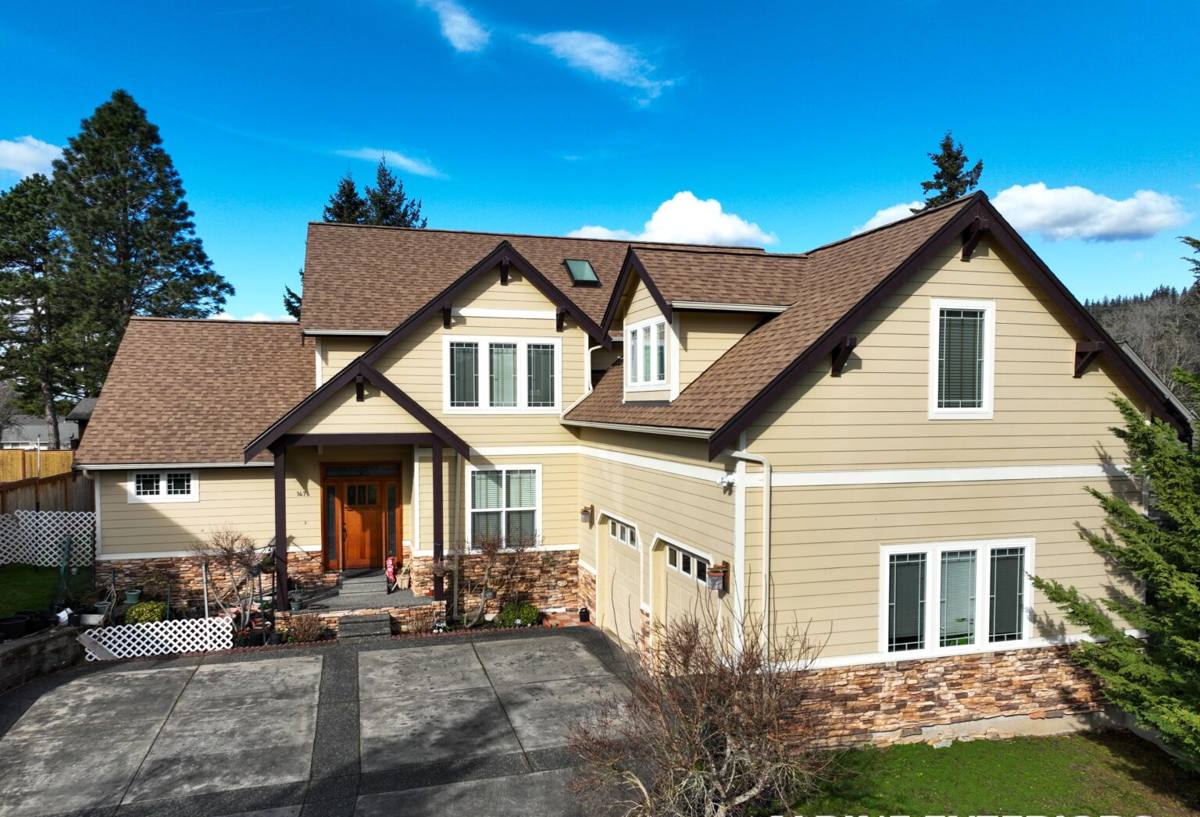
What Sumas' Climate Actually Does to a Deck
Understanding the failure points is most of the battle. In this part of Whatcom County, the damage that shows up on a badly built deck almost always traces back to one of these:
- Trapped moisture at the ledger board — where the deck attaches to the house is the single most common rot location in this climate if flashing was skipped or done wrong.
- Standing water on decking boards — gaps that are too tight, or boards installed bark-side up, hold water and grow moss and mildew faster than they should.
- Corroding hardware — cheap fasteners and connectors rust and stain the wood around them within a couple of wet seasons.
- Poor footing drainage — footings set without adequate drainage in valley soil can shift with seasonal freeze-thaw and saturation cycles.
- Shaded, low-airflow areas — north-facing decks or ones tucked under trees stay damp longer, which is exactly what moss and algae need to take hold.
None of these are exotic problems. They're just the predictable result of building a deck the same way you'd build one somewhere drier, without adjusting for how long this region stays wet.
What a Correctly Built Deck Needs Here
Ledger Flashing Done Right
If your deck attaches to the house, the ledger connection needs proper flashing — not just a bead of caulk — to keep water from working its way behind the siding or into the rim joist. This is the detail that separates a deck that lasts decades from one that needs a rebuild in eight years. It's also the detail that's easiest to shortcut because it's invisible once the decking is down.
Fasteners and Hardware
We use corrosion-resistant fasteners and structural connectors rated for exterior, high-moisture use — stainless steel or hot-dip galvanized, depending on the application. Even away from the immediate coast, Whatcom County's humidity and long wet season are enough to chew through bargain-grade hardware over time, and once fasteners start rusting they streak and weaken the wood around them.
Board Spacing and Orientation
Gap spacing between boards is a deliberate calculation, not a default. Too tight and water sits on the surface; too wide and you get an uncomfortable, unsafe walking surface. We set spacing based on the decking material, the board width, and expected seasonal movement.
Footings Set for Valley Soil
Footings are dug to proper frost depth and sized for the load, with attention to drainage around the base so water doesn't pool against the concrete or the post connection through the wet months.
Choosing the Right Decking Material
There's no single "best" decking material — there's the right one for your budget, your maintenance appetite, and how much sun and shade your deck actually gets. Here's how the common options stack up for a Sumas property:
| Material | Upfront Cost | Maintenance | How It Handles This Climate |
|---|---|---|---|
| Pressure-treated pine | Lowest | Needs re-staining/sealing every 1-3 years | Prone to moss and graying fast in shaded, low-airflow spots without upkeep |
| Western red cedar | Moderate | Needs sealing to hold color and resist mildew | Naturally rot-resistant, but still needs care in shaded areas prone to moss |
| Composite decking | Higher | Occasional washing, no staining or sealing | Holds up well to constant moisture; some capped composites resist mold better than others |
| PVC decking | Highest | Lowest — mostly just washing | Fully synthetic, doesn't absorb moisture, best option for shaded or low-sun sites |
Our honest take: pressure-treated pine is a fine choice if you're willing to stay on top of sealing and cleaning, but it's the material most likely to disappoint someone who wants to "set it and forget it" in this climate. Composite and PVC cost more up front but make sense for shaded decks, north-facing decks, or homeowners who don't want a recurring maintenance chore. Cedar sits in the middle — it looks great and resists rot naturally, but it's not maintenance-free here the way it can be in a drier climate.
Design Considerations for Sumas Properties
Valley lots often have more open sky and less tree canopy right around the house than you'll find closer to the water, which is actually an advantage for a deck — more sun exposure means faster drying after rain and less moss pressure than a heavily shaded lot. When we design a deck for a Sumas property, we look at:
- Which side of the house gets the most sun through fall and winter, since that affects both comfort and how quickly the deck surface dries
- Whether the site has natural drainage away from the house or needs grading and footing adjustments to manage it
- How the deck ties into existing siding and trim so flashing integrates cleanly instead of being an afterthought
- Covered vs. open design — a partial roof or pergola can extend usable outdoor time significantly given how much of the year is wet, but it also changes how much sun the deck surface gets and how fast it dries
Our Process, Start to Finish
- On-site assessment — we walk the property, look at sun exposure, drainage, and how the deck will attach to the house, and talk through what you actually want to use the space for.
- Design and material selection — we go over the material comparison honestly, including what each option will actually cost you in upkeep over the years, not just at checkout.
- Permitting — we handle the permit application and inspections required for the project so you don't have to chase paperwork.
- Framing and structural work — footings, ledger flashing, framing, and connectors go in first, and this is the stage that determines how the deck ages, even though it's the least visible part of the job.
- Decking, railing, and finish work — boards, railings, stairs, and any lighting or finish details go on last.
- Final walkthrough — we go over the finished deck with you, including basic care instructions specific to whatever material you chose.
Permits in Whatcom County
Most new decks — especially anything attached to the house or built above a certain height — require a building permit, and inspections are typically required at the footing and framing stages before decking goes down. Requirements can vary depending on the deck's size, height, and whether it's attached or freestanding, so this isn't something to guess on. We handle the permit process as part of the job so the structural work is inspected and documented properly, which also protects you if you ever sell the home.
Keeping a Deck Looking Good Through Moss Season
Even a well-built deck needs some seasonal attention in this climate. Here's a basic maintenance checklist we give homeowners regardless of which material they chose:
- Sweep debris off the deck regularly through fall — wet leaves trapped between boards are one of the fastest ways to grow moss and stain wood
- Rinse or wash the surface at least once or twice a year to knock back algae and moss before it takes hold, more often on shaded sections
- Check that gaps between boards haven't clogged with debris that traps water
- Inspect railings and stair connections for movement or loose hardware once a year
- For wood decks, plan on re-sealing or staining on the schedule the product calls for — skipping a cycle in this climate shows up fast
- Keep an eye on the ledger flashing area where the deck meets the house; it's worth a visual check each fall before the heavy rains set in
Why Hire a Crew That Already Works in Sumas
A deck built by someone unfamiliar with valley conditions often looks identical to a properly built one on day one — the differences show up two, five, ten years later, in the places you can't see until something fails. We already know which details matter in this part of Whatcom County: how to flash a ledger so it doesn't fail quietly behind the siding, which fasteners actually hold up through repeated wet-dry cycles, and how to grade and orient a deck so it dries out instead of staying damp. That's not something you get from a generic deck-building checklist — it's specific to building here, year after year, and watching what holds up and what doesn't.
If you're ready to talk through a custom deck for your Sumas property, we're happy to walk the site, answer honest questions about materials and costs, and put together a free, no-pressure estimate using the form below.