 Blaine Siding
 Window Installation Built for Custer's Exposure
Custer sits in the open, rural stretch of Whatcom County between Blaine and Ferndale — farmland, fewer windbreaks than a wooded neighborhood, and full exposure to whatever comes off the water and the fields. That combination matters more for window installation than most homeowners realize. A window that's flashed and sealed correctly in a sheltered subdivision can still fail early on a Custer property if the crew doesn't account for the wind-driven rain and salt-laden air that move through this part of the county. We install windows here specifically with that exposure in mind, not a generic install process borrowed from drier climates.
This page covers what Custer homes actually need from a window installation, what a correct job looks like from the inside out, and how our process handles the details that get skipped when a crew is just passing through.
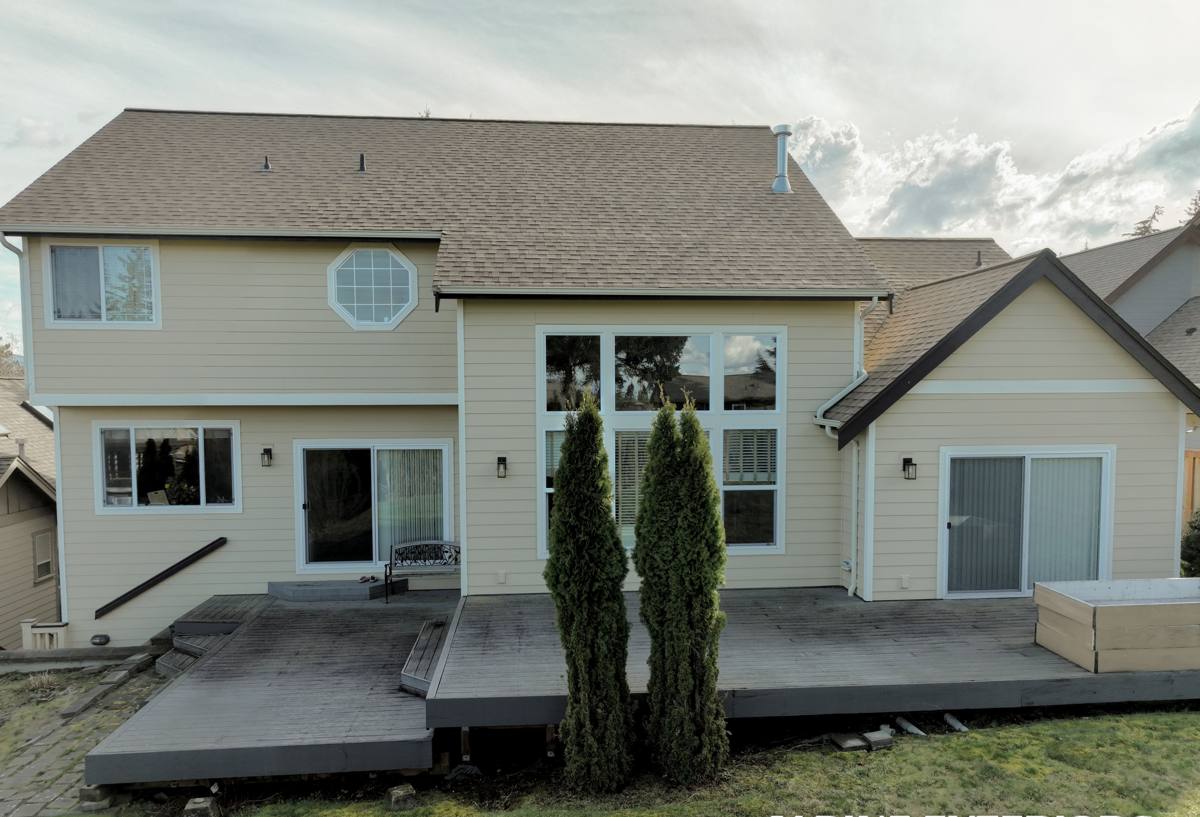
What Whatcom County's Climate Does to Windows Over Time
Every window installation eventually gets tested by the weather it's asked to hold back. In Custer, that test comes early and often.
Salt Air
Proximity to Semiahmoo Bay and the Strait of Georgia means salt-laden moisture rides inland on the wind, especially during winter storms. Salt air accelerates corrosion on window hardware — hinges, cranks, locks, and screws — and it breaks down cheap sealants faster than a dry inland climate would. Aluminum and lower-grade vinyl components can pit or discolor years ahead of schedule if they weren't rated for coastal exposure.
Driving Rain and Wind
Custer's open farmland offers little wind resistance compared to a tree-lined lot closer to town, so rain doesn't just fall here — it gets pushed sideways into wall assemblies and window frames. A window installation that relies on caulk alone to stop water, instead of proper flashing and drainage planes, will eventually leak. It's usually not a dramatic failure; it's a slow stain on the drywall below the sill that shows up a year or two later.
The Long Moss Season
Whatcom County's moss season runs long — often eight or nine months of the year with enough moisture and shade to keep growth active. Moss and algae don't just affect roofs and siding; they take hold in window tracks, weep holes, and sill corners where debris collects and water sits. Left alone, trapped moisture behind moss growth rots wood trim and frames from the inside, which is a much more expensive fix than keeping tracks clear.
Signs a Custer Home's Windows Need Attention
Most window problems here don't announce themselves with a shattered pane. They show up as small, ignorable-looking issues that get worse every wet season.
- Fogging or condensation between panes — a sign the seal has failed and the insulating gas or dead-air space is gone
- Soft or discolored trim or drywall directly below a window
- Windows that are noticeably harder to open, close, or lock than they used to be
- Visible daylight or a draft you can feel around the frame when it's windy
- Moss or dark staining building up in the tracks or at the bottom corners of the frame
- A noticeable rise in heating costs with no other explanation
Any one of these can point to a failed seal, a compromised sill, or flashing that was never installed correctly in the first place. Catching it early is almost always cheaper than waiting for it to spread into the wall framing.
What a Correct Window Installation Actually Involves
Window installation looks simple from the outside — pull the old unit, set the new one, trim it out — but the parts that actually determine whether it lasts are hidden once the job is done.
Flashing and Sequencing
Water management around a window depends on the order materials go in, not just what materials are used. Flashing tape and pan flashing at the sill need to integrate with the house wrap so water is directed out and down, never trapped behind the frame. This sequencing is the single most common thing that gets rushed on a quick installation, and it's exactly the detail that determines whether the window stays dry through a Whatcom County winter.
Sealant and Insulation
Exterior sealant should be a high-quality, UV- and salt-resistant product applied at the right joints — not smeared everywhere as a substitute for proper flashing. On the inside, the gap between the window frame and rough opening needs to be insulated (typically with low-expansion foam) without over-filling it, which can bow the frame and cause the sash to bind.
Fit, Level, and Shim
A window that's out of square by even a small amount will bind, won't lock tightly, and will let in more air and water than one set correctly. Shimming at the right points — not just the corners — keeps the frame from racking under wind pressure or as the house settles.
Choosing the Right Window for a Custer Property
There's no single "best" window material — the right choice depends on your home's exposure, your budget, and how much maintenance you're willing to keep up with. Here's how the common options stack up for a coastal Whatcom County climate:
| Frame Material | How It Handles This Climate | Maintenance | Typical Cost Factor |
|---|---|---|---|
| Vinyl | Won't corrode or rot; performs well against salt air and moisture when properly installed | Low — occasional cleaning of tracks and weep holes | Lower |
| Fiberglass | Very stable in temperature swings and driving rain; strong resistance to moisture-related warping | Low | Mid to higher |
| Wood (unclad) | Attractive but vulnerable to the region's long wet season and moss growth if not maintained | High — regular painting/sealing needed | Mid to higher, plus ongoing upkeep |
| Wood-clad (vinyl or aluminum exterior) | Combines interior wood look with a weather-resistant exterior shell | Moderate | Higher |
| Aluminum | Prone to corrosion and condensation in coastal salt air unless it's a thermally broken, marine-rated product | Moderate to high | Varies widely |
For most Custer homes, we lean toward vinyl or fiberglass frames specifically because of the salt air and rain exposure — they hold up with the least ongoing maintenance. We'll walk through the trade-offs honestly for your specific property rather than pushing one product line.
Our Installation Process
- On-site assessment: We look at existing window condition, wall assembly, and exposure — a window on the windward side of the house is treated differently than one that's sheltered.
- Measurement and product selection: Precise measurements and a frank conversation about material options and budget, based on how that specific opening is exposed to weather.
- Removal: Old units are removed carefully, and we inspect the rough opening and sill for hidden rot or moisture damage before anything new goes in — this is often where a cheap installation reveals problems from years back.
- Repair as needed: Any soft framing, compromised sheathing, or failed prior flashing gets addressed before the new window is set. Installing a new window over a damaged opening just hides the problem.
- Flashing and setting: Pan flashing, house wrap integration, and the new window are installed in the correct sequence to direct water out, not in.
- Insulation and sealing: Low-expansion foam at the gap, proper exterior sealant at the right joints — not as a substitute for flashing, but as a second line of defense.
- Interior and exterior trim: Finished out to match the home, with attention to keeping weep holes and drainage paths clear.
- Final walkthrough: Every window is opened, closed, and checked for square and smooth operation before we consider the job done.
Why a Crew That Already Works Custer Matters
Window installation done by a crew unfamiliar with this specific stretch of Whatcom County tends to make the same mistakes: underestimating wind-driven rain because the property doesn't look "coastal" on paper, using sealant-only water management because it's faster, or specifying a frame material that looks fine on a spec sheet but corrodes within a few years in salt air. A crew that already works in and around Custer and Blaine has seen how these houses age — where the moss builds up first, which sides of a house take the worst of the weather, and what actually holds up over a full Whatcom County winter versus what fails after one or two seasons.
That local track record also means we're not guessing at permitting or code requirements for the area — we know what's expected and build it in from the start rather than treating it as an afterthought.
Keeping New Windows Performing Long-Term
A correct installation is most of the battle, but a little seasonal attention keeps windows performing for the long run in this climate:
- Clear window tracks and weep holes of moss, leaves, and debris at least twice a year
- Rinse salt residue off exterior frames periodically, especially after winter storms
- Check exterior caulking annually for cracking or separation and touch up as needed
- Operate every window through its full range a few times a year so hardware doesn't seize
- Watch for condensation between panes, which signals a seal failure rather than something to just wipe away
- Keep an eye on interior sills and trim for soft spots, especially after a wet winter
If your Custer home has windows that are drafty, fogging, hard to operate, or original to a home built before current flashing standards, it's worth having them looked at before another wet season sets in. We offer free, no-pressure estimates for window installation in Custer and the surrounding Whatcom County area — use the form below to get a straightforward assessment of what your home actually needs.