 Blaine Siding
 Why Custer Homes Need Windows Built for This Climate
Custer sits just inland from Blaine's waterfront, but the air moving through this part of Whatcom County carries the same marine moisture and salt that hits homes right on Semiahmoo Bay and Drayton Harbor. That salt-laden humidity works into hardware, fasteners, and unprotected wood year-round, not just during storms. Add the driving rain this region gets off the Strait of Georgia and Puget Sound — wind-driven storms that push water sideways into siding and window openings instead of straight down — and a window that's merely "watertight on a calm day" isn't enough here.
Then there's moss season, which in this corner of Washington runs most of the year. Shaded, tree-covered sides of homes around Custer stay damp long after a storm has passed, and that dampness finds its way into every gap left by old caulking, worn glazing, or a sill that was never sloped to shed water in the first place. Windows in this area don't fail because they're old — they fail because they were never detailed for this specific combination of salt, wind-driven rain, and standing moisture.
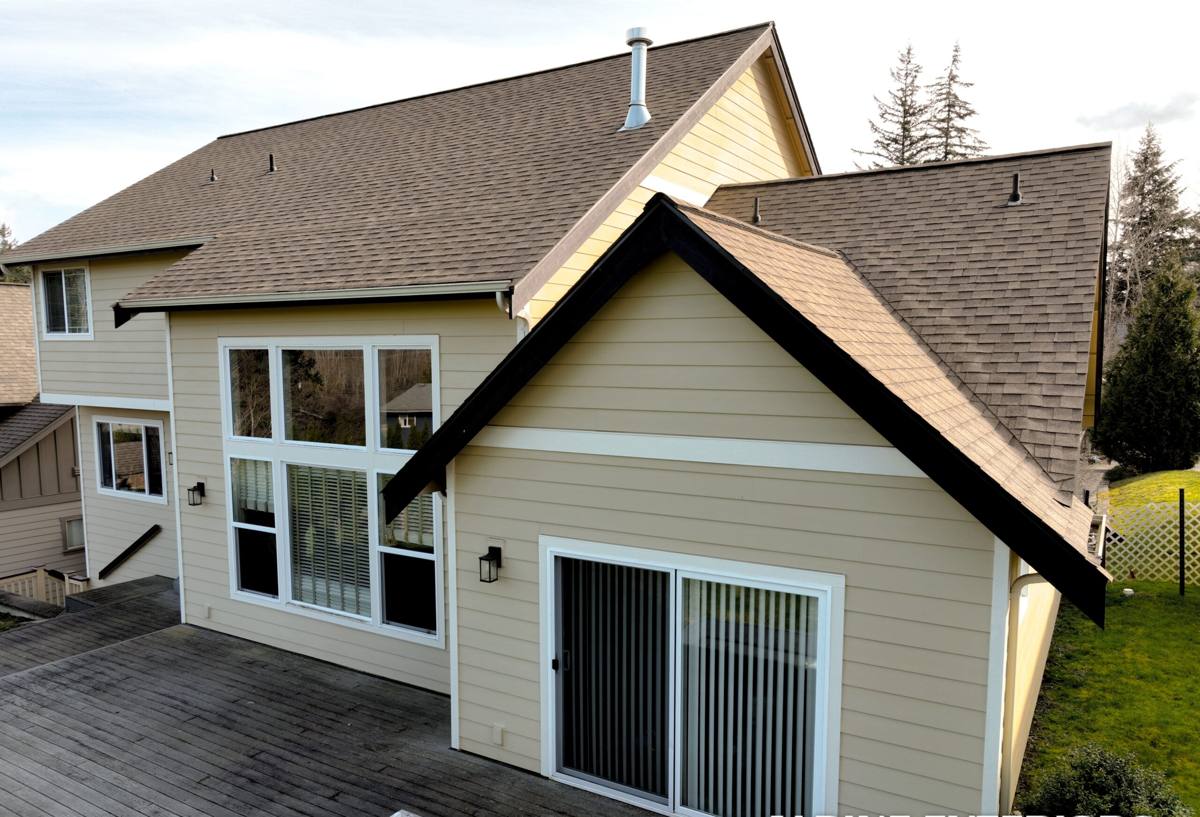
Signs Your Current Windows Are Losing the Fight
- Fogging or a cloudy haze between panes — the seal has failed and moisture is trapped inside the glass unit
- Soft, spongy wood at the sill or trim, or paint that's bubbling and peeling
- A draft you can feel with your hand near the frame on a windy day
- Sashes that stick, won't latch fully, or have been painted shut
- Moss, algae, or black streaking on the trim just below the window
Any one of these is worth a look. Several at once usually means water has already gotten past the frame and into the wall, which turns a window job into a repair job.
What a Correct Window Installation Actually Involves
Water Management Comes First
The glass and frame get the attention, but the sill pan, flashing tape, and integration with the house wrap behind the trim are what actually decide whether a window survives fifteen winters of driving rain or lets water into the wall cavity within a few years. A sloped sill pan directs any water that gets past the sash back outside instead of letting it pool against the framing. Flashing has to be layered correctly — over the sill pan, up the sides, and under the housewrap at the head — so water sheds down and out no matter which direction the wind is pushing it.
Material and Hardware for Salt Air
Fasteners and hardware that aren't rated for coastal exposure corrode faster here than they would twenty miles inland. We spec stainless or coated fasteners and hardware finishes built to hold up against salt air, because replacing a lock or crank mechanism in five years defeats the point of a new window.
Glass and Energy Performance
Whatcom County winters are mild compared to a lot of the country, but they're long, gray, and damp, and heating bills add up over that stretch. Low-E coatings and gas-filled insulated glass cut down on heat loss and reduce interior condensation on cold mornings — which matters directly here, since condensation on glass and sills is one of the things that feeds moss and mildew growth around a window opening.
Choosing the Right Window Material for a Coastal Whatcom County Home
There's no single "best" window material — the right call depends on your home's exposure, your budget, and how much upkeep you want to take on. Here's how the common options actually compare for a home in the Custer and Blaine area:
| Material | Salt Air / Moisture Behavior | Maintenance | Typical Upfront Cost |
|---|---|---|---|
| Vinyl | Won't corrode or rot; performs well in salt air | Low — occasional cleaning | Lower |
| Fiberglass | Very stable in moisture and temperature swings; excellent coastal performance | Low | Mid to higher |
| Wood, aluminum- or vinyl-clad | Good if cladding is intact; exposed wood is vulnerable at cuts and joints | Higher — cladding seams need periodic inspection | Higher |
| Bare aluminum | Prone to pitting and corrosion in salt air over time | Higher | Lower to mid |
For most homes in this area we lean toward vinyl or fiberglass because they hold up to salt air and driving rain with the least ongoing maintenance. Wood-clad windows can still be the right call on a home where the look matters and the owner is willing to keep an eye on the cladding seams — that's a conversation we have honestly, not a one-size answer.
Our Process, Start to Finish
Assessment and Measurement
We start by looking at the actual condition of each opening — not just the window itself, but the sill, the trim, and whatever we can see of the flashing and sheathing behind it. This tells us whether it's a straightforward insert replacement or whether the opening needs to be opened up and rebuilt. Measurements get taken for exact fit; nothing here is a stock size guess.
Removal and Prep
Old windows come out carefully so we can inspect the framing underneath before anything new goes in. Any soft or water-damaged wood gets addressed at this stage — installing a new window over rotten framing just hides the problem for a year or two.
Installation and Sealing
New sill pan, flashing, and the window itself go in per the manufacturer's instructions and tied properly into the existing weather barrier. Sealants are applied where they belong — and only where they belong, since over-caulking can trap moisture just as badly as leaving a gap.
Final Walkthrough and Cleanup
Every window gets operated, checked for square and smooth function, and inspected for a clean seal before we call the job done. Old windows, packaging, and debris leave with us the same day.
What Affects the Cost of a Window Project
- Number and size of window openings being replaced
- Insert replacement (fits into the existing frame) versus full-frame replacement (opening is rebuilt down to the studs)
- Material choice — vinyl, fiberglass, or wood-clad
- Condition of the framing and trim once the old window is removed
- Whether siding or trim repair is needed around the opening at the same time
- Access — second-story or hard-to-reach openings take more time and equipment
- Disposal and haul-away of old windows and materials
We give a clear, itemized estimate up front so there's no guessing between the quote and the invoice. If we find hidden rot once the old window is out, we stop and show you before doing any additional work — we don't upsell off a surprise.
Windows and Siding Work Together — Don't Treat Them Separately
Window openings are one of the most common places a wall system fails, because that's where siding, trim, flashing, and glass all meet at once. As a siding contractor, we see this from the outside in: a new window installed without matching attention to the trim and flashing around it just relocates the leak a few inches over. When we replace windows, we're checking and, where needed, correcting the siding and trim details at the same opening — not treating the window as an isolated product install. That's the difference between a fix that lasts and one that shows up again as a soft spot in three years.
Why a Crew That Already Works Custer and Blaine Matters
Whatcom County's permit process, inspection expectations, and typical home ages and construction styles around Custer aren't the same as what you'd find in a different county or a different climate zone entirely. A crew that's already routing through this area knows what to expect from a given home's era of construction, knows the wind and rain exposure patterns specific to this stretch near the water, and can schedule around here without adding a long drive charge or a delay waiting for a crew to come from somewhere else. That local familiarity shows up in fewer surprises once the old window comes out.
Caring for New Windows in a Marine Climate
- Rinse salt film off exterior frames and glass periodically, especially after windy weather off the water
- Keep weep holes at the bottom of the frame clear of debris so trapped water can drain out
- Check exterior caulking each year before the wet season sets in, and touch up anything that's cracked or pulled away
- Trim back vegetation that shades a window and keeps it damp — this is the single biggest factor in local moss and mildew growth
- Wipe down tracks and hardware occasionally so moving parts don't seize up from grit and salt
A few minutes of upkeep a couple of times a year goes a long way toward getting the full lifespan out of a window in this climate.
If your windows in the Custer or Blaine area are fogging, drafty, or showing soft trim, we're glad to take a look and give you a straight, no-pressure estimate — just fill out the form below.