 Blaine Siding
 Why Composite Decking Makes Sense for Custer
Custer sits a few miles inland from Blaine, but the weather doesn't care about the distance. The same marine air moving off Semiahmoo Bay and the Strait of Georgia reaches Custer properties, and combined with Whatcom County's long, wet winters, that's a hard environment for an outdoor deck to survive in year after year. Homeowners here have usually already dealt with a wood deck that needed re-staining every year or two, or one that started going gray and soft in spots before its time. Composite decking was built for exactly this kind of climate — it doesn't absorb water the way wood does, it doesn't need annual sealing, and it holds up to the freeze-thaw cycles and constant damp that define a Northwest fall and winter.
This page is about composite decking specifically for Custer homes, not decking in general. The climate factors, the build details, and the maintenance schedule below are all shaped by what actually happens to a deck in this part of Whatcom County.
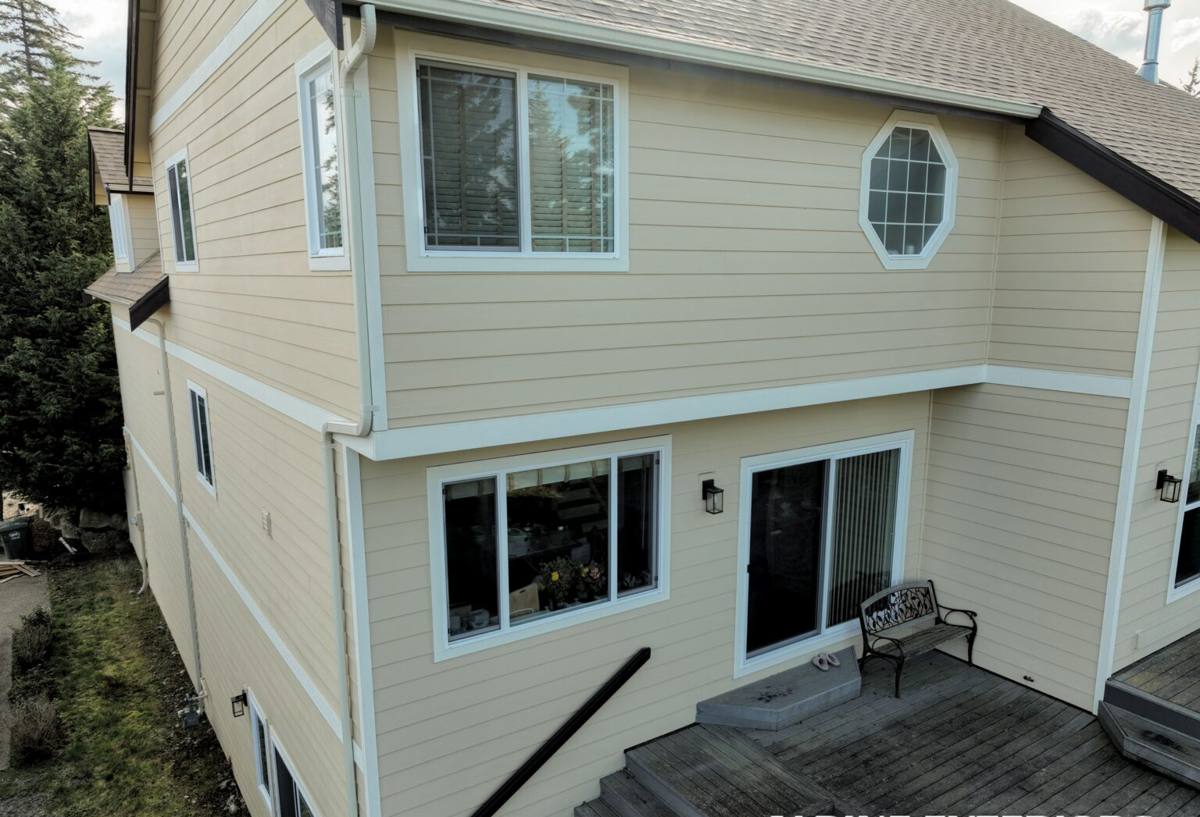
What Whatcom County Weather Does to a Deck
Salt Air
Salt-laden air doesn't just affect homes right on the water. It travels inland on prevailing winds and settles on any exposed surface, including deck boards, railings, and — critically — the metal fasteners and hardware holding a deck together. Over time, salt air accelerates corrosion in low-grade screws, brackets, and connectors. It's one of the main reasons we don't cut corners on fastener spec for any deck we build in this area, composite or otherwise.
Driving Rain
Blaine and the surrounding area get their share of wind-driven rain, and it doesn't fall straight down — it gets pushed sideways and up under railings, into board gaps, and against ledger connections at the house. A deck that isn't detailed for driving rain will show it first at the house-to-deck connection, where water intrusion behind flashing can cause rot in the structure long before the surface boards show any wear.
The Long Moss Season
Whatcom County's moss season isn't really a season — it's most of the year. Anywhere shaded, north-facing, or slow to dry gets a head start on moss and algae growth, and a deck surface that stays damp for days at a time is prime territory. Moss on a walking surface isn't just unattractive; it's slick, and it holds moisture against the board longer than bare wood or composite would otherwise experience on its own.
Composite vs. Wood vs. PVC: What Actually Holds Up
There's no single "best" decking material for every situation, but here's how the common options compare for a Custer property dealing with salt air, rain, and moss pressure:
| Material | Moisture Behavior | Maintenance | Typical Lifespan | Upfront Cost |
|---|---|---|---|---|
| Pressure-treated wood | Absorbs water, swells and checks with wet/dry cycles | Annual cleaning, re-staining every 1-2 years | 10-15 years before major repairs | Lowest |
| Capped composite | Water-resistant cap sheds moisture, core doesn't rot | Periodic washing, no staining or sealing | 25-30+ years | Mid-range |
| Solid PVC | Fully waterproof, no organic material to break down | Occasional cleaning | 30+ years | Highest |
Uncapped or older-generation composite products can still absorb some moisture at the core, which is part of why we're selective about which composite lines we install. For a Custer home dealing with this much rain and humidity, a fully capped board — one with a moisture-resistant polymer shell on all sides — is the standard we work to. Major manufacturers like Trex and TimberTech both offer capped lines built for exactly this kind of climate, and the difference between a capped and uncapped board matters more here than it would in a drier region.
Color Matters More Here Than You'd Think
Very dark composite boards get hot in direct summer sun, but in Whatcom County that's rarely the bigger issue — the bigger issue is that dark, matte-finish boards can show moss and algae growth faster than lighter or more textured colors, simply because it's more visible against a dark background early on. It doesn't mean dark boards are a bad choice, just something worth weighing for a deck that gets shade for part of the day.
What a Correct Composite Deck Build Involves
Composite boards are forgiving in a lot of ways, but the structure underneath them is not something to shortcut, especially in a climate this wet.
Substructure and Framing
Composite decking is heavier than wood, and it needs a framing layout that matches the manufacturer's span ratings — this isn't a place to reuse old joist spacing built for a different product. We also flash and tape the tops of joists before decking goes down, which keeps water from sitting in the wood framing underneath a material that's otherwise doing its job of shedding water on the surface.
Fasteners and Hardware
Given the salt air issue mentioned above, we spec corrosion-resistant, coated or stainless fasteners for every ledger bolt, joist hanger, and hidden fastener clip on decks in this area. This is a small cost difference on the front end and a significant difference in how the structure holds up over 15-20 years.
Drainage and Airflow Underneath
A deck built low to the ground, or over a patio, needs a real plan for where water goes once it gets under the boards. Without adequate airflow and a slope that actually drains, the space beneath the deck stays damp far longer after a storm, which feeds the same moss and mildew growth you're trying to keep off the surface.
Board Spacing and Fastening Method
Composite boards expand and contract with temperature more than most homeowners expect. Correct gap spacing at butt joints and picture-frame borders, and using the fastening system the manufacturer specifies (hidden clips versus face screws), keeps the deck surface flat and keeps warranty coverage intact — installing to a generic standard instead of the product's actual spec is one of the more common mistakes we see when we're called in to fix someone else's deck.
Our Process for Custer Deck Projects
- On-site assessment. We look at the existing structure (if there is one), sun and shade exposure, drainage path, and how close the deck sits to grade.
- Material selection. We walk through capped composite options and color choices based on your home's exposure and how much shade the deck gets.
- Framing and structural work. Any repairs, reframing, or ledger work needed to meet current code and span requirements for the decking you've chosen.
- Installation. Boards, fascia, and railing installed to manufacturer spec, with attention to fastener corrosion resistance and proper gapping.
- Final walkthrough. We go over basic care and answer questions about maintenance specific to your deck's exposure.
Keeping a Composite Deck Moss-Free Near Custer
Composite decking doesn't need staining or sealing, but it isn't zero-maintenance in a climate like this. A little seasonal attention goes a long way:
- Sweep debris and fallen leaves off the surface regularly in fall — trapped organic matter is what moss and algae feed on.
- Wash the deck surface with a soft-bristle brush and a mild soap-and-water solution once or twice a year, more often in shaded areas.
- Avoid pressure washing composite boards on a high setting; it can damage the cap surface over time.
- Keep gutters and downspouts clear so runoff isn't draining directly onto or under the deck.
- Trim back vegetation that's shading the deck and keeping it from drying out between rains.
- Check railing posts and ledger connections once a year for any looseness — a sign water may be getting into a connection point.
Why Hire a Crew That Already Works in Custer
A lot of deck problems in this area trace back to a build that was done correctly for a drier climate, or by a crew unfamiliar with what Whatcom County weather actually does to a structure over a few winters. Working around Blaine and Custer regularly means we're not guessing at fastener spec, flashing details, or how much slope a deck needs to actually drain in this rainfall — we're building to what we've seen hold up, and what we've seen fail, on decks just like the one going in at your house. We also know the permitting expectations for deck construction in this part of the county, which keeps a project from stalling out partway through.
Is Composite Decking Right for Your Custer Home?
Composite decking isn't the right fit for every homeowner or every budget, but for a property in this climate, it solves the two biggest ongoing headaches of a wood deck — rot and yearly refinishing — while holding color and structure through decades of Whatcom County rain and moss season. Before deciding, it's worth walking through your specific site: sun exposure, how close to grade the deck sits, and what your existing structure can support.
Here's a quick gut-check before requesting an estimate:
- Is your current deck showing soft spots, splintering, or repeated staining fatigue?
- Does the deck sit in partial shade for most of the day, where moss tends to take hold first?
- Are you seeing rust streaks around old fasteners or hardware?
- Is the space under the deck staying damp for days after a rain?
- Do you want a surface that doesn't require a yearly maintenance weekend?
If any of that sounds familiar, composite decking is worth a serious look. If you'd like a straightforward, no-pressure estimate for a composite deck project at your Custer home, the form below gets you a real assessment from a crew that already builds decks in this climate.