 Blaine Siding
 Cherry Point sits out on the Whatcom County shoreline north of Bellingham and just south of Blaine, exposed to open water and weather off the Strait of Georgia with very little to break it. A roof out here works harder than a roof a few miles inland, and it shows in how fast problems show up when a roof was built or repaired to a minimum standard instead of a coastal one. Roof replacement in Cherry Point isn't just a bigger version of the same job done anywhere else in the county — it's a job where the details that get skipped elsewhere are exactly the details that fail first. This page covers what a Cherry Point home actually needs from a full roof replacement, what correct installation involves, and how our process works from the first look to the final walk-through.
Why Roof Replacement Looks Different Out Here
Three conditions drive most of the roofing problems we see on shoreline and near-shoreline properties around Cherry Point, and they don't act alone — they compound each other over time.
Salt Air
Airborne salt off the water accelerates corrosion on anything metal on a roof — fasteners, flashing, vent stacks, gutter hardware, and drip edge. Hardware rated for a typical inland install can start rusting within a handful of years out here if it wasn't specified for a marine environment. That corrosion is invisible from the ground until it shows up as a rust stain streaking down a slope or, worse, a leak forming at a fastener head that's already failed underneath the shingle.
Driving Rain
Rain off open water doesn't fall straight down as often as it does inland. Wind pushes it sideways, and sideways rain finds its way into laps, seams, and flashing details that would stay dry in a calmer setting. A roof built to a bare minimum-code standard for wind-driven rain is far more likely to leak at valleys, chimney flashing, skylight curbs, and roof-to-wall transitions than one built with shoreline-specific underlayment coverage and flashing choices.
A Long Moss Season
Mild temperatures, near-constant humidity, and shaded north-facing slopes add up to a moss and algae season that runs most of the year in this part of Whatcom County. Moss holds moisture directly against the roofing material, works its way under shingle tabs as it grows, and accelerates granule loss on asphalt products. Left unaddressed, it shortens the useful life of a roof by years, not months.
Repair, Recover, or Full Replacement?
Not every roof problem calls for a full tear-off, and an honest contractor should be able to tell you which category yours falls into before recommending the most expensive option. The signs below point toward needing a full replacement rather than a targeted repair.
- Shingles curling, cupping, or losing granules across large sections rather than one isolated spot
- Multiple past repairs in different areas of the same roof within a short span of years
- Soft or spongy decking felt underfoot, or visible sagging along a roof plane
- Daylight visible through the roof deck from inside the attic
- Water staining on interior ceilings near exterior walls, especially after a wind-driven storm off the water
- Roof age at or beyond the manufacturer's expected service life for the material installed
- Flashing that's lifted, rusted through, or missing sealant at multiple penetrations
If a roof shows just one or two of these in a contained area, a repair may genuinely be the right call, and we'll say so. A roof showing several of them, or nearing the end of its material's expected life, is usually past the point where repairs are the economical choice.
What a Correct Roof Replacement Involves
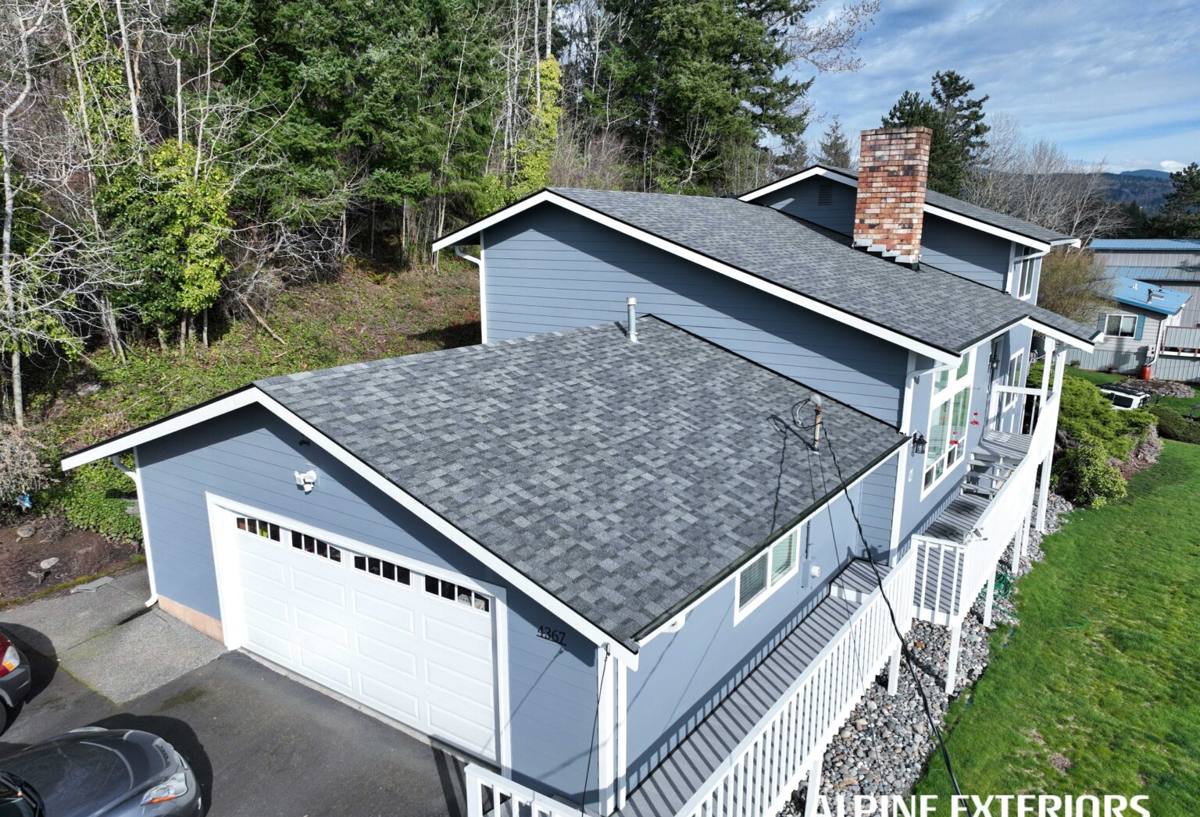
A roof replacement is only as good as the layers homeowners never see once the job is done. Tear-off should go down to bare decking so the crew can actually inspect the sheathing underneath, not stop at the old layer and roof over it. Any soft, rotted, or delaminated decking gets identified and replaced before anything new goes down — skipping this step is one of the most common corners cut on a rushed job, and it's invisible until the new roof starts sagging or leaking from underneath. From there, correct installation means:
- Full underlayment coverage suited to wind-driven rain exposure, not just the minimum code requirement
- Ice-and-water shield or self-adhered membrane at eaves, valleys, and other vulnerable transitions
- New flashing at every penetration, chimney, skylight, and wall transition — reused old flashing is a common shortcut and a common leak source
- Corrosion-resistant fasteners and hardware rated for coastal or marine exposure
- Proper attic and roof deck ventilation so moisture can escape rather than condensing against the sheathing
- Manufacturer-specified nailing patterns and exposure, not field shortcuts to speed up the job
Choosing a Roofing Material for This Climate
There's no single "correct" material for every Cherry Point roof — the right choice depends on budget, roof complexity, and how much long-term maintenance a homeowner wants to take on. What matters is understanding the real trade-offs before deciding.
| Material | Moisture & Moss Behavior | Maintenance in Salt Air | Typical Service Life Here |
|---|---|---|---|
| Architectural asphalt shingle | Absorbs and sheds moisture reasonably well; moss-resistant granules available | Low; corrosion-rated fasteners recommended | 20-30 years with correct install and upkeep |
| Standing seam metal | Sheds water and moss buildup aggressively; minimal absorption | Low, but panel and fastener grade matter near open water | 40-plus years with correct install |
| Composite / synthetic shingle | Dimensionally stable; resists moisture absorption | Low to moderate depending on product | Varies widely by manufacturer |
| Cedar shake | Absorbs moisture readily; prone to moss and rot without upkeep | High; regular treatment needed in this climate | Shorter without consistent maintenance |
Architectural asphalt shingle remains the most common choice for Cherry Point homes because it balances upfront cost with solid performance when installed correctly. Standing seam metal costs more but sheds moss and water more aggressively and needs less ongoing attention, which some homeowners value enough to justify the difference. We'll walk through the honest cost and maintenance trade-offs for your specific roof rather than steering everyone toward the same answer.
Our Roof Replacement Process
- On-site inspection and estimate: We look at the existing roof, attic, and ventilation in person and give a straightforward written estimate — no pressure, no inflated first number to negotiate down from.
- Material selection: We go over the material options that make sense for your roof's slope, exposure, and budget, including the honest trade-offs between them.
- Permitting: Full roof replacements typically require a permit; we handle that process so it isn't left to the homeowner.
- Tear-off and deck inspection: Old material comes off down to the deck, and any damaged sheathing gets identified and replaced before we move forward.
- Underlayment, flashing, and installation: New underlayment, flashing, and roofing material go down to manufacturer specification, not a shortcut version of it.
- Cleanup and walk-through: The site gets cleared of debris and nails, and we walk the finished roof with you before calling the job done.
What Drives the Cost of a Cherry Point Roof Replacement
| Factor | How It Affects the Job |
|---|---|
| Roof size and complexity | More valleys, dormers, and penetrations mean more flashing detail and labor time |
| Pitch and access | Steep or hard-to-access roofs take longer and require more safety setup |
| Material choice | Metal and premium composites cost more up front but often need less maintenance in this climate |
| Deck condition | Rot or soft sheathing found during tear-off adds repair cost not visible before the old roof comes off |
| Underlayment upgrade | Full self-adhered membrane coverage costs more than minimum-code underlayment but reduces wind-driven rain risk |
| Ventilation work | Adding or correcting attic ventilation during the job adds cost but protects the new roof's lifespan |
Broad ranges get thrown around online for roof replacement, but the honest answer is that cost depends heavily on the factors above. We give real numbers after seeing the actual roof, not before.
Why Hire a Crew That Already Works Cherry Point
A roofer who mostly works inland Whatcom County jobs isn't wrong about roofing in general — they're working from a different set of defaults. Fastener specs, flashing choices, and underlayment coverage that hold up fine on a typical inland roof are often undersized for what an open shoreline location throws at a roof year-round. A crew that already works Cherry Point and the surrounding coastline has seen which details actually fail out here in real jobs, not just in a manufacturer's installation manual written for average conditions. That experience shows up in small decisions — which fastener grade to specify, how much underlayment coverage to add at exposed slopes, where extra flashing detail earns its keep — and those decisions are what separate a roof that lasts one hard winter from one that lasts decades.
Maintaining a New Roof in This Climate
Even a correctly installed roof benefits from basic upkeep given what this location deals with:
- Keep gutters and downspouts clear so water isn't backing up under roof edges during heavy rain
- Address moss growth as soon as it appears rather than after it's spread across a full slope
- Trim back tree cover that keeps a section of roof shaded and slow to dry out
- Have flashing points inspected periodically, especially after a hard windstorm off the water
- Treat small leak signs as urgent rather than waiting for the next dry stretch to deal with them
If your roof is showing its age or you're just starting to plan ahead, we're happy to take a look and talk through honest options for your Cherry Point home. Reach out for a free, no-pressure estimate using the form below.