 Blaine Siding
 Roofing in Cherry Point Takes a Different Kind of Beating
Cherry Point sits out along the Strait of Georgia north of Blaine, and that shoreline exposure changes what a roof has to survive. Homes here don't just deal with rain — they deal with salt-laden air moving off the water, wind-driven storms with little to break them up before they hit the house, and a shady, damp climate that keeps roofs wet for months at a stretch. None of that is unique to any one house on Cherry Point; it's the baseline for every roof out here, and it shortens the life of materials and fasteners that would hold up fine twenty or thirty miles inland.
A roof repair that ignores this context tends to fail again within a year or two. A repair that accounts for it — using the right fastener metal, the right flashing detail, the right approach to moss — actually holds. That's the difference we aim for on every Cherry Point job.
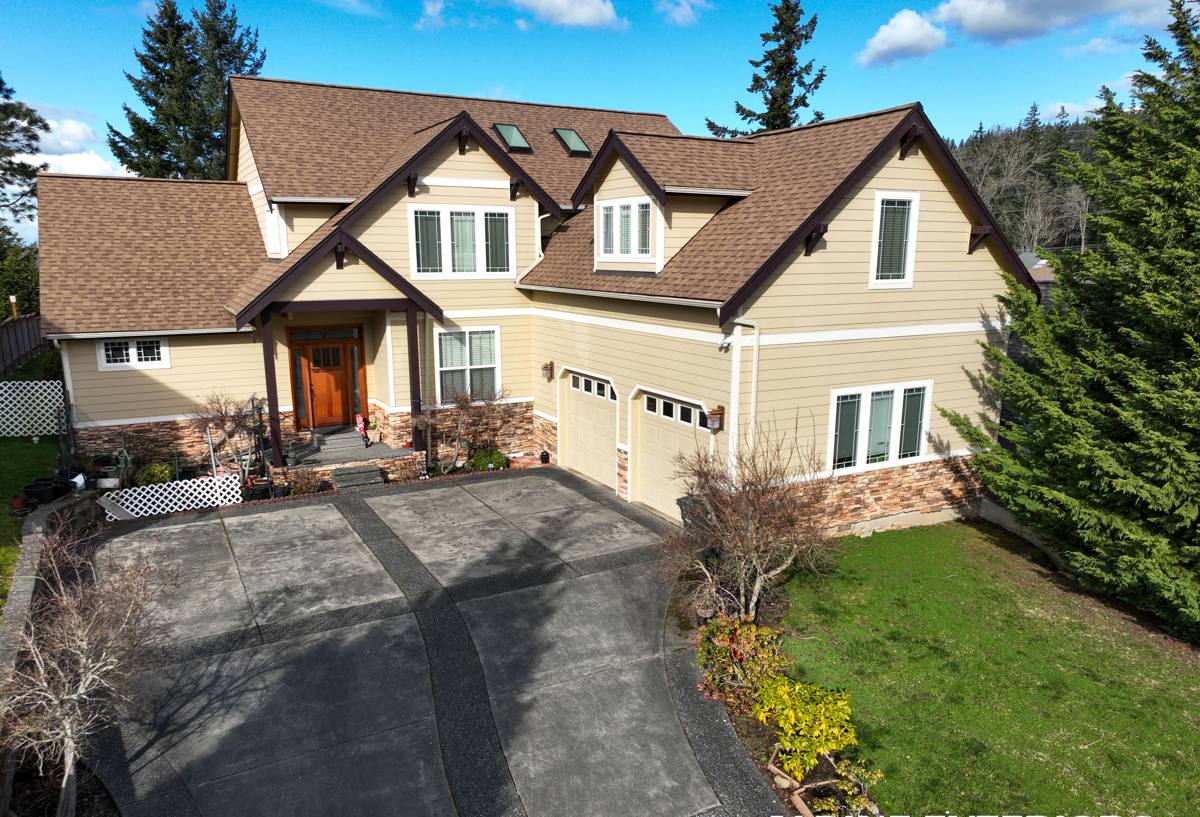
What Salt Air, Driving Rain, and Moss Actually Do to a Roof
Salt Air and Corrosion
Airborne salt accelerates corrosion on anything metal — nail heads, flashing, roof jacks, gutter fasteners, and the metal components inside vents and boots. Galvanized steel that would last decades in a dry inland climate can start rusting through in a fraction of that time this close to the water. Once a fastener or flashing piece corrodes, it stops sealing properly, and that's how small leaks start.
Driving Rain
Whatcom County storms often come in sideways off the water rather than falling straight down. Wind-driven rain gets pushed up under shingle laps, through poorly lapped flashing, and into any gap that a calmer rain would never find. Roofs that look fine in dry weather can still be leaking during a windstorm because the water is entering horizontally, not vertically.
A Long Moss Season
Cool temperatures, shade from mature trees, and near-constant moisture give moss a long growing window in this part of Whatcom County — often most of the year. Moss holds water against the roof surface, works its way under shingle edges as it grows, and lifts shingles as its root mass thickens. A roof that's carrying heavy moss is almost always retaining more moisture than it should, which speeds up granule loss and decking rot underneath.
Common Roof Problems We Find on Cherry Point Homes
Moss and Algae Buildup
This is the single most common issue we see. Moss on the north-facing or shaded slopes of a roof, algae streaking on more exposed areas, and shingles that have started to cup or lift where moss has taken hold.
Corroded or Failing Flashing
Flashing around chimneys, skylights, vent pipes, and roof-to-wall transitions is where most leaks actually originate — not out in the open field of the roof. Salt air speeds up the failure of lower-grade or aging flashing metal.
Wind-Driven Leaks at Eaves and Valleys
Valleys and eaves take the brunt of wind-driven rain because water concentrates there. Underlayment that's degraded, ice-and-water shield that was never installed, or shingles that have lost adhesive bond in those areas are frequent culprits.
Fastener Failure
Nails and screws that have rusted lose their grip. This shows up as shingles that lift in wind, ridge caps that have started to separate, or metal panels that have worked loose at their fastening points.
What a Correct Roof Repair Actually Involves
A roof repair done right is not just sealing the spot where water is showing up inside the house. Water travels — it can enter the roof several feet away from where a homeowner sees a stain on the ceiling. A correct repair means:
- Tracing the leak to its actual entry point, not just its visible symptom
- Checking the decking underneath for soft spots or rot before covering anything back up
- Matching replacement shingles or panels as closely as possible in material, color, and profile
- Replacing flashing with metal suited to a marine climate rather than reusing corroded pieces
- Confirming the underlayment and any ice-and-water membrane in vulnerable areas is intact
- Checking that the repair doesn't leave a mismatched or vulnerable seam that fails again in the next storm
Skipping any of these steps is how a "repair" turns into a callback six months later.
Our Roof Repair Process
- Inspection. We get on the roof (or use a ladder and binoculars if conditions don't allow safe roof access) and look at the whole roof, not just the reported problem area — moss coverage, flashing condition, fastener condition, and the state of the decking where we can assess it.
- Diagnosis. We identify the actual cause of the leak or damage and explain it in plain terms, including anything we find that isn't the original complaint but should be addressed.
- Written scope and estimate. You get a clear description of what we'll do, what materials we'll use, and what it costs before any work starts.
- Repair. We do the work with materials matched to your existing roof and appropriate for a shoreline climate — not whatever happens to be cheapest or on hand.
- Cleanup and moss guidance. We clear debris, remove moss from the repaired area and surrounding sections as needed, and tell you honestly whether ongoing moss treatment makes sense for your roof.
- Follow-up. If anything about the repair doesn't hold up as expected, we come back and make it right.
Repair or Replace? How We Help You Decide
Not every roof problem calls for a full replacement, and not every roof problem should be patched indefinitely either. We look at age, extent of damage, and how many separate issues are stacking up.
| Factor | Repair Usually Makes Sense | Replacement Usually Makes Sense |
|---|---|---|
| Roof age | Under 15-20 years, or roof still has significant remaining service life | Nearing or past the material's expected lifespan |
| Extent of damage | Isolated to one section, one flashing detail, or one storm event | Multiple leak points, widespread moss damage, or repeated failures in different spots |
| Decking condition | Decking is sound where inspected | Soft spots, rot, or repeated water staining in the same areas over time |
| Shingle/material condition | Granule loss and wear limited to the damaged area | Widespread granule loss, brittleness, or curling across most slopes |
| Cost over time | Repair cost is proportionate to remaining roof life | Repeated repair costs are approaching what a new roof would cost |
We'll give you an honest read on which category your roof falls into rather than defaulting to whichever option costs more.
Materials We Use for Repairs
Matching materials matters more on Cherry Point than in a drier, calmer climate, because a mismatched repair is a weak point that salt air and wind will find first.
Composition (Asphalt) Shingles
The most common roofing material in the area and usually repairable if the damage is localized. We source shingles that match the existing color and profile as closely as the manufacturer's current lineup allows, since older shingle lines are sometimes discontinued.
Metal Roofing
Metal roofs hold up well against moss and driving rain when properly installed, but repairs require attention to fastener type and sealant compatibility — mixing incompatible metals accelerates corrosion, which is exactly the failure mode salt air already encourages.
Flashing Metal
We favor flashing metals with better corrosion resistance for shoreline exposure over bare galvanized steel wherever the existing roof system allows for it. This is a durability decision, not an upsell — it's about not having to redo the same flashing repair again in a few years.
Moss and Algae: Prevention After the Repair
A repair without a moss plan on a Cherry Point roof is a temporary fix. After addressing the immediate damage, we talk homeowners through realistic options:
- Manual moss removal on a regular schedule, done gently to avoid damaging granules
- Zinc or copper strips installed near the ridge, which release trace metals that inhibit moss regrowth over time
- Trimming back overhanging branches that keep sections of the roof shaded and damp
- Avoiding pressure washing, which strips granules and shortens shingle life even though it looks effective short-term
None of these eliminate moss permanently in this climate, but together they slow it down significantly and reduce how often repairs are needed.
Why Hire a Crew That Already Works Cherry Point
A roofer who mostly works drier, inland areas doesn't always think about salt exposure, wind direction off the water, or how long moss actually sits on a roof out here before anyone notices it. Working this area regularly means we already know:
- Which fastener and flashing choices actually hold up against marine air, instead of learning it from a callback
- How Whatcom County's permitting and inspection requirements apply to roof repair work
- What wind exposure does to valleys, ridges, and eaves on shoreline-adjacent properties
- How to schedule around this area's weather windows so repairs aren't rushed into a storm
That local pattern recognition is the difference between a repair that's built for this climate and one that's just built.
Signs You Should Have Your Roof Looked At
- Visible moss on any part of the roof, especially shaded north-facing slopes
- Shingles that look lifted, cupped, or curled at the edges
- Water stains on ceilings or in the attic, particularly after a windy storm
- Granules collecting in gutters or at downspout outlets
- Visible rust or corrosion on flashing, vents, or exposed fasteners
- Daylight visible through the roof deck from inside the attic
- Sagging sections anywhere on the roofline
If you're seeing any of these, it's worth having someone look before the next storm rather than after.
If your Cherry Point roof has moss buildup, a persistent leak, or storm damage you'd like a second opinion on, we're glad to take a look. Fill out the form below for a free, no-pressure estimate.