 Blaine Siding
 Cherry Point's Marine Climate Is Rough on Asphalt Shingles
Cherry Point sits right up against the water on the Whatcom County coastline, and that location shapes everything about how a roof ages here. Salt-laden air moves inland with the marine wind, and over years it works on exposed metal — nail heads, flashing edges, vent housings — faster than it would a few miles inland. Add in driving rain that comes sideways off the water during winter storms, and you've got water pressure-tested against every lap, seam, and penetration on the roof, not just sitting and draining like it would in a calmer climate. Then there's moss. Whatcom County's damp, mild winters and shaded tree cover give moss a season that runs most of the year on north-facing slopes and anywhere shade lingers.
None of this means asphalt shingles are the wrong choice for Cherry Point — they're still the most practical, cost-effective roofing material for the vast majority of homes out here. It means the installation details that get glossed over in a dry, inland climate can't be skipped here. A roof that would be "basically fine" in a milder climate can leak within a few years on this coastline if it was built to the same low standard.
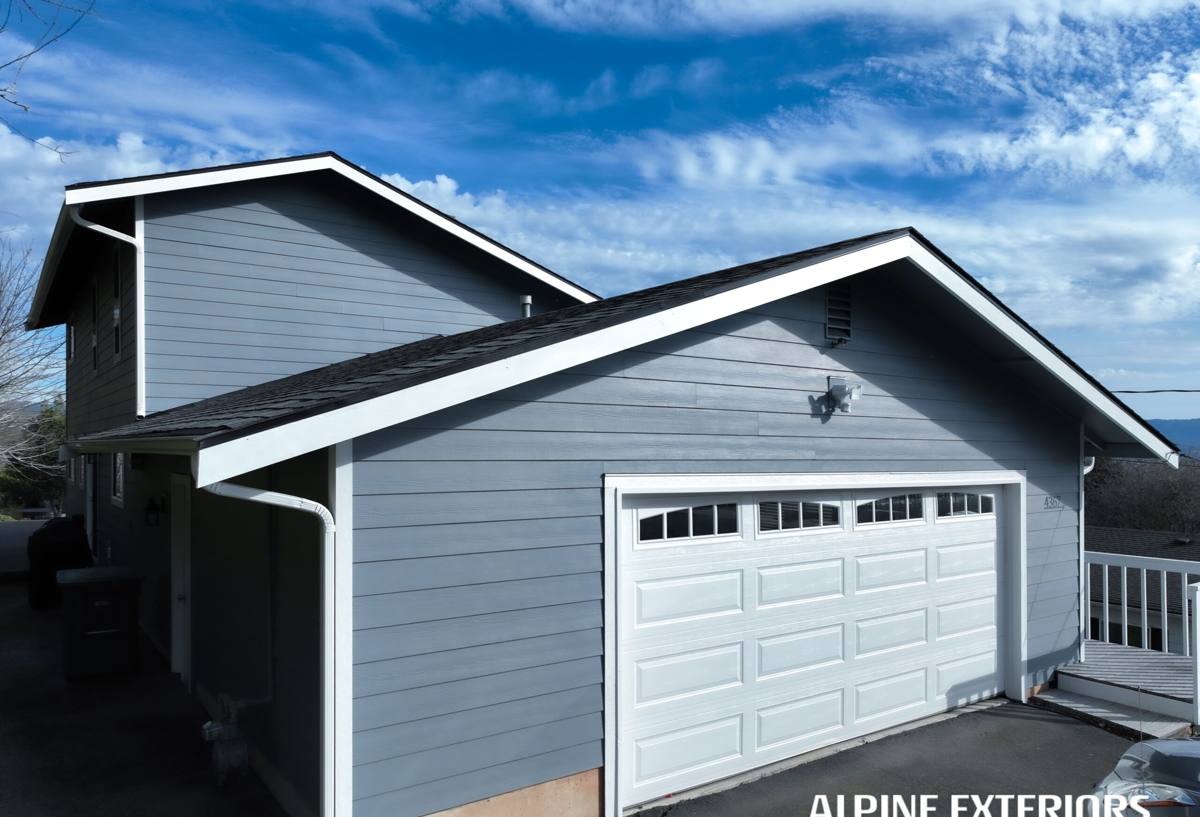
What a Correct Installation Looks Like Out Here
Fasteners and Flashing in Salt Air
Galvanized isn't automatically enough this close to the water. We pay attention to the corrosion resistance of every fastener and flashing component that goes on a Cherry Point roof, not just the shingles themselves. A roof can have premium shingles and still fail early if the flashing around a chimney or the nails holding down the ridge cap start rusting and losing their grip. Valley metal, step flashing at walls, and pipe boots all take direct salt exposure and driving rain, so we treat those details as load-bearing parts of the system, not afterthoughts.
Ventilation and Moisture Control
A shingle roof is only half the moisture story — the other half happens in the attic. Balanced intake and exhaust ventilation keeps moist air moving out instead of condensing on the underside of the deck, which matters even more in a climate this humid. We check that baffles at the eaves aren't blocked with insulation, that exhaust venting is sized to match intake, and that nothing in the attic is trapping warm, damp air against the roof deck. Skipping this step is one of the most common reasons a shingle roof develops deck rot from the inside while looking fine from the ground.
Underlayment and Ice-and-Water Protection
Given how much wind-driven rain this area sees, we don't treat underlayment as a formality. Self-adhering ice-and-water membrane goes at eaves, valleys, and around penetrations — the spots where wind can force water backward under the shingle laps — with synthetic underlayment across the rest of the deck as a second line of defense if any water gets past the shingles themselves.
Choosing a Shingle That Can Actually Handle the Coast
Not every asphalt shingle product performs the same, and the differences matter more here than in a mild inland climate. We look at wind rating, algae resistance, and overall mat quality before we recommend anything for a Cherry Point roof.
| Shingle Type | Typical Lifespan | Wind Resistance | Algae/Moss Resistance | Best Fit |
|---|---|---|---|---|
| Standard 3-tab | Shorter end of the range | Lower wind ratings | Depends on granule treatment | Budget-conscious projects, less exposed roofs |
| Architectural (laminated) | Longer than 3-tab | Higher wind ratings, better here | Usually available with algae-resistant granules | Most Cherry Point homes, especially exposed sites |
| Premium/impact-rated | Longest of the three | Highest wind ratings | Algae-resistant granules standard | Waterfront or highly exposed properties |
Algae-Resistant Granules Matter More on This Coastline
Most major manufacturers now offer shingles with copper- or zinc-infused granules designed to slow the growth of algae and moss over time. In a climate as damp as this one, we consider that upgrade worth the modest cost difference on almost every job — it doesn't make a roof moss-proof, but it buys real time between cleanings and slows the black streaking that plain granules develop within a few seasons near the water.
Moss: Managing a Season That Doesn't Really End
Moss doesn't just grow on old or neglected roofs — it grows wherever shade, moisture, and organic debris sit together long enough, which describes a lot of Cherry Point rooflines for much of the year. North-facing slopes, valleys, and anything under overhanging trees are the areas we watch closest. Left alone, moss lifts shingle edges as it grows, holds moisture against the mat, and accelerates granule loss.
The right approach is prevention plus gentle maintenance, not aggressive cleaning after the fact. Zinc or copper strips installed near the ridge let rainwater carry trace metal down the roof slope and discourage regrowth over time. When moss is already established, we recommend a soft wash approach rather than pressure washing — a pressure washer strips granules and shortens the life of the exact shingles you're trying to protect. Keeping gutters and valleys clear of needles and leaves also removes the organic material moss needs to take hold in the first place.
Repair, Partial Re-Roof, or Full Replacement?
Not every roof problem calls for a full tear-off. If damage is isolated — a section of missing shingles from a windstorm, a failed flashing detail, or a small area of moss damage — a targeted repair or partial re-roof can be the right call, especially if the rest of the roof is holding up well and matching shingles are still available. Full replacement makes more sense when a roof is nearing the end of its expected service life, when damage is spread across multiple slopes, or when the deck itself has issues that go beyond a patch. We'll tell you honestly which category your roof falls into rather than pushing a bigger job than it needs — a repair that solves the actual problem is a better outcome for you than an unnecessary replacement, and a patch on a roof that's clearly at the end of its life just delays a bigger bill down the road.
Our Installation Process
- Inspection and tear-off. We assess the existing roof, remove old material down to the deck, and check for any hidden damage the old shingles were hiding.
- Deck repair. Any soft, rotted, or delaminated sheathing gets replaced before anything new goes down — a new roof installed over a compromised deck fails early no matter how good the shingles are.
- Ice-and-water shield and underlayment. Applied at eaves, valleys, and penetrations first, then synthetic underlayment across the field.
- Flashing. New step flashing, valley metal, and pipe boots sized and installed for this climate's wind and rain exposure.
- Shingle installation. Starter strip, field shingles, and ridge cap installed to the manufacturer's nailing pattern and exposure spec — not shortcuts.
- Ventilation check. Intake and exhaust venting confirmed balanced and unobstructed.
- Cleanup and final walkthrough. Site cleared of debris and nails, and we walk the finished roof with you before we call the job done.
Signs Your Cherry Point Roof May Need Attention
- Granules collecting in gutters or at downspout outlets
- Moss or dark streaking on north-facing slopes or valleys
- Shingles that look curled, cupped, or lifted at the edges
- Rust staining around flashing, vents, or nail heads
- Daylight visible through the roof deck from inside the attic
- Soft spots or sagging felt underfoot when walking the roof
- Water stains on interior ceilings, especially after a windy rainstorm
Any one of these on its own isn't necessarily an emergency, but they're worth a professional look before the next storm season rather than after damage shows up inside the house.
What Drives the Cost of a Shingle Roof Here
Every roof is priced on its own specifics, but the factors that move the number around are consistent. We walk through these with every homeowner before quoting anything.
| Factor | Why It Affects Cost |
|---|---|
| Roof size and number of squares | More surface area means more material and labor |
| Pitch and accessibility | Steeper or harder-to-access roofs take longer and need more safety setup |
| Number of layers to tear off | Removing multiple old layers adds labor and disposal cost |
| Deck condition | Rotted or damaged sheathing needs replacement before shingles go on |
| Shingle tier chosen | Standard, architectural, and premium products carry different material costs |
| Flashing and ventilation scope | Full flashing replacement and ventilation upgrades add scope but reduce future risk |
| Complexity of the roofline | Valleys, dormers, and chimneys all add labor and material detail |
We give straightforward, itemized quotes so you can see what you're paying for — no vague lump-sum numbers, and no pressure to upsell beyond what your roof actually needs.
Why It Matters That We Already Work in Cherry Point
A roofing crew that mostly works dry, inland climates doesn't have daily experience with what salt air and driving rain actually do to fasteners and flashing over a five- or ten-year span. Working this coastline regularly means we've seen which details hold up and which ones fail first — where moss tends to establish on local rooflines, which flashing details leak under wind-driven rain, and how Whatcom County's permitting and inspection process works so a job doesn't stall on paperwork. We also know which flashing metals and fastener coatings tend to hold up over time in this specific environment, which isn't always obvious from a manufacturer's spec sheet written for a national market. That local track record is also why we can speak plainly about trade-offs instead of overselling a product: we're not guessing at what this climate does to a roof, we're watching it happen on houses near yours every season.
If you're weighing a repair, a full replacement, or just want an honest read on how much life is left in your current roof, we're happy to take a look. Request a free, no-pressure estimate using the form below and we'll walk the roof with you and lay out your real options.