 Blaine Siding
 Why Window Replacement Works Differently in California Creek
California Creek sits close to the water on the Whatcom County side of Blaine, and homes in this pocket take a different kind of weather beating than houses a few miles inland. Salt-laden air off the water works on fasteners, hinges, and any exposed metal hardware year-round, not just in storm season. Driving rain, pushed sideways by wind off the water, tests every seam around a window opening — not just the glass itself but the flashing, sealant, and trim behind it. And the long moss season here, which really runs from fall through spring, keeps siding, trim, and window sills damp for months at a stretch. That's exactly the condition wood rot and hidden water intrusion need to get started.
Window replacement in California Creek isn't just about swapping tired glass for something more efficient. It's about closing the specific gaps that let salt, wind-driven rain, and standing moisture into the wall assembly behind the window — gaps that a crew unfamiliar with this stretch of coastline might not think to check.
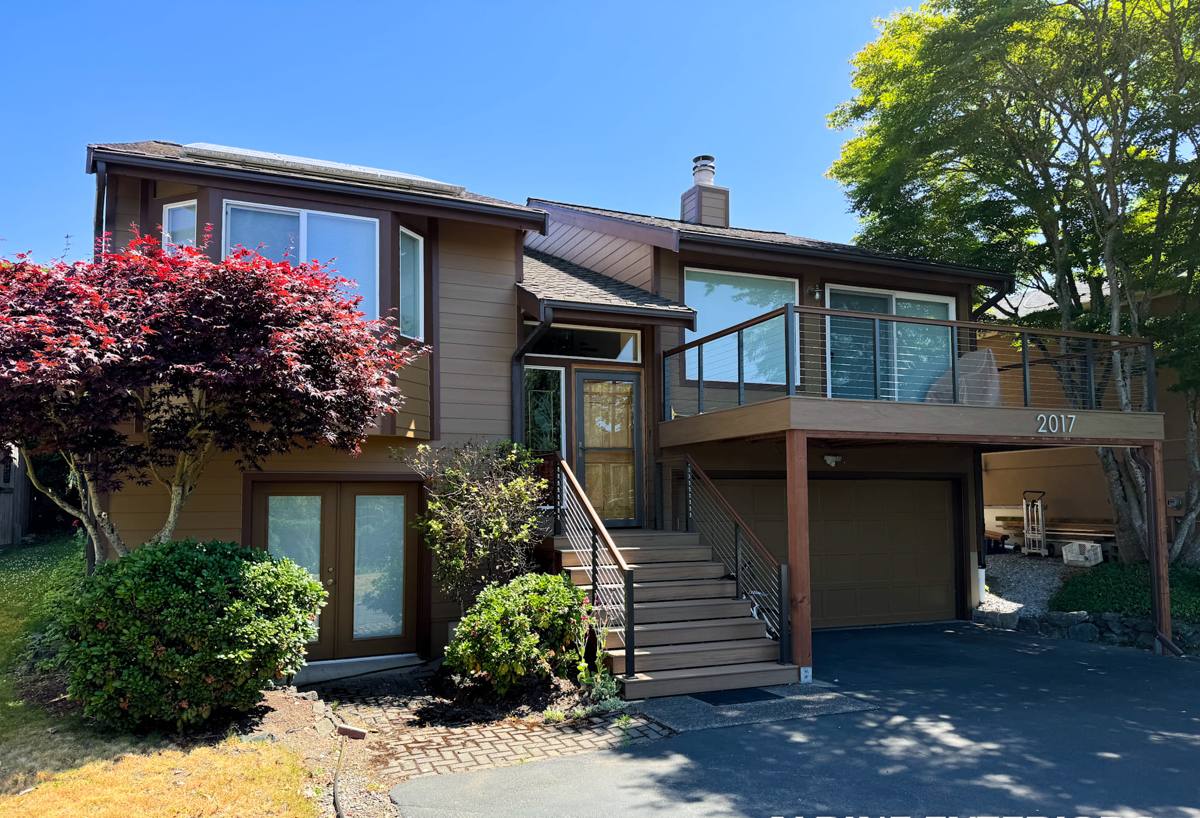
Signs Your Windows Have Stopped Doing Their Job
Moisture and Fogging
Fog or condensation trapped between panes means the seal on a double-pane unit has failed and the insulating gas has escaped. Once that happens, no amount of cleaning fixes it — the glass unit needs replacing. Persistent condensation on the inside of the glass, especially in cooler months, can also point to a window that's no longer holding an even interior temperature.
Operational Problems
Windows that stick, won't stay open, or need to be forced shut are often telling you the frame has swollen from moisture, warped, or shifted slightly out of square. In a climate this damp, that's rarely a hardware problem alone — it's usually water finding its way into the frame material itself.
Frame and Sill Damage
Soft, spongy, or discolored wood at the sill or lower frame corners is one of the clearest signs of long-term water intrusion. By the time it's visible on the interior trim, there's a good chance the sheathing behind it has been wet for a while. Bubbling paint, dark staining, or a persistent musty smell near a window are worth taking seriously rather than just repainting over.
What a Correct Window Replacement Job Actually Involves
A window replacement is only as good as what happens before the new unit ever goes in the opening. In a salt-air, high-rain environment like this, skipping steps shows up as a callback within a year or two — not a decade down the road.
- Removing the old window down to the rough opening and inspecting the framing and sheathing underneath for rot or soft spots before anything new goes in
- Repairing or replacing any damaged sheathing rather than covering it up
- Installing a sloped sill pan so any water that does get past the window has somewhere to go besides your wall cavity
- Integrating new flashing correctly with the existing weather-resistant barrier, shingle-style, so water sheds outward at every layer
- Setting the window level, plumb, and square, then shimming properly instead of relying on fasteners to hold it in position
- Insulating the gap around the frame without overpacking it, which can bow the frame and cause operational issues later
- Sealing the exterior with backer rod and a quality sealant rated for the joint size, plus finishing interior and exterior trim cleanly
Every one of those steps matters everywhere, but in a location where wind-driven rain hits the building envelope directly and salt air accelerates corrosion, the margin for a shortcut is smaller. A window that's slightly out of square or sealed with the wrong product might hold up fine in a drier climate for years. Here, it tends to show problems much sooner.
Choosing the Right Window for a Salt-Air, High-Moisture Climate
Material choice matters more here than it does further from the water. Some options handle salt air and constant damp better than others, and some require more upkeep to stay looking and performing right.
| Frame Material | Salt Air / Moisture Resistance | Maintenance Needs | Best Fit |
|---|---|---|---|
| Vinyl | Good — won't rot or corrode | Low; occasional cleaning | Most homes prioritizing value and low upkeep |
| Fiberglass | Very good — dimensionally stable, resists warping | Low | Homes wanting durability with a paintable finish |
| Wood / Wood-Clad | Fair — needs consistent upkeep to stay ahead of moisture | High; regular sealing/painting | Homeowners committed to maintenance for a specific look |
| Aluminum | Fair — prone to corrosion and condensation near salt air unless well-finished | Moderate | Specific architectural or budget situations |
Our general standard for this area is to steer most homeowners toward vinyl or fiberglass unless there's a strong architectural reason to consider something else. That's not a knock on wood or aluminum windows as products — it's a maintenance and moisture-behavior trade-off. Wood-clad windows can look great, but in a climate with this much sustained dampness, keeping the exterior finish intact becomes a recurring job rather than a one-time decision. We'd rather be upfront about that before you buy than let you find out the hard way.
Hardware and Fasteners
Ask what fastener and hardware finishes are being used, especially on any exterior-exposed hinges, locks, or cranks. Standard hardware that isn't rated for coastal or high-moisture exposure can start showing corrosion within a couple of seasons this close to the water.
Glass and Performance Choices That Matter Here
Beyond the frame, the glass package affects both comfort and how well the window resists the local climate long-term.
- Double-pane vs. triple-pane: Double-pane with a good Low-E coating is adequate for most homes in this area; triple-pane adds meaningful insulation value for rooms that are harder to heat or face prevailing wind and rain directly.
- Low-E coatings: Help control heat loss in winter and reduce fading from UV exposure, which matters even under the Pacific Northwest's frequent cloud cover.
- Gas fills (argon or similar): Improve insulating performance between panes; ask about the manufacturer's seal warranty since a failed seal releases the gas and causes the fogging problem described above.
- Condensation resistance: Worth asking about specifically — homes with higher indoor humidity, common with a lot of rainy-season indoor living, benefit from windows rated to resist interior condensation.
Our Window Replacement Process
- Free on-site assessment: We look at each window opening individually — not every window on a California Creek home is in the same condition, especially ones facing the prevailing wind and rain versus more sheltered sides of the house.
- Honest scope and options: We'll tell you plainly which windows need full-frame replacement, which can use an insert unit, and where we're seeing early signs of moisture damage that should be addressed while the opening is already exposed.
- Scheduling around the weather: Window replacement requires a dry work window. We plan installs with this area's rain patterns in mind rather than gambling on an open wall cavity during a storm.
- Installation: Full removal, framing inspection and repair as needed, proper flashing and sealing, careful setting and insulating, and clean trim work inside and out.
- Final walkthrough: We test operation, check the seal and finish work with you, and make sure everything closes, locks, and looks right before we consider the job done.
Why Hiring a Crew That Already Works California Creek Matters
A lot of window problems in this area trace back to work that was done correctly for a drier climate but not for this one. A crew that regularly works in Blaine and the surrounding Whatcom County waterfront areas already knows which sides of a house take the worst of the wind-driven rain, how quickly moss and moisture build up on north- and west-facing trim, and what the local building department expects for permitting on window replacement projects. That familiarity shows up in small decisions — sealant selection, flashing detail, scheduling around weather — that add up to a job that actually holds up here, rather than one that would have been fine somewhere with a milder or drier climate.
It also means straight answers. If a window on your home is genuinely fine and doesn't need replacing yet, we'll tell you that. If the frame behind an old window has taken on water damage that a simple insert replacement won't fix, we'll tell you that too, before you spend money on a fix that won't hold.
Maintenance Checklist to Protect Your Investment
New windows are a real investment, and a little seasonal attention goes a long way toward protecting it in this climate.
- Rinse salt film and grime off exterior frames and glass a few times a year, more often if the home faces the water directly
- Check and clear weep holes along the bottom of the frame so water has a path to drain out instead of pooling
- Inspect exterior caulking and sealant annually for cracking or gaps, especially after a hard winter
- Clear moss, leaves, and debris from sills, tracks, and nearby gutters before the wet season sets in
- Operate each window a few times through the year so hardware doesn't seize up from disuse and damp
- Watch for soft spots or discoloration on interior sills or trim, and address them early rather than waiting
Getting Started
If your windows are fogging, sticking, showing soft spots, or just costing you more in heating than they should, it's worth having them looked at before another wet season sets in. We'll give you a straight read on what's actually going on and what it would take to fix it right for a home in this part of Blaine. Reach out for a free, no-pressure estimate using the form below.