 Blaine Siding
 Roof Repair Built for California Creek's Weather, Not a Generic Climate
Homes along California Creek, just outside Blaine, sit in one of the harder places in Whatcom County to keep a roof healthy. You've got salt-laden air coming off the water, wind that drives rain sideways instead of straight down, and a wet season that stretches long enough to give moss a real foothold before summer ever dries things out. None of that is unique to any one house on the creek — it's the shared condition every roof out here is fighting, year after year.
A roof repair that ignores those conditions tends to fail again within a season or two. One that accounts for them — the right fasteners, the right underlayment choices, flashing detailed for wind-driven rain rather than just gravity — holds up. That's the difference we aim for on every California Creek call.
Salt Air and Corrosion
Being close to the water means airborne salt settles on roofing metal, fasteners, and flashing over time. Standard steel fasteners and unprotected flashing corrode faster here than they would ten or fifteen miles inland. We factor that into what we use for repairs on homes in this area, favoring corrosion-resistant fasteners and flashing metals over whatever happens to be cheapest at the supply house that week.
Driving Rain and Wind Exposure
Whatcom County storms off the water don't always drop rain straight down — wind pushes it up under shingle edges, into vents, and along flashing seams that would stay dry in a calmer climate. Repairs that only address the visible leak point and skip the surrounding laps and seals often leak again in the next windstorm from a slightly different angle.
A Long Moss Season
The combination of shade, moisture, and mild temperatures gives moss and algae a long growing window here — often most of the year on north-facing slopes and shaded sections near trees. Moss isn't just cosmetic; it holds moisture against the roofing material and works its way under shingle tabs, which is one of the most common repair calls we get in this specific area.
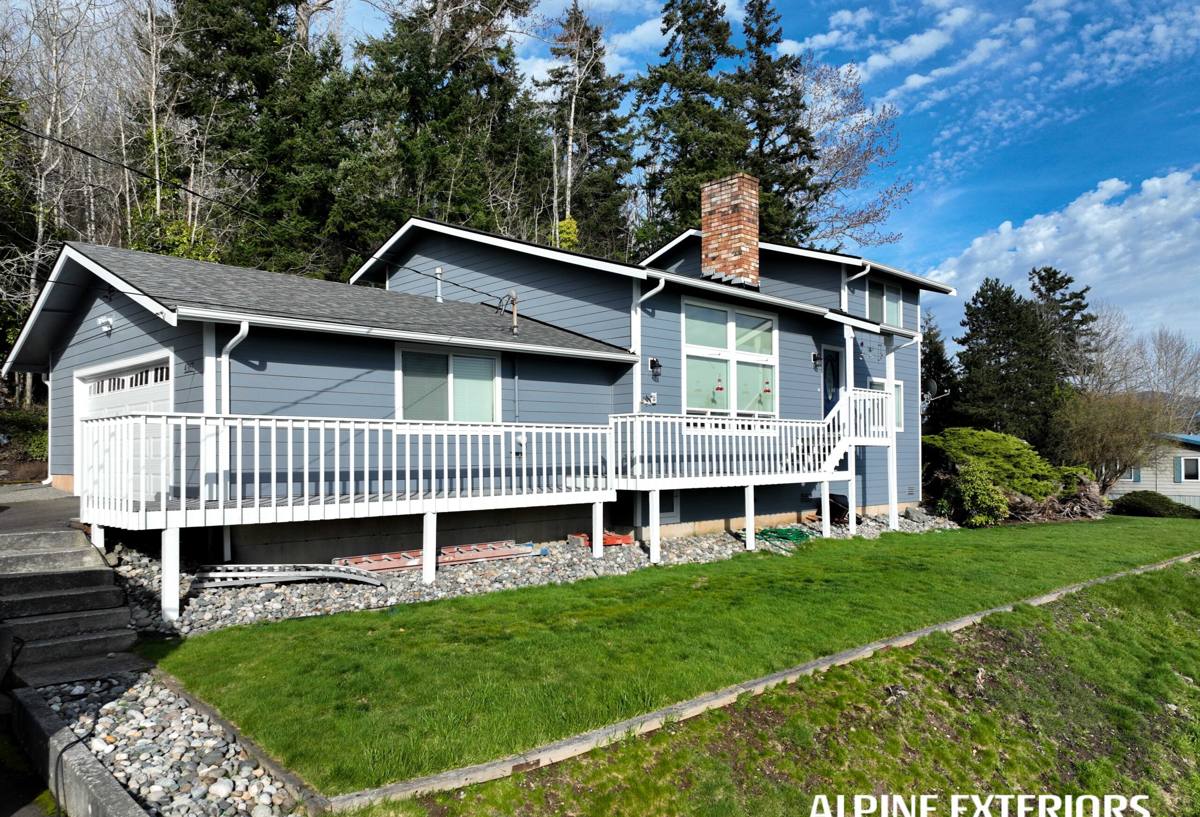
Signs a California Creek Roof Needs Repair — Not Full Replacement
Most roofs don't fail all at once. They develop specific, fixable problem areas first. Catching them early is usually what keeps a roof in the "repair" category instead of tipping it into "replace."
- Isolated leaks or water stains on an interior ceiling, especially near a chimney, skylight, or where two roof planes meet
- Missing, cracked, or curling shingles in one section rather than across the whole roof
- Thick moss growth along ridges or in shaded valleys, particularly where it's lifted shingle edges
- Rusted, lifted, or gapped flashing around vents, chimneys, or wall intersections
- Granules collecting in gutters, a sign of localized shingle wear rather than roof-wide failure
- Soft spots or sagging in a small area of the roof deck, often from a slow leak that's gone unnoticed
- Daylight visible through the roof deck from inside the attic at specific points
If what you're seeing matches one or two items on that list rather than most of it, a targeted repair is usually the honest recommendation — and the more cost-effective one.
What a Correct Repair Actually Involves
Diagnosing the Real Problem First
Water rarely shows up on the ceiling directly below where it entered the roof — it travels along the underlayment or framing before dripping down. A repair that just patches the spot over the stain, without tracing the water's actual path, often leaves the real entry point untouched. Every repair we do starts with tracing the leak to its source, not just its symptom.
Flashing Comes Before Shingles
Most roof leaks in this area trace back to flashing, not the shingle field itself — the metal or membrane detailing around chimneys, skylights, vent pipes, and where a roof meets a wall or a lower roofline. Given the wind-driven rain common here, flashing has to be lapped and sealed correctly, not just present. A shingle-only repair over failing flashing is a short-term fix at best.
Matching Materials, Not Just Covering the Gap
Shingle color and profile change over the years, and a visibly mismatched patch isn't just a cosmetic issue — it's often a sign the repair used whatever was on hand rather than a proper match. We aim for as close a match as the existing roof allows, and we're upfront when an exact match isn't realistic due to product age or discontinued lines.
Ventilation and Moisture Control
A repair that ignores attic ventilation can fail even with perfect workmanship, because trapped moisture from poor airflow causes many of the same symptoms as a leak — rot, staining, and premature shingle wear. Where ventilation is clearly part of the problem, we'll say so rather than repairing the surface symptom and leaving the underlying cause in place.
Repair or Replace? What Actually Drives That Decision
Homeowners near California Creek often ask us to just "fix the leak" without knowing whether a repair is the right long-term call. Here's how we think through it:
| Factor | Favors Repair | Favors Full Replacement |
|---|---|---|
| Extent of damage | Limited to one section or a few isolated spots | Widespread wear, multiple leak points, or granule loss across the whole roof |
| Roof age | Well within its expected service life | Near or past the end of its typical lifespan for the material |
| Underlying deck condition | Solid, dry decking under the damaged area | Soft, rotted, or repeatedly wet decking |
| Moss/algae history | First or occasional occurrence, treatable | Chronic, roof-wide growth that keeps returning |
| Cost over time | One or two targeted repairs cost less than replacement | Repeated repair calls start approaching replacement cost |
We'll give you a straight answer on which column your roof falls into. If a repair genuinely makes sense, we'll recommend the repair — a roof that doesn't need replacing yet shouldn't be sold as one.
Our Process for a California Creek Roof Repair
- Inspection. We look at the reported problem area first, then check the rest of the roof, flashing points, and attic for related issues you may not know about yet.
- Diagnosis and options. We explain what's actually causing the problem, what a proper repair involves, and what it will cost — with repair and, if relevant, replacement compared honestly.
- The repair itself. Matching materials where possible, correct flashing detail, and attention to the specific wind and moisture exposure of your property's location.
- Cleanup and check. Debris and old materials removed, and a final check that the repair area and surrounding sections are sound.
- Follow-up. We stand behind the work and want to know if anything reappears — a repair that doesn't hold isn't finished.
Where Roofing Meets Siding — and Why That Overlap Matters
As a siding contractor, we spend a lot of our time at exactly the point where a roof meets a wall — the transition flashing, the fascia and soffit, the drip edge and trim that tie the two systems together. Roof repair calls near California Creek very often turn out to involve this exact intersection: a leak that looks like a roofing problem is really a wall-flashing or fascia problem, or vice versa.
That's a genuine advantage of hiring a crew that works both trades. A roofer who never touches siding may patch the shingle and leave a failing piece of wall flashing untouched. A siding crew that doesn't understand roofing may reflash a wall intersection without addressing a shingle problem feeding water into it. We look at the whole assembly — roof, flashing, fascia, siding — because on homes near the water, those systems fail together more often than they fail separately.
Moss, Algae, and Ongoing Maintenance Between Repairs
Cleaning Without Damaging the Roof
Pressure washing a shingle roof is one of the fastest ways to shorten its life — it strips granules and can drive water under the shingle mat. Moss and algae removal on an asphalt or composition roof should be done with low-pressure methods and the right approach for the material, not a garden-variety power wash.
Preventive Steps That Actually Help
Keeping overhanging branches trimmed back reduces shade and debris buildup, which slows moss regrowth. Keeping gutters and valleys clear of needles and leaves prevents standing moisture from giving moss a place to start. Neither of these is a substitute for repair when there's already damage, but both meaningfully extend the time between repair calls on a California Creek roof.
Why a Crew That Already Works California Creek Matters
A roof repair crew that's worked this specific stretch of Whatcom County has already seen how the water and wind exposure here plays out on real roofs — which slopes tend to hold moss longest, which flashing details fail first in this wind pattern, and what materials actually hold up against the salt air rather than just performing well on paper. That's not something you get from a general climate zone rating; it comes from doing the work in this area repeatedly.
It also means a faster, more direct response. A crew already working nearby can typically get to an active leak sooner than one dispatching from well outside the area, and follow-up visits are less of a logistical hurdle when the work is close to home rather than a one-off trip.
What to Ask Before Hiring a Roof Repair Contractor Near California Creek
- Will you diagnose the actual leak source, or just patch the visible symptom?
- What specific fasteners and flashing materials do you use, and are they suited to salt-air exposure?
- Do you check attic ventilation as part of a leak diagnosis?
- Are you licensed and insured to work in Washington State?
- Will the repair materials reasonably match my existing roof?
- What's your process if the same problem reappears after the repair?
A contractor who answers these plainly, without dodging or padding the answer, is usually one worth trusting with the job.
If you're dealing with a leak, moss damage, or flashing trouble on a roof near California Creek, we're happy to take a look and give you a straight assessment — no pressure, no upsell, just an honest read on what your roof actually needs. Use the form below to request a free estimate.