 Blaine Siding
 Windows Built for the California Creek Climate
California Creek sits close enough to Drayton Harbor and Semiahmoo Bay that the air carries salt most days of the year, and the weather off the Strait of Georgia doesn't hold back. Homes here take a steady mix of wind-driven rain, damp winters, and long stretches where moss and algae find every surface that stays wet too long. Windows are one of the first places that shows up. A window that's fine in a drier inland town can start failing years early out here if it wasn't chosen or installed with this specific environment in mind.
We do custom window installation and replacement for homes in and around California Creek and the greater Blaine area, and we treat window work the way we treat siding work — as a water-management job first, and a cosmetic upgrade second. Get the water management wrong and no amount of trim work fixes it later.
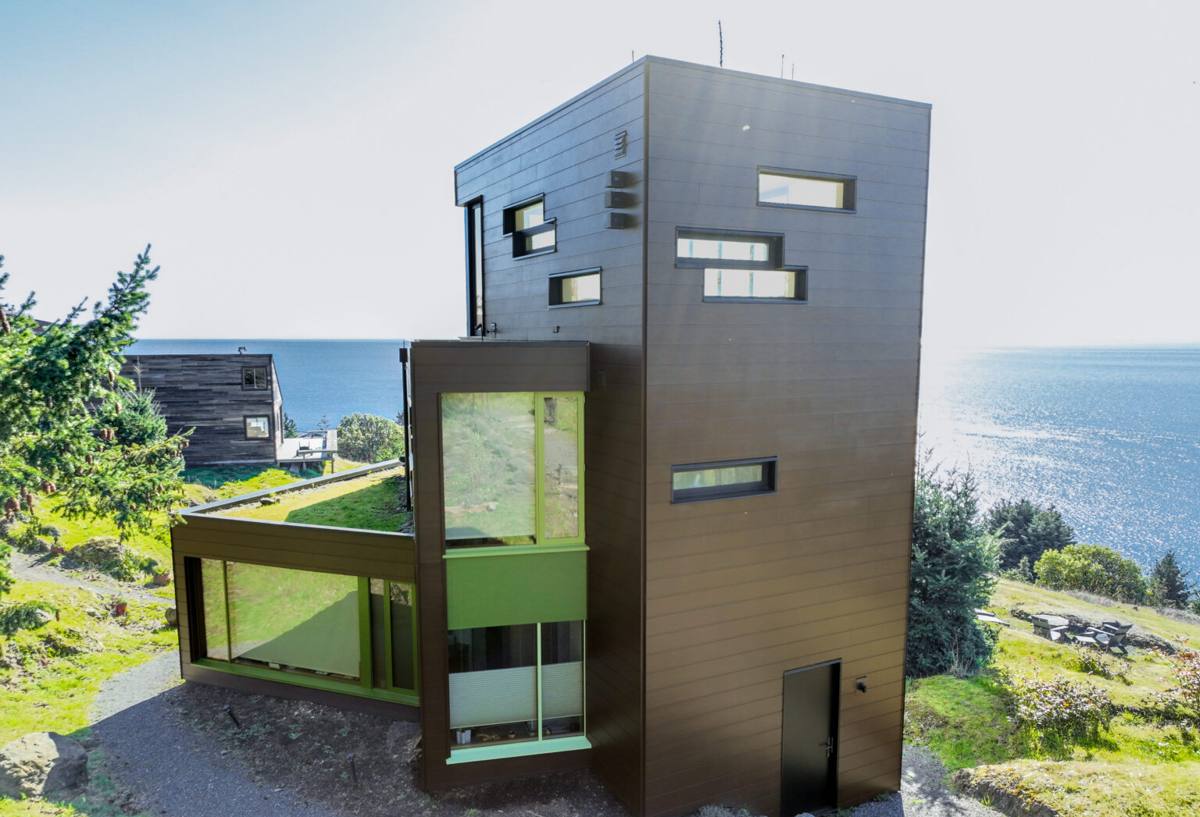
What Salt Air, Rain, and Moss Actually Do to Windows
Each part of this region's climate attacks a window in a different way, and it helps to understand the mechanism before you decide what to replace it with.
Salt Air
Airborne salt is corrosive to bare or poorly coated metal. It accelerates pitting and corrosion on lower-grade aluminum hardware, screws, and cladding, and it can dull or discolor finishes faster than the manufacturer's warranty timeline assumes for a typical inland install. This is the single biggest reason we steer homeowners near the water toward corrosion-resistant hardware and finishes, not because a product is "bad," but because standard-grade components simply weren't tested for a marine environment like this one.
Driving Rain
Wind-driven rain doesn't fall straight down — it gets pushed sideways and upward into gaps that a calm-weather install would never see tested. Flashing, sill pans, and sealant details that would hold up fine in a still climate can leak in a Whatcom County storm if they weren't detailed for wind-driven water. Most window leaks we're called out to inspect trace back to the installation detail, not the window unit itself.
Moss and Algae Season
Long damp stretches with limited direct sun let moss and algae establish on frames, sills, and the siding around a window opening. Beyond the appearance issue, moss holds moisture against wood trim and certain composite materials, which shortens their service life and can hide rot developing underneath.
Signs Your Current Windows Are Losing the Battle
Homeowners in California Creek usually notice one or two of these before they call. If several apply, it's worth having a look before it turns into a bigger repair.
- Fogging or a permanent haze between the panes (a failed seal on a double- or triple-pane unit)
- Soft or discolored wood trim or sill, especially on the side of the house that faces prevailing wind and rain
- Visible corrosion or chalky white residue on aluminum frames or hardware
- Drafts you can feel near the frame even when the window is fully latched
- Difficulty opening, closing, or locking — swollen frames or worn hardware
- Moss or dark streaking building up on the sill or the siding just below the window
- Paint or finish peeling specifically around the window opening rather than the wall generally
- A noticeably higher heating bill with no other explanation
What a Correct Custom Window Installation Involves
"Custom" doesn't just mean an unusual size or shape. In practice it means the window and the install detail are matched to the specific opening, the wall assembly behind it, and the exposure that particular wall gets. That matters more here than in a mild inland climate.
Water Management First
Every install starts with the opening, not the window. That means a properly sloped sill pan so any water that gets past the glass drains outward instead of pooling, correctly lapped flashing tape integrated with the house wrap or building paper, and a head flashing detail that sheds water over the top of the unit rather than trapping it. Skipping or shortcutting this step is the single most common cause of hidden rot behind a window that "looks" fine from inside.
Sizing and Fit
Older homes near California Creek often have openings that have shifted slightly with age, or were never quite standard to begin with. Custom sizing means the window is built or trimmed to fit that actual opening precisely, rather than forcing a stock size and packing the gaps with extra sealant — a shortcut that tends to fail first in a wet climate.
Sealing and Insulation
Low-expansion foam or backer rod and sealant around the perimeter, sized correctly for the gap, keeps both air and bulk water out without over-pressuring the frame. Too little sealant leaves gaps; too much foam can bow a frame out of square.
Choosing the Right Window for a Coastal, Rainy Site
Frame material matters more here than it would forty miles inland. The table below reflects how each common option actually holds up under salt air and sustained moisture, not just how it performs on a spec sheet.
| Frame Material | Salt/Moisture Resistance | Maintenance | General Cost Range (Installed) |
|---|---|---|---|
| Vinyl | Good — won't rust or rot, seams can be a weak point | Low | Budget to mid-range |
| Fiberglass | Very good — dimensionally stable, holds finishes well near salt air | Low to moderate | Mid to upper-mid range |
| Wood / Wood-Clad | Fair — needs a durable exterior cladding and diligent upkeep | Higher, especially in moss season | Upper-mid to premium |
| Aluminum (standard grade) | Weaker unless marine-grade coated — prone to pitting near salt air | Moderate | Varies widely |
There's no single "right" answer for every home — a covered porch window facing away from prevailing weather can get away with more than an exposed second-story window on the windward wall. We walk each opening with you and explain the trade-off in plain terms rather than pushing one product line across the board.
How We Handle a California Creek Window Job
Assessment
We look at the existing opening, the condition of the framing and sill, and how that specific wall is exposed to wind and rain. This tells us whether we're doing a straightforward replacement or need to address hidden damage first.
Protecting Your Siding and Trim
Since we work in siding as much as windows, we treat the surrounding siding as part of the job, not an afterthought. That means careful removal around the opening, protecting adjacent panels or trim, and reinstalling or replacing trim so the finished look is clean, not patched.
Installation
Sill pan, flashing, the window itself, then sealing and insulation, in that order and with each layer allowed to do its job before the next goes on. We don't rely on sealant alone to do the work that proper flashing should be doing.
Final Check
We confirm the window operates smoothly, locks fully, and that all flashing and trim details are sealed and finished before we call the job done.
Why Windows and Siding Need to Be Treated as One System
A window is only as watertight as the wall it's set into. If the siding and flashing around an opening aren't integrated correctly with the window's own flashing, water finds the seam between them — and that's exactly the kind of leak that goes unnoticed for a season or two before it shows up as soft trim or a stain on an interior wall. Because we install both siding and windows, we build the flashing and water path as one continuous system rather than handing off between separate trades who each assume the other handled the transition.
Why It Matters to Hire a Crew That Already Works This Area
A contractor who mostly works drier, inland jobs may not default to marine-grade hardware, may not automatically slope a sill pan for wind-driven rain, or may not think about moss buildup on a north-facing sill until it's already a problem. Working regularly in Blaine and the surrounding Whatcom County coastline means those decisions are second nature, not an afterthought we have to be reminded of. It also means we're familiar with the kind of older housing stock common in this area and how those openings tend to have settled or shifted over time.
Living With Your New Windows: Moss Season Upkeep
A well-installed window in a quality frame material still benefits from basic seasonal care in this climate:
- Rinse sills and frames occasionally during the wet months to keep moss and algae from establishing
- Check that weep holes on the exterior sill stay clear of debris so water can drain
- Look over exterior caulk lines once a year and touch up anything that's cracked or pulled away
- Keep gutters and downspouts clear so runoff isn't dumping extra water onto upper windows
- Wipe down hardware periodically if you're on a wood or standard aluminum frame near the water
None of this is a big time commitment, but skipping it is how a good installation ends up looking neglected years before it needs to.
Get a Straight Answer for Your Home
Every opening in California Creek is a little different — exposure, age, framing condition, and what's already installed all factor into the right recommendation. If you're dealing with drafty, foggy, or aging windows, or planning ahead for a remodel, we're happy to take a look and give you a straightforward, no-pressure estimate using the form below.