 Blaine Siding
 Why California Creek Roofs Wear Differently Than Roofs Inland
If you own a home in California Creek, you already know your roof works harder than a roof twenty miles inland. Being this close to the water in Whatcom County means your shingles are dealing with salt-laden marine air, wind-driven rain that comes in sideways off the water, and long, damp stretches of the year where sunlight barely touches north-facing slopes. None of that is dramatic on its own. It's the combination, repeated year after year, that shortens the life of a roof that wasn't built or installed with this specific climate in mind.
This page is about one thing: doing asphalt shingle roofing correctly for homes in this neighborhood. Not a generic roofing overview, and not a sales pitch — just what actually matters here, what a correct installation looks like, and what to expect if you hire us to do the work.
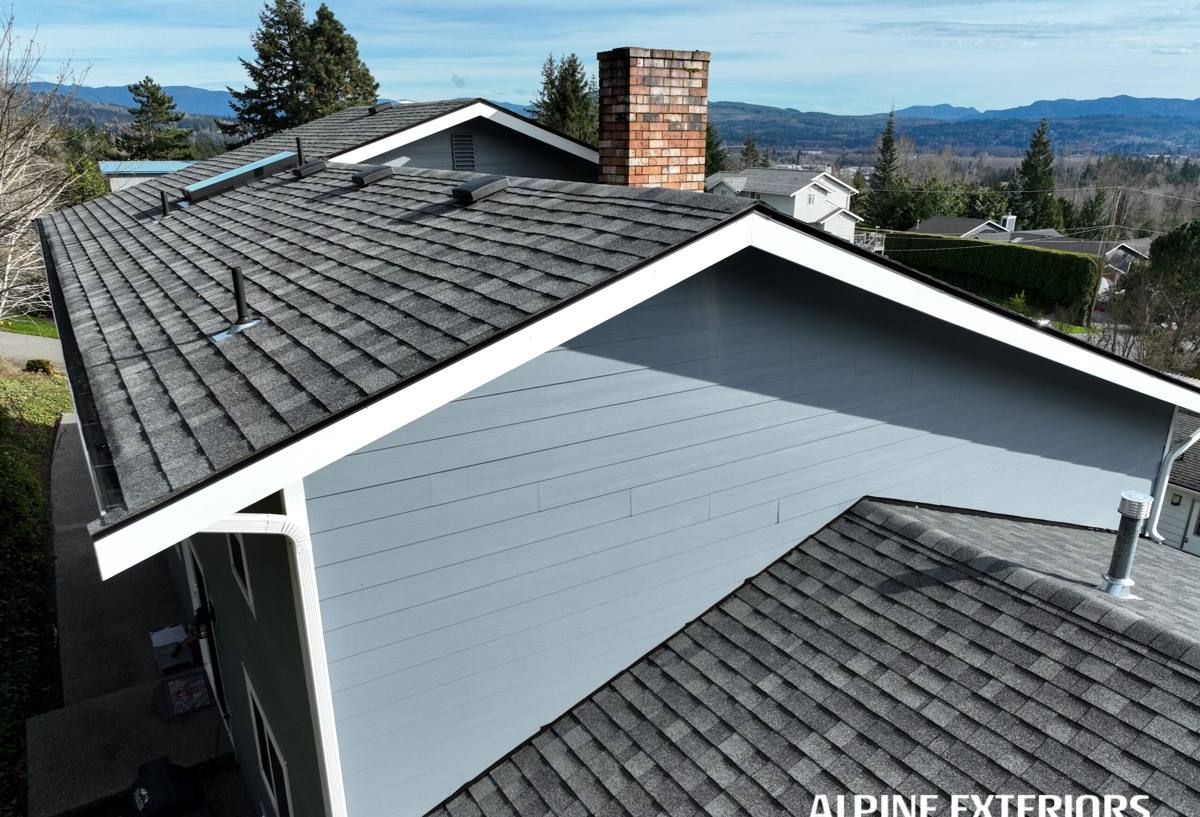
What Salt Air, Rain, and Moss Actually Do to a Shingle Roof
Salt-Laden Air
Homes near Blaine's coastline sit in a fine mist of salt air more often than people realize, even on days that don't feel "coastal." Salt is corrosive to exposed metal — roof vents, flashing, nail heads, and drip edge are the parts of a roof most likely to show it first. Corrosion here doesn't usually cause a dramatic failure; it's slower and sneakier, showing up as rust streaks, loosened fasteners, or flashing that's thinned out and no longer seals the way it should.
Driving, Wind-Driven Rain
Whatcom County gets plenty of straight-down rain, but the rain that damages roofs is the kind that comes in at an angle, driven by wind off the water. That kind of rain finds every shortcut in an installation — shingles that weren't nailed in the manufacturer's nailing zone, valleys that weren't flashed deep enough, or underlayment that was skipped to save time. A roof that would be fine in a calmer climate can leak here simply because it wasn't built for wind-driven moisture.
Moss and Organic Growth
California Creek's tree cover and long damp season are ideal conditions for moss, algae, and lichen. Moss doesn't just look bad — it holds moisture against the shingle surface, works its way under shingle edges as it grows, and can lift tabs enough to let water underneath. Roofs with heavy shade or north-facing slopes are especially prone to it, and once moss gets established it tends to come back faster each year unless the roof and gutters are kept clear.
What a Correctly Installed Asphalt Shingle Roof Includes Here
A shingle roof is a system, not just a layer of shingles nailed to plywood. For this climate, every layer matters more than it would somewhere drier.
Ice-and-Water Barrier and Underlayment
Eaves, valleys, and any low-slope sections should get a self-adhered ice-and-water barrier underneath the shingles, not just standard felt. This is the layer that keeps you dry if wind-driven rain or a wind-lifted shingle lets water past the surface layer.
Attic and Roof Ventilation
Balanced intake and exhaust ventilation keeps moisture from condensing inside the attic, which matters in a climate where the air outside is already damp much of the year. Poor ventilation shortens shingle life from underneath, not just from weather hitting the surface.
Flashing at Every Transition
Valleys, chimneys, skylights, sidewalls, and roof-to-wall transitions are where the vast majority of roof leaks actually start — not in the open field of shingles. Correct flashing, properly lapped and sealed, matters more here than shingle brand or color.
Shingle Selection
Algae-resistant (AR) shingles, which use copper-infused granules to slow algae and moss growth, are worth the modest upcharge on shaded roofs or homes with heavy tree cover. They don't eliminate the need for occasional cleaning, but they meaningfully slow how fast growth returns.
Our Process for a California Creek Roofing Project
1. Inspection and Honest Assessment
We start by getting on the roof, not just looking from the ground. We check the deck for soft spots, look at flashing condition, check ventilation, and look for the specific damage patterns this climate causes — moss undermining shingle edges, corroded fasteners, and wear concentrated on the sides of the roof that face the prevailing wind and rain.
2. Tear-Off vs. Overlay — Our Standard
We install over a full tear-off rather than layering new shingles over old ones. An overlay hides deck problems instead of fixing them, and in a climate this wet, a compromised deck underneath is a much bigger risk than the extra cost of doing it right the first time.
3. Installation Day
Deck repairs first, then ice-and-water barrier at eaves and valleys, synthetic underlayment across the field, new flashing at every penetration and transition, then shingles installed to the manufacturer's nailing pattern — not a faster shortcut pattern that voids the warranty and performs worse in wind.
4. Cleanup and Final Walkthrough
We clear the site of debris and nails, and walk the roof and gutters with you before we call the job done. You should never have to guess whether the work was finished correctly.
Choosing the Right Asphalt Shingle for This Microclimate
Not every asphalt shingle product is built the same way, and the right choice depends on your roof's exposure, budget, and how much shade and tree cover surrounds the house.
| Shingle Type | Typical Lifespan | Algae/Moss Resistance | Best Fit For |
|---|---|---|---|
| Standard 3-tab | 15–20 years | Low unless AR-rated | Budget-conscious re-roofs, minimal tree cover |
| Architectural/laminate | 25–30 years | Moderate to good with AR granules | Most California Creek homes; better wind performance |
| Premium/designer laminate | 30+ years | Good with AR granules | Higher-exposure roofs, homeowners prioritizing longevity and appearance |
For most homes in this neighborhood, we recommend a mid-to-upper tier architectural shingle with algae-resistant granules. The extra cost over a basic 3-tab is modest relative to the roof's overall lifespan, and it's the tier best suited to standing up to both wind exposure and the moss pressure that comes with tree cover this close to the water.
Cost Factors Homeowners Should Understand
Every roof is different, but the price of a re-roof in this area is generally driven by the same handful of factors:
- Roof size and number of stories (affects labor and staging)
- Roof pitch and complexity — valleys, dormers, and multiple planes add labor and flashing work
- Deck condition — plywood replacement is priced separately once uncovered
- Shingle tier selected — 3-tab, standard architectural, or premium laminate
- Ventilation upgrades, if the existing attic ventilation is inadequate
- Tear-off and disposal of the old roofing material
We give a firm, itemized quote after the inspection — not a rough guess from a drive-by look, since the deck condition and flashing needs aren't visible from the ground.
Maintenance That Actually Extends Roof Life Here
A correctly installed roof still needs some attention in this climate. Most of it is simple and doesn't require getting on the roof yourself.
- Keep gutters clear — clogged gutters back water up under the shingle edge, especially during heavy fall rain
- Have moss and debris removed before it builds up thick, rather than after it's already lifted shingle tabs
- Trim back overhanging branches to reduce shade, debris, and the moisture that feeds moss growth
- Watch for granule buildup in gutters, which signals a shingle surface that's aging faster than expected
- Have flashing and roof vents inspected every few years, since corrosion from salt air is gradual and easy to miss from the ground
- Address a small leak or stain immediately — in this climate, a slow leak left alone tends to spread into deck damage before it's obvious indoors
Why Hiring a Crew That Already Works in California Creek Matters
Roofing crews who mostly work drier, inland areas don't always plan for wind-driven rain and salt exposure the way this neighborhood requires. It shows up in small decisions — how deep a valley is flashed, whether ice-and-water barrier is used beyond the bare minimum, whether fasteners and flashing are chosen with corrosion resistance in mind. Those decisions don't show up on a quote sheet, but they show up in how the roof performs during the next winter storm off the water.
We work on homes throughout Blaine and this part of Whatcom County regularly, which means we're not guessing about how this climate treats a roof — we're building for the conditions we see on these houses every season.
Get a Straightforward Estimate
If your California Creek home needs a new asphalt shingle roof, or you're not sure whether repair or replacement makes more sense, we're happy to take a look and give you a straight answer. Use the form below to request a free, no-pressure estimate.