 Blaine Siding
 Storm Damage Roof Repair Built for Birch Point's Weather
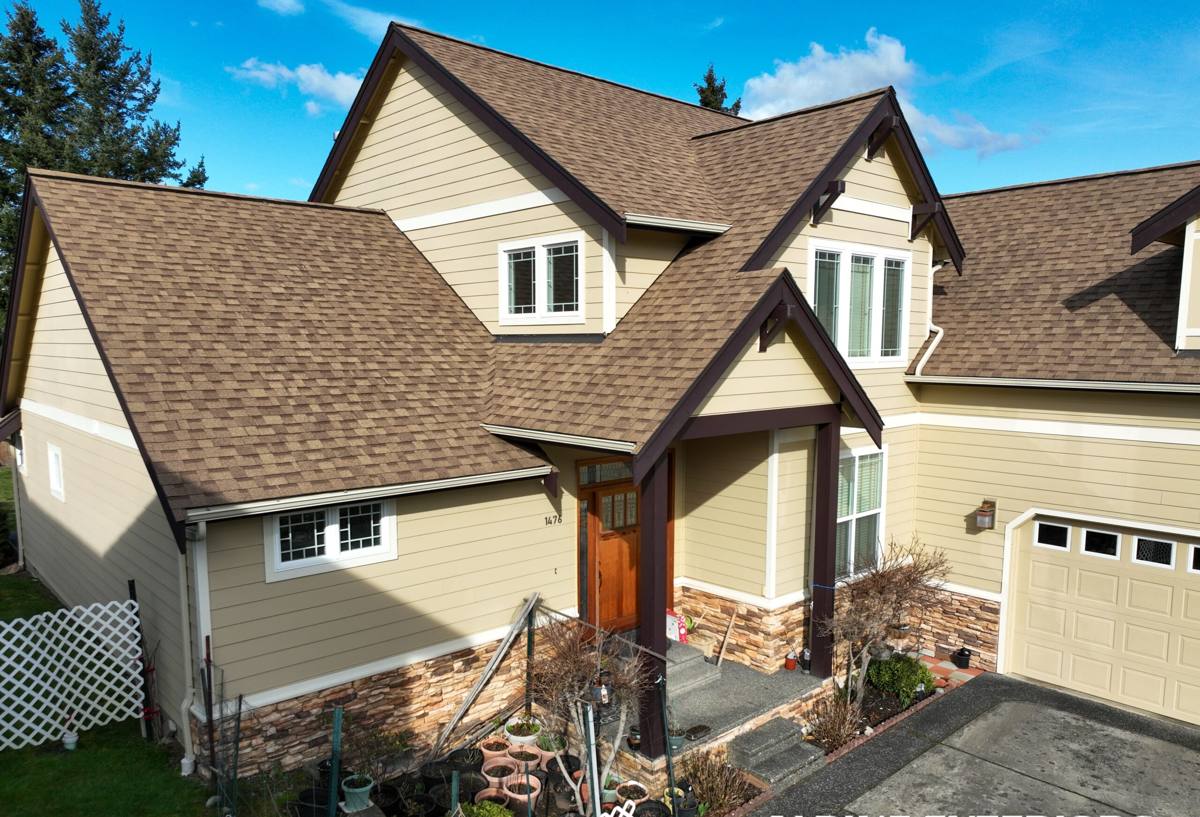
Birch Point sits right up against the water on the edge of Blaine, and that location comes at a cost most inland Whatcom County homes never have to think about. Wind gets a straight run at these roofs off the Strait, rain comes in sideways instead of straight down, and the salt in the air works on metal and fasteners year-round, storm or no storm. When a windstorm does move through, the damage it leaves behind on a Birch Point roof is often different — and often worse — than what we see a few miles inland. This page is about that specific job: repairing storm damage on Birch Point roofs correctly, not just patching what's visible from the ground.
Why Birch Point Roofs Take More Damage Than Most
Wind Off the Water
Homes set back from the shoreline get some buffering from trees, terrain, and other structures. Waterfront and near-waterfront homes in Birch Point don't get that buffer on the water-facing side. Gusts hit roof edges, ridges, and any shingle that's already lifting or aging at full force, and that's usually where storm damage starts — not in the middle of a roof field, but at the edges, ridge caps, and around penetrations like vents and chimneys.
Salt Air and Corrosion
Salt-laden air doesn't just affect boats and car undercarriages. It accelerates corrosion on exposed roofing fasteners, flashing, and gutter hardware. A nail or flashing piece that would last two decades a few miles inland can start rusting and losing its grip years earlier this close to the water. That matters after a storm, because a roof with already-weakened fasteners fails faster under wind load than a roof that's been protected from salt exposure.
A Long Moss Season
Birch Point's tree cover, moisture, and mild temperatures add up to a moss season that runs long compared to drier parts of the state. Moss holds water against the shingle surface, works its way under tabs and shingle edges, and weakens the roofing material from underneath. A roof that's been carrying moss for a season or two is more vulnerable to wind and impact damage than a clean roof, because the moss has already done part of the work of prying shingles loose.
Common Storm Damage We Find on Birch Point Roofs
After a wind event or heavy storm system moves through Blaine, these are the problems we most often find on Birch Point homes:
- Lifted, cracked, or missing shingles along ridges, hips, and roof edges — the spots that take the direct wind load
- Torn or displaced ridge cap shingles
- Flashing pulled loose or corroded at chimneys, plumbing vents, and roof valleys
- Granule loss from wind-driven rain and debris abrasion, which shows up as bald patches on older shingles
- Gutter and downspout damage from wind and falling branches
- Impact damage from fir and cedar branches and debris carried by wind
- Soft decking or early leak staining where moss or a prior small leak went unnoticed before the storm made it worse
What a Correct Storm Damage Repair Actually Involves
Storm damage repair gets done badly more often than most other roofing work, mostly because a lot of the damage is easy to hide with a quick patch that looks fine for a season and fails the next time wind and rain line up. A correct repair on a Birch Point roof means going past the obvious spot and checking the whole roof plane, then fixing the problem instead of covering it.
Matching Materials Properly
Patching a damaged section with the wrong shingle profile, weight, or color doesn't just look off — it can create a seam that sheds water poorly. We match the existing roofing material as closely as the market allows, and where an exact match isn't available, we explain that honestly up front rather than after the work is done.
Flashing Done Right, Not Just Resealed
A common shortcut after storm damage is running a bead of sealant over a lifted or corroded flashing piece instead of replacing it. Sealant is not a flashing repair — it's a temporary stopgap that fails faster in salt air than it would elsewhere. When flashing has been compromised by a storm, we remove and replace it correctly, tucked and lapped the way it should be, not caulked over.
Fasteners That Survive Salt Air
Standard electro-galvanized fasteners corrode faster this close to the water. For storm repairs on Birch Point roofs, we use hot-dip galvanized or stainless fasteners where the application calls for it, because a repair that's only as good as its weakest fastener isn't a repair worth doing twice.
Our Storm Damage Repair Process
- Stabilize first. If there's an active leak or exposed decking, we get it tarped and weather-tight before anything else, so a small storm event doesn't turn into water damage inside the house.
- Full roof inspection. We check the entire roof, not just the section that's visibly damaged — storm wind rarely hits only one spot, and a second area of loosened shingles or flashing is common.
- Photo documentation. We document the damage clearly, which matters both for our own scope of work and for any insurance claim you may file.
- Written scope and estimate. You get a clear description of what's damaged, what needs to be repaired versus replaced, and a straightforward cost estimate before work starts.
- Repair. Work is done to match existing materials, with correct flashing and fasteners suited to a marine environment.
- Final check and cleanup. We walk the roof and gutters again after the repair, clear debris, and confirm everything sheds water the way it should.
Insurance Claims: What Birch Point Homeowners Should Know
Most homeowner's policies cover sudden wind and storm damage, though coverage details, deductibles, and what counts as "sudden" versus "wear and tear" vary by policy and insurer. We're not in a position to promise what your carrier will or won't cover, but we can give you clear, dated photo documentation and a written description of the damage that you can hand to your adjuster. If a repair turns out to involve pre-existing moss damage or age-related wear alongside storm damage, we'll tell you that plainly — an honest scope of work serves you better with an insurer than an inflated one.
Cost Factors for Storm Damage Roof Repair
Every roof and every storm event is different, but here's a general sense of what drives cost on the repairs we see most often in Birch Point:
| Damage Type | Common Cause Locally | Typical Repair Scope | Rough Cost Range |
|---|---|---|---|
| Localized lifted or missing shingles | Wind gusts catching an edge, ridge, or already-weakened shingle | Remove and replace affected shingles and underlayment section | $300–$900 |
| Ridge cap damage | Direct wind exposure along the roof's highest, most exposed line | Replace ridge cap shingles and fasteners | $400–$1,000 |
| Flashing failure (chimney, vent, valley) | Salt-air corrosion plus wind-driven rain finding a weak seal | Remove and properly re-flash the penetration | $500–$1,500 |
| Moss-related shingle degradation | Long moss season holding moisture against the roof surface | Moss removal, treatment, and spot shingle replacement | $600–$2,000+ |
| Gutter/downspout damage | Wind and falling branch debris | Repair or replace damaged sections | $200–$1,200 |
| Decking or sheathing repair | Undetected leak allowed to sit before or during a storm | Cut out and replace damaged decking, then re-roof that section | $1,000–$3,000+ |
These ranges are meant to help you plan, not as a quote — actual cost depends on roof pitch, access, material availability, and how far the damage extends once we're up there.
Checklist: Signs Your Birch Point Roof Needs a Storm Damage Inspection
- Shingles visible in the yard or gutters after a windstorm
- Curled, lifted, or missing shingles visible from the ground
- Granules building up at the bottom of downspouts
- Water stains on ceilings or in the attic following a storm
- Daylight visible through the roof deck when checking the attic
- Flashing that looks bent, lifted, or rust-streaked around chimneys and vents
- Thick moss patches that stayed wet through most of the wet season
- A roof that's due for storm damage but hasn't been looked at in a year or more
If more than one or two of these apply, it's worth getting an inspection before the next system rolls in off the water rather than after.
Why Hiring a Crew That Already Works Birch Point Matters
A roofer who mostly works dry, inland neighborhoods can do fine work on a standard roof and still get a Birch Point storm repair wrong — not from lack of skill, but from lack of exposure to what this specific stretch of shoreline does to a roof over time. A crew that already works Birch Point knows which fasteners actually hold up here, which flashing details fail first in salt air, and how aggressive the moss really gets under the tree cover common to these lots. That local pattern recognition is the difference between a repair that lasts and one that needs redoing after the next storm season. It also means faster response — we're not learning the area's access points and weather quirks for the first time when your roof needs attention now.
If a recent storm left damage on your Birch Point roof, or you want a second set of eyes before moss and salt air turn a small problem into a bigger one, we're glad to take a look. Fill out the form below for a free, no-pressure estimate — we'll tell you honestly what we find and what it actually needs.