 Blaine Siding
 Roof Repair in Birch Point
Birch Point sits close enough to the water that its roofs age differently than roofs ten miles inland. Marine air, wind-driven rain off the strait, and a moss season that can run half the year all add up to specific, predictable failure points. We repair roofs in Birch Point and the rest of the Blaine area regularly, and most of the calls we get fall into a handful of categories — which is good news, because it means the fixes are well understood and don't have to be guesswork.
This page is about roof repair specifically — patching, flashing work, leak tracing, and targeted section replacement — not a full tear-off and re-roof. If your roof needs that, we'll tell you plainly during the estimate instead of selling you a repair that won't hold.
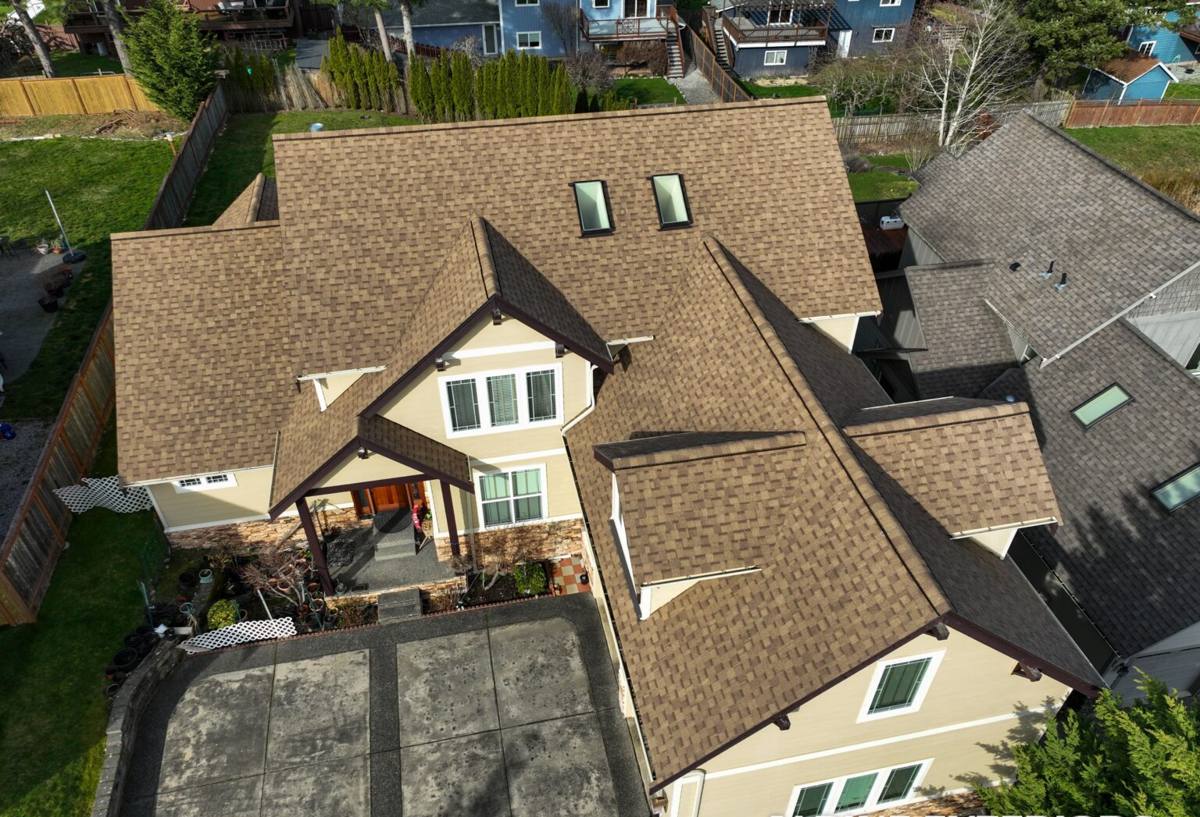
Why Birch Point Roofs Take a Different Kind of Beating
Salt air and metal fatigue
Homes near the water deal with a steady drift of salt-laden air. It doesn't damage roofing the way a storm does — it's slower and less visible. Exposed fasteners, flashing edges, and any unpainted metal corrode faster here than they would a few miles inland in Whatcom County. A nail that backs out or a flashing seam that starts to pit is often the actual source of a "mystery" leak, not a shingle problem at all.
Driving rain finds the weak spot
Wind-driven rain doesn't behave like a normal downpour. It gets pushed sideways and upward under laps, around vent boots, and into any gap that would stay dry in calmer weather. A roof that's held up fine for years can suddenly leak the first time a storm hits from an unusual direction — because that's the first time water has ever been forced into that particular seam.
A long moss season
Shaded, north-facing slopes and anything under overhanging trees can stay damp for months at a time. Moss doesn't just sit on top of shingles — it lifts edges, holds moisture against the roofing material, and works its way into granule loss over time. Left unaddressed long enough, moss growth turns a simple cleaning job into an actual repair.
Common Roof Repair Needs We See in Birch Point
- Wind-lifted or cracked shingles along ridge lines and roof edges, where uplift pressure is highest
- Flashing failures around chimneys, skylights, and roof-to-wall transitions
- Valley leaks where two roof planes meet and water volume concentrates
- Moss-related granule loss and soft spots on shaded or heavily treed roof sections
- Corroded or backed-out fasteners on older metal roofing or flashing
- Gutter and fascia rot where overflow has been running down the roof edge for a season or more
- Interior water stains that trace back to a single failed penetration rather than the whole roof
What a Correct Repair Actually Involves
Finding the real source, not the visible symptom
Water travels. A stain on a bedroom ceiling can trace back to a flashing gap ten feet away, uphill and to the side. Patching the spot where the water shows up, without tracing it back, is the single most common mistake in cheap roof repair — the leak comes right back after the next storm. We trace before we patch.
Matching materials, not just covering the hole
A repair should match the existing roofing's material, profile, and where possible, color — mismatched shingles or flashing metal stand out and can also behave differently in weather, creating a new weak point right at the seam. If an exact match isn't available anymore, we'll say so and talk through the closest reasonable option.
Treating moss at the cause, not just the surface
Cleaning moss off without addressing the moisture and shade conditions that grew it just buys a season or two. A proper repair looks at whether the underlying roofing material has been compromised, whether ventilation is adequate, and whether a zinc or copper strip at the ridge makes sense for ongoing prevention — not just a one-time scrub.
Our Roof Repair Process
- Inspection. We walk the roof (or use a lift/ladder where pitch and safety require it) and check attic space where accessible, since interior signs often tell us more than the exterior does.
- Diagnosis. We identify the actual source of the problem, not just the symptom, and explain it in plain terms — what failed, why, and whether it's isolated or part of a broader pattern.
- Written estimate. You get a clear scope and price before any work starts, including whether we think repair is the right call or replacement should be on the table.
- The repair. We remove and replace only what's actually damaged, tie new material into the existing roof correctly, and reseal or reflash penetrations as needed.
- Cleanup and check. Debris and old material leave the site with us. We check the repair area and surrounding sections before we call it done.
Repair or Replacement: How to Tell
Not every leak means a new roof, and not every roof is worth repairing indefinitely. Here's how we think through it on an actual job:
| Factor | Repair usually makes sense | Replacement usually makes sense |
|---|---|---|
| Roof age | Under roughly two-thirds of the material's expected lifespan | Near or past its expected service life for the material type |
| Extent of damage | Isolated to one section, penetration, or flashing detail | Multiple areas failing, or granule loss spread across most slopes |
| Moss/moisture history | Recent growth, surface-level, roofing underneath still sound | Years of moss buildup with soft decking or compromised underlayment |
| Underlying decking | Solid when checked at the repair area | Soft, delaminated, or showing rot at multiple points |
| Cost relative to a new roof | Repair cost is a small fraction of full replacement | Repeated repairs are adding up to a meaningful share of replacement cost |
Roofing Materials and Coastal Trade-Offs
Asphalt composition shingle
The most common roofing in the area, and generally the most repair-friendly — sections can be matched and replaced without redoing the whole roof, as long as the shingle line hasn't been discontinued. It handles wind-driven rain well when properly installed and sealed, but granule loss from long-term moss exposure is the main thing to watch.
Metal roofing
Metal handles wind uplift and driving rain very well, but in a salt-air environment, fastener and flashing corrosion becomes the main long-term maintenance item. Repairs on metal roofing are almost always about fasteners, sealant at penetrations, and panel seams rather than the panels themselves.
Wood shake and shingle
Cedar has real appeal, but it's the most moisture-sensitive option for a site with a long moss season and persistent damp air — it needs more frequent inspection and moss management to avoid rot setting into the wood itself. If you have cedar roofing, we'll be direct about the maintenance commitment that comes with keeping it healthy near the water, rather than glossing over it.
Maintenance Checklist Between Repairs
- Clear gutters and downspouts at least twice a year — overflow onto the roof edge causes fascia and decking rot over time
- Trim back tree limbs that keep sections of roof shaded and damp longer than the rest
- Have moss addressed before it spreads past a slope or two, not after
- After any major windstorm, do a visual check from the ground for lifted or missing shingles
- Check attic space for daylight, staining, or musty smell once or twice a year
- Don't pressure-wash a roof yourself — it can strip granules and force water under laps
Why a Crew That Already Works Birch Point Matters
Roof repair in a marine-exposed, moss-prone area rewards experience with that specific combination of conditions. A crew that mostly works drier, inland roofs may correctly diagnose a straightforward leak but miss the slower salt-air corrosion or the moss-related moisture pattern that's actually driving the problem. We work Birch Point and the surrounding Blaine area regularly enough to recognize these patterns quickly, which keeps diagnosis time — and your cost — down.
Local access matters too: knowing typical lot layouts, roof pitches, and seasonal weather windows in Whatcom County means we can plan repair timing around the wetter stretches of the year instead of guessing and getting rained out mid-job.
If you've got a leak, a soft spot, or a roof that's overdue for a look, we're happy to come out and give you a straight, no-pressure assessment — repair or replacement, whichever is actually true for your roof. Fill out the form below for a free estimate.