 Blaine Siding
 Roofing on the Water in Birch Point
Homes in Birch Point sit close enough to the water that the roof takes a different kind of beating than a house ten miles inland. Salt-laden air corrodes exposed metal faster, wind off the water drives rain sideways into laps and flashing that would stay dry elsewhere, and the long, mild, wet Whatcom County winter keeps roof surfaces damp for months at a stretch — exactly the conditions moss needs to take hold. None of that means a roof in Birch Point has to fail early. It means the installation has to account for those conditions from the first layer of underlayment to the last cap shingle, not just meet a generic building-code minimum.
We install new roofs in this neighborhood on a regular basis, so this page isn't a generic overview — it's what we've learned actually matters for roofs that sit this close to Blaine's shoreline.
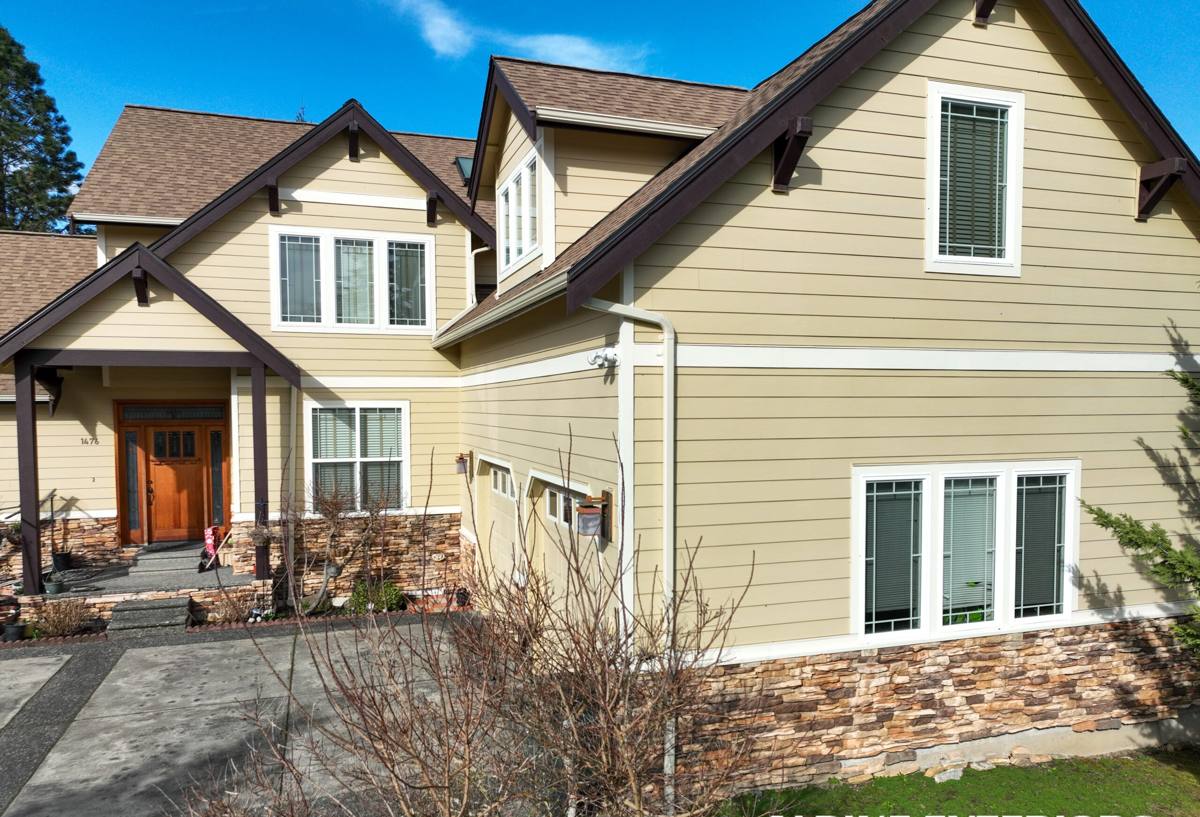
What Salt Air, Wind-Driven Rain, and Moss Actually Do to a Roof
Salt air
Airborne salt accelerates corrosion on anything metal — nails, flashing, drip edge, and roof vents. On an inland roof, cheap fasteners might last the life of the shingle. Near the water, they can start rusting years before the shingles wear out, which leads to leaks at the fastener heads long before the roofing material itself is the problem.
Wind-driven rain
Blaine sits in an exposed spot along the water, and Birch Point's proximity to open water means wind gusts push rain into places that would stay dry on a more sheltered roof — under shingle tabs, up under step flashing, and into valleys from the side rather than straight down. A roof built to handle rain falling straight down isn't automatically built to handle rain being pushed sideways and upward.
Moss and algae
Whatcom County's roofing "moss season" runs long — realistically fall through spring, and sometimes longer on shaded or north-facing slopes. Moss holds moisture against the roof surface, works its way under shingle edges, and lifts them over time. On tree-covered lots, which describes a good share of Birch Point properties, moss isn't a maybe — it's a matter of when and how much.
What a Correct New Roof Installation Includes
A new roof is more than shingles on plywood. For a Birch Point home, we treat these steps as non-negotiable, not upsells:
- Full tear-off and deck inspection — you can't evaluate the plywood or planking underneath without removing the old roof, and any soft, delaminated, or water-damaged decking gets replaced before anything new goes down.
- Ice-and-water shield at vulnerable points — eaves, valleys, and roof-to-wall transitions get a self-adhering waterproof membrane underneath the underlayment, so wind-driven rain that gets past the shingles still hits a waterproof layer, not bare decking.
- Synthetic underlayment across the field — more resistant to moisture and more durable to walk on during installation than old-style felt, which matters on a job that may span a few damp Whatcom County days.
- Corrosion-resistant fasteners and flashing — for coastal installs we lean toward hot-dip galvanized or stainless components at fasteners, drip edge, and flashing rather than the lowest-grade galvanized, because that's the part of the roof most likely to fail first this close to salt air.
- Proper step and counter-flashing at chimneys, walls, and dormers, plus kick-out flashing anywhere a roof edge meets a wall — this is one of the most common places we find leaks on older Birch Point roofs that were never flashed correctly in the first place.
- Balanced attic ventilation — intake at the soffits, exhaust at the ridge, sized to the attic — so moisture from inside the house isn't adding to what the roof already deals with from outside.
Choosing a Roofing Material for a Coastal Blaine Lot
There's no single "best" roofing material for every Birch Point home — it depends on the roof's exposure, the tree cover, the budget, and how the house is used. Here's how the common options actually compare for this specific setting:
| Material | Salt Air / Coastal Wind | Moss Resistance | Maintenance | Typical Lifespan |
|---|---|---|---|---|
| Architectural asphalt shingle | Good, with corrosion-resistant fasteners and flashing | Moderate — algae-resistant (AR) shingles help, but shaded slopes still need periodic treatment | Low to moderate | 25–30 years |
| Metal roofing (standing seam or panel) | Very good when properly coated and fastened; sheds wind-driven rain well | Good — moss struggles to grip a smooth metal surface | Low | 40–50+ years |
| Synthetic/composite shingle | Good; resists moisture absorption better than wood | Moderate to good depending on product | Low to moderate | 30–50 years |
| Cedar shake | Fair — needs regular treatment to hold up to salt and moisture | Poor without diligent upkeep — cedar is a moss magnet in this climate | High | 20–30 years, shorter with neglect |
For most Birch Point homes we end up recommending an architectural asphalt shingle with algae-resistant granules as the practical, cost-effective choice, with metal roofing as the upgrade for owners who want to minimize long-term maintenance and are comfortable with the higher upfront cost. We'll walk you through the honest trade-offs for your specific roof rather than pushing one product across the board.
Moss Prevention Built Into the Install
You can't moss-proof a roof completely in this climate, but you can install one that fights moss instead of inviting it. On new installs we typically discuss:
- Zinc or copper strips near the ridge — rain washing over them carries trace metal ions down the roof that inhibit moss and algae growth over time.
- Algae-resistant (AR) shingle products, which are formulated with copper-infused granules for the same reason.
- Keeping overhanging branches trimmed back after install, since shade and debris are the biggest drivers of moss growth — this is a homeowner maintenance item, not something we can install our way around.
- Clean, correctly sloped valleys and gutters so water and organic debris don't sit and collect in one spot.
None of this replaces periodic roof cleaning, but a roof designed with moss in mind needs that cleaning far less often than one that wasn't.
Our New Roof Installation Process
1. On-site inspection and estimate
We look at the existing roof, the decking condition where visible, attic ventilation, and the specific exposure of your lot — a shaded, tree-covered slope gets a different conversation than an open, wind-exposed one, even on the same street.
2. Material selection
We go over the honest trade-offs between shingle, metal, and synthetic options for your roof's pitch, exposure, and budget — no pressure toward the highest-margin product.
3. Tear-off and deck repair
Full removal of the old roofing, inspection of every section of decking, and replacement of anything compromised before new material goes down.
4. Underlayment, flashing, and ventilation
Ice-and-water shield at the vulnerable points, synthetic underlayment across the field, corrosion-resistant flashing at every penetration and transition, and ventilation corrected or upgraded as needed.
5. Installation and quality check
New roofing installed to manufacturer specifications, followed by a walkthrough with you covering what was done, warranty coverage, and basic upkeep going forward.
6. Cleanup
Full site cleanup including a magnetic sweep for stray nails — standard on every job, not an add-on.
Why a Crew That Already Works Birch Point Matters
Roofing crews unfamiliar with this stretch of Whatcom County sometimes treat every job like it's inland — standard fasteners, standard flashing, no particular thought given to wind exposure or moss. A crew that already works Birch Point and the surrounding Blaine area knows which slopes get hit hardest by wind off the water, which lots hold moisture longest under tree cover, and which flashing details actually hold up here versus which ones look fine on installation day and fail in year three.
That local familiarity also matters for permitting — the City of Blaine and Whatcom County have their own permitting and inspection requirements for re-roofing, and a crew that pulls permits in this area regularly doesn't slow your project down figuring that out for the first time.
Signs Your Roof Needs Replacing, Not Just Repairing
- Granules collecting in gutters or at downspouts in noticeable amounts
- Shingles that are curling, cracking, or missing across multiple areas, not just one spot
- Daylight visible through the roof deck from inside the attic
- Soft or spongy spots when walking the roof
- Repeated leaks in different locations after past patch repairs
- Heavy, persistent moss or algae coverage that returns quickly after cleaning
- The roof is at or past its material's expected lifespan and repairs are becoming frequent
What Drives the Cost of a New Roof
Every roof is priced individually, but the same handful of factors move the number up or down on nearly every Birch Point project:
| Factor | Why It Matters |
|---|---|
| Roof size and pitch | More square footage and steeper pitches mean more material and more labor, including added safety measures on steep sections |
| Number of existing layers | Tearing off multiple old layers of roofing takes more labor and disposal than a single-layer tear-off |
| Decking condition | Rotted or delaminated plywood found during tear-off has to be replaced before new roofing goes down |
| Material choice | Asphalt shingle, synthetic, and metal roofing carry different material and labor costs, offset by different lifespans |
| Roof complexity | Valleys, dormers, chimneys, and skylights each add flashing work and installation time |
| Ventilation upgrades | Adding or correcting soffit and ridge ventilation is often worth doing during a tear-off since the roof is already open |
| Site access | Tree cover, steep driveways, or limited staging space can add time to material delivery and debris removal |
We don't quote a roof over the phone based on square footage alone — an accurate number comes from actually looking at your roof's pitch, layers, and condition in person.
Get a Free, No-Pressure Estimate
If your Birch Point roof is showing its age, dealing with recurring moss, or just due for a straightforward replacement, we're glad to come take a look. The estimate is free, there's no pressure to sign anything on the spot, and you'll get a clear explanation of what your roof actually needs — use the form below to get started.