 Blaine Siding
 Birch Point's Coastal Setting Changes the Roofing Equation
Birch Point sits right up against the water on the Blaine side of Whatcom County, and that location shapes everything about how a roof ages here. Homes in this pocket take a steady dose of salt-laden air off the strait, catch wind-driven rain that doesn't just fall straight down but gets pushed sideways under eaves and into laps, and sit shaded by fir and cedar canopy that keeps roof surfaces damp long after a storm has passed. A roofing material that performs fine three miles inland in drier, more sheltered parts of Blaine can wear out noticeably faster right on the point. That's not a knock on any one product — it's just what salt exposure and prolonged moisture do to fasteners, coatings, and seams over years of freeze-thaw and wet-dry cycling.
We bring this up first because it's the whole reason a "Birch Point roof" is a slightly different job than a roof three streets back from the water. Material selection, fastener spec, and flashing detail all shift when salt air and standing moisture are part of the daily environment instead of the occasional storm.
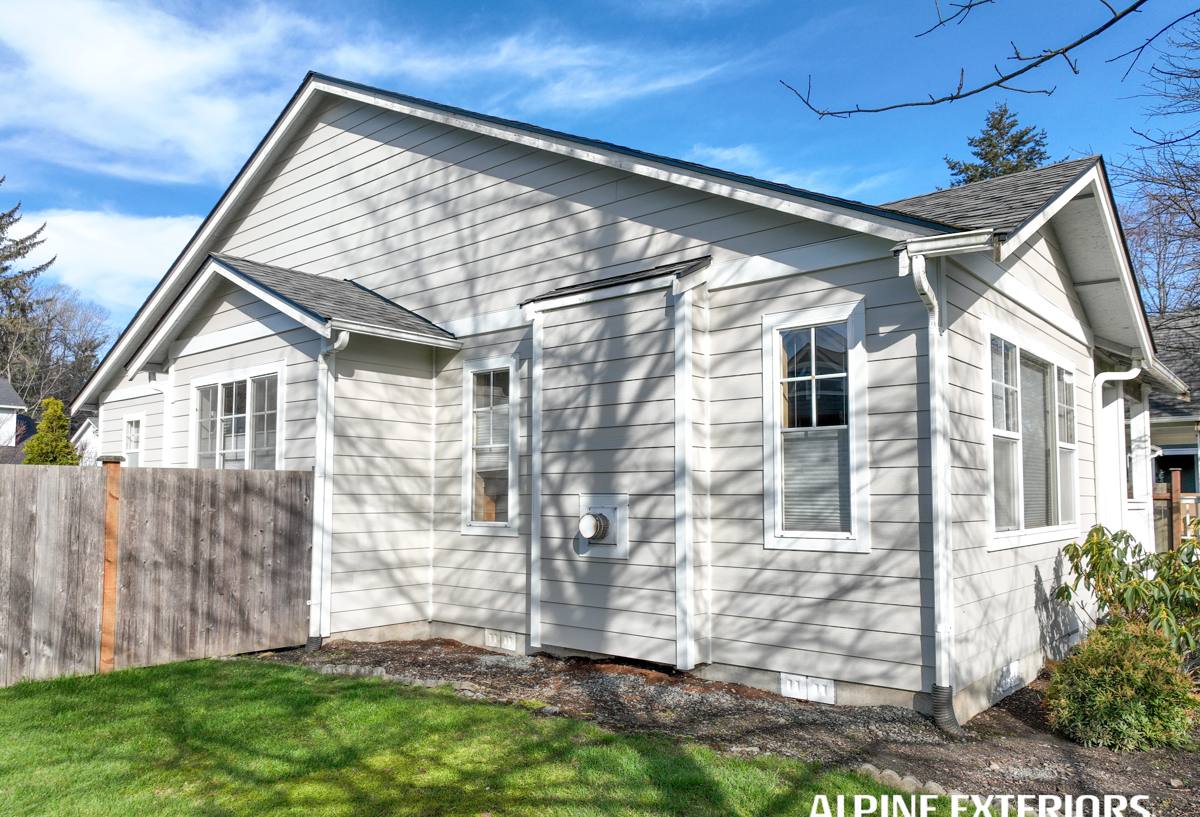
What Salt Air, Driving Rain, and Moss Season Actually Do to a Roof
Salt Air and Corrosion
Airborne salt settles on every exposed surface, including roofing. On metal roofing specifically, this means the choice of base metal, coating, and especially fastener hardware matters more here than almost anywhere else in Whatcom County. Bare or poorly coated steel fasteners are the first thing to fail in a salt environment — you'll see rust streaking below screw heads years before the panel itself shows any wear.
Driving Rain and Wind-Driven Water
Storms off the water don't arrive as gentle vertical rain. Wind pushes water sideways and upward under laps, around chimney and vent penetrations, and into any transition where two roof planes or a roof and wall meet. A roof that's watertight in a calm rain can still leak in a Birch Point northwester if the underlayment, flashing, and fastening pattern weren't detailed for wind-driven water specifically.
Moss and the Long Wet Season
Western Washington's wet season is long, and the tree cover common around Birch Point keeps roofs shaded and slow to dry. Moss and algae take hold anywhere organic debris and moisture sit undisturbed, and on the wrong roofing material that growth holds moisture against the surface, works into seams, and can shorten the life of the roof system underneath. Metal roofing doesn't stop moss from landing on it, but a properly detailed metal roof gives moss far less to hold onto than a porous or granulated surface does.
Why Metal Roofing Fits Birch Point Homes
We recommend metal roofing for a lot of Birch Point properties for a few honest, practical reasons — not because it's trendy, but because of how it behaves under this specific combination of conditions:
- Sheds wind-driven rain well when panels and laps are run with the correct exposure and sealant detail for coastal wind exposure.
- Doesn't absorb water the way porous roofing materials can, which matters in a climate where the roof rarely gets a long stretch to fully dry out.
- Gives moss and algae less to grip than a rough or granulated surface, so growth is easier to keep off with routine washing.
- Long service life when the metal, coating, and fasteners are matched correctly to a salt-air environment.
- Handles the wind loads that come with an exposed waterfront lot, when installed with the right fastening schedule.
None of this makes metal roofing automatically maintenance-free on the water — it still needs the right spec and periodic attention — but it starts from a stronger position than most alternatives when the job site is this close to salt water.
Choosing the Right Metal System for a Salt-Air Site
Not all metal roofing is built the same, and the differences matter more at Birch Point than they would a few miles inland. Here's how the common options compare for a coastal Blaine property:
| System | Coastal / Salt-Air Performance | Typical Trade-Offs |
|---|---|---|
| Standing seam steel (Galvalume or similar coated finish) | Strong performer when the coating is intact and fasteners are concealed; hidden-fastener design keeps water off exposed screw heads | Higher material and install cost than exposed-fastener panels; requires a crew experienced with seaming and thermal movement |
| Exposed-fastener steel panels | Workable in less exposed spots, but every exposed screw is a future maintenance point in salt air | Lower upfront cost, but fastener gaskets and heads need periodic inspection and eventual replacement |
| Aluminum standing seam | Naturally corrosion-resistant, a strong choice directly on the water where steel's coating is the only thing standing between it and salt | Costs more than steel; softer metal needs careful handling during install and snow/ice load consideration |
| Copper or copper-coated accents | Extremely durable and salt-tolerant, but usually used for accents, dormers, or small roof sections rather than the whole roof | Highest material cost by far; typically reserved for feature areas |
For most Birch Point homes, we steer the conversation toward standing seam in either steel with a marine-grade coating or aluminum, depending on budget and how directly exposed the home sits to wind and spray. We'll walk through the real trade-offs for your specific lot rather than defaulting to one answer.
Cost Factors Worth Understanding Up Front
| Factor | Why It Moves the Price |
|---|---|
| Panel material (steel vs. aluminum vs. copper accents) | Raw material and coating cost vary significantly; aluminum and copper run higher than coated steel |
| Roof complexity | Dormers, valleys, and multiple planes require more flashing, more labor, and more cut panels than a simple gable |
| Tear-off vs. overlay | Removing an existing roof down to the deck adds labor but lets us properly inspect and address the sheathing underneath |
| Fastener and flashing spec | Marine-grade fasteners and heavier-gauge flashing cost more than standard hardware but pay off directly on a waterfront lot |
| Ventilation upgrades | Correcting inadequate attic ventilation as part of the job adds cost but protects the new roof investment |
We give straightforward, itemized numbers during the estimate rather than a vague lump sum, so you can see exactly where the money is going and where there's room to adjust.
What a Correct Metal Roofing Installation Involves
A metal roof is only as good as the details underneath it and around its edges. On a Birch Point job, we pay particular attention to:
Underlayment
A high-quality synthetic or self-adhered underlayment goes down first as the real waterproofing layer — the metal panels above it are the primary defense, but the underlayment is what protects the deck if wind-driven rain ever gets past a lap or fastener.
Fasteners and Hardware
In a salt-air environment, we spec fasteners and clips rated for corrosion resistance, not standard hardware store screws. This is one of the most common places we see older installs fail early on the water — the panel is fine, but the fasteners rusted out years before it should have needed attention.
Flashing and Penetrations
Every chimney, vent stack, skylight curb, and valley is a place water wants to find a way in, especially under wind pressure. Flashing has to be formed and layered correctly — not just caulked — to hold up to driving rain year after year.
Panel Fastening Pattern and Wind Rating
Exposed waterfront lots see higher wind loads than sheltered inland sites. We fasten to a pattern that matches the actual exposure of your roof, not a generic minimum.
Ventilation
Trapped moisture under a roof deck causes problems no matter what's on top of it. Proper ridge and soffit ventilation keeps the deck dry from underneath, which matters even more in a climate this consistently wet.
Our Process, Start to Finish
- On-site assessment. We walk the roof, check the current condition, look at exposure and tree cover, and note anything specific to your lot's position relative to wind and water.
- Honest recommendation. We tell you what material and system fit your home and budget, including trade-offs, not just the upsell.
- Written, itemized estimate. No vague lump sums — you see material, labor, and any deck or ventilation repair separately.
- Tear-off and deck inspection (when applicable), so any hidden rot or damage gets addressed before new material goes down, not covered over.
- Installation following the fastener, flashing, and ventilation standards outlined above.
- Final walkthrough so you know what was done and what, if anything, to keep an eye on going forward.
Keeping a Metal Roof Healthy on the Water
Metal roofing needs less attention than most alternatives, but "less" isn't "none," especially at Birch Point. A short annual routine keeps small issues from becoming expensive ones:
- Clear needles, leaves, and debris from valleys and around penetrations before the wet season sets in
- Rinse off accumulated salt film and moss growth with a gentle wash rather than a pressure washer that can damage coatings
- Check exposed fasteners (if your system has them) for early rust staining
- Look at flashing around chimneys and vents for any lifting or sealant failure
- Confirm gutters are clear so water isn't backing up under the roof edge
- After any major windstorm, do a visual check for lifted panels or debris strikes
Why Hiring a Crew That Already Works Birch Point Matters
A crew that's already installed and maintained roofs in this specific area knows which fastener grade actually holds up here, which flashing details fail first under this wind pattern, and how aggressive the moss growth gets under the tree cover common to the neighborhood. That's knowledge you don't get from a general spec sheet — it comes from working this stretch of Whatcom County coastline directly. We'd rather spend a little extra time upfront getting the material and detail spec right for your specific lot than have you calling about a leak two winters from now.
If you're weighing a new metal roof or a replacement for an aging one at Birch Point, we're glad to come take a look and give you a straight read on condition, options, and real numbers. There's no pressure and no obligation — just an honest estimate you can use to make the decision on your own timeline.