 Blaine Siding
 Building a Deck for Birch Point's Waterfront Setting
Birch Point sits right on the water at the edge of Blaine, and that changes what a deck needs to hold up more than it would just a few miles inland in Whatcom County. Homes here often sit on sloped lots that step down toward the shoreline, many wrapped in tree cover that keeps the yard shaded most of the day, with decks built as much for the view and the water access as for everyday outdoor living. That combination of slope, shade, and direct exposure to the water asks more of a deck's structure and material than a standard backyard build does.
A deck built for Birch Point isn't just a smaller version of a deck built anywhere else in Blaine. Site grade, elevation, and how close the structure sits to open water all factor into the framing, fastener choice, and drainage details that actually determine how long it lasts. This page covers what a deck in this specific part of Blaine needs, what a correctly done job involves, and how our process works for a build in Birch Point.
What This Stretch of Shoreline Does to a Deck
Direct Salt Air Exposure
Sitting right on the water means Birch Point homes take a steadier, more direct dose of salt-laden air than properties set back even a short distance inland, and a deck has no wall or roofline to shield it from that exposure. Salt speeds up corrosion in any exposed metal — fasteners, brackets, post hardware, railing connectors — and a fastener that's corroding loses holding strength well before it looks visibly bad. On a structure people stand and walk on, that's a safety issue, not just a maintenance one.
Driving Rain and Wind Off the Water
Storms coming in off the water don't fall straight down here; wind pushes rain sideways, driving it up under railings, into ledger connections, and between deck boards that aren't gapped correctly. A deck built for calm, sheltered conditions elsewhere can shed rain fine on a still day and still trap moisture the moment wind picks up, which happens often on lots with an open water exposure like this. Elevated decks and those built high on a slope tend to see this more than ground-level decks tucked closer to the house.
Shade, Slope, and a Long Moss Season
Tree cover is common on Birch Point lots, and a shaded, sloped yard holds moisture longer than an open, level one does. Combined with Blaine's mild temperatures and near-constant humidity, that gives moss and mildew a long season to work with, and horizontal deck surfaces are usually the first place it takes hold. North-facing decks and any surface that stays damp between rain events will show it fastest, and a decking material with even minor surface porosity gives moss something to grip.
Site Conditions That Set Birch Point Apart
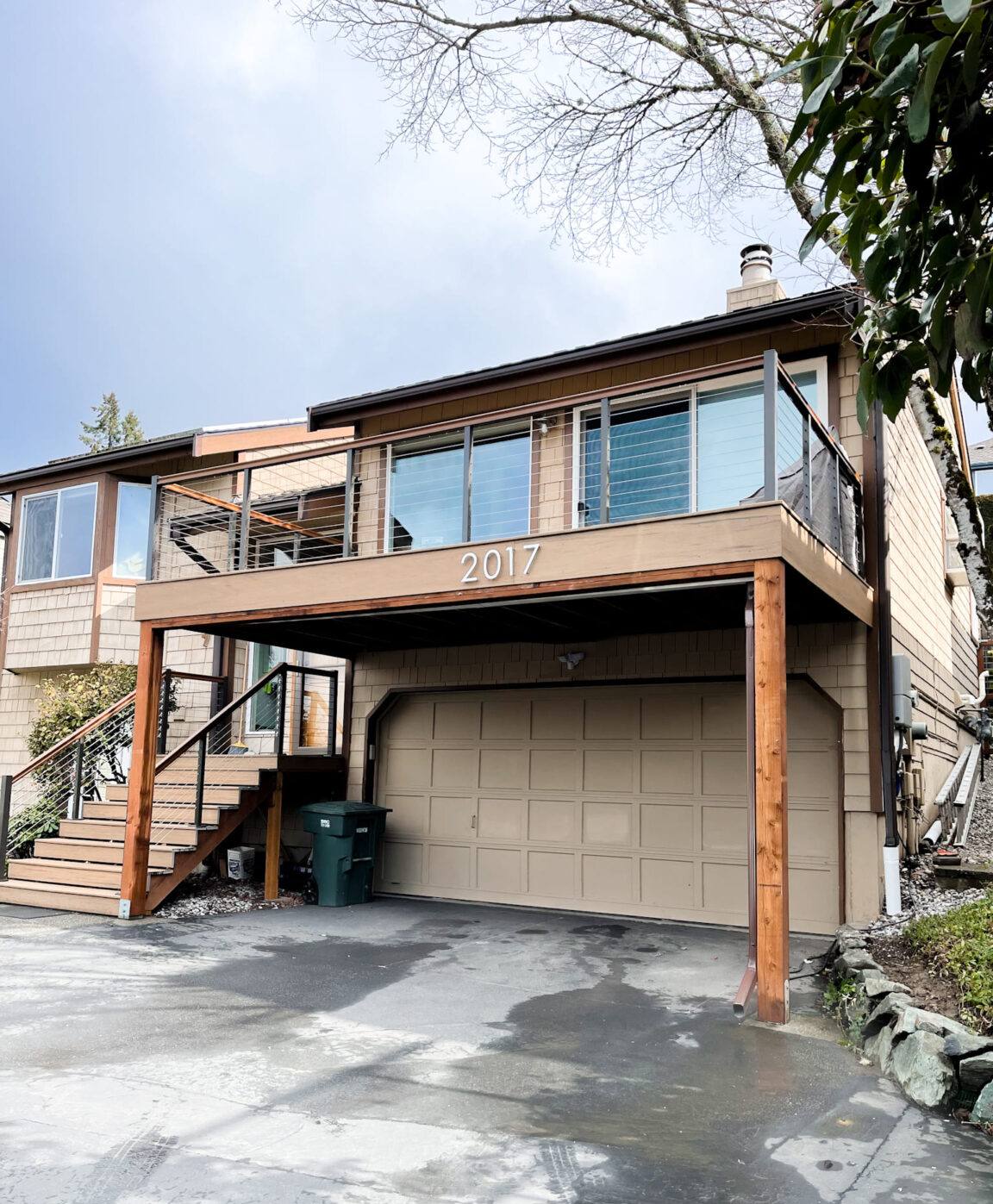
Beyond climate, the physical layout of most Birch Point lots creates structural questions that don't come up as often on flatter, more inland properties in Blaine. Many homes here sit above a sloped yard that drops toward the water, which usually means the deck is elevated rather than sitting a step or two off grade. That changes the guardrail height and structural bracing the build needs, and it often means the substructure has to account for a retaining wall, a steep grade change, or limited access for equipment during construction. Wooded lots add another factor: tree roots and drainage patterns around mature trees affect where footings can go and how water moves under and around the deck once it's built. None of this makes a Birch Point deck impossible to build well — it just means the site work and engineering questions get asked before the framing goes in, not after something settles or shifts.
Choosing the Right Decking Material for This Location
Material choice carries more weight on a lot this exposed, because the gap in performance between a well-suited product and a poorly-suited one shows up faster here than it would on a sheltered, inland deck. The main categories homeowners weigh are pressure-treated or cedar wood, capped composite, and cellular PVC.
| Material | Salt Air & Moisture Handling | Moss Resistance | Upkeep |
|---|---|---|---|
| Cellular PVC | Excellent — no wood fiber to absorb moisture | Strong, smooth non-porous surface | Occasional washing |
| Capped composite | Strong — cap layer resists moisture and staining | Good on most product lines | Occasional washing |
| Uncapped composite | Moderate — some absorption at exposed fiber | Fair; can build up over time in shade | Periodic cleaning |
| Cedar | Moderate — natural resistance, needs sealing | Fair when sealed and maintained | Regular oiling or sealing |
| Pressure-treated wood | Weak against sustained salt exposure over time | Poor without regular treatment | Regular sealing or staining |
On heavily shaded, sloped lots near the water, we lean toward steering homeowners away from uncapped composite and untreated wood unless they're genuinely willing to keep up with the sealing and cleaning those materials need in this setting. Capped composite and cellular PVC cost more up front but ask far less of the homeowner year to year, which matters most on decks that don't get walked past and inspected daily — a common situation for weekend or seasonal use on this stretch of waterfront.
What a Correctly Built Deck Involves Here
The decking surface gets most of the attention when homeowners picture a new deck, but on a Birch Point lot, the framing, fasteners, footings, and drainage work underneath are what actually determine how long it holds up. A correctly done build for this site includes:
- Footings and framing engineered for the actual slope and soil conditions on site, not a generic layout assumed to work on level ground
- Stainless steel or coastal-grade corrosion-resistant fasteners throughout, since standard hardware corrodes faster this close to open water
- Hidden fastener systems on the walking surface where the product allows, reducing exposed metal and giving a cleaner finish
- Correct board gapping for drainage and material movement, so wind-driven rain can actually drain and dry rather than pool between boards
- Proper ledger flashing where the deck ties into the house, one of the most common points where moisture works its way in on a poorly built deck
- Guardrail and post attachment sized for the deck's actual height and the open wind exposure the site sees, not a minimum-code assumption
- Grading and ventilation underneath the deck so moisture doesn't sit against the framing between storms, especially where slope traps runoff
- Drainage planning that accounts for water moving downhill through and around the site, not just water falling directly on the deck itself
Skip any one of those and the deck will likely still look fine the first year or two. The problems tend to show up later, as a soft joist, a loosening guardrail post, or corrosion staining working its way through the boards above it.
Permitting and Shoreline Considerations
Property this close to the water in Whatcom County often falls under shoreline and critical-area review in addition to standard building code, which can affect setbacks, allowable structure height, and how close a deck can sit to the water's edge or a steep slope. That review adds a step to the process compared to a straightforward inland deck permit, and it's worth confirming early rather than discovering it partway through design. We handle that permitting work as part of the job, including the standard structural and elevation requirements that apply countywide, so the homeowner isn't the one sorting out which rules apply to a particular lot.
How Our Process Works
We start with a site visit to look at the actual conditions — existing structure and grade if it's a replacement, slope and drainage patterns, tree cover and shade through the day, and how directly the site faces open water. From there we talk through decking material and layout options that fit the budget and how the space will realistically get used, whether that's a quiet deck for taking in the water or a larger space for entertaining. Once the design and permitting are settled, the build follows the sequence above — footings and framing sized for the site's actual slope and exposure, then decking, guardrails, and any stairs needed to work with the grade. We close out with a walkthrough covering what the specific material chosen actually needs going forward, which for most modern decking materials is minimal, but not nothing.
Keeping a Birch Point Deck Healthy Year-Round
Even a well-built deck in the right material needs some routine attention in this setting to reach its full lifespan. Worth keeping in mind:
- Rinse the deck surface periodically to clear salt residue, pollen, and organic debris before it works into the surface or cap layer
- Keep gaps between boards clear of leaves and needles, which build up faster under tree cover than on open lots
- Check guardrail posts and hardware once a year for early corrosion or loosening, especially before the wet season sets in
- Watch drainage paths around and under the deck after heavy rain, since sloped, wooded lots can shift how water moves season to season
- Address any soft framing, standing water, or leaning guardrail post right away — those are structural issues that don't improve with time
Why It Matters That We Already Work Birch Point
A crew that mostly builds decks on flat, sheltered lots further from the water can still do competent work, but a Birch Point job brings variables that don't come up as often elsewhere in Blaine — sloped footings and framing, corrosion-grade fastener requirements from direct water exposure, guardrail engineering for elevated decks, and a moss season that runs longer under tree cover than it does on open, sunny lots. Working this specific stretch of shoreline regularly means we're not guessing at those requirements on your project. We've seen which decking materials and fastener grades actually hold up to Birch Point's particular mix of salt air, driving rain, slope, and shade, and where the extra structural attention is worth it rather than an unnecessary upsell.
That familiarity also shows up in smaller judgment calls — how to lay out a deck around mature trees and slope without fighting the site, or being straightforward about what a deck here realistically needs to last versus what's just an added cost.
Get a Straight Answer About Your Deck
Whether you're replacing an aging deck, planning a new one for a sloped or wooded Birch Point lot, or just want an honest read on what your property would need, we're happy to walk the site with you and lay out the options plainly. Reach out below for a free, no-pressure estimate.