 Blaine Siding
 Birch Bay's Siding Problem Isn't Like Inland Whatcom County's
Birch Bay sits right on the water, and that changes what siding has to survive out here. Homes a few miles inland in Whatcom County deal with rain and cold. Homes in Birch Bay deal with all of that plus salt-laden air coming off the bay, wind-driven rain that hits walls sideways instead of falling straight down, and a moss season that can run most of the year on north- and west-facing walls. Siding that holds up fine in Bellingham or Ferndale can fail early a few blocks from the shoreline in Birch Bay, and we see the difference in the repair calls we get from each area.
This page is about one thing: what it actually takes to side a Birch Bay home correctly with fiber cement, and why we only do that work with James Hardie products rather than the cheaper alternatives on the market.
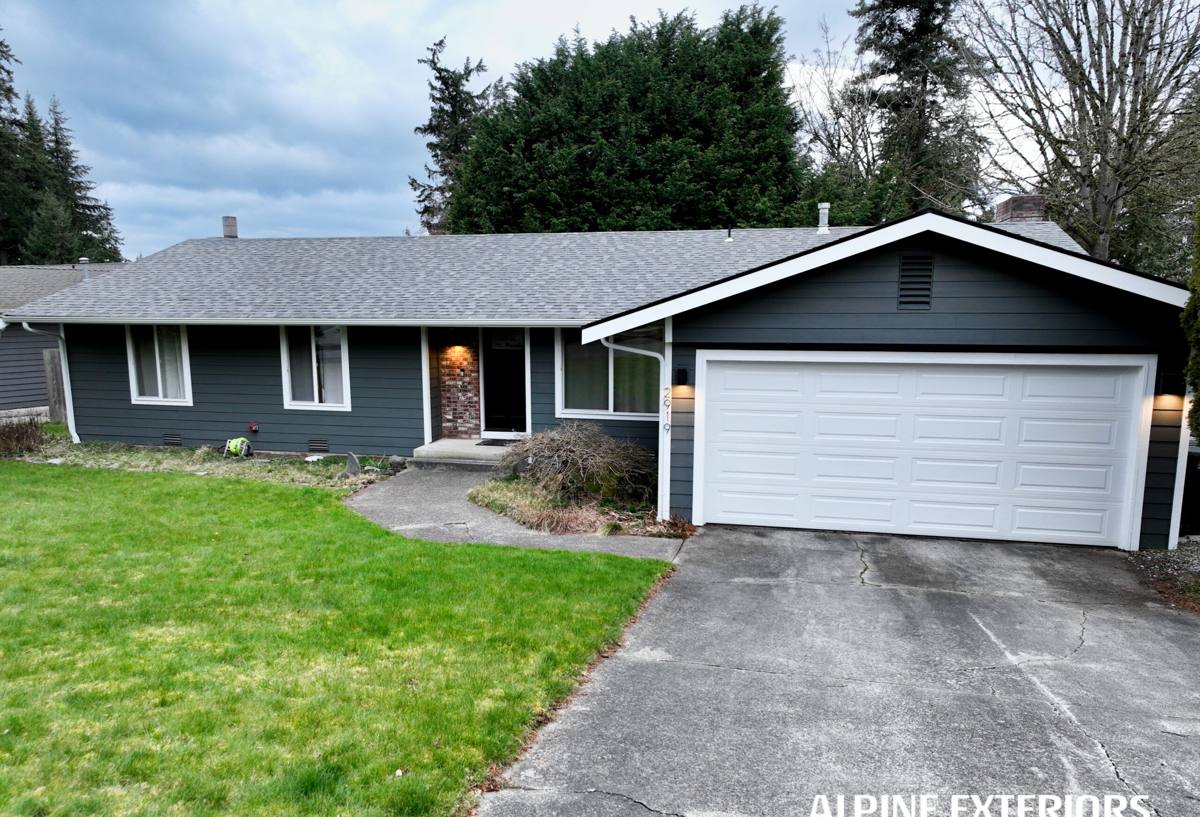
What Birch Bay Homes Actually Need From Their Siding
Resistance to Salt Air
Salt in the air doesn't just sit on the surface — it works into seams, fastener heads, and any exposed edge over time. On homes closer to the water, that salt exposure accelerates finish breakdown on cheaper products and can corrode the wrong kind of fasteners. Fiber cement itself doesn't corrode, and factory-applied finishes hold up to salt exposure far better than field-applied paint, which is one of the biggest reasons we steer Birch Bay homeowners toward a factory-finished product instead of anything that needs painting on site.
Wind-Driven Rain, Not Just Rain
Birch Bay's exposure to open water means rain doesn't always fall straight down — wind pushes it sideways and up under laps, trim, and penetrations that would stay dry on a more sheltered inland lot. That means the water management behind the siding (the house wrap, flashing, and drainage gap) matters as much as the siding material itself. A product that resists moisture but is installed without proper drainage detailing will still let water in around windows, doors, and butt joints.
Moss and Algae Resistance
The combination of shade, moisture, and mild temperatures along this stretch of the coast is close to ideal for moss and algae growth. It shows up first on north-facing walls, under eaves, and anywhere siding stays damp longer after a storm. Moss holds moisture against the wall surface, and over years that constant dampness is what actually damages siding — not the moss itself, but what it traps against the wall.
Why We Install Only James Hardie Fiber Cement Here
We don't install vinyl, LP SmartSide, Cemplank, Allura, or primed wood siding, and Birch Bay's climate is a big part of why. Vinyl can warp and become brittle with temperature swings and doesn't hold up structurally to the sustained wind loads this shoreline sees. Engineered wood products depend on their outer coating staying intact to keep moisture out, and any breach — a scratch, a poorly sealed cut edge, a fastener that backs out — gives water a path into a wood-based core. Other fiber cement brands may look similar on a spec sheet, but we've standardized on James Hardie because of the consistency of its factory ColorPlus finish, the way its HZ5 product line is engineered specifically for the wetter, more humid climate zones the Pacific Northwest falls into, and the strength of its transferable warranty.
None of this means other products are unusable everywhere — it means that after years of doing exterior work on this coastline, we decided we'd rather stand behind one system we trust completely than install several we have reservations about.
What Hardie's HZ5 Line Means for This Climate
James Hardie engineers its siding by climate zone, and the HZ5 formulation is built for regions with sustained moisture exposure and freeze-thaw cycling — which describes Birch Bay's winters well. It's manufactured with that moisture exposure in mind rather than being a one-size-fits-all product shipped to every region the same way.
What a Correct Fiber Cement Installation Involves
The material is only half the equation. A lot of the siding failures we get called out to inspect in coastal Whatcom County trace back to installation shortcuts, not the product itself. A correct job on a Birch Bay home includes:
- A weather-resistant barrier installed and lapped correctly behind the siding, with all seams taped
- A drainage gap or rainscreen strategy so any water that gets behind the siding can drain and dry out instead of sitting against the sheathing
- Properly flashed windows, doors, and any wall penetrations, with kick-out flashing where a roofline meets a wall
- Correct fastener type, spacing, and placement per the James Hardie installation specification — not just "close enough"
- Minimum clearance between the bottom of the siding and grade, decks, or roofing to keep splashback and standing water off the material
- Factory-cut and pre-primed edges sealed at every field cut, since a raw cut edge is the one place fiber cement can absorb water if left untreated
- Caulking only where James Hardie's specifications call for it — over-caulking traps moisture just as badly as under-caulking lets it in
Skip any one of these and you can end up with a wall that looks right for a few years and then starts showing problems that are expensive to trace back to the actual cause.
Our Process for a Birch Bay Siding Project
- On-site inspection: We walk the exterior, check the current siding and water management (or lack of it), and look specifically at wind and moisture exposure based on where the home sits relative to the water.
- Written estimate: You get a clear scope of work and pricing before anything is scheduled — no vague allowances.
- Prep and moisture barrier work: Removal of failing siding, inspection of the sheathing underneath for hidden damage, and installation of the weather-resistant barrier and drainage plane.
- Installation: Hardie panels or planks installed to manufacturer specification, including fastening, flashing, and trim detail work around every window, door, and penetration.
- Final walkthrough: We go over the finished job with you, including how to spot early moss growth and what routine maintenance actually looks like.
Fiber Cement vs. Other Siding in a Coastal Climate
| Factor | James Hardie Fiber Cement | Vinyl Siding | Engineered Wood (LP SmartSide, etc.) |
|---|---|---|---|
| Salt air exposure | Factory finish resists fading and breakdown | Can fade, chalk, and become brittle over time | Coating must stay fully intact to protect the core |
| Wind-driven rain | Non-absorbent core; performance depends on correct install | Can flex and loosen at fasteners under sustained wind | Vulnerable at any breach in the coating or cut edge |
| Moss/algae exposure | Resists moisture absorption; surface can be treated | Doesn't feed moss growth but traps moisture behind panels if warped | Prolonged dampness against an unsealed edge risks rot |
| Fire resistance | Non-combustible | Combustible | Combustible |
| Typical warranty | Long-term, transferable | Varies by manufacturer, often prorated | Varies, often shorter than fiber cement |
Cost Factors for a Birch Bay Fiber Cement Project
Every home is different, so we don't quote pricing sight unseen — but these are the factors that tend to move the number most on Birch Bay jobs specifically:
| Factor | Why It Matters Here |
|---|---|
| Wall exposure to wind and water | Waterfront-facing walls often need more careful flashing and drainage detailing than sheltered walls |
| Condition of existing sheathing | Years of moisture intrusion behind old siding can mean repair work before new siding goes on |
| Home size and wall complexity | More corners, windows, and roof-wall intersections mean more flashing and trim labor |
| Siding profile chosen | Lap siding, shingle-style panels, and board-and-batten all install differently and price differently |
| Access | Steep lots, limited driveway access, or proximity to the water can affect staging and equipment access |
A Homeowner's Checklist Before Hiring Anyone for This Job
- Ask what weather-resistant barrier and drainage strategy they use behind the siding — not just what brand of siding they install
- Confirm they follow the manufacturer's written installation specification, not a generalized approach
- Ask how they handle field-cut edges and why that step matters
- Get a written warranty explanation — both the material warranty and the installer's workmanship warranty
- Ask whether they've worked on homes in Birch Bay or other shoreline areas specifically, not just "the region" broadly
Why Local Experience in Birch Bay Matters
A crew that mostly works drier, more sheltered neighborhoods can still do a technically competent install and still underestimate what this shoreline does to a wall over ten winters. Knowing to pay extra attention to kick-out flashing on a wall that catches wind off the bay, or where moss tends to establish first on a given lot orientation, comes from having actually worked Birch Bay before — not from a general knowledge of Whatcom County siding work. We factor that exposure into how we detail flashing, where we recommend a drainage gap over a standard install, and how we talk homeowners through realistic maintenance expectations for a home this close to the water.
Maintenance After Installation
Correctly installed James Hardie siding is low-maintenance, not no-maintenance. In Birch Bay, that mostly means an occasional rinse to keep salt residue and organic buildup from accumulating, keeping an eye on caulking at trim joints over the years, and addressing any moss on adjacent surfaces (roofs, decks, fences) before it spreads onto siding. None of this is a heavy lift, but it's worth knowing going in rather than being surprised by it later.
If you're dealing with aging, failing, or moss-covered siding on a Birch Bay home, we're happy to take a look and give you a straightforward, no-pressure estimate. Use the form below to get started.