 Blaine Siding
 Why Bellingham Roofs Age Differently Than Roofs Inland
A roof in Bellingham isn't fighting the same battle as a roof in Spokane or even Seattle's drier neighborhoods. Sitting near the Strait of Georgia and Bellingham Bay, homes here deal with salt-laden air, wind-driven rain that gets pushed sideways under poorly flashed edges, and a moss season that can run eight or nine months out of the year. Whatcom County's mild, wet winters never give roofing materials a real chance to dry out between storms, which is exactly the condition moss, algae, and slow-rot decking thrive in.
None of that means a roof here has to fail early. It means the installation has to account for moisture from day one — not just the shingle or metal panel on top, but everything underneath it: the decking, the underlayment, the flashing details, and the attic ventilation that lets the whole assembly dry out between rains. A roof installed the way it would be in a drier climate, with shortcuts on flashing or ventilation, will show problems in Bellingham years before it should.
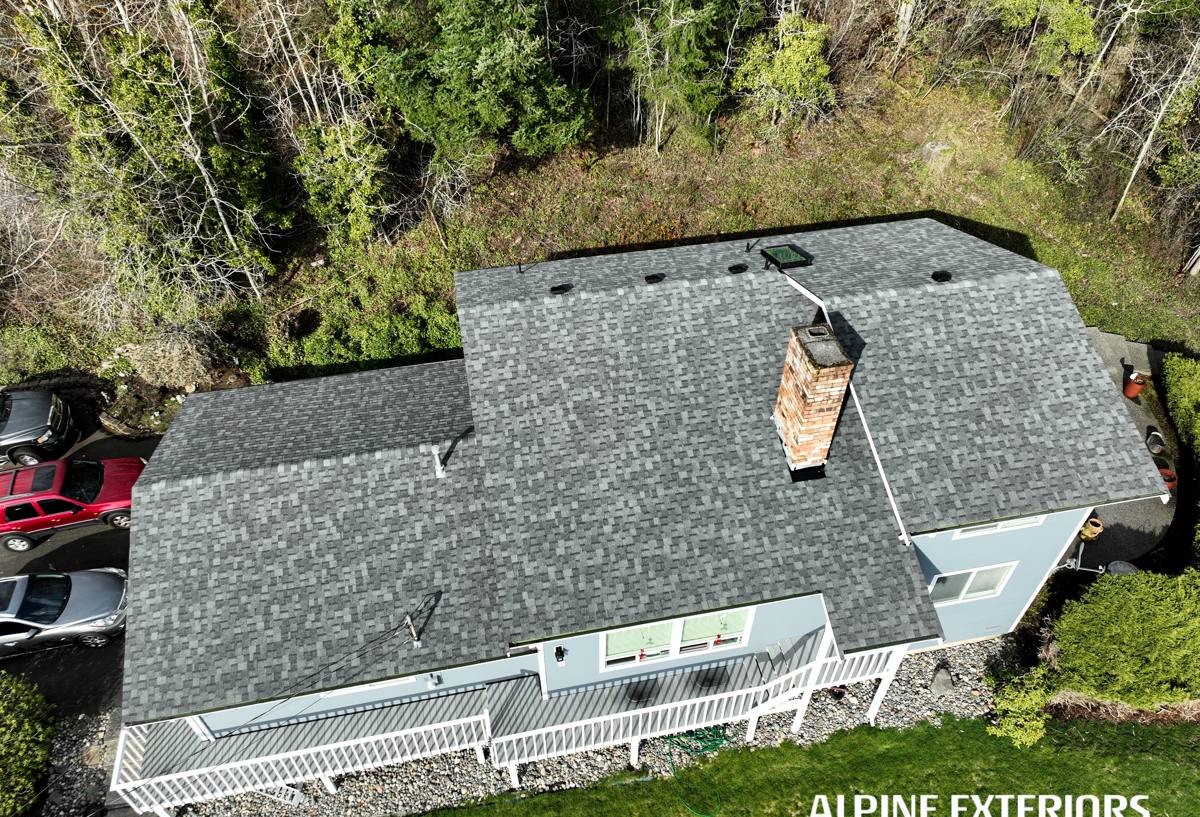
Signs a Bellingham Home Needs a New Roof, Not Another Repair
Most roofs give warning signs long before they leak into living space. In this climate, the warning signs are often moisture-related rather than obvious storm damage.
- Moss or algae streaking that comes back within months of being cleaned
- Shingles that are cupping, curling, or losing granules in the valleys and along the eaves
- Soft or spongy spots on the roof deck, especially near chimneys, skylights, or where two roof planes meet
- Rusted, lifted, or missing flashing around vents, chimneys, and sidewalls
- Daylight visible through the attic decking, or damp insulation after a heavy rain
- A roof that's 20+ years old (asphalt) or showing granular wear even if it "looks fine" from the ground
- Ice-dam-style staining on interior ceilings after a cold snap followed by rain
If more than one or two of these apply, it's usually more cost-effective to plan a full replacement than to keep patching. Repeated patch repairs on an aging roof in this climate tend to just relocate the leak rather than solve it.
What a Correct New Roof Installation Actually Involves
It Starts With the Deck, Not the Shingles
The roofing material gets all the attention, but in a marine climate the decking underneath matters just as much. Once the old roofing is torn off, every section of decking should be inspected for soft spots, delamination, or rot — particularly around old flashing points and low-slope transitions where water has had years to find its way in. Damaged sheathing gets replaced before anything new goes down. Installing new roofing over compromised decking just hides the problem for a year or two.
Underlayment Built for Wind-Driven Rain
Standard felt underlayment is not what a coastal Whatcom County roof needs. A synthetic underlayment with strong wind and moisture resistance, combined with self-adhering ice-and-water membrane at eaves, valleys, and around every penetration, gives the roof a second line of defense when wind pushes rain up under the shingle tabs — which happens regularly with storms coming off the water.
Flashing: Where Most Roof Failures Actually Start
The majority of "roof leaks" that turn out not to be roofing material failures at all are flashing failures — at chimneys, skylights, sidewalls, and roof-to-wall transitions. Correct installation means new step flashing, counterflashing, and kick-out flashing at every one of these points, not reused old flashing tucked under new shingles. This is the detail that separates a roof that lasts to its warranty date from one that starts leaking in year six.
Ventilation That Actually Dries the Attic
A balanced intake-and-exhaust ventilation system (soffit vents paired with ridge or roof vents) keeps the attic close to outside temperature and humidity. Without it, warm moist air condenses on the underside of the decking, which accelerates rot and feeds the moss and mildew that already have every advantage in this climate. Ventilation upgrades are one of the most overlooked parts of a "new roof" and one of the most important for longevity here.
Choosing a Roofing Material for a Bellingham Home
There's no single "best" material — the right choice depends on your roof's slope, your home's style, your budget, and how much upkeep you're willing to do. Here's how the common options actually compare for this climate:
| Material | Moss/Algae Resistance | Typical Lifespan Here | Maintenance Burden | Relative Cost |
|---|---|---|---|---|
| Standard 3-tab asphalt shingle | Low without treatment | 15–20 years | Moderate — periodic moss removal needed | $ |
| Architectural (laminate) asphalt shingle | Moderate; better with algae-resistant granules | 25–30 years | Moderate | $$ |
| Metal (standing seam or panel) | High — sheds moss and debris well | 40–50+ years | Low | $$$ |
| Cedar shake | Low — moss-prone, needs regular treatment | 20–25 years with upkeep | High | $$$ |
We install algae-resistant shingle lines as our standard on asphalt jobs in this area for exactly the reason the table shows: untreated shingles in Whatcom County's wet, shaded conditions grow algae and moss noticeably faster than they would in a drier climate. Cedar shake has genuine visual appeal and a long track record in the Pacific Northwest, but we're upfront with homeowners that it demands the most ongoing maintenance of any option here — that's a trade-off to plan for, not a reason it's a bad product.
How Our Bellingham Roof Installation Process Works
- On-site inspection and estimate. We look at the existing roof, attic ventilation, and any problem areas before quoting, so the number you get reflects your actual roof, not a generic average.
- Material selection. We walk through options, cost differences, and realistic lifespans for your specific roof slope and exposure.
- Permitting. We handle the local permit paperwork required for a full roof replacement so you don't have to track it down yourself.
- Tear-off and deck inspection. Old roofing comes off down to the deck, which gets inspected and repaired as needed before anything new goes on.
- Underlayment and flashing installation. Ice-and-water membrane at vulnerable areas, synthetic underlayment across the field, and all-new flashing at every penetration and transition.
- Ventilation check and correction. Intake and exhaust venting is verified and upgraded if the attic isn't breathing properly.
- Roofing material installation. Installed to manufacturer spec so the warranty stays intact.
- Cleanup and final walkthrough. Magnetic sweep for nails, debris removal, and a walkthrough so you know what was done and what to expect going forward.
Why Local Experience in Blaine and Bellingham Matters
A crew that works Whatcom County roofs regularly already knows which details matter most here: how far up a valley the ice-and-water membrane needs to run given how these storms track in off the water, which flashing details tend to fail first on the roof styles common in this area, and how much ventilation a given attic actually needs versus the bare code minimum. That local pattern recognition is different from general roofing experience — a roof crew based somewhere with a dry climate hasn't spent years watching what actually goes wrong on Bellingham roofs specifically.
Working locally also means we're not disappearing after the job. If a warranty question or a storm-related concern comes up two years down the road, we're still in the area and still reachable — not a crew that was passing through for one season.
What Drives the Cost of a New Roof Here
Every estimate is specific to the home, but the same handful of factors move the price on almost every job in this area:
| Cost Factor | Why It Matters Locally |
|---|---|
| Roof size and number of planes/valleys | More valleys mean more ice-and-water membrane and flashing labor |
| Current deck condition | Rot from years of trapped moisture often isn't visible until tear-off |
| Material choice | Asphalt, metal, and cedar carry very different material and labor costs |
| Ventilation upgrades needed | Older Bellingham homes frequently need added soffit or ridge venting |
| Roof pitch and access | Steeper or harder-to-access roofs take longer and require more safety setup |
| Layers of existing roofing | Multiple old layers add tear-off time and disposal cost |
We'd rather walk you through these factors on your actual roof than quote a number over the phone that won't hold up once we're up there.
Caring for a New Roof Through Whatcom County's Wet Season
A correctly installed roof still benefits from basic upkeep, especially given how long moss season runs here:
- Keep gutters clear of needles and debris so water isn't backing up under the eaves
- Have moss growth treated or removed before it thickens enough to hold moisture against the shingles
- Trim back overhanging branches that keep sections of the roof shaded and slow to dry
- Check attic ventilation isn't blocked by insulation piled over soffit vents
- Schedule a quick visual check after major windstorms, since driving rain can expose small flashing issues early
None of this is heavy maintenance — it's the kind of upkeep that, done consistently, is the difference between a roof that reaches its full expected lifespan and one that doesn't.
Warranty and What to Expect After Installation
Manufacturer warranties on roofing materials only hold up if the installation followed spec — that's a big part of why the underlayment, flashing, and ventilation details above aren't optional extras. We install to manufacturer requirements so the material warranty stays valid, and we stand behind our own workmanship separately from that. Before we leave the job, you'll know exactly what's covered, for how long, and what routine maintenance (like moss control) is on you to keep it that way.
If your Bellingham home's roof is showing its age, or you just want an honest read on how many years it has left, we're happy to take a look. Fill out the form below for a free, no-pressure estimate.