 Blaine Siding
 Asphalt Shingle Roofing in Bellingham: Built for This Coastline
Bellingham sits close enough to the water that salt air is part of daily life, and close enough to the Cascade foothills that rain shows up sideways more often than straight down. Add in the shaded, damp yards common throughout Whatcom County, and you've got a climate that is genuinely hard on a roof. Asphalt shingle roofing can hold up well here for decades — but only when the material, ventilation, and installation details all account for what this specific location does to a roof over time. A shingle roof installed the way it would be in a dry inland town will not perform the same way three miles from Bellingham Bay.
This page covers what a correctly installed or repaired asphalt shingle roof needs to survive Bellingham's weather, what our process looks like on a Bellingham property, and why local experience matters more here than the shingle brand on the wrapper.
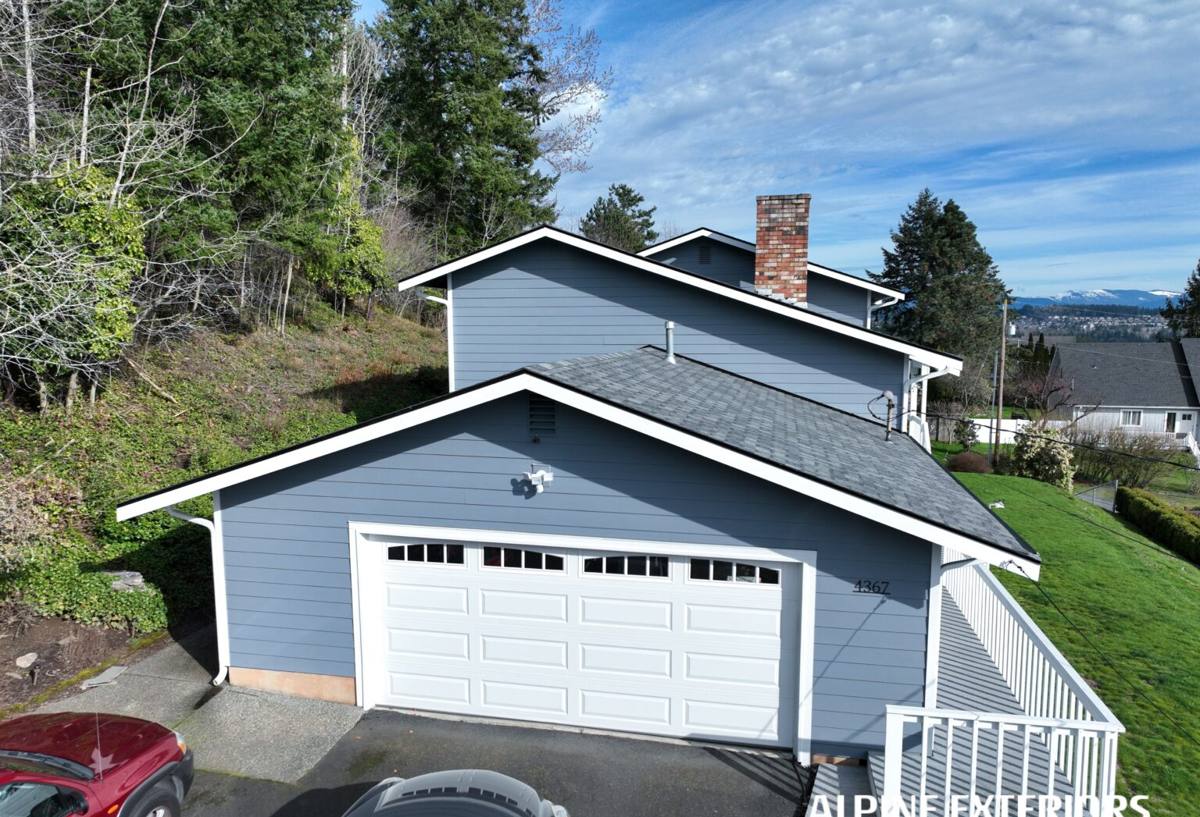
What Bellingham's Climate Actually Does to a Shingle Roof
Salt Air and Coastal Moisture
Homes closer to the water deal with a fine salt residue that settles on roofing, gutters, and flashing. Over years, that residue accelerates corrosion on exposed metal fasteners, flashing, and vent boots. It's not dramatic — you won't see it happen — but it's steady, and it's why fastener and flashing choice matters more here than in a typical inland install.
Driving Rain
Wind off the Strait and the Bay doesn't just drop rain straight down — it pushes it sideways and up under shingle tabs, ridge caps, and anywhere flashing meets a wall, chimney, or skylight. A roof that would shed water fine in a calmer climate can leak here if the underlayment, ice-and-water shield placement, and flashing laps aren't done with wind-driven rain specifically in mind.
Moss and Shade
Whatcom County's tree cover and long wet season give moss everything it needs: moisture, shade, and organic debris caught on the shingle surface. Moss holds water against the shingle mat far longer than open sun and air would allow, which shortens shingle life and can lift tabs enough for wind and rain to get underneath. North-facing slopes and roofs under conifers see this first and worst.
Quick Reference: Climate Stress vs. What It Requires
| Climate Factor | Effect on the Roof | What the Install Needs |
|---|---|---|
| Salt air near the water | Corrosion of fasteners and exposed metal over time | Corrosion-resistant fasteners and flashing, proper metal selection |
| Wind-driven, sideways rain | Water forced under tabs, laps, and flashing joints | Correct nail placement, sealed laps, wind-rated shingle sealing |
| Shade and heavy moss growth | Trapped moisture, mat degradation, lifted tabs | Zinc or copper strips, airflow, periodic moss removal |
| Long wet season overall | Slow drying, more time for water to find weak points | Proper ventilation and underlayment to let the deck dry between storms |
What a Correct Asphalt Shingle Roof Job Involves
Tear-Off and Deck Inspection
A proper reroof starts with full removal of the old roofing, not an overlay. Overlaying hides deck problems — soft spots, old leaks, rot around penetrations — that only show up after a new roof is already down. In a climate as wet as this one, hidden deck damage is common enough that skipping the inspection step is a real risk, not a formality.
Underlayment Choice
Synthetic underlayment with taped or lapped seams performs better under sustained rain than older felt products, which can wick moisture at seams. In areas prone to wind-driven rain — including most of Bellingham given its exposure — ice-and-water shield membrane at eaves, valleys, and around penetrations adds a second line of defense where water is most likely to be pushed backward under shingles.
Flashing Details
Flashing failures, not shingle failures, cause the majority of leaks we find. Step flashing at walls and chimneys, properly lapped valley flashing, and correctly sized drip edge at eaves and rakes all matter more than which shingle brand sits on top of them. This is also where salt-air corrosion resistance matters most, since flashing is the metal most directly exposed to weather.
Ventilation
Balanced intake and exhaust ventilation keeps the underside of the roof deck dry and helps shingles cure and perform as designed. In a shaded, damp climate, poor ventilation traps moisture against the deck from both directions — rain from outside, humidity from inside — which shortens the life of everything above it.
Nailing and Sealing
Manufacturer nailing patterns exist for a reason, and in a windy coastal area they're not optional. Under-nailed or improperly placed fasteners are one of the most common causes of blow-offs and lifted tabs we see on older Bellingham roofs.
Choosing Shingles for This Climate
Not every asphalt shingle product is built the same, and for a Bellingham roof we weigh a few things above pure appearance:
- Wind rating: Higher wind-rated shingles resist lifting and blow-off in sustained coastal gusts.
- Algae resistance: Shingles with copper- or zinc-infused granules resist the dark streaking and moss growth common in wet, shaded climates.
- Mat quality: A denser, higher-quality mat holds up better to repeated wet-dry cycling than a thin, budget mat.
- Warranty structure: We review what's actually covered — material only, or material plus labor — since coastal climates can void certain warranty terms if ventilation or installation specs aren't met exactly.
We don't push homeowners toward the cheapest shingle line available. A slightly higher upfront cost for a better-rated shingle in a coastal, mossy climate almost always pays for itself in fewer callbacks, less granule loss, and a longer real-world lifespan than the base-grade product.
Our Process for a Bellingham Roofing Project
- On-site inspection: We walk the roof (or use safe access methods where the roof condition doesn't allow foot traffic) and check the deck, flashing, ventilation, and any problem areas from inside the attic where visible.
- Honest scope and estimate: We tell you plainly whether you need a full reroof, a repair, or a maintenance plan — not the most expensive option that fits the visit.
- Material selection: We walk through shingle options with wind rating, algae resistance, and warranty terms explained in plain language, matched to your roof's exposure and budget.
- Tear-off and deck repair: Old roofing comes off, the deck gets inspected and repaired where needed before anything new goes down.
- Underlayment, flashing, and shingle installation: Installed in the sequence and with the fastening pattern the manufacturer specifies, with extra attention to valleys, walls, and eaves.
- Final walkthrough: We review the finished roof with you, including ventilation and any moss-prevention measures installed, before calling the job done.
Repair, Maintenance, or Full Replacement?
Not every roofing issue in Bellingham means a full reroof. A lot of the calls we get are isolated problems — a section of lifted shingles after a windstorm, a flashing leak around a chimney, or moss buildup that needs clearing before it does real damage. We look at the whole roof's age, material condition, and history before recommending replacement over repair.
Signs You Likely Need Repair, Not Replacement
- Isolated leak tied to one flashing point or penetration
- A small number of shingles cracked, curled, or missing after a storm
- Moss or debris buildup with the shingle mat still in solid condition underneath
- Roof is under roughly 15 years old and otherwise sound
Signs Pointing Toward Full Replacement
- Widespread granule loss visible in gutters or downspouts
- Multiple past repairs in different areas of the roof
- Soft or spongy deck sections found during inspection
- Shingles at or past their expected service life for this climate
Moss and Debris: Ongoing Care Between Roofing Projects
Even a well-installed shingle roof needs periodic attention in a climate like this. Keeping gutters clear so water doesn't back up under eave edges, removing moss and organic debris before it mats down against the shingle surface, and trimming back overhanging branches that keep a roof shaded and damp all extend the life of the roof between major projects. We treat this as part of an honest roofing relationship, not an upsell — a roof that's maintained properly rarely surprises you with a sudden leak.
Why Local Experience in Bellingham Matters
A roofing crew that works across Whatcom County regularly sees how this specific stretch of coastline behaves — which slopes hold moss longest, where wind-driven rain causes the most flashing failures, and which shingle products actually hold their algae resistance after a few wet winters. That's different from general roofing knowledge learned somewhere drier. It shows up in the small decisions: where we add extra ice-and-water membrane, how we detail a valley, which fastener we use near the water. Those decisions are what separate a shingle roof that lasts its full expected life here from one that needs early repairs.
Getting a Roof That's Actually Right for Bellingham
Every roof on this list of considerations — deck condition, ventilation, flashing, shingle selection — interacts with the others. A great shingle on a poorly ventilated deck will still underperform. Perfect flashing won't save a roof with the wrong nailing pattern in high wind. We look at the whole system, not just the shingle, because that's what actually determines how the roof holds up through a Bellingham winter.
If you're dealing with an aging roof, storm damage, moss buildup, or you're just planning ahead, we're happy to take a look and give you a straightforward assessment. Request a free, no-pressure estimate using the form below and we'll walk you through exactly what your roof needs.