 Blaine Siding
 Roofing for Grandview's Coastal Climate
Grandview sits close enough to Blaine's shoreline and the Strait of Georgia that homes here take a different kind of weathering than roofs just a few miles inland. Salt-laden air corrodes exposed metal faster, driving rain off the water tests every lap and seal in a roof system, and the long gray stretch of fall through spring gives moss and algae months at a time to get established on north-facing slopes and shaded valleys. An asphalt shingle roof that's specified and installed for this environment holds up. One that isn't shows it early — streaking, granule loss, soft spots at the edges, and moss creeping up from the eaves.
This page covers what asphalt shingle roofing actually requires for a Grandview home: the materials that make sense here, what correct installation looks like underneath the shingles you can see, and how we handle the job from first look to final cleanup.
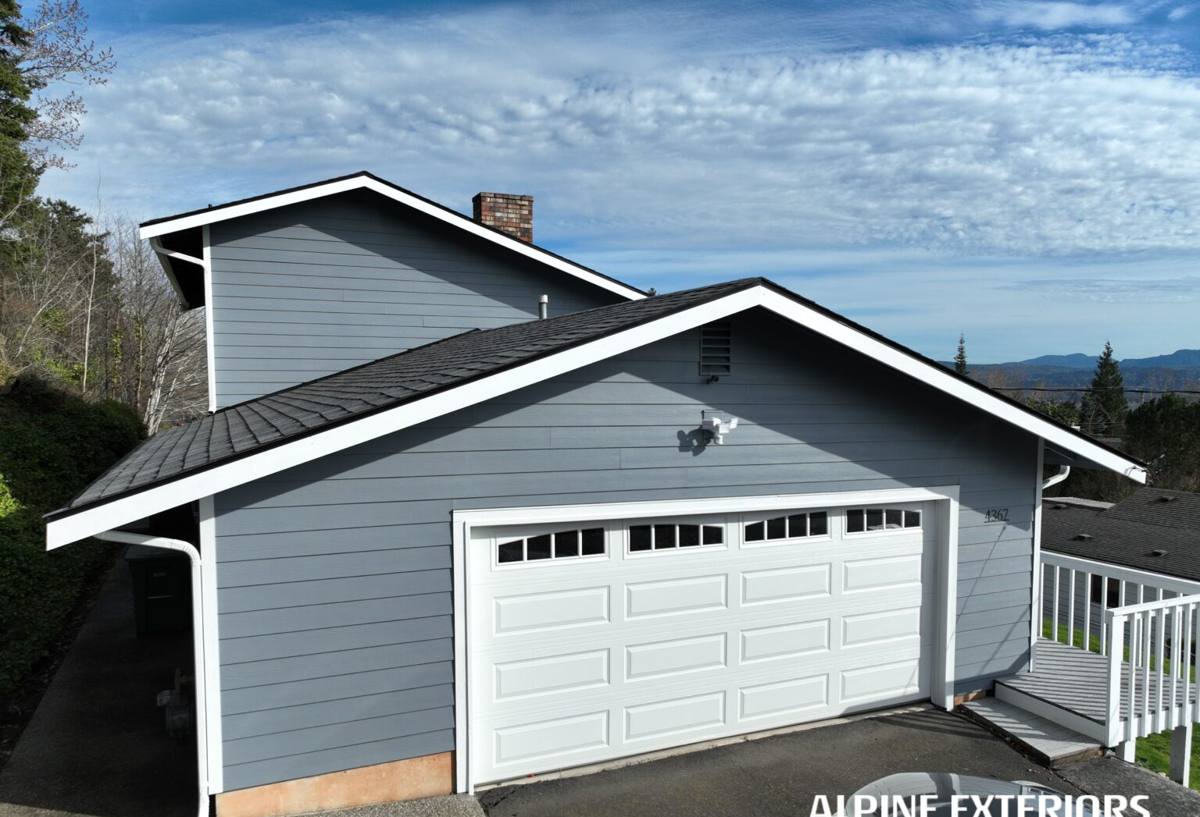
What Whatcom County Weather Does to a Roof
Salt Air
Homes near Blaine's water get airborne salt on everything exposed to weather. It's most aggressive on unprotected metal — nails, flashing, vent caps, and drip edge. Standard electro-galvanized fasteners and thin-gauge flashing corrode faster in this air than they would twenty miles inland. We treat coastal exposure as a baseline design factor, not an upgrade.
Driving Rain
Wind off the water pushes rain sideways, not just straight down. That matters because a roof only sheds water well if every lap, seam, and penetration is built assuming water will hit it from an angle, not just fall on it. Underlayment coverage, shingle nailing pattern, and flashing detail at valleys and walls all carry more weight here than they would in a calmer inland microclimate.
Moss and Algae
Western Washington's wet season runs long, and shaded or north-facing roof sections in Grandview stay damp for extended stretches. Moss doesn't just look bad — it holds moisture against the shingle surface, lifts shingle edges as it grows, and works its way under laps over time. Algae staining is mostly cosmetic but is a sign that a roof surface stays wet longer than it should.
What a Correct Asphalt Shingle Job Includes
The shingle layer is the part everyone sees, but most roof failures actually start below it. A roof built for this climate gets these layers right:
- Deck inspection and repair — any soft, delaminated, or water-damaged sheathing gets replaced before anything else goes down. Shingles fastened over a compromised deck never perform correctly.
- Ice and water shield at vulnerable points — eaves, valleys, and roof-to-wall transitions get a self-adhering waterproof membrane, not just felt. These are the spots where driving rain and ponding find their way in first.
- Synthetic underlayment across the field — a full secondary water barrier under the shingles, lapped correctly with the roof's water flow, not against it.
- Corrosion-resistant flashing and fasteners — given the salt exposure here, we don't cut corners on metal quality at valleys, chimneys, skylights, and wall intersections.
- Balanced ventilation — intake at the eaves and exhaust at the ridge, sized to the attic. Poor ventilation traps moisture underneath the deck, which accelerates the exact moss and rot problems this climate already encourages.
- Manufacturer-spec nailing — correct nail count and placement per shingle, which is what determines wind resistance and warranty validity far more than the shingle brand itself.
Skip any one of these and the roof may look fine for a year or two before the shortcuts show up as leaks, premature moss growth, or shingles lifting in a windstorm.
Choosing Shingles for a Grandview Roof
Not every asphalt shingle product is a good fit for a coastal, high-moisture climate. We generally steer homeowners toward algae-resistant, architectural-grade shingles for Grandview roofs, for practical reasons rather than brand preference:
| Shingle Type | How It Performs Here | Trade-Offs |
|---|---|---|
| 3-tab (standard) | Lower upfront cost; adequate wind rating for typical exposure | Shorter lifespan, less resistant to algae staining, thinner profile shows wear sooner |
| Architectural (laminated) | Heavier, better wind and impact resistance, longer service life in wet climates | Higher material cost, though the gap has narrowed over the years |
| Algae-resistant (AR) coating | Copper- or zinc-infused granules resist the streaking and moss-friendly growth common on shaded, damp slopes | Slightly higher cost; doesn't eliminate moss risk entirely, just slows it |
| Impact-rated (Class 4) | Worth considering on exposed, wind-loaded slopes; may qualify for insurance discounts | Premium cost; benefit is marginal on well-sheltered roof sections |
We don't push the most expensive option by default — we look at the roof's actual sun exposure, tree cover, and pitch, then recommend the shingle class that matches what that specific roof will face.
Signs a Grandview Roof Needs Attention
Because moss and salt exposure work slowly, a lot of roof damage in this area gets noticed later than it should. Watch for:
- Moss or dark algae streaking on north-facing or shaded slopes
- Granules collecting in gutters or downspouts
- Shingle edges curling, cupping, or lifting
- Rusting or discolored flashing around chimneys, vents, or skylights
- Soft spots or sagging when walking the roof (best assessed by a professional)
- Daylight visible through the attic decking, or damp insulation below the roof
None of these mean the whole roof needs to come off immediately — sometimes it's a repair, sometimes it's a sign the roof is at the end of its useful life. Either way, catching it early is cheaper than dealing with the interior water damage that follows a missed leak.
Our Process for Grandview Roofing Projects
1. Inspection and Honest Assessment
We walk the roof, check the attic side when accessible, and tell you plainly whether you're looking at a repair, a partial re-roof, or a full replacement. We don't inflate a repair into a replacement to run up the job.
2. Tear-Off and Deck Check
Old roofing comes off down to the deck so we can actually see what's underneath — this is where hidden rot or past leak damage shows up, and it needs to be fixed, not covered over.
3. Waterproofing Layers First
Ice and water shield at the vulnerable areas, then full underlayment coverage, before a single shingle goes down.
4. Shingle Installation to Spec
Correct nailing pattern, proper exposure and offset, and flashing detail at every valley, wall, and penetration — the details that determine whether the roof performs in a real coastal storm, not just on a dry day.
5. Ventilation Check
We confirm intake and exhaust ventilation is balanced for the attic space, adjusting where needed rather than just replacing what was there before.
6. Cleanup and Walkthrough
Magnetic sweep for stray fasteners, full site cleanup, and a walkthrough so you know exactly what was done and what to expect going forward.
What Drives Cost on a Grandview Roof
| Factor | Why It Matters |
|---|---|
| Roof size and pitch | More surface area and steeper slopes mean more material and labor time |
| Deck condition | Rotten or damaged sheathing found during tear-off adds repair cost but is not optional to fix |
| Number of penetrations | Chimneys, skylights, and multiple vents each need individual flashing work |
| Shingle class | Standard 3-tab vs. architectural vs. algae-resistant changes material cost per square |
| Accessibility | Steep pitch, limited staging area, or difficult access can affect labor time |
| Existing layers | A full tear-off of multiple old layers takes longer than roofing over a single layer (where code allows) |
We give straightforward, itemized estimates rather than a single vague number — you should know what you're paying for, not just the bottom line.
Moss Season Maintenance Checklist
Between full roof replacements, a little seasonal attention goes a long way in this climate:
- Clear moss and debris from valleys and shaded slopes before it establishes and lifts shingle edges
- Keep gutters and downspouts clear so water isn't backing up under the eaves
- Trim back overhanging branches to reduce shade and debris buildup on the roof
- Check and touch up flashing sealant annually, especially around chimneys and vents exposed to salt air
- Have the roof looked at after any major windstorm off the water
Why Local Experience Matters in Grandview
A roof built for a dry inland climate and a roof built for a Whatcom County coastal community aren't the same job, even if the shingles look identical in the pile. A crew that regularly works Grandview and the surrounding Blaine area already knows which slopes hold moisture longest, how much wind exposure to plan for off the water, and which fastener and flashing grade actually holds up against salt air over time. That local pattern recognition is what keeps a roof performing in year eight, not just on installation day.
If you're weighing a repair against a full replacement, or just want an honest read on where your roof stands, we're glad to take a look. Reach out for a free, no-pressure estimate using the form below.