 Blaine Siding
 Roofing in the Dakota Creek Area of Blaine
The Dakota Creek area sits close enough to the water and to Whatcom County's tree cover that roofs here take a different kind of beating than roofs twenty miles inland. Salt-laden air off the Strait works into granules and fasteners over time, wind-driven rain off Semiahmoo Bay finds every weak lap and nail pop, and the shade and dampness from the creek corridor's trees keep moss and algae active most of the year. An asphalt shingle roof can absolutely handle this climate — but only if it's specified and installed with that climate in mind, not installed the same way it would be in a dry inland subdivision.
This page is about that one job done right in this one area: what a Dakota Creek roof actually needs, how we build it, and why local experience on this stretch of Whatcom County matters more than a lot of homeowners assume.
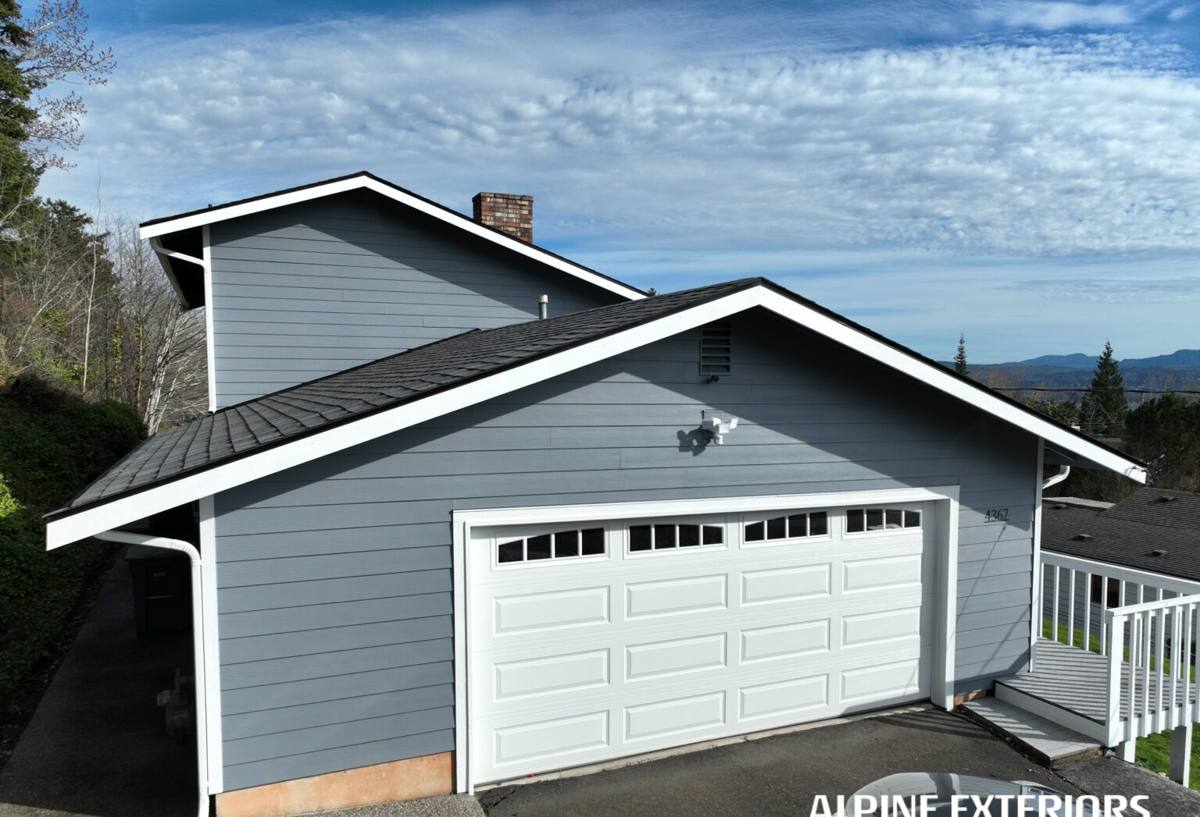
What Dakota Creek's Climate Actually Does to a Roof
Three things drive almost every asphalt shingle failure we see out here, and they compound each other:
- Salt air: corrodes exposed fasteners, flashing edges, and metal drip edge faster than inland installs, especially on the weather-facing slopes.
- Driving rain: Pacific storms push rain sideways, not straight down, which means it tests laps, nail placement, and underlayment coverage at valleys, walls, and eaves — not just the open field of the roof.
- Moss and algae season: the shade, humidity, and mild temperatures around the creek corridor keep organic growth active nearly year-round, not just in the wet months. Moss holds moisture against the shingle mat and lifts tabs, which is how small leaks start.
None of this means asphalt shingles are the wrong choice for a Dakota Creek home — they're still the most practical, cost-effective option for most roof shapes here. It means the details of the install carry more weight than the brand name on the wrapper.
What a Correct Install Looks Like Here
Underlayment and Water-Shedding Layers
On a roof exposed to sideways rain, the underlayment is doing more work than people think. We run synthetic underlayment across the full deck and add self-adhered ice-and-water membrane at eaves, valleys, and around penetrations — the spots where wind-driven rain is most likely to get pushed backward under a shingle tab. This isn't an upgrade we push to run up a bid; it's the difference between a roof that sheds a storm and one that leaks at the first hard nor'wester.
Fastening and Wind Exposure
Nail placement and pattern matter more on an exposed or waterfront-adjacent lot than they do on a sheltered inland roof. We follow the manufacturer's high-wind nailing pattern (six nails per shingle where the exposure calls for it) rather than the minimum four, and we check starter strip adhesion at eaves and rakes carefully, since that's the edge wind gets under first.
Ventilation Balance
A roof that can't breathe traps moisture in the attic, which condensates, feeds mold, and ages shingles from underneath — a real problem in a damp climate like this one. We balance intake (soffit or eave vents) against exhaust (ridge vent, in most cases) so the attic actually moves air instead of just having vents installed for show.
Choosing Shingles for This Climate
Not every asphalt shingle product performs the same way under salt air and constant dampness. Here's how the common categories stack up for a Dakota Creek home:
| Shingle Type | Wind/Rain Performance | Moss & Algae Resistance | Typical Fit |
|---|---|---|---|
| 3-tab (standard) | Lower wind rating, thinner mat | Standard granules only, unless AR-treated | Budget-driven jobs, less exposed slopes |
| Architectural / laminate | Higher wind rating, thicker mat sheds rain better | Widely available with algae-resistant (AR) granules | Most Dakota Creek homes — best balance |
| Impact-rated / premium laminate | Strongest wind and impact rating | AR granules standard on most product lines | Exposed or waterfront-adjacent lots, longer hold planning |
We don't push a specific manufacturer as "the only option" — several major shingle lines perform well here. What matters more is choosing algae-resistant (AR) granules for anything under tree cover or near the creek, and matching the wind rating to how exposed your particular roof plane actually is, not just picking the cheapest line in the rack.
Our Process on a Dakota Creek Re-Roof
- On-site inspection: we walk the roof and attic, check deck condition, ventilation, flashing, and moss/moisture damage before quoting anything.
- Written scope: underlayment type and coverage, shingle line and wind rating, flashing and drip edge material, ventilation plan — all spelled out, not left as assumptions.
- Tear-off and deck check: old roofing comes off down to the deck so we can catch soft or water-damaged sheathing before it's covered up again.
- Underlayment and flashing first: ice-and-water membrane at vulnerable areas, synthetic underlayment across the field, new flashing at valleys, walls, and penetrations.
- Shingle install to spec: correct nailing pattern for the exposure, proper starter strip and cap detail at ridges and hips.
- Ventilation tie-in: intake and exhaust balanced and confirmed, not just installed and left unchecked.
- Final walk-through: we go over the finished roof and the workmanship warranty with you before we consider the job done.
Cost Factors for a Dakota Creek Re-Roof
Every roof is different, but the line items that actually move the price on jobs in this area tend to be the same handful:
| Factor | Why It Matters Here |
|---|---|
| Roof pitch and access | Steeper or harder-to-reach roofs take longer and need more safety setup |
| Deck condition | Moss and trapped moisture can rot sheathing that isn't visible until tear-off |
| Underlayment spec | Full ice-and-water coverage vs. minimum-code coverage changes material cost but also long-term leak risk |
| Shingle line chosen | 3-tab vs. architectural vs. impact-rated shifts both material cost and expected lifespan |
| Flashing and vent replacement | Salt-air corrosion often means flashing and vent boots need full replacement, not reuse |
| Number of layers to remove | Tear-off of an existing layer (or two) adds labor and disposal cost |
We'd rather walk your roof and give you real numbers than quote a ballpark that doesn't hold up once we're up there. As a general rule, expect asphalt shingle re-roofs in this region to run from the mid-single-digit thousands for a small, simple roof up into the high five figures for a large, steep, or complex one — the factors above are what push a project up or down that range.
Signs Your Roof Needs Attention Now
Homeowners near Dakota Creek often live with small roof problems longer than they should because the roof "isn't leaking yet." By the time water shows up inside, the damage underneath is usually further along than it looks. Watch for:
- Moss buildup on north-facing or shaded slopes, especially where it's thick enough to hold visible moisture
- Granules collecting in gutters or at downspout outlets
- Curling, cupping, or lifted shingle tabs, particularly on the weather-facing slope
- Dark streaking (algae) spreading across the roof field
- Rusted or lifting flashing at valleys, chimneys, or wall intersections
- Soft spots or sagging visible from the ground or in the attic
- Daylight visible through the roof deck from inside the attic
Any one of these on its own isn't an emergency, but two or three together usually means it's worth having someone look before the next big storm season.
Living With an Asphalt Shingle Roof Here: Maintenance That Actually Helps
A correctly installed roof still needs upkeep in this climate — that's not a knock on the product, it's just what salt air and moss pressure require. A short, honest maintenance routine goes a long way:
- Have moss physically removed (not just chemically treated) every year or two on shaded slopes
- Keep gutters clear so water isn't sitting against the eave or backing up under shingles
- Keep overhanging branches trimmed back to cut down on shade, debris, and moss spores landing on the roof
- Have flashing and vent boots checked every few years for salt-air corrosion or cracking
- Address small leaks or lifted shingles promptly rather than waiting for a full-blown interior leak
None of this requires a contractor visit every time — a lot of it is basic homeowner upkeep. But it makes a real difference in how many years you actually get out of the roof you paid for.
Why Local Experience on This Stretch of Whatcom County Matters
A crew that already works Blaine and the Dakota Creek area isn't guessing at wind exposure, moss pressure, or which flashing details fail first in this specific climate — we've already seen it on other roofs nearby. That shows up in practical ways: knowing which slopes on a given lot take the worst of the wind-driven rain, not underspecifying ventilation because "it's fine inland," and not being surprised by how fast moss comes back on a shaded northern exposure here. It also means we're a known, findable local business if a warranty question comes up five years down the road — not a crew that worked the area once and moved on.
If you're weighing a repair against a full re-roof, or just want an honest read on how much life is left in your current roof, we're happy to take a look. Reach out for a free, no-pressure estimate using the form below.