 Blaine Siding
 Roofing in a Coastal Whatcom County Neighborhood
Birch Point sits close enough to the water that the weather doesn't behave like it does a few miles inland. Homes here take on salt-laden air, wind-driven rain that gets pushed sideways under normal shingle laps, and long stretches of shade from mature evergreens that keep roof surfaces damp well after a storm has passed. None of that is unique to any one house — it's simply what a roof faces year-round on this stretch of the Blaine coastline, and it's why an asphalt shingle roof that would hold up fine in a drier, more sheltered part of Whatcom County can fail early here if it wasn't built for these conditions.
This page covers what that actually means in practice: what a correctly installed asphalt shingle roof needs to include for a Birch Point home, what tends to go wrong when it doesn't, and how we approach the work when we're on one of these roofs.
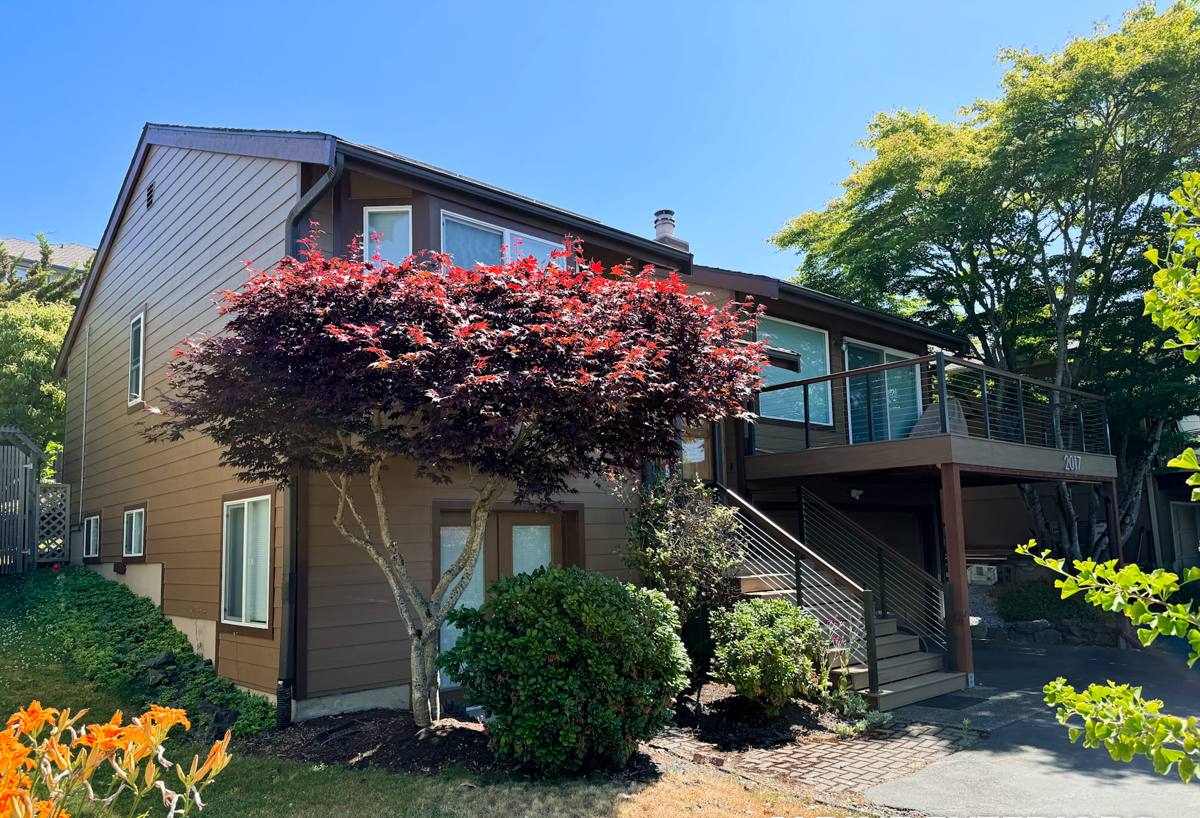
What Salt Air, Rain, and Moss Actually Do to a Roof
Salt Air and Metal Components
Asphalt shingles themselves tolerate salt air reasonably well, but the metal parts of a roofing system don't always. Flashing, drip edge, nail heads, and vent housings can corrode faster near the water than they would a few miles inland. Once flashing starts to pit or thin, it stops shedding water the way it's supposed to, and that's usually where a roof starts leaking — not through the shingles themselves.
Wind-Driven Rain
Rain that comes in at an angle behaves differently than rain that falls straight down. It can work its way under shingle tabs, around chimneys, and along valleys if the underlayment, sealant strips, and fastening pattern weren't installed with that in mind. A roof that "looks" fine from the ground can still be letting water past the shingle layer if these details were rushed.
Moss and Shade
Birch Point has plenty of tree cover, and shaded, north-facing roof sections stay damp longer after every rain. That moisture is exactly what moss needs to take hold. Moss doesn't just sit on top of shingles — its root structure lifts granules and edges, which lets water track underneath the shingle mat instead of running off it. A roof with a long moss season, like most of this area sees, needs to be designed and maintained with that in mind from day one.
What a Correctly Installed Roof Includes Here
A shingle roof is a system, not just a layer of shingles nailed to plywood. For a Birch Point home, we pay particular attention to a few details that matter more here than they would somewhere drier and more sheltered:
- Ice-and-water or self-adhering underlayment at eaves, valleys, and around every penetration — the areas most exposed to wind-driven rain and standing moisture.
- Corrosion-resistant flashing and fasteners so salt air doesn't shorten the life of the metal components faster than the shingles above them.
- Proper attic ventilation so moisture generated inside the house isn't adding to what the roof deck already deals with from outside.
- Correct nailing pattern and shingle sealing for wind exposure, not just the manufacturer's minimum for a standard installation.
- Algae-resistant shingle granules where shaded, moss-prone areas make sense for it.
Skip any one of these and the roof may still look right for a year or two, but it will show its weak points sooner than it should — usually right where the climate is hardest on it.
Choosing the Right Asphalt Shingle for This Location
Not every asphalt shingle product is built the same way, and the right choice depends on how exposed the roof is to wind, shade, and moisture. Here's how the common tiers compare for a Birch Point home specifically:
| Shingle Type | Where It Fits at Birch Point | Trade-Offs to Know |
|---|---|---|
| Standard 3-tab | Lower-budget option for sheds, secondary structures, or short-term ownership plans | Lower wind rating and thinner profile; moss and wind stress show up sooner on exposed or shaded slopes |
| Architectural (laminated) | The practical default for most Birch Point homes | Heavier mat and higher wind rating; costs more up front but holds up better against driving rain and gusts off the water |
| Algae-resistant architectural | Best fit for shaded, tree-covered lots with a long moss season | Slightly higher material cost; the copper- or zinc-infused granules slow algae and moss growth rather than eliminating it entirely |
| Impact-rated | Worth discussing if wind-blown debris from nearby trees is a known issue on your lot | Higher upfront cost; may qualify for an insurance discount depending on your policy |
We'll talk through which tier makes sense for your specific roof — its slope, sun exposure, tree cover, and how long you plan to own the home — rather than defaulting to one product for every job.
Signs a Birch Point Roof Needs Attention
Because so much of the damage here starts underneath the shingles rather than on top of them, it's easy to miss the early warning signs. Worth checking for:
- Moss buildup on north-facing or shaded slopes, especially along ridges and valleys
- Granules collecting in gutters or at downspout outlets
- Dark streaking or discoloration across the shingle field
- Curling, cupping, or lifted shingle edges, particularly on wind-exposed slopes
- Rusty streaks below flashing, vent stacks, or metal valleys
- Soft spots, sagging, or visible daylight in the attic near the roof deck
- Water stains on interior ceilings after a windy rainstorm rather than a calm one
Any one of these on its own isn't necessarily an emergency, but a few of them together usually mean the roofing system has started letting go somewhere.
Our Process for a Birch Point Roof
1. On-Site Inspection
We walk the roof (or use a ladder and a close visual/photo inspection where walking it isn't safe), check the attic for ventilation and moisture issues, and look at flashing, valleys, and penetrations — not just the shingle field. Coastal roofs fail at the details first, so that's where we look first.
2. A Straight Answer
Some roofs need full replacement; plenty of others need targeted repair, better ventilation, or a moss treatment plan instead. We'll tell you which one you actually have and explain why, in plain terms.
3. A Written, Itemized Quote
You'll see the shingle product, underlayment type, flashing plan, and labor scope broken out — not a single lump-sum number with no detail behind it.
4. Tear-Off and Deck Check
Old roofing comes off down to the deck so we can check for soft or water-damaged plywood before anything new goes down. Covering up a damaged deck is one of the most common shortcuts that leads to early failure, and it's not one we take.
5. Installation Built for This Climate
Underlayment, flashing, ventilation, and shingles go in following the details above — not the bare minimum spec, but what actually holds up against salt air, wind-driven rain, and a long moss season.
6. Cleanup and Walkthrough
We clear the site of old materials and debris and walk the finished roof with you so you know what was done and what to watch for going forward.
Moss: Prevention Beats Removal
Moss is close to unavoidable on shaded roofs in this part of Whatcom County, but it doesn't have to shorten a roof's life if it's managed instead of ignored. A few honest points on this:
Algae-resistant shingles slow moss and algae growth but don't stop it outright — they buy time, they don't eliminate the maintenance need. Zinc or copper control strips near the ridge use rainwater runoff to inhibit growth on the slopes below them, and they're a reasonable add-on for heavily shaded roofs. Physical removal (soft-washing, not pressure-washing) on a routine schedule protects granule life far better than waiting until moss is thick enough to see from the ground. Pressure washing a shingle roof strips granules and shortens its life — it's not a shortcut we recommend or use.
The honest answer is that no shingle roof at Birch Point will be maintenance-free. The goal is a system that's built to slow the damage and a maintenance rhythm that keeps it from getting ahead of you.
What Roofing Costs Depend On
Every roof is different, so we don't quote sight-unseen — but these are the factors that move the price up or down on most Birch Point homes:
| Factor | Why It Matters |
|---|---|
| Roof size and pitch | Steeper roofs take longer to work safely and require more fall-protection setup |
| Number of existing layers | Tear-off of multiple old layers adds labor and disposal cost |
| Deck condition | Rotted or soft plywood found during tear-off needs replacement before new roofing goes down |
| Shingle tier chosen | Standard, architectural, algae-resistant, and impact-rated products all carry different material costs |
| Roof complexity | Valleys, dormers, skylights, and multiple penetrations all add flashing work and labor time |
| Site access | Tree cover, slope, and driveway access affect staging, dump trailer placement, and safety setup |
We'll walk you through exactly which of these apply to your roof before you commit to anything.
Why Local Experience at Birch Point Matters
A roofing crew that regularly works this part of the Blaine coastline already knows which details can't be skipped here — the flashing that needs to be corrosion-resistant, the valleys that need extra underlayment, the shaded slopes that need an algae-resistant shingle instead of a standard one. That's not something you can fully spec from a general roofing guide; it comes from having seen how roofs in this specific climate actually age and fail. It also means we're not guessing at wind exposure or moss patterns for your lot — we've worked on roofs facing the same conditions nearby.
Whatcom County's building and permitting requirements also apply consistently to roofing work in and around Blaine, and a crew that works here regularly already has that process down, which keeps your project from stalling on paperwork.
If your roof is showing moss, granule loss, or you just want an honest read on its condition, we're glad to take a look. The estimate is free, there's no pressure to move forward, and you'll get a straight answer either way — use the form below to get started.