 Blaine Siding
 Board & Batten Siding, Built for How Sumas Actually Weathers
Sumas sits right up against the Canadian border in Whatcom County, and homes here take a different kind of beating than siding twenty miles south. The valley funnels wind-driven rain off the Fraser lowlands, humidity sits high for months at a stretch, and north-facing walls can stay damp long after a storm has passed through the rest of the county. Board and batten siding — with its vertical boards and raised battens covering the seams — is one of the best-looking ways to finish a home out here, but it's also one of the least forgiving styles if the material or the install is wrong. Every seam, every batten, every cut end is a place water can find its way in if the job wasn't done right.
This page is about that one job, done correctly, for this one area. If you're comparing bids for board and batten siding on a Sumas home, this is what should be in the conversation.
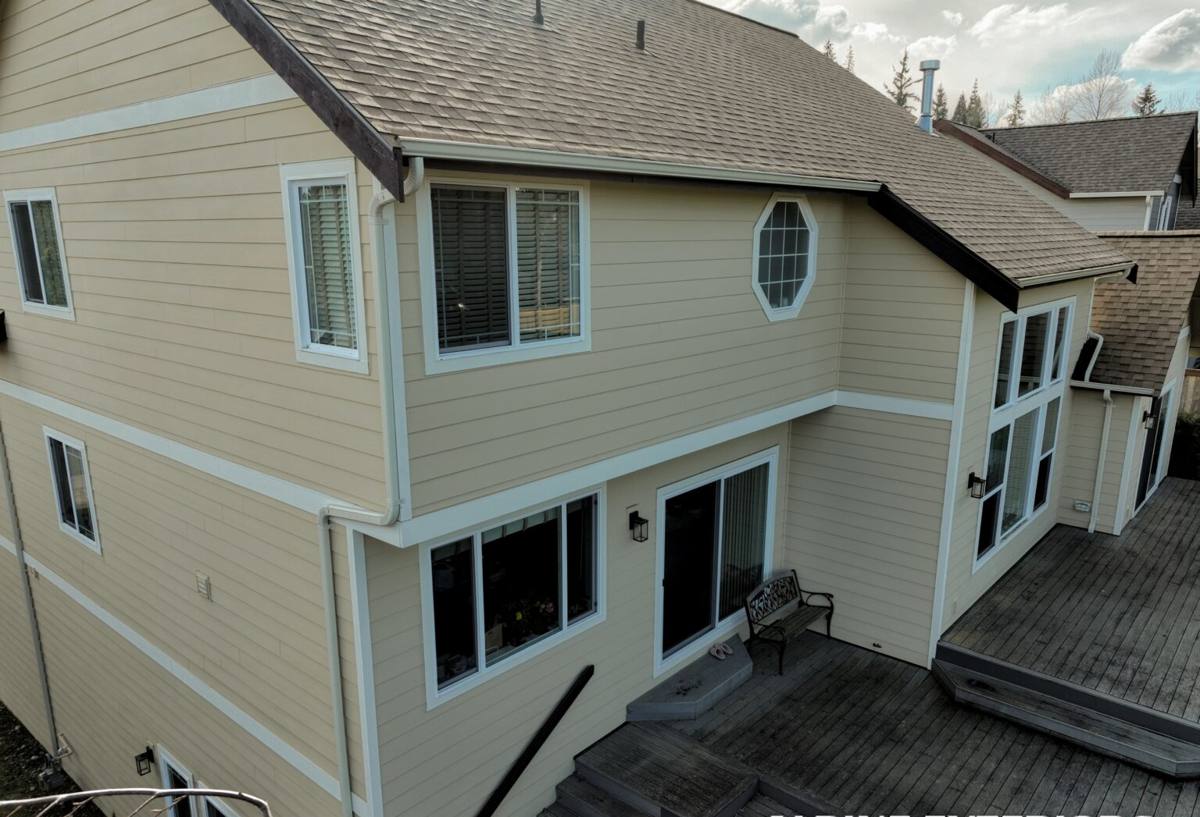
Why Sumas' Climate Makes This Style Harder to Get Right
Moisture That Doesn't Let Up
Whatcom County gets a long, wet stretch from fall through spring, and Sumas' low-lying position means fog and standing humidity linger even on days when it isn't actively raining. Board and batten has more vertical seams per square foot than lap siding, and every one of those seams is a potential path for water if it isn't flashed, caulked, or gapped correctly behind the battens.
Moss and Organic Growth
A long moss season is part of life this close to the border. Moss holds moisture against a wall far longer than open air does, and on wood-based or wood-look products, sustained dampness is exactly what accelerates rot at butt joints and board bottoms. Material choice and back-ventilation matter more here than in a drier climate.
Driving Rain and Wind Exposure
Storms coming through this part of the county often bring wind-driven rain that hits siding at an angle instead of falling straight down. That kind of exposure pushes water sideways into gaps that would stay dry in a calmer climate — which is why batten spacing, fastening pattern, and joint treatment can't be generic; they have to account for how rain actually behaves on a Sumas wall.
Why We Install James Hardie — Not Wood, Not Vinyl — for This Style
Board and batten is traditionally a wood look, and that's part of its appeal — but traditional wood board and batten (or primed spruce versions of it) is exactly the wrong material for Sumas' moisture load. Wood siding depends on paint film integrity to keep water out, and in a climate with this much sustained dampness and moss pressure, that paint film is under constant stress. Cedar board and batten looks great going up; keeping it looking that way here means an ongoing maintenance commitment most homeowners don't sign up for knowingly.
Vinyl board and batten avoids the rot question but introduces a different one: it's a thin material that can warp or distort with temperature swings, and the vertical profile makes any waviness more visible than it would be on horizontal lap siding. It also doesn't hold paint if a homeowner later wants a color change.
We install James Hardie fiber cement board and batten exclusively. It's non-combustible, it doesn't absorb water the way wood does, and it holds a factory-applied ColorPlus finish that isn't relying on field-applied paint to do the waterproofing work. Hardie's HZ5 product line is engineered for wetter, harsher climates — which is the category Whatcom County falls into — and that engineering shows up specifically in how the product handles moisture cycling over time, not just in a marketing sheet.
| Material | Moisture Behavior | Moss/Rot Risk | Maintenance |
|---|---|---|---|
| James Hardie fiber cement | Doesn't swell, rot, or absorb water like wood | Low — non-organic material | Occasional wash; factory finish holds color |
| Cedar / primed spruce | Absorbs moisture; depends on paint film | High — organic material, moss traps moisture against it | Repaint/reseal on a recurring cycle |
| Vinyl | Doesn't rot, but can warp with heat/cold cycling | Low, but grime and moss sit on surface | Low, but can't be repainted if it fades or warps |
What a Correct Board & Batten Job Actually Involves
The visible boards and battens are the easy part to judge from the street. The parts that determine whether the job lasts are the parts you can't see once it's finished:
- Weather-resistive barrier: a continuous, correctly lapped water barrier behind the siding, not just wrapped and stapled.
- Rainscreen gap: a small air gap behind the siding lets any moisture that does get behind the boards drain and dry out instead of sitting against the wall — critical in a climate with Sumas' humidity levels.
- Flashing at every penetration: windows, doors, hose bibs, light fixtures — anywhere something interrupts the wall plane needs proper flashing, not just caulk.
- Correct batten spacing and fastening: battens have to be spaced and fastened per manufacturer spec so the assembly can move with temperature and moisture changes without cracking the finish.
- Sealed and primed cut ends: every field cut exposes raw material; if it isn't sealed, that's where water gets in first.
- Proper clearance at grade and roofline: siding that runs too close to the ground or tucks wrong under a roofline transition holds moisture against the bottom edge — a common failure point.
Skip any one of these and the siding can still look right for a year or two. In this climate, the failures show up as staining, soft spots at the bottom of boards, or paint failure at the seams — usually starting on the north or west-facing walls that stay damp longest.
Our Process for Sumas Board & Batten Projects
1. On-Site Assessment
We look at the whole wall system, not just the old siding — sheathing condition, existing moisture damage, window and door flashing, and how the house handles water at grade. Board and batten replacement is a good time to fix problems that have been hiding under the old siding.
2. Product and Layout Plan
We spec the Hardie board and batten profile, reveal width, and color for the home, and plan batten layout around windows, corners, and trim so the pattern reads cleanly instead of getting chopped up at openings.
3. Tear-Off and Sheathing Check
Old siding comes off, sheathing gets inspected and repaired where needed, and any rot found at this stage gets addressed before anything new goes up — not covered over.
4. Water Barrier and Rainscreen Installation
This is the step that matters most for long-term performance in this climate, and it's the one most easily rushed by crews unfamiliar with what wet-climate installs require.
5. Board & Batten Installation to Spec
Fastening, spacing, and flashing done to James Hardie's published installation requirements — which is also what keeps the manufacturer warranty intact.
6. Final Walkthrough
We go over the finished job with the homeowner, including basic care — what routine washing looks like and what to watch for as the home settles into the first few seasons.
Why Local Installation Experience Matters Here
Board and batten installed to a generic spec sheet, without adjusting for a specific site's exposure, is where a lot of siding problems in this region start. A crew that already works in and around Sumas has seen which walls take the worst of the wind-driven rain, which lots hold moss longest, and where drainage tends to collect at the base of a home. That local knowledge shapes real decisions — where to add extra flashing attention, how to handle a particularly exposed gable end, what batten spacing holds up best against this specific weather pattern — decisions a crew unfamiliar with Whatcom County conditions might not think to make.
What to Check Before Hiring Anyone for This Job
- Do they install to the manufacturer's published fastening and clearance specs, or their own shortcuts?
- Do they include a rainscreen gap, or just wrap and nail siding directly to the sheathing?
- Will cut ends be sealed and primed on-site, every time, not just at obvious visible edges?
- Do they inspect and repair sheathing before re-siding, or install over whatever is underneath?
- Can they explain how their approach accounts for this area's rain and moss exposure specifically?
Get a Straight Answer on Your Sumas Home
If you're planning a board and batten project in Sumas, we're happy to take a look at the home, walk you through what the job actually requires for this climate, and give you a clear, no-pressure estimate. There's a form below — reach out and we'll get you scheduled.