 Blaine Siding
 Building Decks That Hold Up in Whatcom County's Wet Climate
A deck in Sumas has a harder job than it looks like it does. It's not just a place to put a grill and a couple of chairs — it's an exterior structure that sits exposed to rain, temperature swings, and moisture nearly year-round. Whatcom County's marine-influenced climate means driving rain for months at a stretch, a long moss season that coats anything horizontal and shaded, and, closer to the water toward Blaine, salt-laden air that speeds up corrosion on fasteners and hardware. Inland toward Sumas, decks deal with more standing moisture, shade from surrounding trees, and freeze-thaw cycles in the colder months. Either way, a deck built without that climate in mind starts showing problems within a few years — soft boards, rusted screws, slick moss buildup, and framing that rots from the inside before the surface ever looks bad.
We build decks specifically for this region, not a generic deck design pulled from a catalog meant for a dry climate. That means different material choices, different flashing details, and different fastening hardware than you'd see recommended in a national how-to guide.
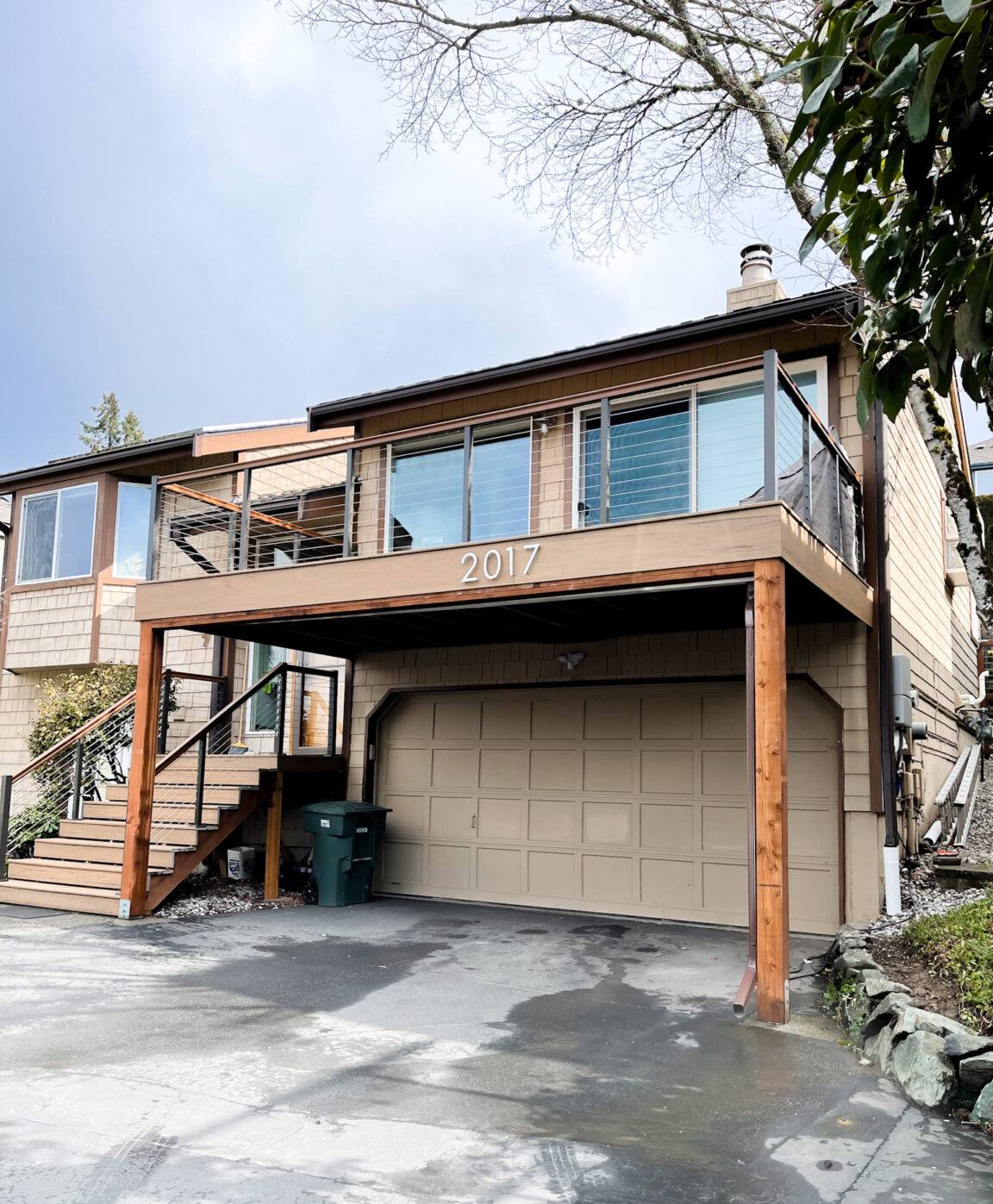
What a Sumas Deck Actually Has to Handle
Before we talk about materials or process, it helps to understand what's actually working against a deck out here:
- Sustained rain: Whatcom County sees extended wet stretches, not just occasional showers — water sits on horizontal surfaces longer than in drier climates.
- Moss and algae growth: Shaded or north-facing decks can develop a moss film within a single season, which holds moisture against the board surface and creates a slip hazard.
- Freeze-thaw cycling: Cold snaps followed by rain and thaw can work water into small cracks in wood decking or unsealed fasteners, widening them over time.
- Corrosion-prone hardware: Standard zinc-coated screws and brackets degrade faster in our humidity, especially closer to the coast, leading to streaking and eventual fastener failure.
- Wet soil around footings: Poorly drained sites can leave post footings sitting in saturated ground for weeks, which matters for both frost heave and long-term stability.
None of these problems are dramatic on their own, but they compound. A deck that ignores even one of them tends to need real repair work inside of five to seven years instead of lasting two or three decades.
Choosing the Right Decking Material for This Climate
There's no single "best" decking material — there's a best material for your budget, your maintenance tolerance, and how much sun or shade your site gets. We'll walk through the honest trade-offs rather than push whatever's easiest for us to install.
| Material | Upfront Cost | Moisture/Moss Resistance | Maintenance | Typical Lifespan |
|---|---|---|---|---|
| Pressure-treated lumber | Lowest | Fair — needs sealing to perform well | Annual cleaning, periodic re-staining/sealing | 10–15 years before major boards need replacing |
| Cedar | Moderate | Good natural resistance, but surface still needs upkeep | Regular sealing to prevent graying and splitting | 15–20 years with consistent maintenance |
| Capped composite | Higher | Very good — resists moisture absorption and moss staining | Occasional washing, no sealing or staining | 25–30 years, often with a manufacturer warranty |
| PVC decking | Highest | Excellent — fully synthetic, doesn't absorb moisture | Lowest — soap and water cleaning only | 30+ years |
Pressure-treated wood is a reasonable choice if you're comfortable staying on top of yearly maintenance and want the lowest entry cost. Composite and PVC cost more upfront but make sense for homeowners who want to spend a Saturday enjoying the deck instead of re-sealing it — especially valuable given how much of the year here is too wet to comfortably do that kind of maintenance work anyway.
Why We're Careful About Cheaper Composite Blends
Not all composite is the same. Early-generation and budget composite boards without a full polymer cap can absorb moisture at the core over time, which is a real problem in a climate this wet. Our standard is to use capped composite or PVC products specifically because the outer shell resists water intrusion — it's a maintenance and moisture-behavior decision, not a brand preference, and we'll explain the difference on your specific project so you know what you're paying for.
Framing and Footings Built for Local Soil and Weather
The decking boards are the part everyone sees, but the framing underneath is what determines whether the deck is still safe in twenty years. A few details matter more here than in drier climates:
- Footing depth: Footings need to be set below the local frost line and bear on undisturbed, well-draining soil — not backfill that can settle or heave.
- Ledger flashing: Where a deck attaches to the house, proper flashing keeps water from tracking behind the siding and into the rim joist — this is one of the most common failure points we see on older, poorly built decks in wet climates.
- Joist spacing and blocking: Tighter joist spacing and proper blocking reduce board deflection and keep decking from cupping as it takes on and releases moisture.
- Ground clearance and airflow: Adequate clearance under the deck lets air move and moisture evaporate instead of sitting trapped against framing.
We treat the substructure as the part of the job that actually determines the deck's lifespan. It's also the part that's invisible once decking is installed, which is exactly why it needs to be right the first time.
Railings, Fasteners, and Hardware That Won't Rust or Fail
A deck is only as good as the hardware holding it together, and this is an area where corners get cut without homeowners knowing it. We use stainless steel or coated fasteners rated for exterior and ground-contact use, and hidden fastener systems where the decking product supports them — both to reduce visible corrosion streaking and to avoid the exposed screw heads that loosen first under repeated wet-dry cycling. Railing posts get the same attention: proper post-to-frame connections matter more for long-term stability than the railing style itself.
Permits and Building Code Basics for a New Deck
Most new decks above a certain height or attached to the house require a permit, and inspections typically check footing depth, ledger attachment, and guardrail construction. General guardrail code in most jurisdictions requires a minimum 36-inch height on decks above a certain elevation and baluster spacing that prevents a 4-inch sphere from passing through — but exact requirements and permit thresholds vary by jurisdiction, so we confirm current local requirements before finalizing a design rather than assuming last year's code still applies. Handling the permit and inspection process correctly the first time avoids the cost and delay of failed inspections partway through the build.
Our Deck Building Process
- On-site assessment: We look at drainage, sun/shade exposure, existing structure (if replacing a deck), and how the space will actually be used.
- Design and material selection: We walk through material trade-offs honestly based on your budget and maintenance preference, not just what's easiest to sell.
- Permitting: We handle the permit application and coordinate required inspections.
- Framing and footings: Footings, ledger flashing, and structural framing are completed and inspected before decking goes down.
- Decking, railings, and finish work: Boards, railings, and any stairs or lighting are installed with fastening details matched to the material.
- Final walkthrough: We go over the finished deck with you, including basic care instructions specific to whatever material you chose.
Maintenance That Keeps a Sumas Deck Looking New
Even low-maintenance materials benefit from a little seasonal attention in this climate. A simple yearly routine goes a long way toward preventing the moss buildup and moisture damage that shorten a deck's life:
- Sweep debris off the deck regularly, especially in fall when leaves and needles trap moisture against boards.
- Wash the surface once or twice a year with a deck-safe cleaner to remove early moss and algae growth before it takes hold.
- Check railing posts and stair connections annually for any looseness.
- Re-seal or re-stain wood decking on the manufacturer's recommended schedule — don't wait until it's visibly gray or cracked.
- Keep gutters and downspouts near the deck clear so runoff isn't dumping extra water onto or under the structure.
- Trim back overhanging branches to reduce shade and debris, which both contribute to moss growth.
Why Hire a Crew That Already Works This Area
A deck design that works fine in a dry climate can fail early here if the contractor isn't accounting for our rain, moss, and soil conditions. Working across Whatcom County — from the coastal exposure near Blaine to inland communities like Sumas — means we've seen how decks actually age in this specific climate, not just how they're supposed to perform on paper. That shows up in small decisions: which footing depth we won't skimp on, which fastener coating we won't substitute, and which decking products we've stopped installing because we didn't like how they handled moisture over time. Those are the decisions that separate a deck that still looks good in fifteen years from one that needs board replacement in five.
If you're planning a new deck or replacing one that's showing its age, we're happy to take a look and talk through honest options for your site and budget. Reach out for a free, no-pressure estimate using the form below.