 Blaine Siding
 Composite Decking Built for Nooksack's Climate
Nooksack sits close enough to the water and low enough in the valley that decks here take a beating most homeowners underestimate until they're dealing with it. Salt-tinged air rolling in off the Strait, driving rain that doesn't let up for days at a stretch, and a moss season that can run from October through April all work against a deck that wasn't built with this specific climate in mind. Composite decking has become the go-to answer for a lot of Whatcom County homeowners for good reason, but "composite" isn't one product — it's a category, and how it's installed matters as much as which board you pick.
This page covers what we've learned installing composite decks for homes in and around Nooksack: what the climate actually does to a deck over time, what a correct installation looks like, and why hiring a crew that already works this area — rather than a general contractor passing through — makes a real difference in how the deck performs ten years from now.
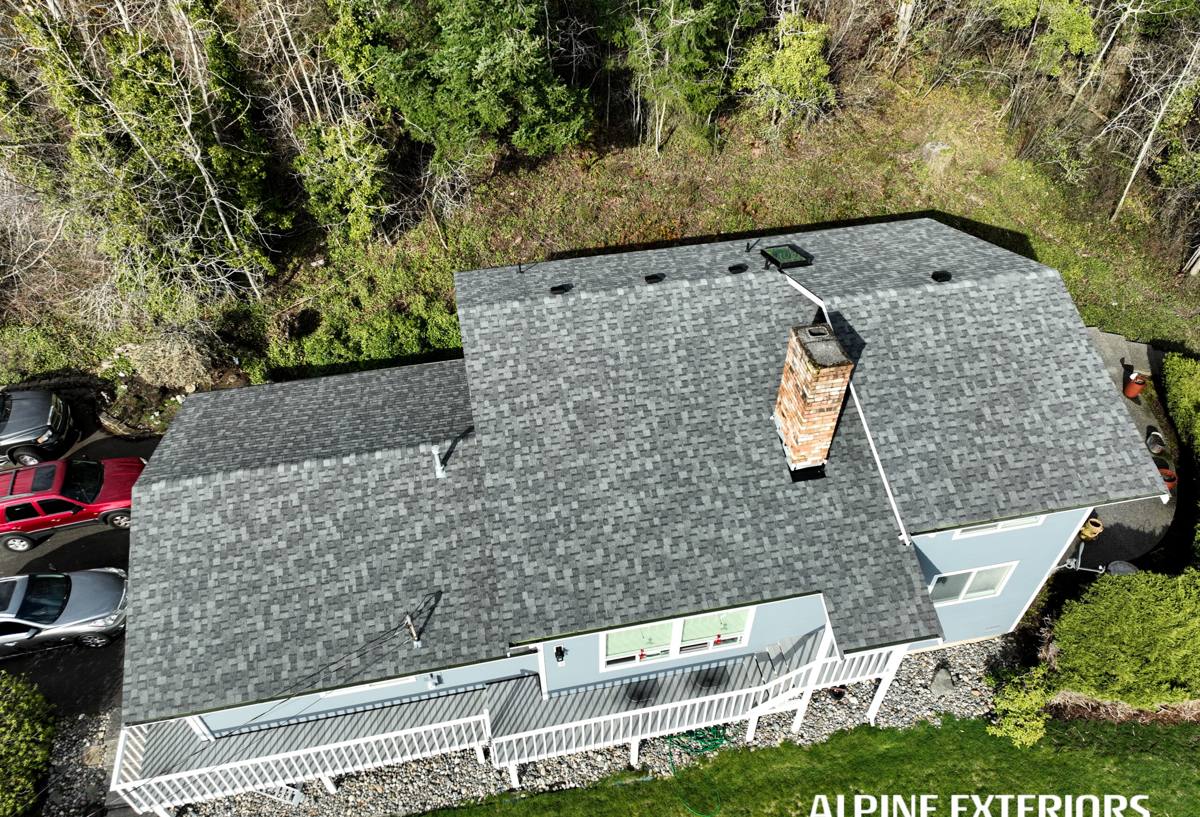
What Nooksack's Weather Actually Does to a Deck
Moisture That Never Fully Dries Out
Whatcom County doesn't get brutal winters, but it makes up for that with sheer duration of dampness. A deck here can go weeks at a time without a full dry-out cycle between rain events. That matters because wood decking relies on wet-dry cycling to shed moisture; when that cycle gets interrupted for months, wood stays saturated longer, which accelerates rot at fastener points and board ends. Composite decking doesn't absorb water into its core the way wood does, which is the main reason it holds up better through a Nooksack winter.
Salt Air and Fastener Corrosion
Nooksack isn't right on the beach, but it's close enough to Birch Bay and the Strait that salt-laden air still reaches inland on a west wind. Salt air is hard on metal — screws, joist hangers, and structural fasteners corrode faster here than they would fifty miles inland. This is less about the decking boards themselves and more about what's holding the whole structure together underneath them.
Moss and Algae Growth
Shaded decks, north-facing decks, and anything under tree cover in this area will grow moss and algae if it isn't dealt with. Composite decking is far less hospitable to moss than wood because there's no organic material for it to root into, but moss can still build up on the surface if a deck never sees direct sun and isn't cleaned periodically. Board spacing and drainage design affect how much moss becomes a maintenance issue.
Why Composite Makes Sense for This Area Specifically
We install both wood and composite decking, and we're upfront with homeowners about which one fits their situation. For a lot of Nooksack properties — especially ones with shaded yards, limited sun exposure, or owners who don't want to refinish a deck every couple of years — composite is the more practical long-term choice given the moisture load this area sees. It's not that wood "fails" here; it's that wood decking in a climate this wet requires more consistent maintenance (sealing, staining, moss treatment) to keep performing the way it should. Composite shifts that maintenance burden from "regular and required" to "occasional and optional."
The trade-off worth knowing about upfront: composite decking costs more per square foot than wood at installation, and it can retain surface heat differently in direct sun. For most Nooksack yards, with the tree cover and cloud cover typical of this area, that heat consideration rarely ends up being a real issue.
What a Correct Composite Deck Installation Involves
The Substructure Comes First
The decking boards get the attention, but the framing underneath is what determines whether the deck lasts. In a high-moisture area like Nooksack, that means:
- Pressure-treated joists rated for ground contact where applicable, not just general exterior use
- Joist tape or a butyl flashing membrane on top of every joist, so the fasteners never sit in standing moisture against bare wood
- Corrosion-resistant, coated fasteners and hardware throughout — not just at the surface, but at every hanger and structural connection
- Proper ledger board flashing where the deck attaches to the house, since this is the single most common spot we find water damage on older decks
- Adequate slope away from the house for drainage — even a slight miscalculation here causes standing water problems over time
Ventilation and Airflow Underneath
A deck built low to the ground or over a patio without enough clearance traps moisture underneath, which slows drying and invites rot in the framing even if the composite boards on top are holding up fine. We plan for airflow underneath every deck we build, not just the visible surface.
Board Installation Details
Composite boards need consistent gapping for both drainage and thermal expansion — composite material expands and contracts with temperature more than wood does, and gapping that's too tight leads to buckling, while gapping that's too wide looks sloppy and lets debris build up. Hidden fastener systems, when used correctly, keep the surface clean and reduce the number of penetration points where water could otherwise find its way in.
Composite Decking Options: What the Differences Actually Mean
Composite decking isn't uniform across brands and product lines. The table below breaks down the general categories homeowners choose between, in plain terms.
| Type | What It Is | Trade-offs |
|---|---|---|
| Capped composite | Wood-fiber/plastic core with a protective polymer cap on all sides | Best moisture and stain resistance; higher cost; the standard we recommend for wet climates |
| Uncapped composite | Wood-fiber/plastic blend with no protective outer layer | Lower cost, but more prone to moisture absorption and surface fading over time — a tougher fit for a climate this wet |
| PVC (cellular vinyl) | All-plastic board, no wood fiber content | Excellent moisture resistance and very low maintenance; typically the highest upfront cost; can feel less "natural" underfoot to some homeowners |
For most Nooksack homes we work on, capped composite is the sweet spot between cost and long-term performance given how wet this area stays for most of the year.
Our Process, Start to Finish
- On-site assessment: We look at your existing deck or build site, check drainage, sun exposure, and how the structure ties into the house.
- Honest product recommendation: We walk through composite options that fit your budget and your yard's actual conditions — not a one-size-fits-all pitch.
- Written estimate: Clear scope, materials, and timeline before any work starts.
- Demo and structural repair: Old decking removed, framing inspected, and any rot or damage addressed before new material goes down.
- Flashing and substructure build-out: Ledger flashing, joist tape, and corrosion-resistant hardware installed per manufacturer spec.
- Board installation: Composite decking installed with correct gapping, fastening, and any railing or trim work.
- Final walkthrough: We go over the finished deck with you, including basic care and what to expect over the seasons.
Maintenance: What Composite Still Needs in This Climate
Composite decking is low-maintenance, not no-maintenance. In a moss-prone, high-rainfall area like Nooksack, a little seasonal attention goes a long way:
- Rinse or sweep debris (leaves, needles) off the deck regularly — trapped organic material holds moisture against the board surface and feeds moss growth
- Clean the surface with a soft-bristle brush and mild soap once or twice a year, more often on shaded sections
- Check gaps between boards periodically for debris buildup that can block drainage
- Inspect railing posts and structural connections annually for movement or loosening, especially after a heavy storm season
- Keep gutters and downspouts near the deck clear so runoff isn't dumping extra water onto or under the structure
Repair, Replacement, or New Build?
Not every deck problem in Nooksack means a full replacement. If the framing underneath is sound and the issue is surface-level — worn wood boards, a section of railing, or damaged decking near a downspout — a repair or partial resurface with composite boards can extend the life of a structurally solid deck. But if the joists or ledger board show rot, especially from years of trapped moisture, that's a structural issue that needs to be addressed at the framing level before any new decking goes down over top of it. We'll always tell you honestly which situation you're in rather than upselling a full rebuild you don't need.
Why a Local Crew Matters for This Job
A deck built to a generic spec sheet doesn't account for the fact that Whatcom County gets a different volume and pattern of rainfall than most of the country, or that homes this close to the water deal with salt exposure that inland installers rarely think about. We work in Nooksack and the surrounding Blaine area regularly, which means we already know which details — flashing at the ledger, fastener selection, drainage slope — matter most for decks that have to survive a Pacific Northwest wet season year after year. A crew unfamiliar with the area can build a technically sound deck by a generic standard and still miss the specific conditions that determine whether it holds up here.
If you're weighing a new composite deck or replacing an aging wood deck in Nooksack, we're glad to take a look and give you a straight answer on what your yard and budget call for. Reach out for a free, no-pressure estimate using the form below.