 Blaine Siding
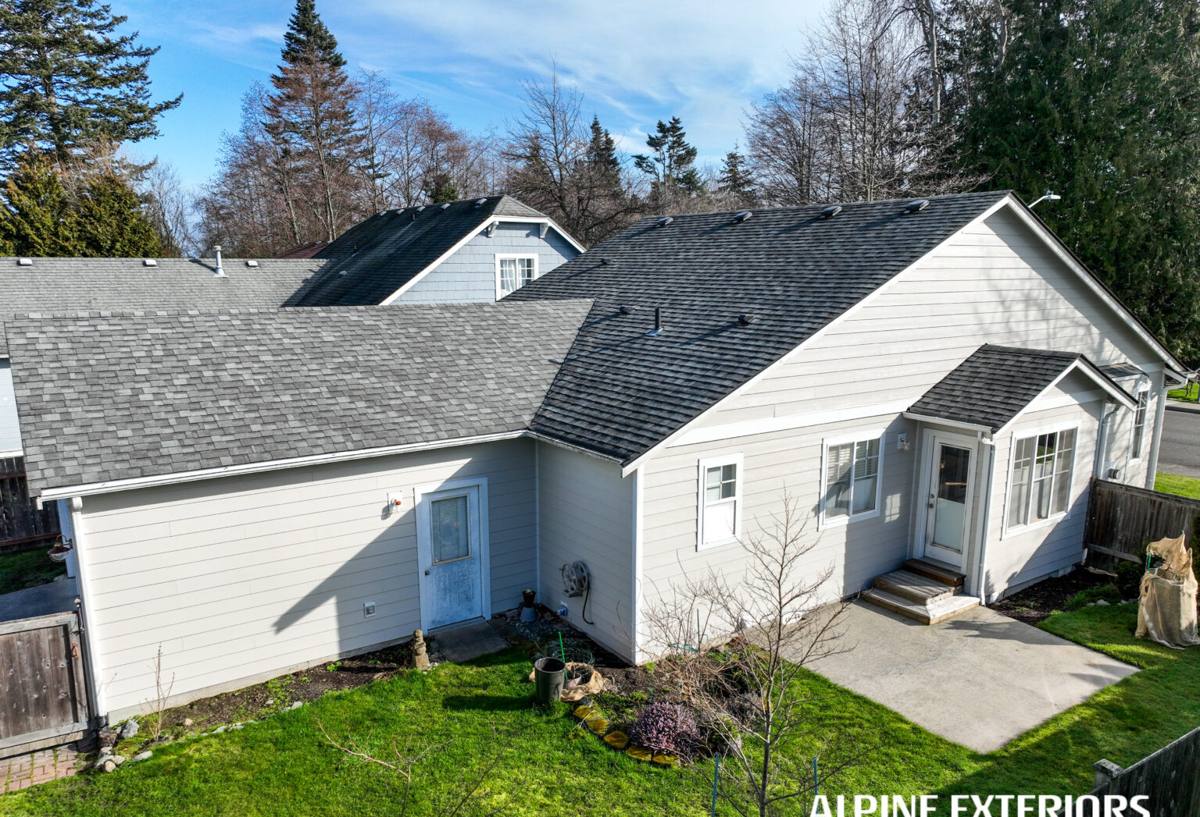
 Asphalt Shingle Roofing Built for the Nooksack Area
Homes in and around Nooksack sit close enough to the water and the lowland river valleys that roofing has to answer to two things at once: salt-tinged marine air moving in off the Strait, and the long, wet stretch of fall through spring that Whatcom County is known for. An asphalt shingle roof that looks fine from the driveway can still be losing the fight underneath — at the nail line, in the underlayment, in the valleys where water actually collects. Our crew works this area regularly, and the roofs we get called out to repair almost always fail for the same handful of reasons, not because asphalt shingles are the wrong product, but because they were installed for a drier climate than this one.
This page covers what a correctly installed or replaced asphalt shingle roof needs to hold up here, what our process looks like from first look to final walkthrough, and why local experience changes the outcome more than most homeowners expect.
What This Climate Actually Does to a Shingle Roof
Blaine and the surrounding Whatcom County lowlands get a combination of moisture exposure that's tougher on roofing than most of the country deals with. It's worth breaking down because each piece attacks the roof differently.
Salt Air and Metal Fasteners
Proximity to the water means airborne salt settles on every exterior surface, including the roof. Over years, that accelerates corrosion on exposed metal — nail heads, flashing edges, and any fastener that isn't properly sealed or coated. A roof detailed for an inland climate often uses standard fasteners and minimal flashing coverage; here, that shortens the service life of exactly the parts holding the shingles down.
Driving Rain, Not Just Rainfall Totals
It's not only how much rain falls — it's the direction it comes from. Wind-driven rain off the water pushes water sideways and upward under shingle edges, into gable ends, and around any penetration that isn't sealed on more than one plane. A roof built to shed rain falling straight down can still leak in a storm that's throwing rain sideways at 30 degrees.
Moss Season That Doesn't Really End
Shade, moisture, and cool temperatures are moss's favorite combination, and this area supplies all three for most of the year. Moss doesn't just look bad — it holds moisture against the shingle surface, lifts shingle edges as it grows, and works its way under tabs and around fasteners. Left alone through a few wet seasons, moss growth turns into granule loss and premature shingle failure, especially on north-facing slopes and anywhere tree cover keeps a roof section shaded.
What a Correct Asphalt Shingle Job Requires Here
A shingle roof is a system, not a single product. In this climate, every layer underneath the visible shingle has to be treated as load-bearing for moisture, not decorative.
- Ice-and-water shield at vulnerable zones: eaves, valleys, and around penetrations — not just where code minimums require it, but everywhere wind-driven rain is likely to test the seal.
- Synthetic underlayment rated for extended wet exposure, since a roof deck here can stay damp under the shingles longer than in drier regions.
- Corrosion-resistant fasteners and flashing suited to a marine-influenced environment, not the cheapest option that meets a generic spec.
- Proper valley and step flashing detail, since valleys are where driving rain concentrates and where most leaks we're called to fix actually originate.
- Balanced attic ventilation, so moisture from inside the house isn't adding to what the roof is already fighting from outside.
- Shingle selection matched to wind and algae exposure, not just color and price.
Skip any one of these and the roof will likely still look correct for a year or two — the failures in this climate tend to show up slow, as soft spots, granule loss, or a leak that only appears during a hard sideways storm.
Our Process for a Nooksack-Area Roof
1. On-Site Assessment
We walk the roof and the attic, not just one or the other. Attic moisture, ventilation balance, and deck condition tell us as much as the shingle surface does. We also check north-facing and shaded slopes specifically for moss establishment, since that's usually where a roof here is aging fastest even if the rest looks fine.
2. Honest Scope: Repair vs. Replace
Not every roof that's showing moss or a few worn shingles needs full replacement. We'll tell you plainly when a repair and a moss treatment plan will buy you several more years, and we'll tell you plainly when the underlayment or deck is compromised enough that a patch is a short-term fix on a longer-term problem.
3. Tear-Off and Deck Inspection
On a full replacement, we remove down to the deck and inspect for soft spots or rot before anything new goes down — covering over a compromised deck is one of the most common ways a "new roof" fails early.
4. Moisture-Detail Installation
This is where the climate-specific work happens: extended ice-and-water coverage, correctly lapped underlayment, valley and flashing detail built for driving rain, and fastener choices that won't corrode out early in salt-influenced air.
5. Ventilation Check
We confirm intake and exhaust venting are balanced before closing out the job. A roof that's watertight but poorly ventilated still traps moisture and shortens shingle life from underneath.
6. Final Walkthrough
We review what was done, what to watch for seasonally (moss regrowth, gutter and valley debris), and what routine maintenance actually looks like for a roof in this specific setting.
Repair, Moss Treatment, or Full Replacement — How to Tell
| Situation | Likely Approach | Why |
|---|---|---|
| Moss on shaded slopes, shingles otherwise intact | Moss removal + preventive treatment | Addresses the surface problem before it becomes granule loss or lifted tabs |
| Isolated leak near a valley or penetration | Targeted flashing/underlayment repair | Most leaks here trace to a detail failure, not the whole field of shingles |
| Widespread granule loss, curling, or soft deck spots | Full tear-off and replacement | Underlayment and deck are likely compromised beyond a patch |
| Roof nearing the end of its rated life with no major symptoms | Planned replacement | Replacing proactively avoids interior damage from a failure during a storm |
Why Local Experience Changes the Outcome
A shingle installed correctly for a dry inland climate and one installed correctly for the Nooksack area aren't the same job, even if the shingle itself is identical. A crew that hasn't worked this specific mix of salt exposure, driving rain, and near-constant moss pressure tends to build to a generic spec — code minimum flashing, standard fasteners, standard ventilation assumptions. That roof may pass inspection and still underperform here within a few years.
Working this area regularly means we've seen where roofs actually fail locally — which slopes hold moss longest, which valley details take the worst of the wind-driven rain, and which fastener and flashing choices hold up versus which ones don't. That's not something a general spec sheet captures; it's pattern recognition from doing this work in this specific climate, repeatedly.
Maintenance That Actually Extends Roof Life Here
Asphalt shingle roofs in this climate benefit from a maintenance rhythm that's a bit more active than what's needed in drier parts of the state. None of it is complicated, but skipping it tends to catch up with a roof faster here than elsewhere.
- Check shaded and north-facing slopes for moss establishment at least once a year, ideally before the wet season sets in.
- Keep gutters and valleys clear of debris — a blocked valley concentrates water exactly where driving rain is already testing the flashing.
- Have flashing around chimneys, vents, and skylights inspected periodically, since these are the points most likely to develop a slow leak first.
- Trim back tree cover where practical to reduce the shade and moisture that feed moss growth.
- Address minor granule loss or lifted tabs promptly rather than waiting — small issues here tend to compound during storm season rather than stay static.
What Homeowners Ask Us Before Committing to a Roof
Most homeowners in this area have already dealt with moss, a slow leak, or a roof that underperformed its expected life. The questions we get are usually less about the shingle brand and more about whether the job will actually hold up through another wet season — which is the right question to be asking.
If you're seeing moss buildup, a slow leak, or a roof that's simply aging out, we're happy to take a look and give you a straightforward assessment — no pressure, no inflated scope. A free estimate is the easiest way to find out exactly where your roof stands and what it actually needs.