 Blaine Siding
 Roofs in the Lynden Area Take a Different Kind of Beating
Homes around Lynden sit in a stretch of Whatcom County that gets hit from two directions. There's the marine air rolling in off the Strait of Georgia and Boundary Bay near Blaine, carrying salt and moisture that settles into roofing materials year-round. Then there's the rain itself — long, low-intensity systems that can sit over a roof for days at a time, finding every gap in flashing, every worn seal around a pipe boot, every spot where granules have thinned out. Add a moss season that can run from fall through spring in the shaded, tree-lined lots common to this area, and you've got a roof that ages differently than one in a drier inland climate.
None of that means Lynden roofs fail faster than roofs anywhere else. It means they fail in specific, predictable ways — and a repair that doesn't account for those ways is a repair that comes back.
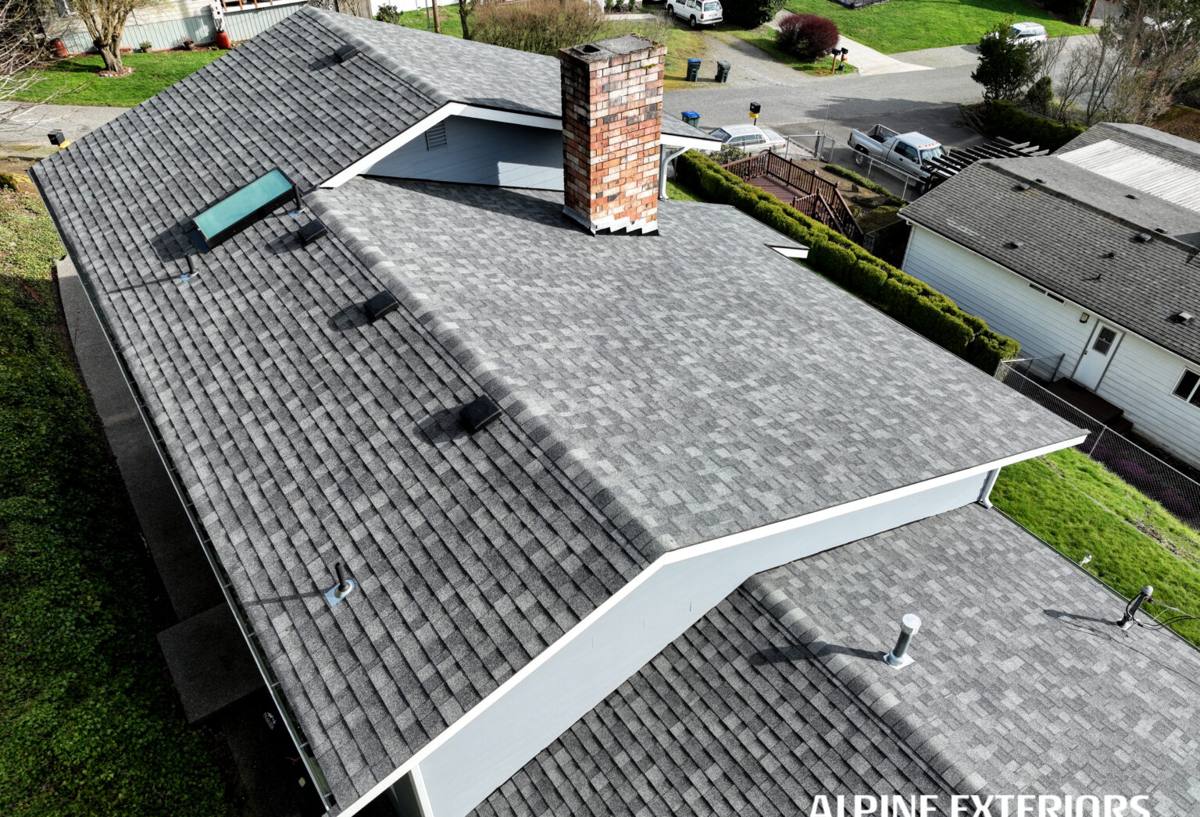
Signs a Lynden Roof Needs Repair Now, Not Later
Roof problems in this climate rarely announce themselves with a dramatic leak on day one. They show up as small signals that get ignored until water finds a path inside. Homeowners who catch these early save real money.
- Dark streaking or thick green-black moss buildup on north-facing slopes or under tree cover
- Granules collecting in gutters or at downspout outlets — a sign shingles are wearing thin
- Soft or discolored ceiling drywall, especially near chimneys, skylights, or where two rooflines meet
- Curling, cracked, or lifted shingle edges, particularly on slopes that catch the most wind-driven rain
- Rusted, lifted, or missing flashing around vents, chimneys, and valleys
- Daylight visible through the attic roof deck, or damp insulation below it
- Gutters pulling away from the fascia, which lets water run behind the drip edge instead of off it
Any one of these on its own might be minor. A few of them together usually means water has already worked past the surface layer and into the roof assembly underneath.
What a Correct Roof Repair Actually Involves
Finding the Real Source First
The most common mistake in roof repair isn't bad workmanship — it's fixing the wrong spot. Water travels along the underlayment and rafters before it shows up as a stain, so a leak over the hallway might actually originate a few feet upslope near a vent or valley. A correct repair starts with tracing the path, not patching wherever the ceiling stain happens to be.
Matching Materials, Not Just Color
Patching in shingles or panels that don't match the existing roof's age, exposure, and granule wear creates a visible seam and, more importantly, a performance mismatch — new material can shed water differently than a decade-old roof around it. We try to match not just the product line but how weathered the surrounding roof already is, so the repair blends and performs consistently.
Flashing and Underlayment Do the Real Work
Shingles or panels shed the bulk of the water, but flashing and underlayment are what keep a roof watertight at the vulnerable points — valleys, chimneys, skylights, wall intersections. In a high-rainfall area like Whatcom County, a repair that replaces surface material but reuses old, brittle flashing is a short-term fix. We replace flashing as part of the repair whenever it's compromised, not just when it's visibly failed.
Moss, Algae, and Debris: The Long-Term Roof Killer Here
Why It Takes Hold So Easily
Moss needs shade, moisture, and organic debris to establish itself, and Lynden-area lots — with mature trees, damp air, and roofs that rarely get a stretch of hot, dry weather to fully cure — offer all three. Moss doesn't just sit on top of shingles; its root structures work into the granule layer and lift shingle edges, which is exactly where wind-driven rain gets underneath.
What Moss Damage Actually Costs You
Left alone, moss holds moisture against the roof surface far longer than open air would, accelerating granule loss and wood rot in the deck below. By the time moss is visibly thick, there's often already deck softening underneath it. Repairing that section means more than a moss treatment — it means pulling material back, checking the deck, and rebuilding that section properly.
Prevention as Part of the Repair
Where it makes sense, we install zinc or copper strips near the ridge on repaired sections, since rain washing over these metals naturally inhibits new moss growth downslope. It's a small addition during a repair that reduces how often that section needs attention again.
Repair vs. Replace: How We Help You Decide
Not every damaged roof needs full replacement, and not every leak is a quick patch. The honest answer depends on the roof's age, how much of it is affected, and what's happening underneath the surface layer.
| Factor | Leans Toward Repair | Leans Toward Replacement |
|---|---|---|
| Roof age | Under 12–15 years, otherwise sound | Near or past manufacturer's expected service life |
| Extent of damage | Localized — one valley, one penetration, isolated shingles | Widespread granule loss or moss across multiple slopes |
| Deck condition | Solid, dry decking under the affected area | Soft, delaminated, or rotted decking in multiple spots |
| Leak history | First occurrence, clear single cause | Recurring leaks in different spots over time |
| Underlayment | Still intact and pliable | Brittle, torn, or original to a much older roof |
We'll tell you plainly if a repair is the right call — and just as plainly if it isn't. A roof that needs replacement dressed up as a "repair" just delays a bigger bill and risks interior damage in the meantime.
Our Repair Process
1. On-Site Diagnosis
We inspect from the attic side when accessible, not just the roof surface, since that's where the real leak path usually shows up first.
2. Written Scope Before Any Work Starts
You get a clear explanation of what's damaged, why, and what the repair will involve — no vague line items.
3. The Repair Itself
Damaged material comes off, the deck is checked and repaired if needed, flashing and underlayment are addressed at the source, and new material is matched and integrated with the existing roof.
4. Cleanup and Walkthrough
Nails, debris, and old material are cleared from the yard and gutters, and we walk the repair with you before we consider the job done.
Why a Crew That Already Works This Area Matters
Roof repair isn't just a general trade skill — it's shaped by what the local climate actually does to roofs over time. A crew that regularly works Blaine, Lynden, and the surrounding Whatcom County communities has already seen how moss establishes on the shaded slopes typical of this area, how salt air affects fasteners and flashing near the water, and which underlayment and flashing details hold up against sustained driving rain versus a quick summer shower. That familiarity shows up in fewer callbacks and repairs that are built for the conditions they'll actually face, not generic conditions from a training manual.
It also means a faster response. When a leak shows up mid-storm, a crew already working in the area can typically get eyes on the roof sooner than one dispatching from farther out.
Roofing Materials We Work With for Repairs
Most repairs in this area involve asphalt composition shingles, since that's the dominant roofing material on homes here, but we also repair metal roofing and cedar where it's still in service. Each material fails differently:
- Asphalt shingles — granule loss, curling, and cracked seals are the common issues; repair usually means replacing the affected course and checking underlayment beneath it
- Metal panels — failures are typically at seams, fastener penetrations, and flashing transitions rather than the panels themselves
- Cedar shakes — moisture retention and split shakes are the main concern in this climate; repair involves selective replacement and confirming ventilation is adequate underneath
We don't push a material switch during a repair unless there's a real functional reason to — matching what's already on the roof is usually the more durable and cost-effective path.
After the Repair: Keeping It From Happening Again
A repair holds up longer with a little basic upkeep. We'll point out anything specific to your roof, but in general: keep gutters clear so water isn't backing up under the edge, keep overhanging branches trimmed back so debris and shade don't accumulate on the surface, and have the roof looked at after any major windstorm rather than waiting for a stain to appear on the ceiling. In a climate that stays wet for months at a stretch, catching small issues early is what keeps a repair a repair instead of a replacement.
If you're seeing moss, a stain, or missing granules on a roof in the Lynden or Blaine area, we're glad to take a look and give you a straight answer on what it needs. Reach out for a free, no-pressure estimate using the form below.