 Blaine Siding
 Deck Replacement Near Lynden: Built for This Valley's Weather
Lynden sits inland from Blaine in the Nooksack River valley, and while it doesn't take the direct salt spray that coastal Whatcom County properties see, it gets its own version of the same problem: long, wet winters, heavy fog off the valley floor, and shade from mature trees that keeps moisture sitting on wood far longer than homeowners expect. Add in the driving rain that comes through the county most of the year, and a deck here is under near-constant moisture pressure for six to eight months out of twelve.
We're based out of Blaine and work the Lynden area regularly, which matters because deck problems here don't look like deck problems in a dry climate. A deck that would last 20 years in Eastern Washington can fail structurally in half that time in this valley if it was built without the right ledger flashing, joist protection, and gaps for water to actually get out. This page covers what a deck replacement should involve if it's going to hold up here, not just look good on install day.
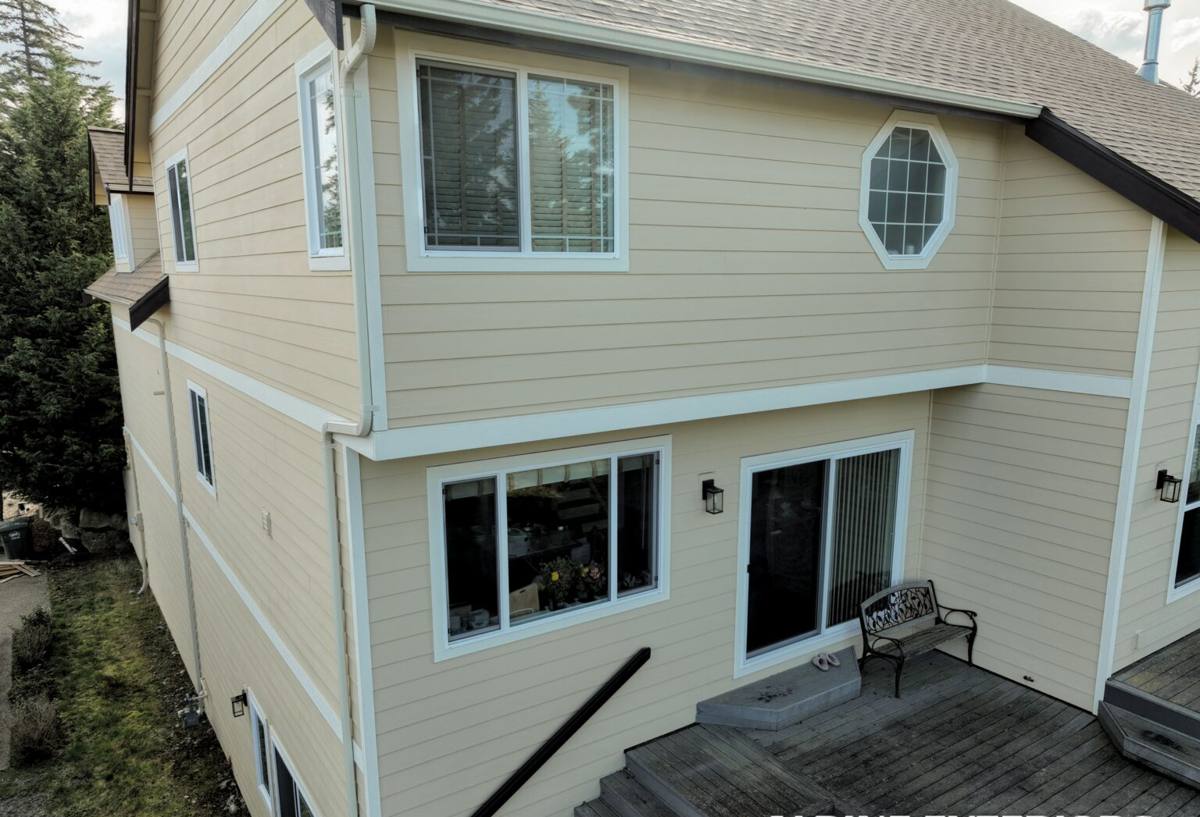
Why "Repair" Isn't Always the Honest Answer
Plenty of decks get patched for years before anyone brings up full replacement. Boards get swapped, a post gets sistered, a railing gets tightened. That's reasonable when the problem really is isolated. But there's a point where patching stops being cost-effective and starts being a way to avoid the bigger job — and we'd rather tell a homeowner that up front than sell three years of small repairs.
Signs You're Past the Repair Stage
- Soft or spongy decking in more than one or two isolated spots, not just around a single drain point
- Rot or discoloration at the ledger board where the deck attaches to the house — this is the single most common failure point in wet climates
- Rust streaking or crumbling around joist hangers and fasteners
- Posts that have shifted, or footings you can visibly rock with hand pressure
- A railing that flexes noticeably when leaned on
- Moss or dark staining that keeps coming back within weeks of cleaning, even after the surface has been treated
Any one of these on its own might be a repair. Two or more together, especially involving the ledger or the framing, usually means the structure has been absorbing moisture for years and replacement is the honest recommendation.
What a Correct Deck Replacement Actually Involves
A deck is only as good as what's underneath it, and in a climate like this, the parts you don't see matter more than the decking boards on top. We treat four things as non-negotiable on every replacement:
Ledger Flashing
The ledger board is where the deck bolts into the house rim joist, and it's the number one spot we find rot on older decks in this area. Correct flashing — metal flashing under the siding, a waterproof membrane behind the ledger, and proper stand-off from the house — keeps water from running down behind the board and into the house framing itself. A deck with a poorly flashed ledger can look completely fine on the surface while the wall behind it is quietly rotting.
Joist and Beam Protection
Untreated or poorly sealed joists are the second most common failure point. We use joist tape or a comparable barrier over the top of every joist and beam so fastener holes and cut ends aren't left exposed to standing moisture.
Footings Sized for Wet Soil
Valley soil here holds moisture longer than sandy or well-drained ground, which affects how footings behave over time. Footings need to be poured below frost depth and sized to the load, not just matched to whatever was there before — especially if the original deck was undersized to begin with, which is common on older homes.
Gaps and Drainage
Every board needs a consistent gap for water to shed and air to move underneath. Decking installed too tight looks better for about a year and then starts trapping moisture between boards, which is exactly the setup that grows moss and speeds up rot.
Decking Material Choices for a Valley Climate
There's no single "best" decking material — there's a best fit for how much maintenance a homeowner wants to do and how much they want to spend up front versus over time. Here's how the common options actually compare for a climate with this much sustained moisture:
| Material | Moisture Behavior | Maintenance | Typical Lifespan |
|---|---|---|---|
| Pressure-treated wood | Resists rot when sealed, but needs re-sealing to stay ahead of moisture | Annual cleaning, re-staining every 2-3 years | 10-15 years |
| Cedar | Naturally moisture-resistant, but surface graying and moss growth start faster if untreated | Regular cleaning, periodic oiling | 15-20 years |
| Composite decking | Doesn't absorb water like wood, but can grow surface mildew/moss if not cleaned | Periodic washing, no staining or sealing | 25-30 years |
| PVC decking | Fully moisture-resistant surface, best option for constant shade and standing moisture | Low — occasional washing | 25-30+ years |
For Lynden properties with heavy tree cover or north-facing decks that don't get much direct sun to dry out, we generally steer homeowners toward composite or PVC. Not because wood is a bad product — a well-maintained cedar deck is genuinely beautiful — but because the maintenance burden in a shaded, damp spot is higher than most people want to keep up with year after year.
Cost Factors Homeowners Should Actually Weigh
We don't quote prices without seeing the deck, but these are the variables that move the number most:
| Factor | Why It Matters |
|---|---|
| Deck size and height | Larger and multi-level decks need more framing, more footings, and more labor time |
| Decking material | Composite and PVC cost more upfront than wood but less over the deck's life |
| Ledger and structural condition | Rot found behind the ledger or in the rim joist adds repair scope beyond the deck itself |
| Railing style | Cable, glass, and metal railings cost more than standard wood or composite balusters |
| Access and site conditions | Sloped yards, tree removal, or tight access can add labor time |
| Permit requirements | Height, size, and proximity to property lines can trigger permitting and inspection steps |
Permits and Local Requirements
Deck replacements above a certain height or size typically require a permit, and setback rules from property lines can affect where a deck can legally sit — especially on Lynden lots where older decks were sometimes built closer to a boundary than current code allows. We handle the permit process as part of the job rather than leaving it for the homeowner to sort out, and we build to pass inspection the first time, not to squeak by.
Our Process, Start to Finish
- On-site assessment. We look at the ledger, framing, footings, and decking condition — not just the surface — and tell you honestly whether you're looking at repair or replacement.
- Written estimate. Material options, structural scope, and timeline laid out clearly before any work starts.
- Permit handling. If the project requires one, we pull it and schedule inspections.
- Demo and structural rebuild. Old decking, framing, and any compromised footings come out; new framing goes in with proper flashing and joist protection.
- Decking and railing install. Boards and railing go on with correct spacing and fastening for the material chosen.
- Final walkthrough. We go over the finished deck with you before calling the job done, including basic care for whatever material you chose.
Why a Crew That Already Works Lynden Matters
A deck built by someone unfamiliar with this valley's conditions can look identical on install day to one built by a crew that knows what this climate does over time — the difference shows up in year three, not week one. We've seen what happens when ledger flashing gets skipped to save a few hours, and we've seen the framing damage that follows. Working this area regularly means we're not guessing at how much moisture protection is enough; we've seen the failures firsthand on other properties in the same valley and build accordingly from the start.
Familiarity with local permitting and setback expectations also means fewer surprises mid-project. We're not learning the county's requirements on your job.
Keeping a New Deck Healthy in This Climate
- Sweep leaves and debris off regularly — trapped organic matter holds moisture against the deck surface
- Clean moss and algae growth as soon as it appears rather than letting it establish
- Check the gap between boards each spring to make sure nothing has swollen shut
- Inspect railing connections and fasteners annually for looseness or rust staining
- Keep gutters and downspouts near the deck clear so runoff isn't draining directly onto or under it
- Re-seal or re-stain wood decking on schedule rather than waiting until it's visibly graying
If you're in Lynden and dealing with a deck that's showing its age, or you just want an honest read on whether repair or replacement makes sense, we're happy to take a look. The estimate is free, there's no pressure, and you'll get a straight answer either way — use the form below to get started.