 Blaine Siding
 Why Birch Bay Is a Tougher Climate for Siding Than It Looks
Birch Bay sits right on the water, and that changes what a siding system has to survive day after day. It isn't just rain — it's salt-laden air blowing off the bay, wind-driven rain that hits walls sideways instead of falling straight down, and long stretches of gray, damp weather that never fully dry out a wall assembly. Add in the shade from mature trees on many Birch Bay lots, and you get near-constant surface moisture for months at a time. That combination is what drives moss, algae, and mildew growth on siding, trim, and roof edges across this stretch of Whatcom County.
Most siding products are engineered and tested for a generic climate. Birch Bay isn't generic. A product that performs fine in a dry inland town can fail faster here simply because it's never given a chance to dry between rain events, and because airborne salt accelerates corrosion on fasteners, flashing, and any exposed metal components.
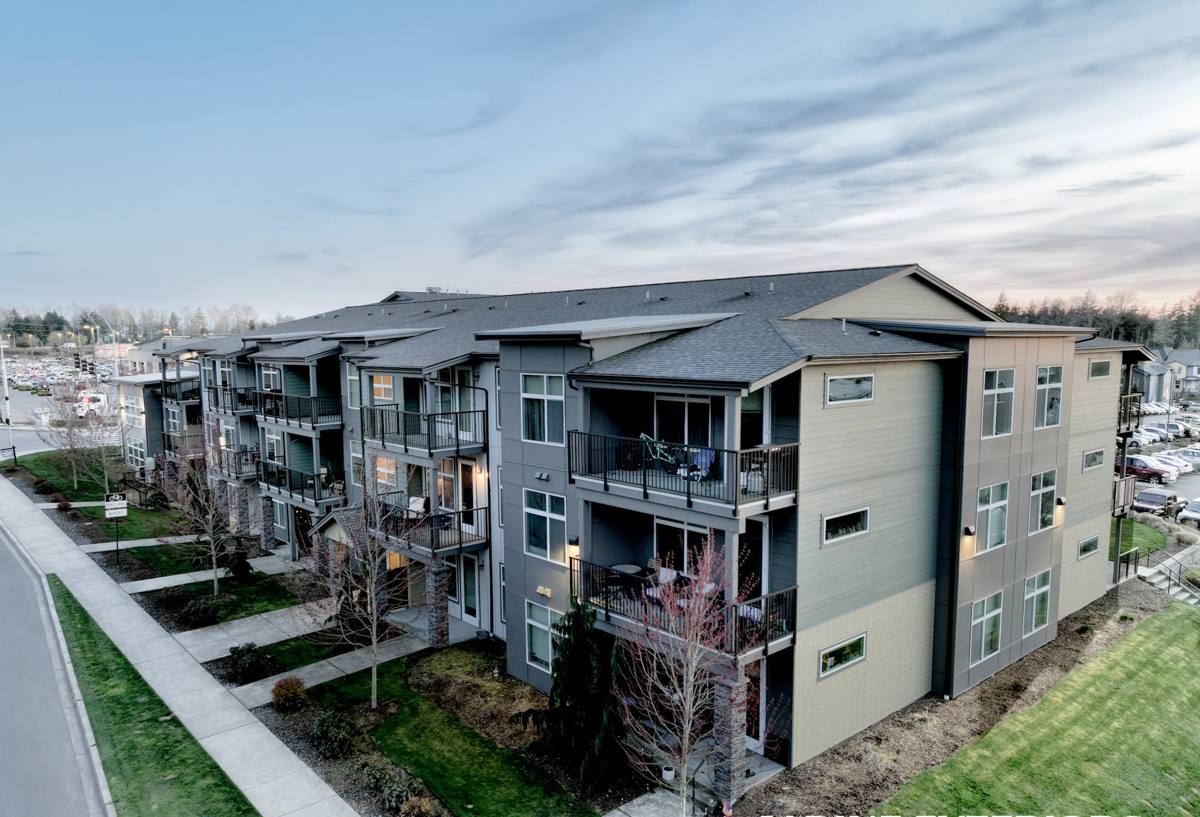
What Birch Bay Homes Actually Need From Their Siding
Before talking about brands or products, it helps to be specific about what the job actually is. A siding system on a Birch Bay home needs to do four things well, continuously, for decades:
- Shed wind-driven rain without letting water track sideways or upward behind the cladding
- Resist moisture absorption into the material itself, not just at the surface
- Hold a factory finish that doesn't chalk, fade, or lose adhesion under salt exposure and UV
- Stay dimensionally stable through repeated wet-dry cycles so seams, caulk lines, and fastener holes don't work loose over time
This is where the material choice starts to matter a lot more than most homeowners expect. A product that checks the box on price or appearance but struggles with any one of those four things will show it within a few Whatcom County winters — not immediately, but on a timeline that's expensive to deal with once it starts.
Why We Only Install James Hardie in This Area
We standardized on James Hardie fiber cement for every home we side, and Birch Bay's climate is a good example of why. Hardie's board is engineered from cement, sand, and cellulose fiber — it doesn't absorb and swell the way wood-based products can, and it's non-combustible, which matters in a region where summer wildfire smoke and ember risk have become a real seasonal concern. For coastal and marine-exposed areas like Birch Bay, Hardie makes an HZ5 formulation specifically engineered for wetter, harsher climates, with a moisture and freeze-thaw profile suited to exactly this kind of exposure.
The ColorPlus factory finish is the other piece that matters here. It's baked on in a controlled environment rather than sprayed on-site, which gives it better adhesion and color retention than field-applied paint — a real advantage when the same wall is getting salt air one week and driving rain the next. It also comes with a longer finish warranty than most site-applied paint jobs will ever get you, which matters when repainting a home on a bluff or near open water is neither cheap nor something you want to redo every five to seven years.
We won't install vinyl, LP SmartSide, primed spruce, cedar, or other fiber cement brands, and it's worth being straight about why. Each of those has legitimate uses somewhere — this isn't a claim that they're defective products. But in a salt-air, high-moisture environment like Birch Bay, they each carry a trade-off we're not willing to build into a home: vinyl can warp and doesn't hold up structurally the way fiber cement does; wood-based composite siding is more sensitive to sustained moisture exposure at cut edges and seams; and off-brand fiber cement products don't carry the same climate-specific engineering or the transferable warranty backing that James Hardie does. We'd rather install one product correctly than offer five and hope the cheaper ones hold up.
What a Correct Install Looks Like Near the Water
Fiber cement siding is only as good as the assembly behind it, and this is where installation quality separates a 30-year exterior from a callback-ridden one. In a wind-driven-rain environment like Birch Bay, a few details are non-negotiable:
Drainage Plane and Water-Resistive Barrier
Every wall needs a continuous, properly lapped water-resistive barrier behind the siding, with a drainage gap that lets any water that gets past the cladding find its way back out instead of sitting against the sheathing. Skipping or shortcutting this is the single most common cause of hidden rot behind siding that looks fine from the curb.
Flashing at Every Penetration
Windows, doors, hose bibs, light fixtures, and deck ledgers all need proper flashing integrated into the drainage plane — not just caulk. Caulk is a maintenance item, not a waterproofing strategy, and it's the first thing that fails under repeated salt and UV exposure.
Clearances and Fastening
Hardie panels and lap siding have specified clearances from grade, roofing, and decks, and specific fastener patterns and types. In a marine environment, using the corrosion-resistant fasteners Hardie specifies isn't optional — the wrong fastener will streak, corrode, and eventually let a board work loose well before the siding itself has a problem.
Joint and Seam Treatment
Butt joints, corners, and trim transitions all need to be treated per Hardie's published details, with the right sealants and gaps for expansion. Done wrong, these are exactly the spots where Birch Bay's moss and mildew get a foothold first.
How Material Choices Actually Compare in This Climate
| Factor | James Hardie Fiber Cement | Vinyl | Wood-Based Composite |
|---|---|---|---|
| Moisture absorption | Very low; engineered cement composition | Doesn't absorb, but can warp/gap letting water behind it | More sensitive at cut edges and seams |
| Salt-air / coastal exposure | HZ5 formulation built for this exposure | Can become brittle and discolor over time | Requires diligent maintenance to prevent edge swelling |
| Finish longevity | Factory-baked ColorPlus, strong warranty | Color molded in, but fades and chalks with UV/salt | Field-painted; recoat cycles needed sooner |
| Fire resistance | Non-combustible | Combustible, can melt/deform | Combustible |
| Typical lifespan when correctly installed | Decades, with proper drainage/flashing | Long, but performance issues show earlier in this climate | Shorter without consistent upkeep |
None of this means the other materials are junk everywhere — it means Birch Bay's specific mix of salt exposure, wind-driven rain, and shaded, slow-drying walls rewards a product engineered for exactly that, which is the whole reason we standardized on one system instead of offering several.
Moss, Algae, and the Maintenance Reality
Even the right siding needs some upkeep in a climate like this. Moss and algae growth on north-facing and shaded walls is common throughout Birch Bay and the rest of Whatcom County, and it's mostly cosmetic on a correctly installed Hardie system — but ignoring it long-term isn't a great idea either, since organic growth holds moisture against the surface. A simple annual maintenance routine keeps a Hardie exterior looking right and performing the way it should:
- Rinse siding gently once or twice a year with a garden hose and soft brush — avoid high-pressure washing, which can force water behind laps and joints
- Trim back vegetation and tree limbs that keep walls shaded and damp longer than necessary
- Check and refresh caulking at trim, windows, and joints every few years, sooner in the most exposed, salt-facing walls
- Inspect fastener heads and flashing annually for any early corrosion or staining, especially on the side of the home facing the water
- Clear gutters and downspouts regularly so overflow doesn't run down the siding face
Our Process for a Birch Bay Job
Working on homes right on the water changes how we sequence a job, not just what we install. We plan around tide-influenced wind patterns and weather windows so panels, house wrap, and flashing details aren't left exposed longer than necessary. We pay close attention to existing moisture damage during tear-off, since homes near the bay are more likely to have hidden issues behind older siding than homes further inland — and we'd rather find and fix that now than button it up under new Hardie board. Every install follows Hardie's published fastening, clearance, and flashing specs to the letter, because those details are what determine whether the warranty — and the wall behind it — actually holds up.
Why a Crew That Already Works Birch Bay Matters
Siding a home in Birch Bay isn't identical to siding one a few miles inland in Blaine or Bellingham. The wind exposure varies block by block depending on how open a lot is to the water, drainage details need to account for the higher moisture load, and knowing which walls take the worst of the weather changes where extra flashing or clearance attention pays off. A crew that has already worked this specific stretch of coastline has seen what fails here and, more usefully, has seen what holds up over time — that's not something a general contractor without local water-adjacent experience picks up on the first try.
If you're planning a siding project in Birch Bay, we're happy to take a look and talk through what your home actually needs — no pressure, no obligation. Use the form below to request a free estimate.