 Blaine Siding
 Bellingham's Climate Is Harder on Siding Than Most Homeowners Realize
Homes in and around Bellingham sit in a stretch of Whatcom County where three things work against exterior siding at the same time: proximity to salt water, long stretches of driving rain off the Strait of Georgia and Bellingham Bay, and a moss and algae season that can run most of the year in shaded, north-facing areas. Any one of those is manageable. Together, they punish siding materials that weren't engineered for it. Wood fibers swell and rot at cut edges. Vinyl gets brittle and chalky faster near salt air. Caulked seams that aren't detailed correctly become the entry point for moisture that doesn't fully dry out between storms.
That combination is exactly why we install James Hardie fiber cement siding exclusively on homes in this area, and why this page focuses specifically on what a correct Hardie job looks like for Bellingham, rather than a generic overview of the product.
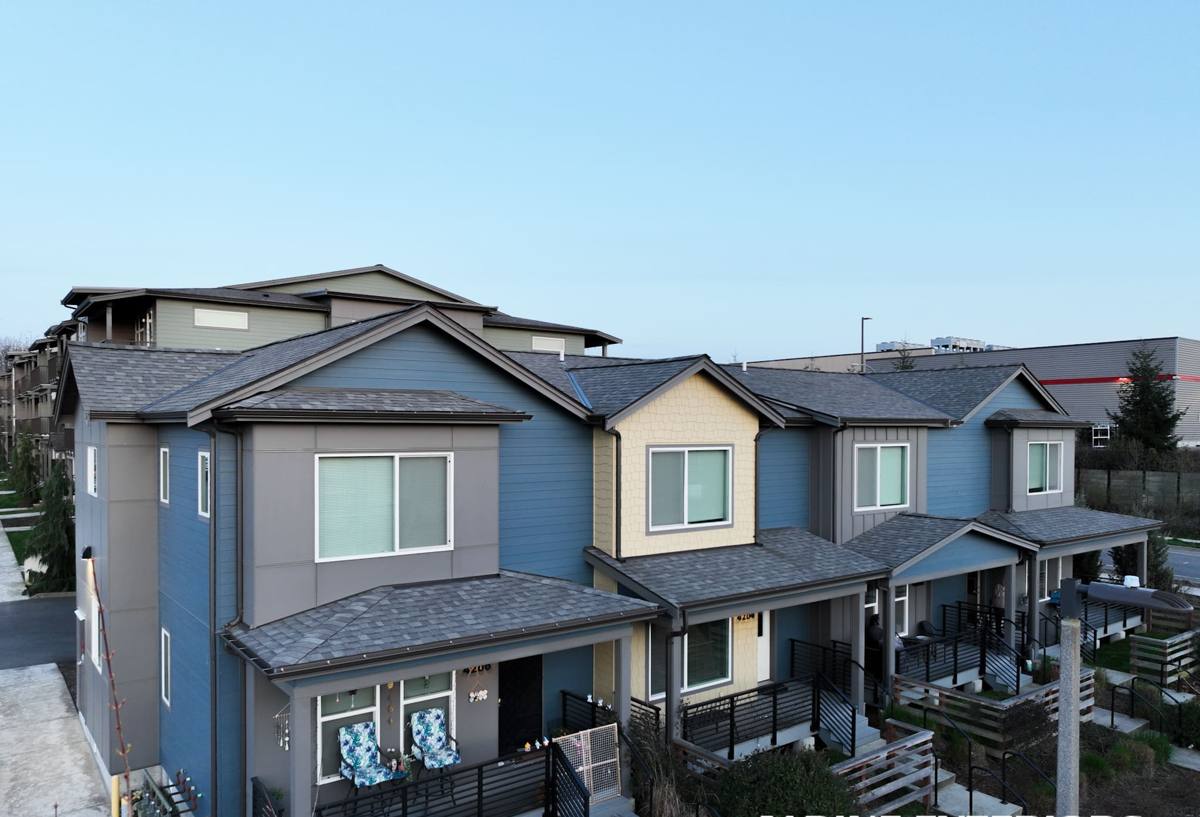
Why James Hardie Is the Only Product We Put on These Homes
We get asked regularly why we don't offer vinyl, LP SmartSide, cedar, or other fiber cement brands. The honest answer is that we've standardized on one product line because it holds up consistently in this specific climate when installed correctly, and we'd rather be excellent at one system than mediocre across several.
What Makes Fiber Cement Different Here
James Hardie's HardieZone system is engineered for regional exposure levels, and most of Whatcom County falls into the HZ5 or HZ10 zones, which account for wet, marine-influenced conditions. The board is non-combustible, doesn't swell or delaminate from moisture the way wood-based products can, and holds paint and factory finish far longer than wood siding exposed to constant damp cycles. It also doesn't provide the same food source for moss and algae that wood does, which matters in a climate where north-facing walls can stay damp for weeks at a time in winter.
ColorPlus Factory Finish
Most of what we install uses Hardie's ColorPlus finish — a baked-on, factory-applied color coat rather than field-applied paint. In a climate with this much rain, that matters more than it sounds. Field-painted siding depends on ideal weather during application and even coverage at every cut edge; factory finish is cured under controlled conditions before it ever reaches the site, and it comes with its own finish warranty separate from the substrate warranty.
Choosing the Right Hardie Profile for a Bellingham Home
Not every Hardie product is the right fit for every home style. Part of doing this correctly is matching the profile to the house and its exposure.
| Product | Typical Use | Why It Fits This Area |
|---|---|---|
| HardiePlank Lap Siding | Traditional and craftsman-style homes | Most common choice; sheds driving rain well when lapped and flashed correctly |
| HardiePanel Vertical Siding | Modern builds, accent walls, gable ends | Clean lines; works well paired with board and batten detailing |
| HardieShingle | Cottage and Cape Cod-style homes | Popular for coastal-influenced neighborhoods; needs careful moisture detailing at each course |
| Board and Batten | Farmhouse and transitional exteriors | Strong vertical water-shedding profile for high-rain walls |
We walk through these options with homeowners based on the home's orientation, roof overhangs, and which walls take the most direct weather — a west or south wall facing open exposure needs different attention than a sheltered, tree-covered north wall prone to moss.
What a Correct Installation Actually Involves
Fiber cement siding is only as good as the installation behind it. This is where a lot of the real protection against Whatcom County weather is won or lost, and it's mostly invisible once the job is finished.
Water Management Comes First
Before a single piece of siding goes up, the wall needs a proper weather-resistive barrier and correctly lapped flashing at every window, door, and penetration. In a climate that sees sustained rain rather than occasional downpours, water finds any gap given enough time. We install with a rainscreen gap where the wall assembly calls for it, so any moisture that does get behind the cladding has a path to drain and dry instead of sitting against the sheathing.
Fastening and Clearances
James Hardie publishes specific fastening patterns, minimum clearances from grade, roofing, and decks, and gapping requirements at butt joints. Skipping these isn't a cosmetic shortcut — it's how siding fails early in wet climates. We follow manufacturer installation instructions to the letter, both because it's the right way to build and because it's what keeps the product warranty valid.
Caulking and Sealant Details
Over-caulking is as much a problem as under-caulking. Butt joints on Hardie lap siding are often designed to be left uncaulked or treated with a specific joint system, because trapping moisture behind a sealed joint in a wet climate causes more harm than a properly gapped and shielded joint. This is one of the most common mistakes we see from installers unfamiliar with fiber cement.
Moss, Algae, and Long-Term Appearance
Whatcom County's moss season isn't a minor annoyance — on shaded walls and around foundation lines, it can establish within a year or two on the wrong surface. Fiber cement doesn't feed moss growth the way wood does, but growth can still take hold on any surface that stays damp, especially where landscaping or fencing blocks airflow and sun. Proper clearance from grade and vegetation, plus the drainage plane behind the siding, keeps walls drying out between storms instead of staying wet. ColorPlus finish also holds up better against pressure washing than field-applied paint, which matters if a homeowner wants to knock moss or algae staining off periodically without damaging the finish.
Our Process for Bellingham-Area Siding Jobs
- On-site walkthrough to assess current siding, moisture damage, trim condition, and wall exposure on each side of the house
- Written estimate covering product selection, profile, color, and scope — including any sheathing or moisture damage repair needed before new siding goes on
- Removal of old siding and inspection of the wall assembly underneath, since siding jobs are often the only time hidden moisture damage becomes visible
- Installation of weather-resistive barrier, flashing, and rainscreen components before any Hardie board goes up
- Siding installation to manufacturer specification, including fastening pattern, clearances, and joint treatment
- Final trim, caulking where appropriate, and site cleanup
We don't skip the wall-assembly inspection step to save time. On older homes in this area, especially those that have gone through a few decades of Pacific Northwest winters, what's happening behind the old siding is often more important than what's visible on the surface.
What Drives Cost on a Job Like This
| Factor | Why It Matters |
|---|---|
| Amount of tear-off and disposal | Removing existing siding, especially layered or damaged material, adds labor |
| Sheathing or framing repair | Moisture damage found during tear-off needs to be fixed before new siding goes on |
| Product line and profile | Lap, panel, shingle, and board-and-batten have different material and labor costs |
| Home complexity | Dormers, multiple gables, and cut-up wall lines take more time than simple rectangular walls |
| Trim and accent work | Custom trim details add to both material and installation time |
We give a specific number after seeing the home, not a rough guess over the phone — condition varies too much house to house to estimate honestly without a walkthrough.
Maintaining Hardie Siding in This Climate
- Rinse siding periodically to keep moss, algae, and salt residue from building up, especially on shaded and coastal-facing walls
- Keep landscaping and mulch beds pulled back from direct contact with the bottom edge of the siding
- Check and re-caulk around window and door trim every few years, since sealant wears faster than the siding itself
- Watch gutters and downspouts for overflow that can wash directly down a wall section
- Have any impact damage or cracked boards repaired promptly rather than left exposed to rain
None of this is heavy maintenance — that's part of the point of fiber cement — but a little attention goes further here than it would in a drier climate.
Why Local Experience Matters for This Job
Installing Hardie correctly requires following the same manufacturer specifications everywhere, but knowing how to sequence a job around Whatcom County weather, which wall orientations need extra drainage attention, and how moss and salt exposure behave on homes in this specific area comes from working here repeatedly. A crew that already does this work around Blaine and Bellingham isn't guessing at how a north-facing wall behaves through a wet winter — they've seen it.
If you're considering new siding for a Bellingham-area home, we're happy to walk the property, look at what your current siding is telling us about moisture and wear, and put together a straightforward, no-pressure estimate using the form below.