 Blaine Siding
 Roofing in Grandview Faces a Different Kind of Wear
Grandview homes sit close enough to Semiahmoo Bay and the Salish Sea that salt-laden air is part of daily life, not an occasional event. Add Whatcom County's long, wet winters and the shaded, moisture-holding conditions that many Grandview lots have from mature tree cover, and you get a roofing environment that's tougher on materials than most manufacturers' warranty testing accounts for. Salt air accelerates corrosion on exposed metal fasteners and flashing. Driving rain, often pushed sideways by wind off the water, finds every weak seam and undersized overlap. And moss doesn't just sit on top of shingles looking bad — it holds water against the roof surface for months at a time, which is exactly the condition that breaks down asphalt granules and rots decking underneath.
A roof that's correctly installed for these conditions looks similar to one installed anywhere else, but the details underneath — fastener choice, underlayment layering, flashing sequencing, and ventilation — are where a Grandview-appropriate roof earns its keep.
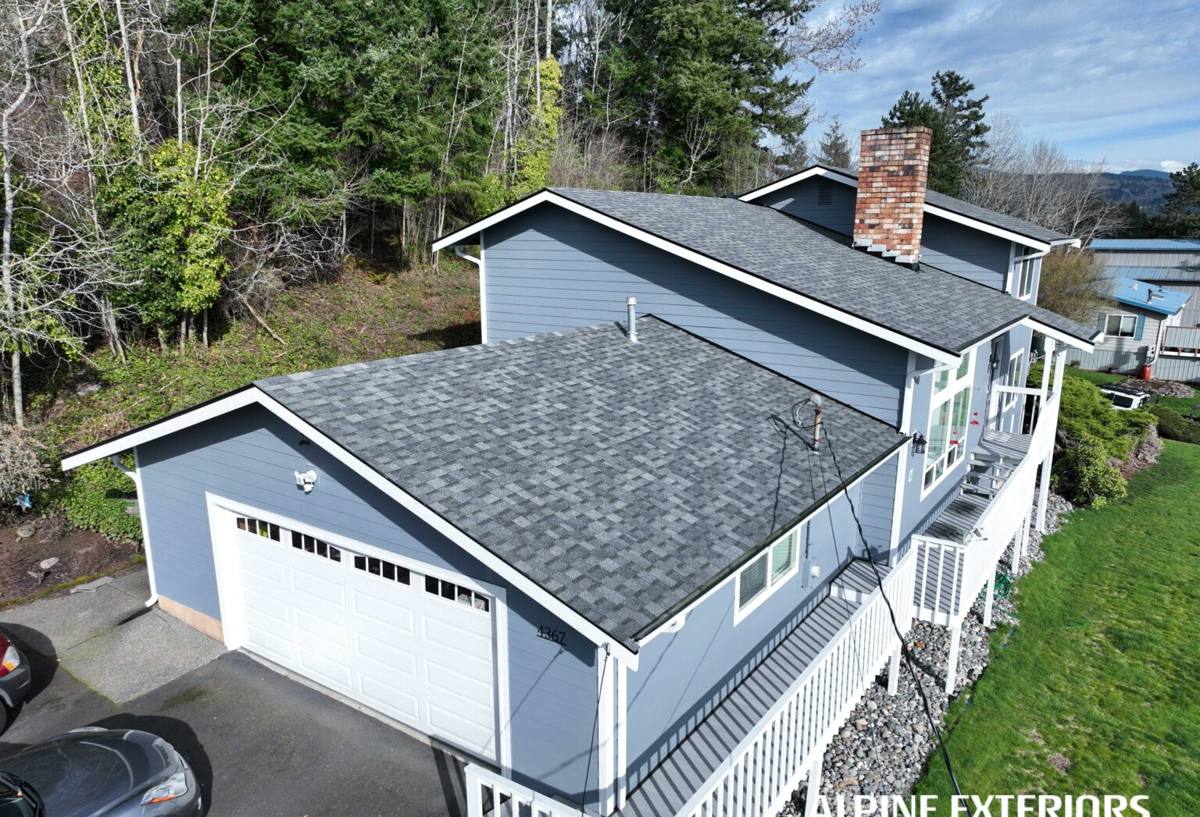
Signs a Grandview Roof Is Ready for Replacement
Most homeowners call us after noticing one or two visible problems, but by the time shingles are visibly failing, the decking underneath has often been absorbing moisture for a while. Here's what we look for during an inspection, and what you can check yourself from the ground or a ladder:
- Shingle edges curling, cupping, or losing granules in patches (check gutters for granule buildup)
- Moss or algae streaking that keeps coming back within months of cleaning
- Soft or spongy spots when walking the roof, especially near valleys and low-slope sections
- Rusted or lifted flashing around chimneys, vents, and skylights
- Daylight visible through the attic roof deck, or damp insulation after a heavy rain
- Shingles older than 20-25 years, regardless of how they look from the street
- Interior ceiling stains that appear after wind-driven rain but not after calm rain
That last one is a common Grandview-specific clue — a leak that only shows up during storms with wind off the bay usually points to a flashing or fastener problem rather than worn-out field shingles, and it's worth diagnosing correctly before assuming the whole roof needs replacing.
What a Correct Installation Actually Involves
Full Tear-Off, Not a Layover
We remove the existing roofing down to the deck rather than installing over it. A layover hides deck damage, traps moisture between layers, and voids most manufacturer warranties outright. In a climate where moss and moisture are already working against the roof, starting with a hidden problem underneath is not a shortcut worth taking.
Deck Inspection and Repair
Every square foot of decking gets checked once the old roofing is off. Soft, delaminated, or water-stained plywood or OSB gets replaced before anything new goes down — nailing new roofing to compromised decking is one of the most common causes of early failure we see on older Grandview homes.
Underlayment Built for Wet Weather
We use synthetic underlayment as the primary moisture barrier across the field of the roof, with self-adhered ice-and-water shield in valleys, along eaves, and around all penetrations. In a region with as much sustained rainfall as Whatcom County gets, the underlayment is doing real structural work, not just serving as a backup.
Flashing Sequencing
Flashing at chimneys, skylights, sidewalls, and vent penetrations has to be woven into the roofing layer by layer, not caulked on afterward. Caulk fails; properly stepped and counter-flashed metal doesn't rely on a sealant to stay watertight. We use corrosion-resistant flashing materials given the salt air exposure in the area.
Fastening for Wind and Corrosion
We use corrosion-resistant fasteners rated for coastal exposure, driven to manufacturer spec — not overdriven, which cracks shingles, and not underdriven, which lets wind get underneath them. Nail pattern and fastener count matter more here than in drier inland areas because wind-driven rain will exploit any gap.
Ventilation: The Part Homeowners Rarely Ask About
Attic ventilation is one of the biggest factors in how long a roof lasts, and it's also one of the most commonly overlooked. Without balanced intake at the eaves and exhaust at the ridge, heat and moisture build up in the attic, which shortens shingle life from underneath and creates the exact damp, dark conditions moss thrives on above. On Grandview homes with mature tree cover, shaded roof sections already dry out more slowly after rain — poor ventilation compounds that by keeping the deck warm and damp long after the storm has passed.
As part of every roof replacement, we evaluate existing intake and exhaust venting and correct imbalances where we find them. This isn't an upsell; it's a condition of the roofing manufacturer's warranty in most cases, and it's cheap to fix while the roof is already open.
Choosing the Right Roofing Material for Grandview
There's no single "best" roofing material — the right choice depends on how much moss and moisture resistance you want to pay for up front versus manage with maintenance over time. Here's how the common options compare for this specific climate:
| Material | Moss/Moisture Resistance | Typical Lifespan Here | Trade-offs |
|---|---|---|---|
| Standard 3-tab asphalt | Lower — needs regular moss treatment | 15-20 years | Lowest upfront cost, shortest lifespan in wet shade |
| Architectural (laminate) asphalt | Moderate, better with algae-resistant granules | 25-30 years | Best balance of cost and durability for most homes |
| Metal (standing seam or panel) | High — sheds moisture, resists moss | 40-50+ years | Higher upfront cost, requires experienced installer for coastal fastening |
| Cedar shake | Low without diligent maintenance | 20-30 years with upkeep | Natural look, highest maintenance burden in wet, shaded conditions |
For most Grandview homes we recommend algae-resistant architectural shingles as the practical middle ground, and metal roofing for homes with heavy shade, low-slope sections, or owners who want to minimize moss maintenance long-term. We're happy to walk through the honest trade-offs for your specific roof rather than push one product.
Our Installation Process, Start to Finish
- Inspection and estimate: We walk the roof and attic, document existing conditions, and give you a written scope and price — no pressure, no inflated "storm damage" claims.
- Material selection: We go over the options above based on your roof's slope, shade exposure, and budget.
- Scheduling around weather: Given how often Whatcom County sees rain, we plan tear-off in sections we can dry-in the same day, so your home is never left exposed overnight.
- Tear-off and deck repair: Full removal, deck inspection, and replacement of any compromised sheathing.
- Underlayment and flashing installation: Ice-and-water shield at vulnerable areas, synthetic underlayment across the field, new flashing throughout.
- Ventilation correction: Intake and exhaust venting balanced to manufacturer spec.
- Roofing installation: Materials installed to manufacturer and local code specifications, with attention to fastening for wind and salt exposure.
- Final walk-through: We inspect the completed roof with you, clean up the site fully, and go over warranty paperwork.
What Affects the Cost of a Grandview Roof Replacement
| Factor | Why It Matters Here |
|---|---|
| Roof size and complexity | More valleys, dormers, and penetrations mean more flashing work and labor time |
| Deck condition | Moisture damage found during tear-off adds material and labor to repair before roofing goes down |
| Material choice | Asphalt, metal, and cedar carry very different material costs and installation labor |
| Existing ventilation | Adding or correcting intake/exhaust venting is inexpensive during a tear-off, costly to retrofit later |
| Access and site conditions | Tree cover, slope, and driveway access affect staging, disposal, and labor time |
We provide a written, itemized estimate before any work starts, so you know exactly what you're paying for and why — including if we find deck damage that wasn't visible during the initial inspection.
Why It Matters to Hire a Crew That Already Works This Area
A roofing crew that mostly works drier inland areas can still do competent work, but they're often applying general practices rather than ones calibrated to salt air, sustained coastal rainfall, and heavy moss pressure. We work throughout Blaine and Whatcom County regularly, which means we already know which fastener grades hold up here, which flashing details fail first in wind-driven rain, and how much ventilation correction the typical Grandview attic actually needs — not guesswork on the day of the job.
It also means we're a known, reachable local business if a warranty question or a storm-related concern comes up years down the road, rather than a crew that was passing through for one season.
Maintaining Your New Roof After Installation
A correctly installed roof still benefits from basic upkeep in this climate:
- Keep gutters clear so water isn't backing up under the roof edge, especially during fall leaf drop
- Have moss growth treated before it spreads, rather than waiting for a visible mat to form
- Trim back overhanging branches that keep sections of the roof shaded and slow to dry
- Schedule a quick visual inspection every couple of years, especially after major windstorms
None of this is heavy maintenance — it's the kind of upkeep that keeps a well-installed roof reaching its full expected lifespan instead of failing early from preventable moisture issues.
Get a Straight Answer on Your Grandview Roof
If you're not sure whether your roof needs full replacement or just repair, we'd rather tell you that honestly than sell you a job you don't need yet. Reach out for a free, no-pressure estimate — we'll inspect the roof, explain what we find in plain terms, and give you a written scope so you can decide with real information.