 Blaine Siding
 Grandview's Deck Problem: Salt Air, Rain, and a Long Moss Season
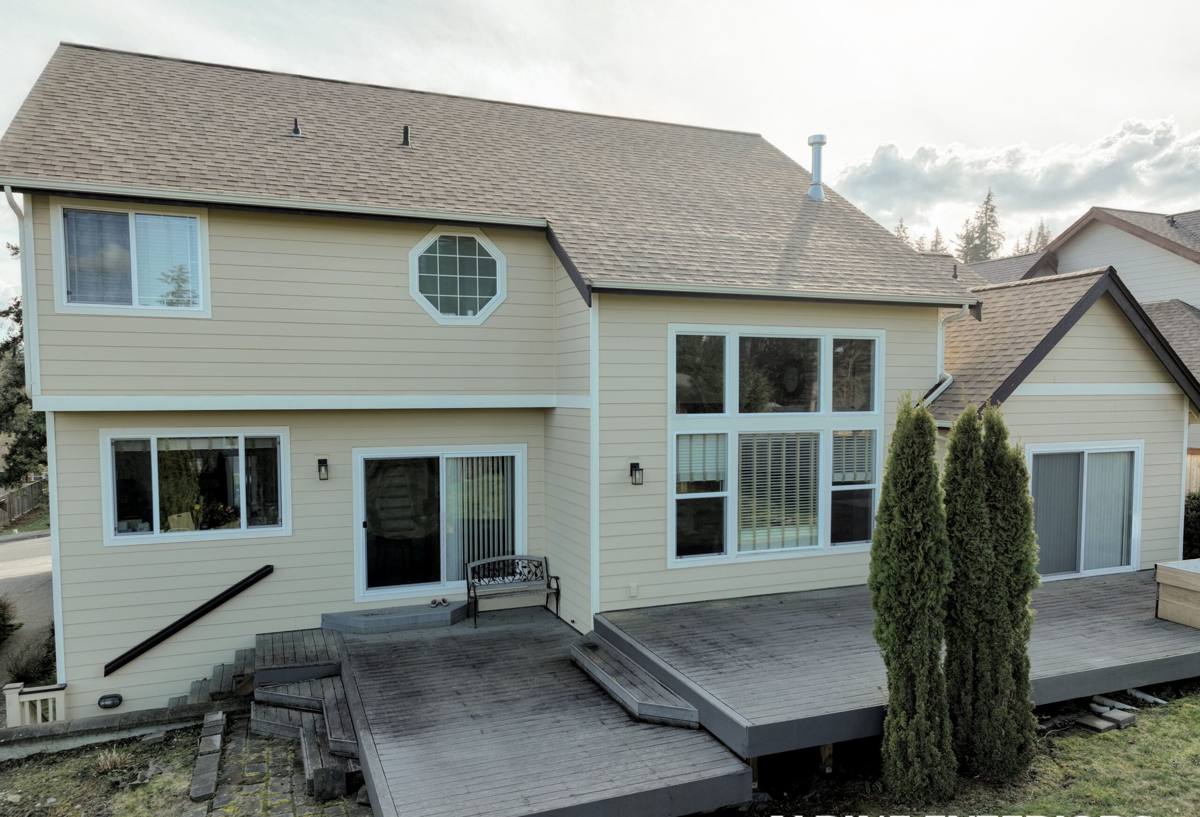
If you own a deck in the Grandview area of Blaine, you already know it doesn't age like a deck in a drier, inland town. Whatcom County's northwest corner sits right where the salt water meets the rain, and that combination is hard on wood, hardware, and even a lot of modern composite decking. Salt-laden air corrodes metal faster than plain rain does. Blaine's driving rain — often coming sideways off the water in a stiff wind — finds its way into joints, screw holes, and ledger connections that would stay dry in a more sheltered spot. And the long stretch of gray, damp months from fall through spring gives moss, algae, and mildew months on end to get established on anything that doesn't dry out quickly.
None of that means a deck in Grandview is doomed. It means the repair work needs to account for those conditions specifically — not just patch what's visibly broken, but address why it broke in the first place. That's the difference between a repair that lasts a couple of seasons and one that lasts the life of the deck.
How Salt Air, Rain, and Moss Actually Damage a Deck
Fastener and Hardware Corrosion
Standard galvanized fasteners hold up fine in a lot of the country. Close to the water, they don't last as long — the zinc coating that protects the steel underneath gets eaten through faster by salt-laden moisture, and once that happens, the fastener rusts, weakens, and eventually fails. This shows up as rust streaking down deck boards, screw heads that shear off when you try to back them out, and joist hangers that have gone from silver to orange-brown. It's one of the most common repair triggers we see on decks in this part of Whatcom County, and it's often worse than it looks from the surface.
Ledger Board and Framing Rot
The ledger board — the piece that bolts your deck to the house — is the single most important structural connection on most decks, and it's also the one most exposed to trapped moisture if it wasn't flashed correctly when built. Add Blaine's rain volume and the salt content in the air, and any gap in the flashing turns into a slow leak that rots the ledger, the rim joist behind it, and sometimes the wall framing inside. This kind of damage is often invisible until the deck starts to feel spongy or pulls away slightly from the house.
Moss, Algae, and Surface Decay
Moss and algae aren't just cosmetic. They hold moisture against the wood surface long after the rain has stopped, which accelerates rot in the boards themselves and makes the surface slick and dangerous underfoot — especially on stairs. A deck that stays shaded or doesn't get much airflow in the Grandview area can develop a moss layer within a single wet season if it isn't cleaned and treated.
Signs Your Deck Needs Repair, Not Just a Cleaning
A pressure wash and a coat of sealer can make an old deck look better without actually fixing anything underneath. Here's what tells us — and should tell you — that there's real repair work needed:
- Soft, spongy, or bouncy spots when you walk across the deck
- Rust stains bleeding out from screw heads or metal connectors
- Any gap, even a hairline one, where the deck meets the house siding
- Railings or posts that wiggle more than a small amount when pushed
- Boards that stay wet or dark long after the rest of the deck has dried
- Moss or black algae that returns within weeks of cleaning
- Stair stringers or ledger areas with visible rot, splitting, or crumbling wood
- Deck fasteners that are heavily rusted or missing entirely
If you're seeing two or more of these, it's worth having someone look at the framing, not just the surface boards.
What a Proper Deck Repair Actually Involves
Structural Repairs Come First
Any legitimate repair starts underneath, not on top. That means checking the ledger connection, the joists, the posts, and the footings before touching the decking boards or railings. Replacing rotted decking on a deck with a compromised ledger board just hides the real problem under a nice-looking surface — and that's the kind of shortcut that leads to a failure later, sometimes a dangerous one.
Decking and Railing Repairs
Once the structure is sound, we address the visible parts: swapping out rotted, cupped, or splintering boards, resetting or replacing loose balusters and rail posts, and correcting any spacing or fastening issues along the way. We match materials as closely as practical, since blending a repair into an older deck is part of doing the job right.
Sealing and Finish Work
The last step is protecting what you just repaired. For wood decks, that means the right sealer or stain applied to a properly dried, clean surface — not slapped over old, failing finish. For composite decking, it means making sure fastening and clearances follow the manufacturer's spec, since composite boards expand, contract, and handle moisture differently than wood.
Repair or Rebuild? What Actually Drives That Decision
Not every deck problem calls for a full rebuild, and not every deck is worth patching. The honest answer depends on how much of the structure is affected versus how much is surface-level.
| Factor | Leans Toward Repair | Leans Toward Rebuild |
|---|---|---|
| Ledger board condition | Solid, properly flashed | Rotted or improperly flashed originally |
| Extent of damage | Isolated to a few boards or fasteners | Spread across most of the framing or decking |
| Age of the deck | Newer, otherwise well-built | Original construction issues or very old framing |
| Post and footing condition | Stable, no movement | Settling, shifting, or undersized footings |
| Code compliance | Meets current guardrail and connection standards | Built before current standards and lacks proper hardware |
We'll always tell you plainly which side of that table your deck falls on, and why — not just what's easiest to sell.
Our Grandview Deck Repair Process
- Inspection. We check the ledger connection, framing, posts, footings, and decking surface, and we test suspect areas by hand rather than guessing from a visual look.
- Honest assessment. We walk you through what we found, what's structural versus cosmetic, and what your real options are — repair, partial rebuild, or full rebuild — with no pressure toward the most expensive path.
- Scope and estimate. You get a clear, itemized plan before any work starts, including materials and fastener grade.
- Repair work. Structural issues are corrected first — ledger flashing, framing, hardware — followed by decking, railings, and stairs.
- Finish and protection. Sealing, staining, or manufacturer-specified finishing to help the repair hold up against the next several wet seasons.
- Final walkthrough. We check the work with you and point out anything you should keep an eye on going forward.
Materials and Hardware We Use — and Why It Matters Here
In an area like Blaine, hardware selection isn't a minor detail — it's often the difference between a repair that lasts and one that fails again in a few years.
| Component | Standard-Grade Option | What We Use in Salt-Air Areas |
|---|---|---|
| Fasteners | Basic galvanized screws/nails | Stainless steel or heavy hot-dip galvanized rated for coastal exposure |
| Joist hangers & connectors | Standard galvanized | Higher corrosion-resistance coated or stainless hardware |
| Ledger flashing | Basic flashing tape | Full-coverage, self-adhering flashing integrated with house wrap |
| Decking | Untreated or minimally treated wood | Treated wood or composite matched to the home's exposure and your budget |
We don't upsell every repair to premium materials — plenty of Grandview decks do fine with solid mid-grade materials installed correctly. But on fasteners and flashing specifically, cutting cost is usually a false economy this close to the water, because the labor to redo it later costs far more than the hardware would have.
Permits and Local Building Considerations in Blaine and Whatcom County
Structural deck repairs — anything touching the ledger, framing, footings, or guardrails — commonly fall under Whatcom County or City of Blaine permitting requirements, depending on the scope and the deck's height above grade. Guardrail height, baluster spacing, and stair rail requirements also get checked against current code when structural work is done, even on an older deck that predates those rules. We handle figuring out what's required for your specific repair rather than leaving that research to you, and we won't cut a structural corner just because a permit adds a step.
Why a Crew That Already Works Grandview Makes a Difference
Deck repair isn't one-size-fits-all, and a crew that only occasionally works this stretch of Whatcom County coastline can miss what's routine to a crew that works it regularly. Knowing which fastener grades actually hold up here, which areas of a deck typically show hidden rot first because of prevailing wind and rain direction, and how aggressively moss comes back in a shaded Grandview yard versus a sunnier lot — that comes from doing this work locally, season after season, not from a general checklist. It also means faster response when something needs a second look, and a crew that stands behind the work because we're not driving in from somewhere else.
Keeping a Repaired Deck in Good Shape
A repair holds up longer with a little seasonal attention. A few habits make a real difference in this climate:
- Sweep debris and standing leaves off the deck regularly through fall, when moss gets its start
- Rinse off salt residue and grime a few times a year, especially after storms
- Check fastener heads and railings for movement or rust once or twice a year
- Keep gutters and downspouts near the deck clear so water isn't dumping onto it
- Re-seal or re-stain wood decking on the schedule the product calls for, not just when it looks bad
If you're noticing soft spots, rust stains, stubborn moss, or just aren't sure whether your deck needs a repair or a rebuild, we're happy to take a look and give you a straight answer. Reach out for a free, no-pressure estimate using the form below.