 Blaine Siding
 Dakota Creek's Climate Is Rougher on Siding Than It Looks
Dakota Creek sits close enough to the water and to open farmland that homes here take a steady beating most inland Whatcom County neighborhoods never see. Salt-laden air off the Strait works its way into seams and fastener heads. Wind-driven rain doesn't just fall straight down — it gets pushed sideways into wall assemblies during winter storms. And the long, damp shoulder seasons that stretch from October through May give moss, algae, and mildew months of standing moisture to work with before a real dry spell ever shows up.
None of that is unusual for northwest Washington. What is unusual is how many siding products simply weren't engineered with this combination in mind. A siding choice that holds up fine in a drier climate, or even in a milder coastal pocket, can start showing problems within a few winters out here — swelling at butt joints, paint failure on south and west faces, moss colonizing north-facing walls that never fully dry out. Getting siding right in Dakota Creek isn't about picking a premium product for its own sake. It's about matching the material and the installation to what this specific stretch of coastline actually does to a house.
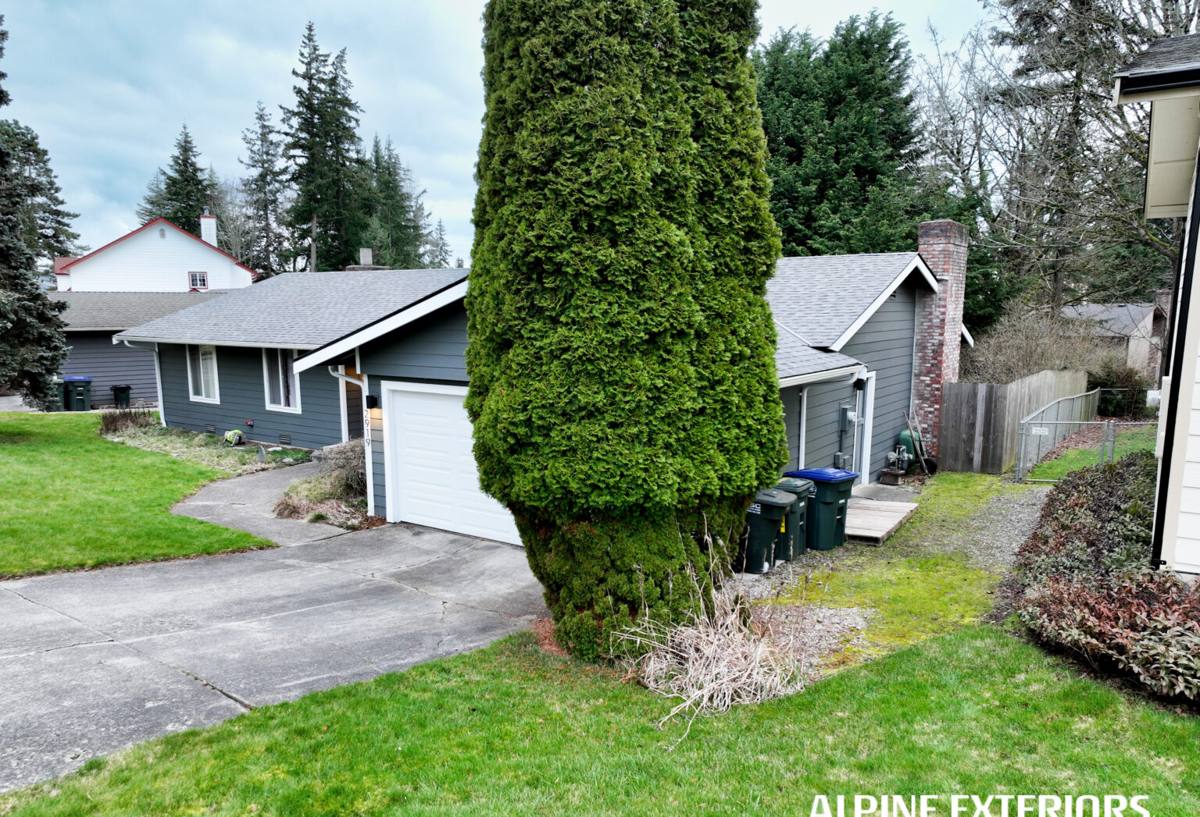
Why We Install Only James Hardie Fiber Cement
We standardized on James Hardie fiber cement siding for every home we touch, including here in Dakota Creek, and we don't install vinyl, LP SmartSide, primed wood, or other fiber cement brands. That's not a marketing position — it's a decision built around what actually survives long-term exposure to salt air and driving rain without turning into a maintenance headache for the homeowner.
Fiber cement is made from cement, sand, and cellulose fiber, which means it doesn't absorb water the way wood-based products do and doesn't expand and contract with humidity swings the way vinyl does. James Hardie's ColorPlus factory-applied finish is baked on under controlled conditions, which gives it far better resistance to fading and peeling in coastal UV and salt exposure than field-applied paint. And Hardie engineers specific product lines for different climate zones — its HZ5 configuration is built for regions with freeze-thaw cycling and sustained moisture, which describes a Whatcom County winter well.
We're upfront that this isn't the cheapest siding option on the market. It's priced as a long-term investment, backed by a strong transferable limited warranty, and it holds up to the specific punishment Dakota Creek dishes out — that combination is why we put it on homes instead of the alternatives.
What This Means Day to Day
- No repainting cycle every 5-8 years like you'd budget for wood or field-painted siding
- Non-combustible material, which matters for insurance conversations and wildfire-adjacent building codes
- Consistent color and texture across the whole house, since it's factory-finished rather than site-painted
- A warranty that transfers to the next owner if you sell, which matters in a market where coastal homes turn over
What Correct Installation Actually Requires Here
Fiber cement siding fails when it's installed like any other siding, not because of the material itself. In a salt-air, high-rain environment like Dakota Creek, the installation details matter more than they would somewhere drier, and cutting corners on any of them shows up as a problem within a few wet seasons.
The Non-Negotiables
- Rainscreen or drainage plane behind the siding — a gap that lets any moisture that gets past the cladding drain and dry out instead of sitting against the sheathing
- Correct fastener penetration and spacing — under- or over-driven nails are one of the most common causes of premature failure, and it's invisible once the job is "done" unless you know what to check
- Proper clearance at grade and at horizontal trim — Hardie specifies minimum clearances from the ground and from decks/patios for a reason; driving rain finds any gap that's too tight
- Sealed and flashed penetrations — every vent, light fixture, and hose bib penetration is a potential entry point for wind-driven rain if it's not properly flashed and sealed
- Factory-cut edges kept intact where possible — field cuts expose raw fiber cement that needs to be sealed per manufacturer spec, or they become a moisture entry point over time
Every one of these is a Hardie installation requirement, not an optional upgrade. Skipping any of them can void the manufacturer warranty even if the siding itself is genuine James Hardie product — which is exactly why installer track record matters as much as brand choice.
James Hardie Product Lines: Matching the Line to the Exposure
Not every wall on a Dakota Creek home faces the same conditions. A south or west-facing wall exposed to prevailing wind and rain needs different attention than a sheltered wall tucked behind a garage. We plan the product mix and detailing per elevation rather than treating all four walls the same.
| Product Line | Best Suited For | Why It Matters Here |
|---|---|---|
| HardiePlank Lap Siding (HZ5) | Most wall areas, standard field siding | Engineered for regions with freeze-thaw and sustained moisture exposure |
| HardiePanel Vertical Siding | Accent walls, gables, modern facades | Fewer horizontal joints means fewer potential water entry points |
| HardieTrim Boards | Corners, window and door casing, fascia | Matches expansion/contraction rate with the field siding, reducing gap and caulk failure |
| HardieSoffit Panels | Eaves and overhangs | Resists the moss and mildew growth that soffits in shaded, damp areas are prone to |
Our Process for a Dakota Creek Project
1. On-Site Assessment
We walk the exterior wall by wall, checking the condition of the existing siding, the state of the sheathing and framing underneath where accessible, and any signs of past moisture intrusion around windows, decks, and roof-to-wall transitions. This tells us whether we're doing a straightforward re-side or whether there's rot or water damage to address first.
2. Water Management Plan
Before a single piece of siding goes up, we plan the drainage plane, flashing details, and penetration sealing for the whole house — not as an afterthought, but as the actual foundation of the job. This is the step that determines whether the house handles a wet Whatcom County winter well or poorly.
3. Installation to Manufacturer Spec
Fastener spacing, clearances, and joint treatment follow James Hardie's published installation guidelines exactly, elevation by elevation, adjusted for each wall's actual exposure.
4. Final Walkthrough
We review the finished work with the homeowner, including what basic upkeep (if any) to expect and how the warranty coverage works going forward.
Signs Your Current Siding Is Already Losing the Fight
Homeowners in Dakota Creek often reach out after noticing one or two of these — worth checking your own place against this list before problems compound:
- Persistent moss or black streaking that comes back within weeks of cleaning
- Soft or spongy spots when you press on siding near the bottom courses or around windows
- Paint that's peeling, chalking, or has faded unevenly, especially on south/west walls
- Visible gaps or separation at butt joints and corner boards
- Warping, bowing, or buckling panels, particularly after a wet winter
- Rising energy bills that suggest the wall assembly isn't performing the way it used to
Maintenance: What Fiber Cement Actually Needs Out Here
One of the real advantages of switching to properly installed Hardie fiber cement in a climate like this is how little ongoing attention it needs compared to wood or a repainted product. That said, "low maintenance" isn't "no maintenance," especially with a long moss season in play.
| Task | Frequency | Why |
|---|---|---|
| Soft wash to remove moss/algae buildup | Every 1-2 years | Prevents organic growth from holding moisture against the surface long-term |
| Visual check of caulking at trim and penetrations | Annually | Caulk is the first line of defense at joints and wears out well before the siding does |
| Clear debris from behind gutters and at wall/roof transitions | Seasonally | Backed-up water at these transitions is a common source of hidden intrusion |
| Full repaint | Not required with ColorPlus finish | Factory finish is warrantied separately from the substrate and typically outlasts field-applied paint by a wide margin |
Why Local Experience in This Specific Area Matters
Blaine and the Dakota Creek area aren't generic "Pacific Northwest" — the exposure here, this close to Semiahmoo Bay and the open water beyond it, is more aggressive than what a crew coming from inland Whatcom County or Bellingham typically plans for. A contractor who's actually worked houses in this specific pocket knows to treat every south and west elevation as a wind-driven-rain elevation by default, knows how aggressively moss establishes on shaded north walls here, and doesn't need to relearn those lessons on your house.
That experience shows up in the small decisions — where extra flashing gets added even though it's not strictly required, which corners get sealed a little more conservatively, which walls get the vertical accent treatment instead of standard lap because it sheds water better in that specific spot. Those calls come from having already seen what does and doesn't hold up on homes just like yours, in this exact climate.
Ready to Talk About Your Home?
If your Dakota Creek home's siding is showing its age, or you're planning ahead before the next wet season, we're happy to take a look and give you an honest read on what it needs. The estimate is free, there's no pressure, and you'll get a clear picture of the work and the product involved before you decide anything.