 Blaine Siding
 Roofing in Everson Is Its Own Problem to Solve
Everson sits inland from Blaine but still gets the same weather pattern that defines roofing work across Whatcom County: long stretches of low-intensity rain broken up by wind-driven storms off the water, cool damp air for much of the year, and a shade-and-moisture combination that keeps roofs wet longer than homeowners expect. A roof here doesn't fail because of one bad storm. It fails slowly, from moisture that never fully dries out between rain events and from moss that gets a foothold and doesn't let go.
That means a roof replacement in this area has to be evaluated differently than the same job would be in a drier climate. The materials, the ventilation, the underlayment, and the detailing around valleys and flashing all need to account for a roof that will spend more days of the year damp than dry. Get that part wrong and even a brand-new roof can show problems within a few years.
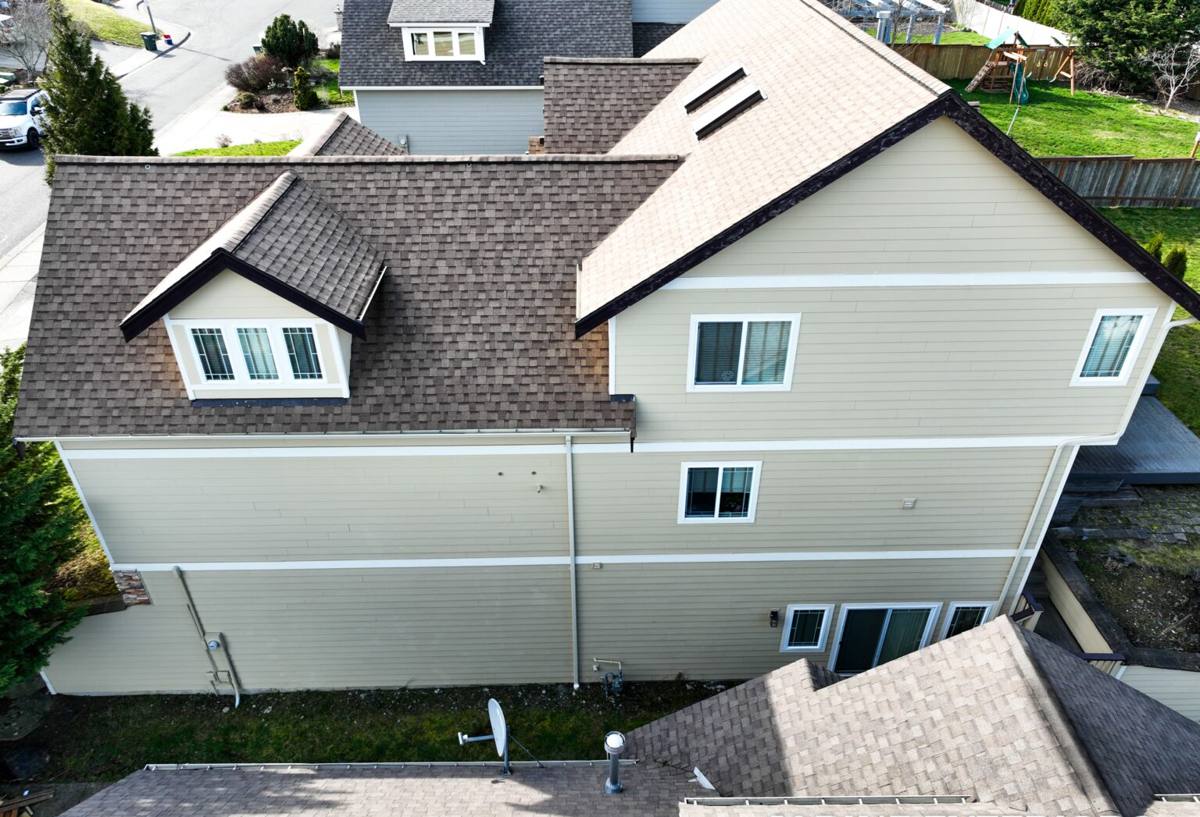
What Salt Air, Driving Rain, and Moss Actually Do to a Roof
Salt Air and Metal Components
Being close to the water means airborne salt reaches roofing hardware, flashing, and fasteners even on homes that aren't directly on the coastline. Over time, salt exposure accelerates corrosion on unprotected or poorly coated metal — nails, drip edge, valley flashing, and vent flashing are the parts that usually show it first. A roof replacement in this region should specify corrosion-resistant fasteners and flashing as a baseline, not an upgrade.
Driving Rain and Wind-Driven Water
Rain that comes in sideways during a windstorm doesn't behave like rain falling straight down. It gets pushed up under shingle tabs, into exposed nail heads, and along any seam that isn't properly lapped or sealed. This is why underlayment quality and correct shingle exposure matter more here than in calmer climates — the roof has to shed water that's actively being pushed uphill by wind, not just water running downhill by gravity.
Moss and the Long Wet Season
Moss needs sustained moisture and shade to establish, and Everson's tree cover combined with a long damp season gives it exactly that. Moss holds water against the roofing surface, which keeps shingles saturated far longer than they're designed to stay wet. On older roofs, thick moss growth at the ridge and in valleys is often the clearest sign that the roof deck underneath has been absorbing moisture for a while — sometimes longer than the shingles have visibly shown it.
Signs a Roof in This Area Is Ready for Replacement
Because moisture damage here tends to build quietly, it helps to know the specific signs that point to replacement rather than a patch repair:
- Moss buildup that returns within a season or two of cleaning, especially in shaded valleys and along the north-facing slope
- Granules collecting in gutters or downspouts, which signals the shingle surface is breaking down
- Shingle edges that curl, cup, or lift, often worst on slopes that catch the most wind-driven rain
- Soft spots or slight sag felt when walking the roof, suggesting the deck has absorbed moisture
- Rusted or discolored streaking below metal flashing or fasteners, a sign salt-driven corrosion has already started
- Daylight or water staining visible in the attic along the roofline, particularly near valleys and chimneys
- A roof that's approaching or past the manufacturer's expected service life for this climate, regardless of appearance
Any one of these on its own might just need a repair. Two or three together, especially on a roof more than 15-20 years old, usually means it's more cost-effective to replace than to keep patching.
What a Correct Roof Replacement Involves Here
Full Tear-Off and Deck Inspection
We don't recommend roofing over an existing layer in this climate. A full tear-off is the only way to actually inspect the deck for the soft or delaminated spots that moisture causes, and it's the only way to install underlayment and flashing correctly. Any damaged sheathing gets replaced before new roofing goes down — covering it up just moves the problem underneath a new roof instead of fixing it.
Underlayment Built for Wind-Driven Rain
Given how often rain here gets pushed sideways by wind, we install synthetic or ice-and-water-shield underlayment at valleys, eaves, and other vulnerable transitions, not just the field of the roof. This is a second line of defense in case wind-driven water gets past the shingle surface — cheap insurance against the specific weather pattern this area sees.
Ventilation That Actually Dries the Deck
A roof deck that stays damp for extended periods needs somewhere for that moisture to go. Balanced intake and exhaust ventilation lets the attic and deck dry out between rain events instead of staying saturated, which directly affects how long moss takes to re-establish and how long the shingles last. Ventilation upgrades are frequently the most impactful part of a replacement that homeowners initially assume is a cosmetic job.
Flashing and Fastener Selection for Salt Exposure
Every metal component — drip edge, step flashing, valley metal, pipe boots, fasteners — gets specified with corrosion resistance in mind rather than defaulting to whatever is cheapest. This is a small line-item difference at install time and a significant difference in how the roof looks and performs a decade out.
Comparing Roofing Materials for This Climate
Material choice matters more here than in drier parts of the state, mostly because of how each material handles sustained moisture and moss pressure over time.
| Material | Moisture & Moss Behavior | Maintenance | Typical Lifespan |
|---|---|---|---|
| Architectural asphalt shingle | Good with proper ventilation and algae-resistant granules; still needs periodic moss removal | Low to moderate | 25-30 years |
| Standard 3-tab asphalt | More prone to moss retention and curling in sustained damp conditions | Moderate | 15-20 years |
| Metal roofing | Sheds moisture and resists moss well; coating quality matters near salt air | Low | 40-50+ years |
| Wood shake | Absorbs moisture readily and is highly susceptible to moss and rot in this climate | High | Shorter, and shortened further without diligent upkeep |
We install asphalt and metal roofing systems most often in this area because they hold up well against the moss-and-moisture cycle with reasonable maintenance. Wood shake can look great, but its moisture absorption makes it a harder recommendation here — that's a maintenance and longevity trade-off we'll walk through honestly rather than push a product that fights the climate.
Our Process, Start to Finish
- On-site inspection. We walk the roof and the attic, check the deck condition, ventilation, and flashing, and photograph anything that affects the scope.
- Written estimate. You get a clear breakdown of materials, labor, and any deck repair or ventilation work identified during inspection — no surprise add-ons after the fact.
- Material selection. We go over the options that make sense for this climate and your budget, including the trade-offs in the table above.
- Scheduling around the weather. Tear-off exposes your home to the elements, so we plan around forecasted dry windows and protect the structure if conditions shift mid-job.
- Full tear-off and deck repair. Old roofing comes off completely, the deck is inspected and repaired as needed, before anything new goes down.
- Installation. Underlayment, flashing, ventilation, and roofing material are installed in that order, with attention to the wind-driven-rain details covered earlier.
- Final walkthrough. We review the completed roof with you, confirm cleanup is complete, and go over any warranty documentation.
Cost Factors for an Everson Roof Replacement
Every roof is priced based on its own specifics, but the factors that most often move the number here are consistent:
- Roof size and pitch, since steeper roofs take longer to work safely
- Number of valleys, penetrations, and flashing details, all of which add labor and material
- Condition of the existing deck and how much sheathing needs replacing
- Material choice, from standard asphalt up through metal roofing
- Ventilation upgrades needed to correct an under-ventilated attic
- Access and site conditions, including how close trees and structures are to the roofline
We'll break each of these out in a written estimate so you can see exactly what's driving the cost rather than getting a single lump-sum number.
Why It Matters That We Already Work in This Area
A roofing crew that works Everson and the broader Blaine area regularly knows which slopes tend to hold moss, which older homes commonly have under-ventilated attics, and how the local wind pattern tends to drive rain during winter storms. That's not something you can fully account for from a general roofing checklist — it comes from having done this work, on this kind of roof, in this specific stretch of Whatcom County. It shows up in small decisions: where we add extra underlayment even though it's not strictly required by code, which fastener spec we default to given the salt exposure, and how we sequence a tear-off around a weather window that a crew unfamiliar with the area might misjudge.
It also means we're not disappearing after the install. A roof replacement done right in this climate should need little more than occasional moss maintenance for its full service life, but if a question comes up — about a warranty item, a flashing detail, or how the roof is handling its first wet season — you're working with a crew that's still local and still reachable.
Get a Free, No-Pressure Estimate
If your roof in Everson is showing moss that keeps coming back, granule loss, curling shingles, or it's simply getting up in years, it's worth having it looked at before a repair turns into a bigger problem. Fill out the form below for a free estimate — we'll give you a straight answer on whether you need a full replacement or just a repair, with no pressure either way.