 Blaine Siding
 Why Everson Homes Need a Roof Built for This Climate
Everson sits inland from the water compared to some of Whatcom County's coastal communities, but it still gets the full package of what makes Northwest Washington roofing hard: long wet stretches from fall through spring, driving rain that comes in sideways during winter storms, and enough shade and moisture on tree-lined lots to keep moss and algae in business year-round. Add in the salt-tinged air that moves inland off the Strait of Georgia and Puget Sound, and you've got conditions that punish a roof that wasn't installed with this specific climate in mind.
Metal roofing holds up well here, but only when it's specified and installed correctly. A metal roof that's wrong for the site — wrong fastener type, wrong underlayment, wrong panel system for the roof's pitch and exposure — will show problems faster in Whatcom County than it would in a drier climate. This page covers what a correctly built metal roof looks like on an Everson home, and why the details matter more here than they would somewhere with an easier climate.
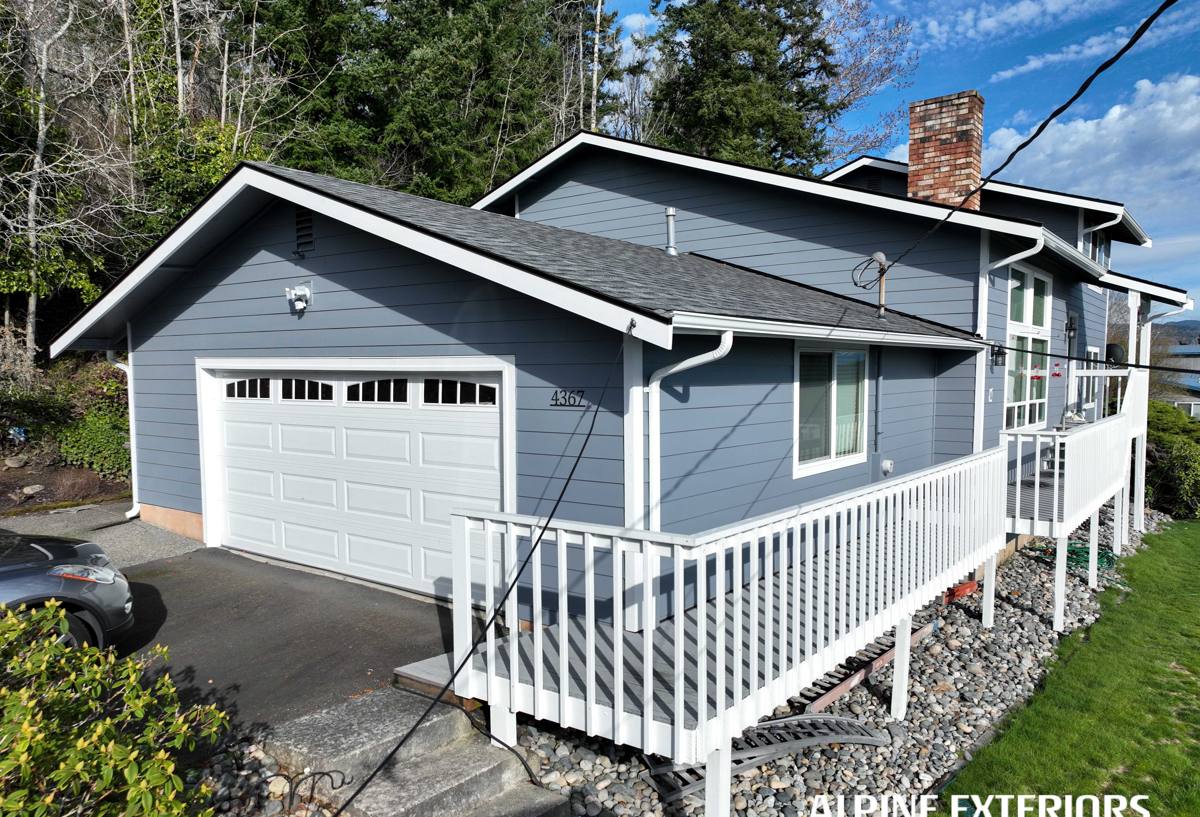
What Driving Rain and Long Wet Seasons Do to a Roof
Everson gets extended stretches of steady rain, and periodically the wind pushes that rain sideways instead of straight down. That matters for roofing because a roof only has to shed water well when it's falling vertically — wind-driven rain tests every seam, every penetration, and every transition point on the roof.
Where Wind-Driven Rain Finds Weak Points
- Panel seams and overlaps that weren't fastened or sealed to spec
- Flashing around chimneys, skylights, and roof-to-wall transitions
- Valleys where two roof planes meet and water volume concentrates
- Fastener penetrations that weren't sealed or that use the wrong gasket material
- Eaves and rake edges without proper drip edge or underlayment wrap
A correctly installed metal roof accounts for all of these before the first panel goes up, not as an afterthought once water starts finding its way in.
Moss, Algae, and Long-Term Roof Health
Whatcom County's tree cover and moisture combine to create ideal conditions for moss and algae growth on roofing materials, and Everson properties with mature trees or north-facing slopes see this pressure more than most. Moss isn't just cosmetic — on the wrong material it holds moisture against the roof surface, works into seams and fastener points, and can shorten the life of the underlying structure.
Why Metal Handles Moss Season Differently
Metal roofing gives moss and algae a much harder surface to establish on compared to shingles or wood. There's no granule surface or organic material for spores to root into, and the smooth, non-porous finish sheds water fast enough that persistent damp conditions — the thing moss needs to take hold — don't build up the same way. Metal roofs still need periodic cleaning of debris from valleys and low-slope areas where organic matter can collect, but they don't feed moss growth the way some other materials do.
Salt Air and Material Corrosion
Coastal and near-coastal air carries salt that accelerates corrosion on unprotected or poorly coated metal. This is one of the most overlooked factors in metal roofing decisions in this part of Washington — not every metal roofing product or fastener is rated the same way for a salt-air environment.
| Component | Why It Matters in Salt Air | Our Standard |
|---|---|---|
| Panel coating | Bare or lightly coated steel corrodes faster near salt air | Coatings rated for coastal/marine exposure |
| Fasteners | Mismatched metals cause galvanic corrosion at every screw point | Fasteners matched to panel material, not generic hardware |
| Flashing metal | Dissimilar metals in contact accelerate corrosion at joints | Flashing material matched to panel system |
| Cut edges | Exposed raw metal at field cuts corrodes first | Edges sealed or coated after cutting, not left bare |
None of this is exotic — it's just attention to detail that a roof needs when it's going up in a marine-influenced climate instead of a dry inland one.
Metal Roofing Systems: What's Actually Available
"Metal roofing" covers a range of products, and the right one depends on the home's roof pitch, style, and budget. We walk Everson homeowners through the real trade-offs rather than pushing one system for every roof.
Standing Seam
Concealed fasteners, raised interlocking seams, and a clean vertical-line appearance. This is the system we recommend most often for this climate because the seam design and lack of exposed fastener heads give it the best long-term resistance to wind-driven rain intrusion. It costs more up front than exposed-fastener panels, but the reduced maintenance and leak risk over the roof's life usually justify it.
Exposed-Fastener Metal Panels
A more budget-friendly option using screws driven through the panel face into the roof deck, with a rubber washer sealing each fastener. These can perform well, but the washers are a wear item — they degrade with UV and temperature cycling and eventually need replacement or re-torquing. On a roof exposed to Everson's rain and salt air, we're upfront with homeowners that this is a maintenance trade-off, not a set-it-and-forget-it choice.
Stone-Coated Steel
Steel panels with a stone-chip coating, often shaped to resemble shingle or tile profiles. A good option for homeowners who want metal's durability with a more traditional look. Installation quality at the fastener and flashing points matters just as much as with any other metal system.
What a Correct Metal Roof Installation Involves
The panel itself is only part of the job. Most metal roof failures we're called out to inspect trace back to installation shortcuts, not the material itself.
The Non-Negotiables
- A roof deck inspection before anything goes down — soft or damaged decking gets addressed first, not covered up
- Correct underlayment for a metal system, not a generic felt product left over from shingle work
- Proper ventilation so trapped moisture and heat don't build up under the panels
- Flashing custom-fit to the roof's actual valleys, penetrations, and wall transitions — not one-size-fits-all trim
- Fasteners and flashing metal matched to the panel material to prevent galvanic corrosion
- Panel layout planned to minimize field cuts and exposed raw edges
Skipping any of these doesn't necessarily show up on day one. It shows up two or three wet seasons later, which is exactly why installation quality matters more than most homeowners realize when they're comparing bids.
Our Process for Everson Metal Roofing Projects
1. On-Site Assessment
We look at the existing roof, deck condition, ventilation, and how the home's specific exposure — tree cover, slope orientation, proximity to open air — should factor into the material and system recommendation.
2. Straight Talk on Options
We walk through standing seam versus exposed-fastener versus stone-coated steel in plain terms, including honest cost and maintenance trade-offs for each, so the decision fits the home and the budget rather than a sales script.
3. Deck and Structure Prep
Any deck repair, ventilation correction, or underlayment work happens before a single panel is installed. This is the step that gets skipped by crews trying to move fast, and it's the one we won't shortcut.
4. Installation to Coastal-Climate Standards
Matched fasteners, properly lapped and sealed seams, custom flashing at every transition, and attention to the details that matter specifically in a wet, salt-influenced climate.
5. Final Walkthrough
We go over the finished roof with the homeowner, including what routine maintenance — if any — the chosen system needs going forward.
Cost Factors for Metal Roofing in Whatcom County
Every roof is different, and we don't quote sight unseen, but these are the main variables that move the price on a metal roofing project in this area.
| Factor | Why It Affects Cost |
|---|---|
| Panel system chosen | Standing seam costs more than exposed-fastener panels due to material and labor complexity |
| Roof pitch and complexity | More valleys, dormers, and penetrations mean more flashing work and labor time |
| Deck condition | Existing damage found during tear-off adds repair scope before installation can proceed |
| Tear-off vs. overlay | Removing old roofing adds labor and disposal cost but is often the right call for a metal roof's long lifespan |
| Ventilation upgrades | Older Everson homes sometimes need ventilation corrected to perform well with a new metal system |
Why a Crew That Already Works in Everson Makes a Difference
A roofing crew that mainly works drier, inland climates can install a technically fine roof that still underperforms once it hits a real Whatcom County winter, because the details that matter here — fastener corrosion resistance, wind-driven rain sealing, moss-resistant material choices — aren't the same details that matter everywhere. A crew that regularly works Everson and the surrounding Blaine area already knows how local weather patterns stress a roof over the seasons, which materials hold up and which need more upkeep, and how to flash a roof so it performs through driving rain rather than just looking good on install day.
That local track record isn't a marketing point — it's the difference between a roof that needs attention in year three and one that doesn't need attention for decades.
If you're weighing metal roofing options for a home in Everson or elsewhere in Whatcom County, we're happy to take a look and walk you through what makes sense for your specific roof. Fill out the form below for a free, no-pressure estimate.