 Blaine Siding
 Deck Repair Built for Ferndale's Weather, Not Just Its Zip Code
Ferndale sits close enough to the water and to Blaine's marine air that decks here take a different kind of beating than decks fifty miles inland. Salt-tinged air off the Strait of Georgia, long stretches of driving rain from October through May, and a moss season that seems to start earlier every year all work against wood, fasteners, and even composite decking if it's not installed and maintained correctly. A deck that would hold up fine in a drier part of the state can show rot, soft spots, and failing hardware within a few seasons out here if it wasn't built with this climate in mind.
We repair decks for homeowners in Ferndale and the surrounding Blaine area regularly, and the patterns are consistent. Most of the calls we get aren't about decks that were built badly — they're about decks that were built for a different climate, or maintained on a schedule that doesn't account for how much moisture this corner of Whatcom County actually sees.
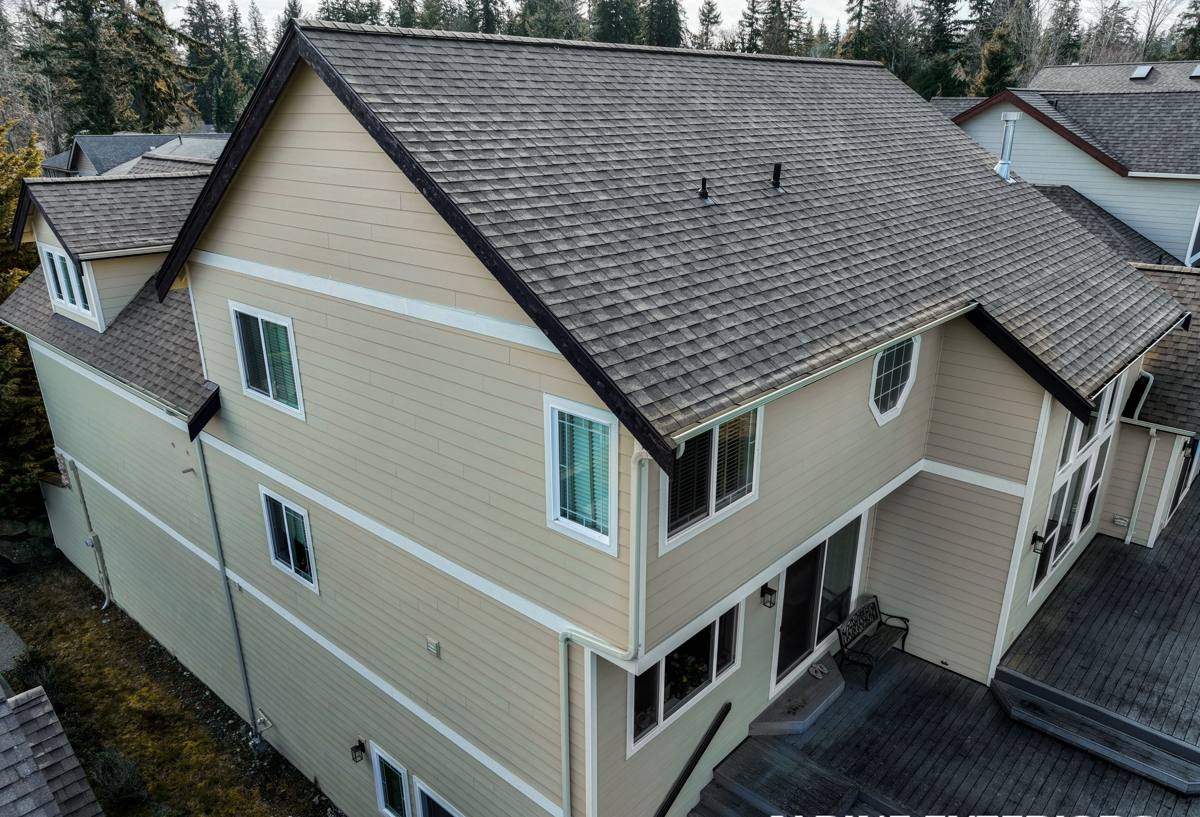
Why Ferndale Decks Fail Differently
Moisture That Doesn't Let Up
The biggest factor is simply how long things stay wet. In many parts of the country, a deck gets rained on and then dries out over a few sunny days. Around Ferndale and Blaine, that drying window can be short or nonexistent for weeks at a time in the fall and winter. Wood that stays damp is wood that rots — and it's the hidden structural pieces (ledger boards, joists, posts, and the fasteners holding them together) that suffer most, because they're the last to get noticed.
Salt Air and Metal Fatigue
Proximity to the water means the air carries salt, even a few miles inland. Salt accelerates corrosion on nails, screws, joist hangers, and structural brackets. Once a fastener starts corroding, it loses holding strength long before it looks obviously bad from the surface. We've opened up decks where the boards looked fine but the hardware underneath was compromised enough to be a real safety concern.
Moss and Trapped Debris
Moss doesn't just make a deck look neglected — it holds moisture directly against the wood surface and grows into seams, screw holes, and the gaps between boards. Left alone through a full moss season, it can hold water against decking for months. Combined with fall leaf litter and needle drop from surrounding trees, debris in the gaps between boards is one of the most common (and most preventable) causes of premature rot we see in this area.
What a Proper Deck Repair Actually Involves
A repair that's done right starts with figuring out what's actually wrong, not just what's visible. Surface staining or a soft board is often a symptom, not the problem itself.
- Probing suspect boards, posts, and the ledger board connection with a screwdriver or awl to find soft, rotted wood beneath the surface
- Checking joist hangers, structural screws, and bolts for corrosion or loosening — especially anywhere water tends to pool
- Inspecting the ledger board attachment to the house, since this connection carries a large share of the deck's structural load and is a common source of hidden water intrusion
- Assessing railing posts and connections for movement or rot at the base, where moisture collects
- Checking drainage under and around the deck, including whether water is being directed away from the structure or pooling against it
- Confirming flashing at the house connection is intact and actually shedding water, not channeling it into the wall assembly
Once we know the scope, repairs generally fall into a few categories: replacing individual rotted boards, rebuilding sections of substructure (joists, posts, beams), re-securing or replacing corroded hardware, fixing or adding flashing at the ledger, and addressing drainage so the same damage doesn't come back in a couple of years.
Repair vs. Rebuild: How We Make the Call
Not every deck with a problem needs to be torn out. But a repair that only addresses the visible symptom while leaving compromised framing in place isn't a repair worth doing — it's a delay. We look at the structure as a whole before recommending a path.
| Situation | Typical Recommendation | Why |
|---|---|---|
| Surface boards worn, gray, or splintering, framing solid | Board replacement or resurfacing | Structure is sound; only the wear layer needs attention |
| Isolated soft spot near a planter, downspout, or low corner | Localized repair | Damage is contained and not structural in scope |
| Rot at the ledger board or multiple joists | Partial rebuild of substructure | These are load-bearing connections; patching around rot here is unsafe |
| Widespread corrosion on original fasteners, deck 15+ years old | Full rebuild evaluation | Piecemeal hardware replacement rarely catches every compromised connection |
| Persistent moss and moisture despite past cleaning | Repair plus drainage correction | Fixing the symptom without fixing water flow just resets the clock |
Decking Materials: What Holds Up Here
Material choice matters more in this climate than in drier regions, and it's worth being honest about trade-offs rather than pushing one product as a cure-all.
Pressure-Treated Wood
Affordable and easy to repair in sections, but it depends heavily on consistent maintenance — sealing or staining on a real schedule, not just when it starts to look gray. In a climate with this much sustained moisture, skipped maintenance years show up fast as rot and checking.
Cedar
Naturally more rot- and insect-resistant than most softwoods and a good regional fit, but it's a softer wood that still needs sealing to perform well against constant wet weather. It also costs more than pressure-treated lumber.
Composite Decking
Low maintenance on the surface and resistant to rot in the boards themselves, but composite is unforgiving of installation mistakes — inadequate ventilation underneath, wrong fastener spacing, or improper flashing at the ledger can trap moisture against the structural framing even while the boards themselves look fine. We only install composite when the substructure and drainage details are done to the standard the product actually requires; otherwise it just hides a moisture problem instead of preventing one.
In every case, the framing underneath matters as much as the surface material. A composite deck over rotted joists is still a failing deck — it just looks better while it's failing.
Our Process for Deck Repair Jobs in Ferndale
- On-site inspection. We walk the full deck, probe suspect areas, and check the substructure, ledger connection, and hardware — not just the visible surface.
- Honest scope and options. We explain what we found, what's actually causing it, and whether targeted repair or a larger rebuild is the right call — with the reasoning, not just a number.
- Repair or rebuild. We replace what needs replacing, correct drainage and flashing issues where they're contributing to the damage, and use fasteners and hardware rated for this climate's moisture and salt exposure.
- Walkthrough. Before we consider the job done, we walk it with you so you know what was fixed and what to watch going forward.
Maintenance That Actually Matters in This Climate
A repaired deck stays repaired longer with a few habits that matter more here than in drier climates:
- Clear leaves, needles, and debris from between boards before fall rains set in, not after
- Treat or clean moss growth early in the season rather than letting it establish through winter
- Check that gutters and downspouts near the deck are directing water away from posts and framing
- Reseal or restain wood decking on the schedule the product actually calls for, not on a "when it looks bad" basis
- Do a quick check of railing posts and stair stringers for movement once a year, since these take repeated stress and are early indicators of hidden rot
Why Local Experience Matters for This Job
Deck repair is one of those jobs where regional experience shows up directly in the outcome. A crew that mostly works drier climates may not think to check ledger board flashing as closely, may under-spec hardware for salt exposure, or may not factor in how long this area's moss season really runs. We work on decks throughout Ferndale and the broader Blaine area regularly, so we're not guessing at how Whatcom County weather affects a repair — we're building and repairing to what it actually takes to hold up here, through the driving rain, the salt air, and the moss, year after year.
If you've got a deck in Ferndale showing soft spots, moss buildup, loose railings, or you just want an honest opinion on whether it needs a repair or a rebuild, we're happy to take a look. Reach out for a free, no-pressure estimate using the form below.