 Blaine Siding
 Why Cherry Point Decks Need to Be Built Differently
Cherry Point sits right up against the Strait of Georgia, and that proximity to open water changes what a deck has to survive. Homes here deal with a steady drift of salt-laden air, wind-driven rain that gets pushed sideways under railings and into ledger connections, and a long stretch of the year — roughly fall through spring — where shade, humidity, and mild temperatures keep moss and algae growing on any surface that doesn't dry out quickly. A deck built the same way you'd build one twenty miles inland in Whatcom County will age faster out here. Fasteners corrode sooner, framing stays damp longer, and decking surfaces get slick and green well before a homeowner expects it.
None of that means a deck can't last for decades at Cherry Point. It means the design, material selection, and construction details have to account for the site from the start, not get patched in after the fact.
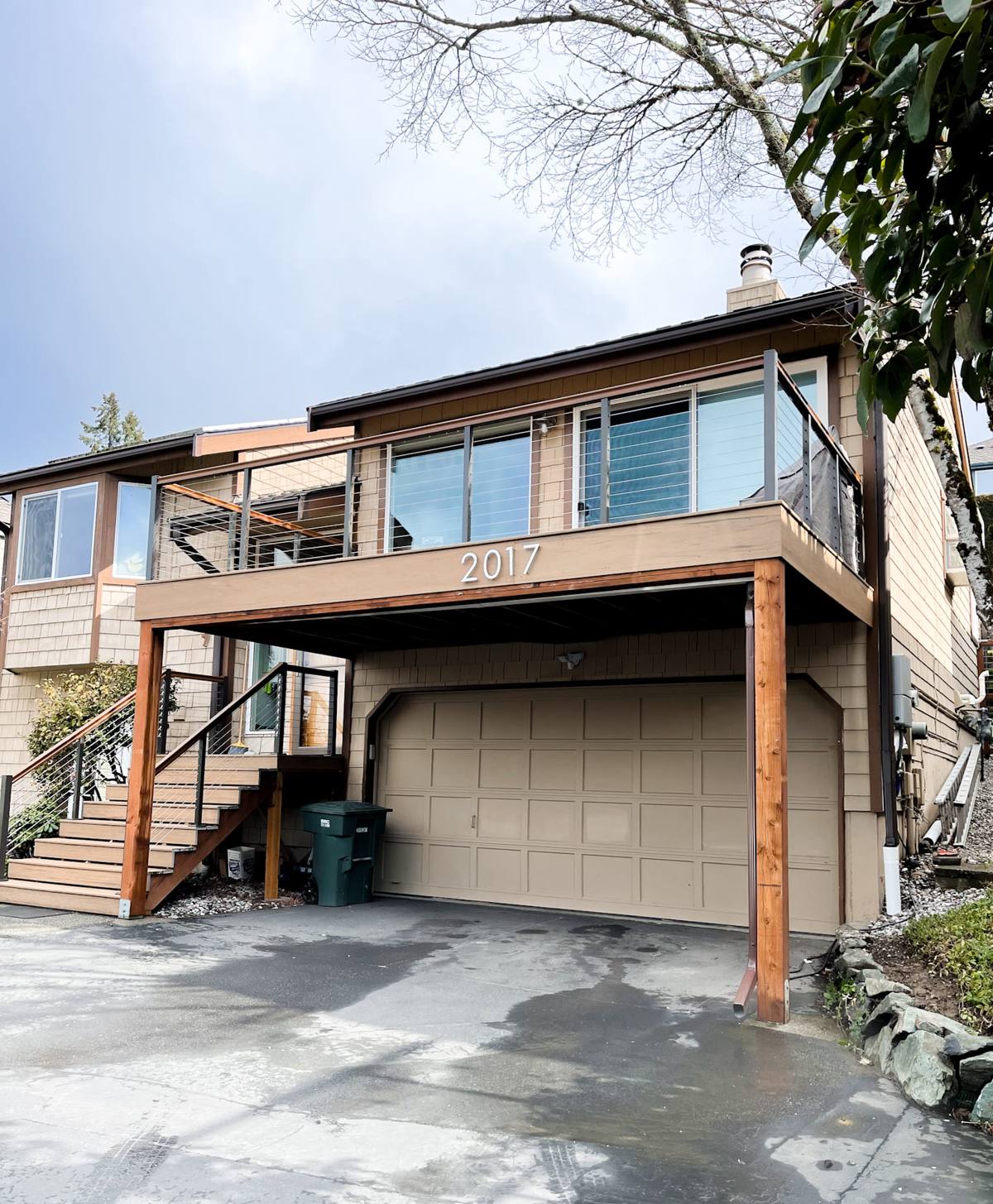
What Correct Deck Construction Looks Like on the Water Side of Blaine
A structurally sound deck is a structurally sound deck anywhere — proper footing depth, correctly sized joists and beams, code-compliant ledger attachment, and railings that meet load requirements. What changes near the water is the margin for error. Framing that's marginally undersized or under-flashed might hold up fine in a drier inland yard for years before problems show. In a salt-air, high-moisture environment, the same shortcuts show up much sooner as soft framing, rust streaks, or a ledger board that's held moisture against the house band joist.
The details that matter most here
- Ledger flashing that fully sheds water away from the house rim joist, not just a strip of tape over the top edge
- A capillary break or spacer between the ledger and the house wall so moisture can't wick and sit trapped
- Joist tape or a sealed cut end on every framing member that gets a fastener driven through it
- Corrosion-resistant hardware rated for the fastener and connector combination being used, not just "outdoor rated"
- Footings set to the depth and bearing conditions the site actually requires, confirmed rather than assumed
Decking Material Options for a Salt-Air, Moss-Prone Site
Every decking material handles this climate differently. There's no single "best" choice — it depends on how much upkeep the homeowner wants to do and what look they're after. Here's how the common options actually perform at a site like Cherry Point.
| Material | How it handles salt air and moisture | Moss and algae behavior | Upkeep |
|---|---|---|---|
| Pressure-treated lumber | Holds up structurally when properly sealed and maintained; end grain and fastener holes are the weak points | Grows moss readily if not cleaned and re-sealed on schedule | Annual cleaning and re-sealing recommended |
| Cedar | Naturally decay-resistant but still needs sealing near salt spray; softer surface than composite | Prone to graying and moss in shaded, damp spots without upkeep | Periodic cleaning, oil or sealer every 1-2 years |
| Capped composite | Strong performer — the cap resists moisture absorption and salt exposure much better than wood | Still needs washing; smooth caps shed algae more easily than wood grain | Occasional washing, no sealing or staining |
| PVC decking | Fully synthetic, doesn't absorb moisture, handles salt air well | Similar to composite — needs periodic washing to stay slip-free | Lowest upkeep of the common options |
We'll walk through these trade-offs honestly for your specific deck rather than defaulting to one product. A shaded, low-airflow deck under trees near the water is a different maintenance conversation than an open, sun-exposed deck facing the strait.
Hardware and fasteners we take seriously here
Fastener choice matters more at Cherry Point than almost anywhere else in our service area. Standard hot-dip galvanized fasteners can be adequate inland, but in direct salt air, stainless steel or coated fasteners rated for coastal exposure are the more honest choice for anything structural — ledger bolts, joist hangers, and beam connections. It costs a bit more up front and saves the homeowner from replacing corroded hardware in a fraction of the deck's expected life.
Moss, Algae, and Drainage: Designing a Deck That Dries Out
The long moss season around Blaine isn't just a cosmetic nuisance — a deck surface that stays damp and shaded is also a slip hazard and, over time, a path for moisture into fastener holes and end grain. Good deck design fights this at the drainage and airflow level, not just with surface cleaning after the fact.
- Decking gaps sized correctly for the material to let water drain through instead of pooling on the surface
- Joist spacing and blocking that doesn't trap debris and standing water underneath
- Skirting, if used, vented rather than sealed tight, so air can move under the deck
- Grading and drainage around footings so water isn't sitting against posts and piers
- Surface material chosen with the deck's actual sun and shade exposure in mind, not a one-size-fits-all pick
A deck built with these details in mind still needs periodic cleaning — nothing eliminates moss entirely in this climate — but it dries out faster after rain and holds up noticeably longer between cleanings than one built without them.
Permitting and Site Considerations Near the Water
Deck projects at Cherry Point and other near-shoreline areas in Whatcom County can involve permitting and setback questions that don't come up on a typical inland lot, particularly for larger decks, elevated structures, or work close to a bluff or shoreline. We handle the permit application and coordinate with the county on your behalf as part of the project, and we'll flag early if your site has any conditions — slope, shoreline proximity, or existing structure issues — that could affect design or footing placement before we finalize a plan.
Our Process for a Cherry Point Deck Project
- On-site visit to assess sun/shade exposure, wind direction, drainage, and existing structure condition
- Honest material recommendation based on your maintenance preferences and the site's specific exposure
- Detailed plan covering footing depth, framing, flashing, hardware, and decking layout
- Permit handling with the county where required
- Construction with corrosion-resistant hardware and full ledger flashing as standard, not an upgrade
- Final walkthrough covering how to maintain the specific materials we installed for this climate
We work Cherry Point regularly, which means we're not guessing at how a deck built here holds up over time — we've seen which details pay off and which shortcuts cause callbacks two or three years down the road.
What to Expect for Maintenance After We Build
No deck at Cherry Point is maintenance-free, regardless of material. Wood decks need periodic cleaning and re-sealing to keep moss and moisture from getting a foothold, especially on shaded sections. Composite and PVC decks need far less attention but still benefit from an annual wash to clear algae film before it gets slick. We'll give you a straightforward maintenance schedule specific to whatever material you choose, based on your deck's actual sun exposure and layout — not a generic pamphlet.
Cost Factors to Expect
Every deck project is priced around its own specifics, so we won't quote a number without seeing the site. What generally moves the price up or down:
| Factor | Effect on cost |
|---|---|
| Deck size and shape | Larger and more complex shapes increase material and labor |
| Decking material | Pressure-treated is the lowest upfront cost; composite and PVC cost more upfront but less in upkeep over time |
| Height and footing requirements | Elevated decks and difficult soil conditions require more substantial footings and framing |
| Railing style and hardware | Coastal-rated fasteners and higher-end railing systems add cost but reduce long-term maintenance |
| Site access | Tight or sloped lots near the water can add labor time for material handling |
Why a Crew That Already Works Cherry Point Matters
A deck built by a crew unfamiliar with this stretch of coastline tends to look fine on day one and show its weaknesses two or three winters in — corroded fasteners, a ledger that's held moisture against the house, decking that never quite dries out under tree cover. Building here regularly means we already know which fastener grades hold up, which framing details keep moisture out of the ledger connection, and how to lay out a deck so it actually sheds water instead of collecting it. That local knowledge is the difference between a deck that needs real attention every year and one that just needs an occasional wash.
If you're planning a new deck or replacing one that's showing its age at Cherry Point, we're happy to take a look and give you a straightforward, no-pressure estimate — just fill out the form below.