 Blaine Siding
 Composite Decking in Sumas: Building for This Specific Climate
Sumas sits out toward the Canadian border in a low, flat stretch of Whatcom County, and homes here deal with a slower-draining, more humid version of the weather that moves through the rest of the county. Rain sits longer on flat ground than it does on a sloped lot, marine air off the Strait and the Sound still reaches this far inland on a regular basis, and the valley holds moisture close to the ground well after a storm has passed. A deck built here spends more of the year damp than dry, and that changes what "correct" decking actually means.
This page is specifically about composite decking for Sumas properties — not a general decking overview. We'll cover what the local climate does to a deck, what a properly built composite deck involves, how our process works, and why a crew that already works this part of the county is worth the difference over a contractor who mostly builds elsewhere and treats Sumas like any other stop.
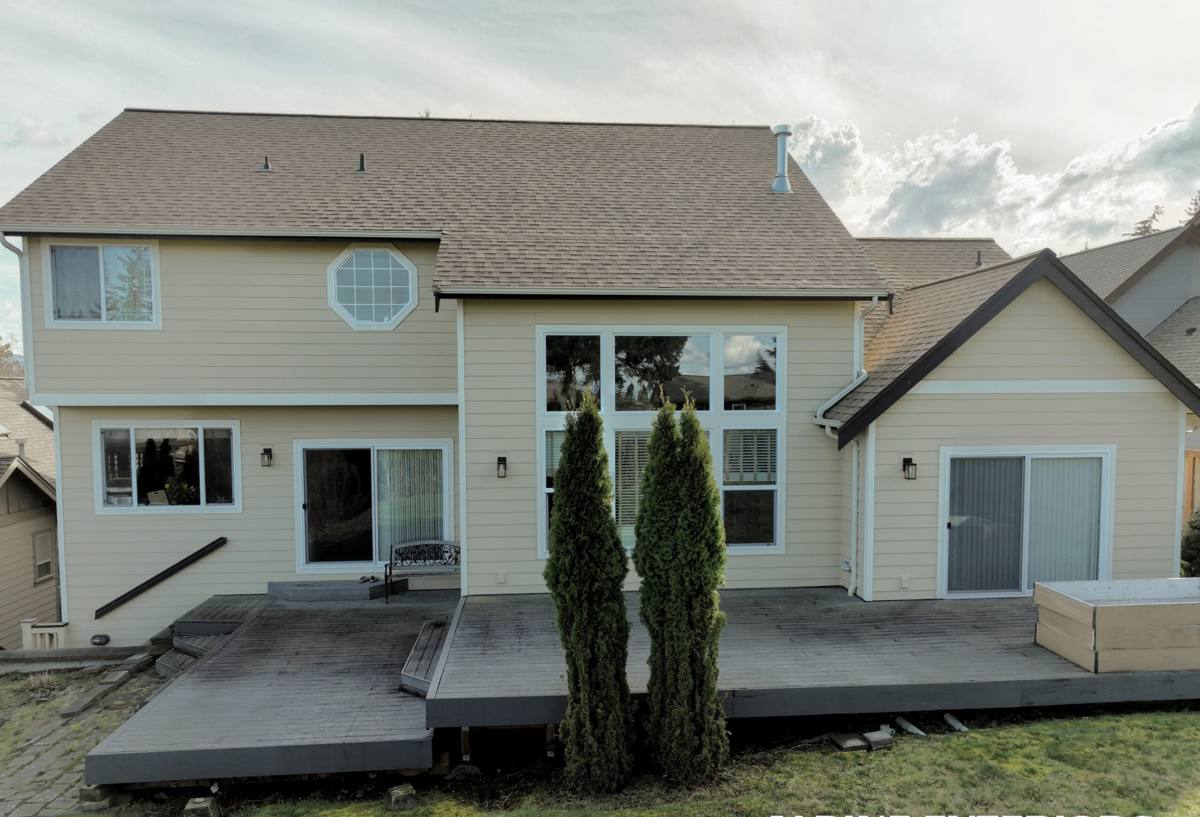
What Sumas's Climate Does to a Deck
Driving Rain and Standing Moisture
Storms coming through this part of Whatcom County don't just drop rain straight down — wind pushes it sideways into railings, under ledger connections, and between boards that aren't gapped right. On the flat, low ground around Sumas, water is also slower to run off than it would be on a sloped city lot, which means a deck surface and the framing underneath it can stay wet for longer stretches after a storm than homeowners expect.
Salt-Laden Air, Even This Far Inland
Sumas isn't waterfront, but marine air off the Strait of Georgia and Puget Sound moves through the whole county regularly, and it carries salt content with it even well inland. That's a slower, lower-dose version of what a bay-front deck deals with, but it still matters over years — exposed metal hardware corrodes faster than it would in a dry inland climate, and that corrosion often starts before it's visible.
A Moss Season That Doesn't Really End
Mild temperatures and near-constant moisture give moss, algae, and mildew a long growing window here — realistically fall through spring, and sometimes longer on shaded or low-airflow decks. A horizontal deck surface holds water longer than a wall or roofline does, which is exactly why decks are usually the first exterior surface on a property to show green film or dark staining.
Why Composite Decking Holds Up Better Here
Homeowners in Sumas generally choose between pressure-treated or cedar wood, capped composite, and cellular PVC. In a climate that stays damp this much of the year, the gap in real-world performance between these options shows up faster than it would in a drier part of the state.
Wood can look great when it's new, but it needs regular sealing or staining to hold up against sustained moisture, and it's the material most likely to show soft spots, graying, and moss growth first if that maintenance schedule slips even one season. Capped composite uses a plastic shell around a wood-fiber composite core, which resists moisture absorption, staining, and fading far better than wood or uncapped composite — in a climate like this one, that cap layer is doing real, measurable work rather than just adding to the price tag. Cellular PVC decking has no wood fiber at all, so it doesn't absorb moisture even at cut edges or fastener holes; it costs more and can flex a bit more under heavy point loads, but for a low, damp, shaded lot it's worth discussing.
| Material | Handling Sustained Moisture | Moss Resistance | Upkeep |
|---|---|---|---|
| Cellular PVC | Excellent — no wood fiber to absorb moisture | Strong, smooth non-porous surface | Occasional washing |
| Capped composite | Strong — cap layer blocks moisture and staining | Good on most product lines | Occasional washing |
| Uncapped composite | Moderate — some absorption at exposed fiber | Fair; more prone to buildup over time | Periodic cleaning |
| Cedar | Moderate — natural resistance, needs sealing | Fair when sealed and maintained | Regular oiling or sealing |
| Pressure-treated wood | Weak against sustained low-ground moisture | Poor without regular treatment | Regular sealing or staining |
What a Correct Composite Deck Install Involves
The composite boards get the attention, but on flat, damp ground like Sumas sits on, the framing and drainage underneath those boards are what actually decide how long the deck holds up. A build done right here includes:
- Pressure-treated framing rated for sustained ground moisture, sized correctly for the span and load the composite product requires
- Stainless or coated corrosion-resistant fasteners throughout, not standard hardware that starts corroding faster in salt-influenced air over a few seasons
- Hidden fastener clip systems on the deck surface itself where the product supports it, reducing exposed metal and giving a cleaner walking surface
- Correct board gapping for both drainage and thermal movement, so wind-driven rain and surface moisture can actually clear between boards instead of sitting
- Proper ledger board flashing where the deck ties into the house — the single most common failure point on a poorly built deck in a wet climate
- Joist spacing matched to the specific composite product's span rating, not a generic framing layout borrowed from a wood deck
- Grading and airflow underneath the deck so ground moisture doesn't sit trapped against the framing between storms, which matters more on flat lots than sloped ones
- Footings set to the correct frost depth for this part of the county, with proper drainage around them so standing water isn't collecting against the post base
Skip any one of these and the deck will still look right on day one — composite boards hide a lot of shortcuts on the surface. The problems show up a couple of wet seasons in, as a soft joist, a loosening post, or moss taking hold in spots that never fully dry between rains.
Substructure and Drainage: The Part Nobody Sees
On the flat ground around Sumas, drainage design under the deck matters as much as the decking material choice itself. Where a sloped lot naturally sheds water away from the framing, a flat lot needs that grading built in on purpose — a slight pitch away from the house, gravel or drainage material under low-clearance decks, and joist tape over the framing so fastener holes and cut ends aren't sitting exposed to moisture that has nowhere to go. Low-to-the-ground decks are the most common place we see this skipped, because the substructure is hard to inspect once the boards go down, and it's also the area that suffers most from sitting water on flat terrain.
Ventilation matters just as much as grading. A deck built tight to the ground with no real airflow underneath stays damp longer after every rain, which shortens the life of the framing even when the decking surface above it is a composite product rated for wet climates. We build in clearance and venting wherever the design allows, rather than treating it as optional.
Composite Board Tiers and What Affects Your Cost
Composite decking comes in a range of tiers, generally split by cap technology, color and streaking options, and warranty length. Entry-level composite lines are usually capped on the top surface only, mid-tier lines cap all four sides of the board, and premium lines add richer wood-grain finishes and longer warranties. For a climate like this one, we generally steer homeowners toward at least a fully-capped mid-tier board, since the exposed-fiber edges on entry-level products are the first place moisture works its way in over time.
Beyond the board tier itself, a handful of site factors drive most of the cost difference between projects:
| Cost Factor | Why It Matters |
|---|---|
| Deck size and shape | More linear footage of board, framing, and picture-frame trim to install and cut |
| Height off the ground | Elevated decks need engineered railing, stairs, and post footings; low decks need drainage and ventilation work instead |
| Existing structure removal | Tearing out and disposing of an old wood deck adds labor before the new build even starts |
| Railing style | Composite, cable, and glass railing systems vary widely in material and installation cost |
| Board tier chosen | Fully-capped and premium composite lines cost more per square foot than entry-level composite |
| Site access and grading | Flat, low-clearance lots often need added drainage prep that a sloped lot doesn't |
Our Installation Process for Sumas Properties
We start with a site visit — looking at existing structure condition if it's a replacement, grading and drainage across the lot, sun and shade exposure through the day, and how close the ground sits to the deck's future substructure. On flat properties like most of what we see around Sumas, that drainage assessment shapes a lot of the framing plan before we ever get to picking a board color.
From there we walk through composite tier and railing options that fit the budget and how the space will actually get used. Permitting in this part of Whatcom County generally follows standard setback, structural, and elevation requirements, and we handle that as part of the job. Once permitted, the build follows the sequence above — substructure, grading, and framing first, sized and fastened for the site's real moisture exposure, then the decking surface, railing, and any stairs or trim. We close with a walkthrough covering exactly what the composite product you chose needs going forward, which is minimal compared to wood, but not nothing.
Living With a Composite Deck Through Moss Season
Composite decking doesn't rot the way wood does, but it isn't maintenance-free in a climate that stays damp this much of the year — moss and algae can still grow on the surface, especially in shaded corners or spots with poor airflow underneath. A few habits keep a composite deck performing the way it's supposed to:
- Rinse or wash the surface periodically to clear pollen, organic buildup, and any early moss film before it sets into the board's texture
- Keep the gaps between boards clear of leaves and debris so water and airflow can actually move through as designed
- Use a soft-bristle brush and a composite-safe cleaner rather than an aggressive pressure washer setting, which can damage the cap layer on some products
- Check railing posts and hardware once a year for early corrosion or loosening, especially heading into the wet months
- Trim back overhanging branches or plants that hold shade and moisture against the deck surface longer than the rest of the yard sees
- Address any soft framing, standing water, or drainage issue underneath right away — that's a structural concern, not a cosmetic one
Why It Matters That We Already Work Sumas
A contractor who mostly builds decks in drier or better-drained parts of Whatcom County can still put a deck together competently, but a Sumas job has variables that don't come up as often elsewhere — drainage planning for flat, low ground, corrosion-grade fasteners for sustained marine-air exposure, and a moss season that runs longer here than it does on a sunnier, better-drained lot. Working this area regularly means we're not guessing at those requirements on your project. We've seen which composite lines actually hold up against this specific combination of standing moisture, salt-influenced air, and shade, and which framing and drainage details are worth the extra time rather than an unnecessary upsell.
That local familiarity also shows up in smaller judgment calls — how to grade a low deck on flat ground so it actually drains, or being straightforward with a homeowner about what a composite deck here realistically needs to last, rather than what just adds to the invoice.
Get a Straight Answer About Your Deck
Whether you're replacing a tired deck, building new, or just want an honest read on what a composite deck would take on your Sumas property, we're happy to walk the site with you and lay out the options plainly. Reach out below for a free, no-pressure estimate.