 Blaine Siding
 Why Cherry Point's Coastline Climate Is Hard on Siding
Cherry Point sits right on the Strait of Georgia, on the northern edge of Whatcom County a short drive from Blaine, and that waterfront position changes what siding has to deal with compared to homes even a few miles inland. Salt-laden marine air settles on exterior walls year-round, wind-driven rain gets pushed sideways into joints and laps during winter storms, and the long Pacific Northwest wet season gives moss and algae months at a time to take hold on shaded and north-facing walls. None of this is dramatic on any single day. It's the accumulation, year after year, that separates siding that lasts three decades from siding that starts failing at ten or twelve years.
Salt air is the piece homeowners underestimate most. It doesn't just sit on the surface — it works into fasteners, seams, and any spot where a coating has thinned or chipped, accelerating corrosion and breaking down finishes faster than the same product would wear a few miles inland. Combine that with near-constant moisture and you get a climate that punishes any siding material that depends on an intact paint film or a water-resistant (rather than water-proof) core to stay sound.
What Cherry Point Homes Typically Need From Their Siding
Properties around Cherry Point tend to sit on larger rural or waterfront lots, with a real mix of home ages — some older homes built before modern weather-resistive barrier standards were common, alongside newer construction. That spread-out layout matters for siding decisions in a practical way: these aren't neighborhoods where a contractor drives by every week. Homeowners here need a material that can go long stretches without attention and still perform, not one that needs yearly caulking, spot-priming, or re-coating to keep water out.
Beyond durability, the finish matters. A siding that holds its factory color and doesn't feed algae growth the way bare or field-painted wood-based products can will simply look better, longer, with less work. And because a full siding job on a Whatcom County coastal property is a real investment, the material chosen has to be one that's genuinely engineered for wet, salt-exposed climates — not just rated for "moderate" weather in a catalog written for a national market.
Signs Your Cherry Point Home's Siding Needs Replacing
Repair makes sense when damage is isolated. Replacement becomes the right call when the underlying material or the water management behind it has failed broadly. Signs worth taking seriously on a coastal Whatcom County home include:
- Soft, spongy, or crumbling spots when you press on the siding, especially near the bottom courses
- Moss or algae that returns within weeks of cleaning, rather than months
- Paint that's peeling, bubbling, or alligatoring — particularly on north-facing or shaded walls
- Visible warping, cupping, or delamination of panels or boards
- Staining, dark streaking, or rot concentrated at butt joints, corners, or below window sills
- Drafts, musty odors, or soft drywall on interior walls that back up to exterior siding
- Original siding that's 20+ years old and has never had its weather barrier inspected
One or two of these on their own might point to a repair. Several at once, especially combined with visible failure at seams and corners, usually means the water management system behind the siding has been compromised for a while — and that's a replacement conversation, not a patch job.
What a Correct Siding Replacement Actually Involves
New siding panels are the visible part of the job, but they're not the part that determines whether the wall stays dry for the next 30 years. On a site this exposed to wind-driven rain, the details behind the panels matter as much as the panels themselves.
Moisture Management Comes First
A correct replacement starts with the weather-resistive barrier — the housewrap or building paper installed directly over the sheathing. It has to be lapped correctly, shingle-style, so water is always directed outward and down, never trapped behind a seam. Every penetration, from hose bibs to electrical outlets to light fixtures, needs proper flashing tied into that barrier before a single piece of siding goes up. Skipping or rushing this step is the single most common cause of hidden rot behind siding that looks fine from the street.
Fastening and Attachment
In a salt-air environment, fastener choice isn't a minor detail. Fasteners rated for coastal or marine exposure resist corrosion that would otherwise stain the siding face and weaken the attachment over time. Nailing patterns and placement also have to follow the manufacturer's engineering — not a generalized "how we've always done it" approach — because siding rated for wind and moisture performance only delivers that performance when installed to spec.
Trim, Flashing, and Transition Details
Window and door heads need drip caps or Z-flashing that actually sheds water past the siding below, not just decorative trim. Roof-to-wall intersections need kick-out flashing so runoff is directed into the gutter instead of behind the wall. These are the spots where driving rain finds its way in on an exposed coastal property, and they're also the spots that get shortcut most often on a rushed job.
Why We Install Only James Hardie Fiber Cement
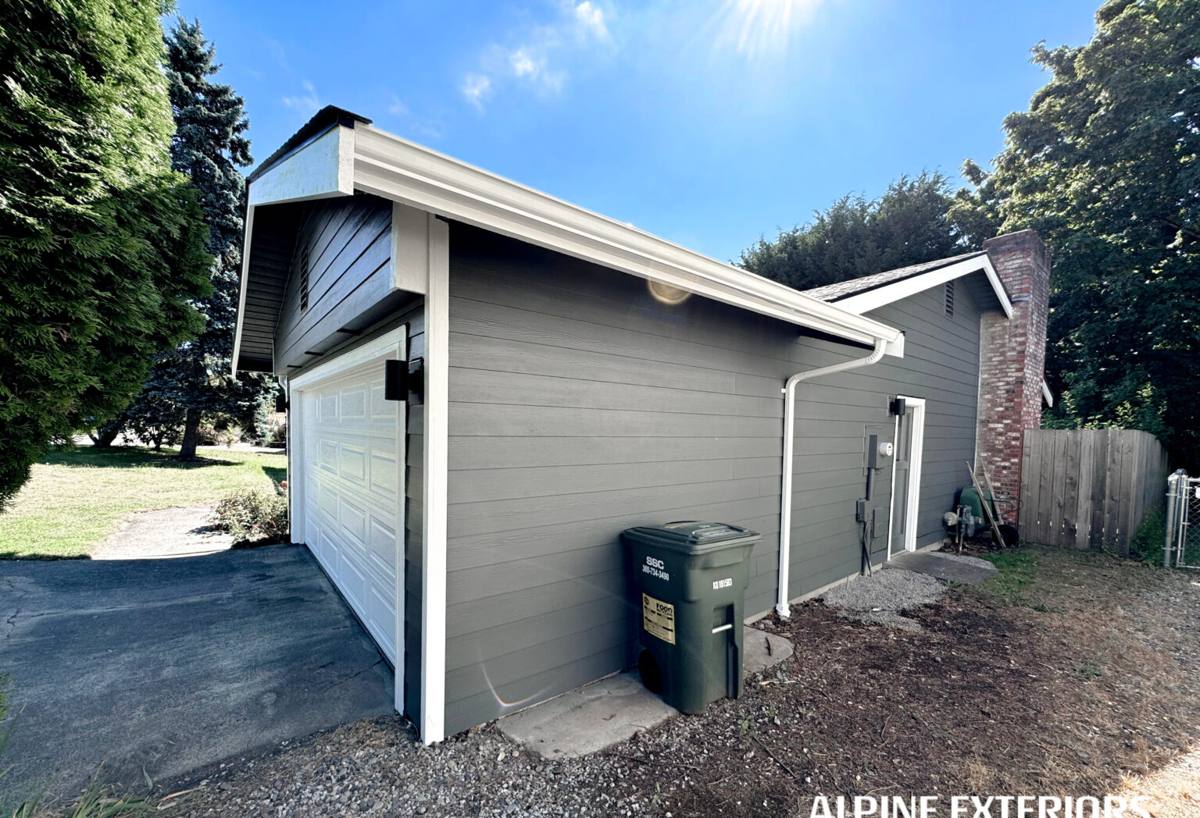
We standardized on James Hardie fiber cement siding and don't install vinyl, LP SmartSide, primed spruce, or cedar. That's not a marketing position — it's a decision based on what actually holds up in a climate like this one. Fiber cement is dimensionally stable and doesn't rely on an intact paint film or engineered-wood core to keep moisture out the way wood-based products do, and it won't soften, delaminate, or feed rot the way untreated or under-maintained wood siding can. Here's how the common options stack up against the conditions Cherry Point homes actually face:
| Factor | Vinyl | Wood / Cedar | Engineered Wood (LP SmartSide) | James Hardie Fiber Cement |
|---|---|---|---|---|
| Moisture / rot resistance | Won't rot, but seams can trap moisture behind panels | Vulnerable without diligent maintenance | Resin-treated, but core is still wood-based | Non-organic core, doesn't rot |
| Salt air / corrosion | Can become brittle and discolored over time | Fasteners and finish degrade faster near the coast | Finish and edges are the weak points | Engineered for coastal exposure |
| Moss / algae tendency | Moderate, depends on texture | High, especially on shaded walls | Moderate to high without upkeep | Lower, factory finish sheds growth better |
| Finish durability | Color can fade or chalk | Requires repainting on a cycle | Field-applied or factory finish, still needs upkeep | Baked-on ColorPlus finish, long fade resistance |
| Fire resistance | Combustible | Combustible | Combustible | Non-combustible |
For a Whatcom County waterfront property specifically, we install Hardie's HZ5 line, which is engineered for climate zones like ours — colder, wetter, with more moisture cycling than the HZ10 formulation used further south. Paired with a full ColorPlus factory finish and a transferable warranty, it's the combination we're willing to put our name behind on a coastal job.
Our Process for a Cherry Point Siding Replacement
Inspection and Assessment
We start by looking past the surface — checking for soft sheathing, evaluating the existing weather barrier where it's exposed, and identifying every spot where the current siding has let water in. This tells us whether we're dealing with cosmetic wear or a wall assembly that needs rebuilding.
Tear-Off and Substrate Prep
Old siding comes off down to the sheathing so we can address any rot or damage underneath rather than covering it up. This is also where we correct any flashing or barrier issues found during inspection, since none of that is fixable once new siding is closed up over it.
Installation to Manufacturer Spec
New housewrap, flashing at every penetration, and Hardie panels installed with the fastening pattern and clearances the manufacturer specifies — not shortcuts that happen to look fine on installation day but fail three winters later.
Final Walkthrough and Cleanup
We walk the finished job with the homeowner, check trim and caulk lines, and make sure the site is cleared of debris and old material before we call it done.
Cost Factors for a Cherry Point Siding Replacement
Every property is different, but the following factors are what actually move the price on a coastal Whatcom County siding job:
| Factor | How It Affects Cost |
|---|---|
| Home size and wall area | More square footage means more material and labor hours |
| Tear-off vs. build-over | Full tear-off costs more upfront but is the only way to inspect and fix what's behind the old siding |
| Story count and accessibility | Multi-story homes and steep or waterfront lots require more staging and time |
| Trim and detail complexity | Homes with lots of windows, corners, or architectural detail take longer to flash and finish correctly |
| Siding profile and finish choice | Lap width, texture, and ColorPlus color selection affect material cost |
| Site access and logistics | Rural or waterfront properties can require extra time for material delivery and staging |
We provide a written estimate that breaks these factors down for your specific property rather than a one-size-fits-all number, since a rural acreage lot near Cherry Point and a tighter in-town Blaine lot rarely cost the same to do right.
Why Hiring a Crew That Already Works Cherry Point Matters
A crew that's done siding work around Cherry Point knows which walls on a given lot orientation take the worst of the wind-driven rain, where salt exposure tends to hit fasteners and trim hardest, and how Whatcom County's permitting and inspection process actually runs — not just in theory, but from having gone through it. That familiarity shows up in fewer surprises mid-project and a wall assembly that's built for the specific way weather behaves on this stretch of coastline, not a generic installation that happens to be technically up to code.
It also matters for logistics. Rural and waterfront properties around Cherry Point aren't always straightforward for material delivery and staging, and a crew that's worked the area already knows how to plan around that instead of losing days to it.
If your siding is showing wear, or you're just trying to figure out whether repair or full replacement makes sense for your home, we're happy to take a look. Fill out the form below for a free, no-pressure estimate — we'll walk the property, explain what we find, and give you a straight answer either way.