 Blaine Siding
 Cherry Point's Coastal Climate Is Uniquely Hard on Siding
Homes in the Cherry Point area, between Blaine and Ferndale along Whatcom County's shoreline, sit in one of the more demanding microclimates for exterior materials in the Pacific Northwest. It isn't one single problem — it's three working together year-round. Salt-laden air moves in off the water and settles on every exposed surface. Driving rain, pushed nearly sideways by wind off the Strait of Georgia, finds gaps that a calmer climate would never expose. And a long, wet moss season keeps north- and west-facing walls damp for months at a stretch. Any one of these will wear down the wrong siding material. Together, they will find every weakness in a poorly installed product, no matter what it's made of.
That combination is why a "standard" siding job — the kind that might hold up fine in a drier inland town — often underperforms out here. Getting siding right in Cherry Point means understanding what the local climate actually does to a wall system, not just what the product brochure says it can handle.
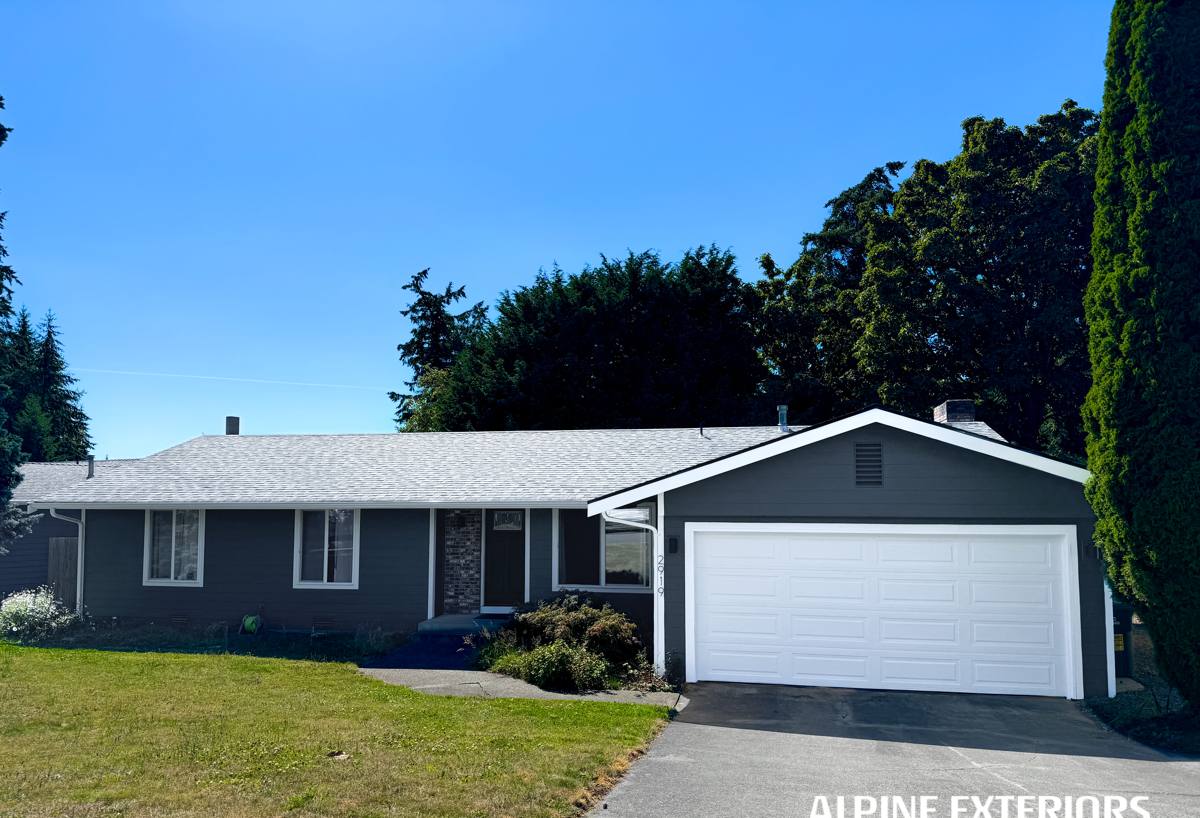
The Three Climate Factors That Determine How Siding Performs Here
Salt Air and Airborne Moisture
Proximity to open water means a steady, low-grade exposure to salt and moisture in the air, even on days without rain. Salt is corrosive to exposed metal fasteners and flashing, and it accelerates the breakdown of finishes that aren't formulated to resist it. Over years, siding that isn't engineered for coastal exposure can chalk, fade unevenly, or develop surface degradation faster than the same product would inland.
Wind-Driven, Horizontal Rain
Rain that comes in at an angle behaves differently than rain that falls straight down. It gets pushed under laps, around trim, and into any gap in the water-resistive barrier or flashing detail. A siding installation built for calmer weather can look fine for a season or two and still be letting water behind the cladding the whole time. The failures that matter in this climate are almost never visible from the street — they're happening in the wall assembly.
A Long, Damp Moss Season
Shade, humidity, and cooler temperatures keep many exterior walls damp for extended stretches of the year, especially on properties with tree cover or limited afternoon sun. That moisture supports moss and algae growth on siding surfaces and, more importantly, on trim, fascia, and anywhere water is slow to shed. Materials that absorb moisture rather than shed it give moss something to root into, which accelerates surface breakdown over time.
What "Correct" Siding Installation Actually Involves
Panels going up straight is the easy part to judge from the ground. The parts of a siding job that actually determine whether it survives a Cherry Point winter are mostly hidden once the work is done. A correct installation includes:
- A properly lapped, continuous water-resistive barrier (WRB) behind the siding — not just tar paper stapled up quickly
- Flashing at every window, door, and roofline penetration, installed in the correct shingle-lap order so water is directed out, not in
- Manufacturer-specified fastener spacing, type, and depth — over-driven or under-driven nails are one of the most common causes of early siding failure
- Proper clearance between siding and grade, decks, roofs, and other hard surfaces so water and debris don't wick moisture into the panel edge
- Correctly sized gaps at butt joints and trim, sealed with the right sealant — not caulked shut solid, which traps moisture instead of letting the assembly breathe as designed
- Field-cut edges primed or sealed per manufacturer spec, since a raw cut edge is the most vulnerable point on any fiber cement panel
Skip any one of these and the siding can still look correct for a while. In a climate that combines salt air, driving rain, and a long damp season, the gap between "looks right" and "installed right" shows up faster than it would somewhere drier.
Why We Install Only James Hardie Fiber Cement
We made a deliberate decision to install one siding system: James Hardie fiber cement. We don't offer vinyl, cedar, primed spruce, LP SmartSide, or other fiber cement brands, and that's worth explaining rather than just stating.
Fiber cement is non-combustible, which matters in a state that takes wildfire risk seriously even in wetter western counties. Hardie's HZ5 product line is engineered specifically for climates like ours — regions with sustained moisture exposure, freeze-thaw cycling, and coastal air — with moisture management built into the panel formulation rather than added on afterward. The factory-applied ColorPlus finish is baked on under controlled conditions, which gives it more consistent, longer-lasting color and weather resistance than a finish applied on-site after installation, and it comes with its own dedicated finish warranty separate from the product warranty. Combined, that's a system built to hold up under exactly the three stresses Cherry Point homes deal with: salt air, wind-driven rain, and prolonged damp.
None of this means other materials are inherently bad products. It means that after years of doing exterior work in this specific climate, we standardized on the one system that gives homeowners here the best combination of durability, low maintenance, and a warranty that actually holds up over the ownership of the home.
How Fiber Cement Compares to Other Siding Options for This Area
| Factor | Vinyl | Cedar | LP SmartSide | James Hardie Fiber Cement |
|---|---|---|---|---|
| Salt air resistance | Can become brittle and fade over time | No inherent resistance; finish wears | Engineered wood; finish protects substrate | Formulated for coastal exposure (HZ5) |
| Moisture behavior | Doesn't absorb, but seams can trap water | Absorbs moisture; prone to rot if unmaintained | OSB-based substrate is moisture-sensitive if breached | Engineered to resist moisture absorption and swelling |
| Moss/algae resistance | Moderate; surface can host growth in shade | Higher risk; wood is a natural growth medium | Moderate with intact finish | Dense composition resists moss rooting |
| Maintenance | Low, but limited repair options if damaged | High — regular staining/sealing required | Moderate — finish upkeep matters | Low — factory finish, occasional caulk/paint touch-up |
| Fire rating | Combustible | Combustible | Combustible (wood-based) | Non-combustible |
| Typical lifespan when correctly installed | 20–30 years | 20–30 years with upkeep | 25–30 years | 30+ years, often longer |
The table simplifies real trade-offs, but the pattern holds across most coastal Whatcom County properties: materials that rely on a surface finish or an absorbent substrate ask more of the homeowner over time, in maintenance or in risk, than a dense, factory-finished fiber cement panel does.
Our Installation Process for Cherry Point Homes
- On-site assessment. We look at wall orientation, tree cover, drainage, and existing moisture damage before recommending anything.
- Tear-off and substrate inspection. Old siding comes off and we check sheathing for rot or water damage before anything new goes up — this is where hidden problems from a prior installation usually show up.
- Water-resistive barrier and flashing. A continuous, correctly lapped WRB goes on first, with flashing detailed at every window, door, and penetration.
- Hardie panel installation to manufacturer spec. Correct fastener type, spacing, and gapping, with special attention to corners, butt joints, and any area exposed to prevailing wind and rain.
- Sealant and finish work. Joints and trim are sealed with the appropriate products — not oversealed, which can trap moisture behind the panel.
- Final walk-through. We review the completed work with the homeowner and explain what routine maintenance, if any, will be needed going forward.
Signs Your Cherry Point Home's Siding Needs Attention
- Persistent moss or algae staining that returns shortly after cleaning
- Soft spots, bubbling, or visible warping, especially on north- or west-facing walls
- Paint or finish that's peeling, chalking, or fading unevenly
- Gaps opening up at trim, corners, or butt joints
- Musty smells or visible staining on interior walls that back up to exterior siding
- Siding that flexes or feels spongy when pressed near the base of the wall
Any one of these on its own isn't necessarily an emergency, but in this climate they tend to compound quickly once moisture gets behind the cladding.
Cost Factors for Siding Installation Near Cherry Point
Every home is different, but the factors that typically move the price on a project out here are consistent:
| Factor | Why it matters |
|---|---|
| Tear-off vs. install over existing | Removing old siding adds labor but allows sheathing inspection and repair — usually the right call given this climate's moisture risk |
| Existing moisture damage | Rotten sheathing or framing found during tear-off needs repair before new siding goes on |
| Home size and wall complexity | Dormers, multiple gables, and cut-up wall lines take more time and material than a simple rectangular footprint |
| Trim and detail level | Extensive trim, corner boards, and accent details add labor beyond the field siding itself |
| Site access | Rural and waterfront lots around Cherry Point can add setup time for staging and material delivery |
We give a firm, itemized quote after the on-site assessment — not a ballpark based on square footage alone, since the factors above can shift a project's scope more than home size does.
Why Local Experience in This Area Matters
A crew that primarily works drier, inland projects can install fiber cement correctly on paper and still miss the details that matter specifically for a shoreline-exposed wall — the extra attention to flashing on a west-facing gable, the gap sizing that accounts for this area's humidity swings, the fastener choice that holds up to salt air over decades instead of years. We work in Blaine and the surrounding Whatcom County coastline regularly enough to know which walls on a given property need extra attention before a single panel goes up, and we build that into the plan rather than treating every home the same way.
If you're planning a siding project for a Cherry Point property, we're happy to walk the exterior with you, point out what we're seeing, and put together a clear, no-pressure estimate — no obligation, just an honest look at what your home actually needs.