 Blaine Siding
 Building a Deck That Actually Holds Up in Cherry Point
Cherry Point sits right up against the Strait of Georgia, and that waterfront exposure changes what a deck has to survive compared to a deck built a few miles inland in Blaine or Ferndale. Salt-laden wind off the water, long stretches of driving rain, and a moss season that can run from October well into spring all work on a deck's structure, hardware, and surface at the same time. A deck built to a generic spec sheet might look fine for the first year or two out here, then start showing corroded fasteners, soft spots at the ledger board, or a slick green film on the walking surface well before it should. Building correctly for Cherry Point from day one costs a little more attention up front and saves a lot of grief later.
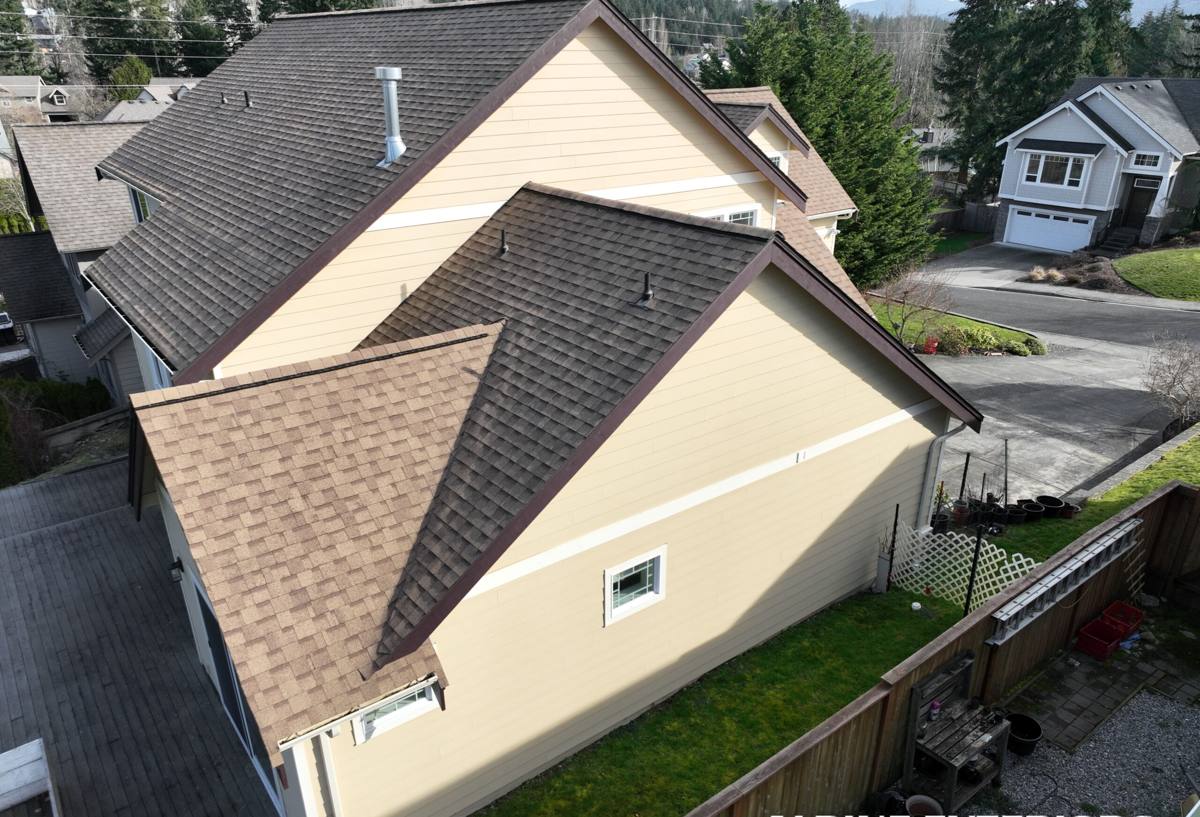
What Cherry Point's Climate Actually Does to a Deck
It helps to understand the specific mechanisms at work, because they point directly to what needs to be different about a deck built here.
Salt Air and Metal Fasteners
Airborne salt from the Strait accelerates corrosion on any exposed metal — screws, joist hangers, bolts, post bases, and railing hardware. Standard electro-galvanized fasteners, which hold up fine in drier or more inland areas, can start rusting and staining the decking within a season or two this close to the water. Once a fastener starts corroding, it loses holding strength well before the rust is visible on the surface, which is part of why hardware grade matters more here than the average homeowner realizes.
Driving Rain and the Ledger Board
Wind-driven rain off the water doesn't just fall on a deck — it gets pushed sideways into the house-to-deck connection at the ledger board. This is the single most common failure point on decks in this part of Whatcom County. If the ledger isn't flashed and sealed correctly where it meets the house, water works its way behind the board and into the rim joist and framing, and by the time it shows up as a soft spot or a stain on an interior ceiling, real structural repair is usually needed.
Moss Season and Slip Risk
Whatcom County's long wet season, combined with the shade many waterfront and treed Cherry Point lots have, means moss and algae growth on horizontal wood surfaces is a near-certainty without some kind of mitigation. Beyond the cosmetic issue, a mossy deck surface is genuinely slick, and it's one of the more common reasons we get called out to look at an older deck — not because the structure failed, but because the walking surface became a hazard.
Choosing the Right Decking Material for This Location
There's no single "best" decking material for every project — it depends on budget, how much upkeep you want to do, and how close the deck sits to open water and full salt exposure. Here's how the common options actually perform in a Cherry Point setting:
| Material | Salt/Moisture Resistance | Moss & Slip Behavior | Maintenance | Typical Lifespan Here |
|---|---|---|---|---|
| Cedar | Naturally rot-resistant, but surface greys and needs sealing to hold up to salt spray | Prone to moss without regular cleaning/sealing | Annual cleaning, re-sealing every 1–2 years | 15–20 years with upkeep |
| Pressure-treated fir/hem-fir | Good rot resistance from treatment, but fasteners must be rated for treated lumber | Moss-prone in shaded, damp spots | Cleaning and re-staining every 1–2 years | 15–25 years with upkeep |
| Composite decking | Doesn't rot or absorb moisture; good in salt air | Textured composites resist algae film better than smooth boards, but still need occasional washing | Periodic washing, no staining/sealing | 25–30+ years |
| Tropical hardwood (e.g. ipe) | Very dense, excellent moisture resistance | Can get slick when wet; benefits from a textured finish | Occasional oiling to maintain color, otherwise low | 30+ years |
We'll talk through this table honestly during an estimate rather than steering everyone toward the highest-margin product. A well-maintained cedar deck can be a great choice for a homeowner who enjoys the upkeep, while composite is often the better call for a second home or a lower-maintenance lifestyle. What we won't do is install a beautiful material on top of framing and hardware that isn't built for the salt exposure — that mismatch is where most premature deck failures out here actually start.
Framing and Structure: Where Decks Fail First
The decking boards get all the attention, but the framing underneath is what actually determines how long a deck lasts in this environment. For Cherry Point projects we pay particular attention to:
- Ledger attachment and flashing — proper through-bolting into the house rim joist, with correctly lapped flashing and a water-diverting gap, not just lag screws and caulk
- Hardware grade — stainless steel or heavy hot-dip galvanized joist hangers, screws, and post bases rated for coastal/salt exposure, not standard electro-galvanized hardware
- Post bases and footings — post bases that keep the wood post off the concrete and out of standing water, on footings sized and set below frost depth per code
- Joist spacing and beam sizing — sized to the actual decking material and span, since composite and hardwood decking often have different span-rating requirements than standard lumber
- Board fastening method — face-screwed or hidden-fastener systems chosen based on the decking material, installed with the gapping the manufacturer specifies for wet-climate expansion
Railings and Hardware Built for Salt Exposure
Railings take a lot of direct weather on a waterfront-facing deck, and they're a safety component, not just a design detail. We build railing posts into the framing with hardware rated for the same salt exposure as the rest of the structure, and we're careful with any dissimilar-metal contact points — mixing metals (say, an aluminum baluster against a standard steel bracket) in a salt-air environment can set up galvanic corrosion that eats through a connection faster than either metal would corrode on its own. Whatever railing style you choose — wood, metal, cable, or glass — the fasteners and brackets holding it to the deck need to match the environment, not just the look.
Drainage, Slope, and Moss Prevention Built In
A lot of moss and slip problems on older Cherry Point decks trace back to a deck surface that doesn't shed water fast enough. Getting this right at construction is far easier than fighting it afterward. Details we build in from the start:
- A slight slope away from the house so water sheets off rather than pooling on the boards
- Board spacing sized to let water and debris fall through rather than collecting between boards
- Ventilation gaps under low decks so the framing and joist tops can actually dry out between rain events
- Textured or grooved-face decking in shaded areas, where moss risk is highest
- Keeping decking clear of overhanging branches where reasonably possible, since leaf litter and shade both feed moss growth
Our Process for a Cherry Point Deck Project
Site Visit and Assessment
We start on site, looking at sun and shade exposure, how exposed the lot is to wind off the water, existing drainage patterns, and how the deck will attach to the house. This is also when we talk through material options honestly against your budget and maintenance preferences.
Design and Material Selection
We put together a layout and material spec based on that site assessment — not a one-size-fits-all package. Railing style, decking material, and hardware grade all get decided together so the whole system is matched, not mismatched.
Permitting
Depending on the size, height, and attachment method, a deck project may require a permit through Whatcom County. We handle that process as part of the job rather than leaving it for the homeowner to sort out, and we build to the code requirements that apply to your specific property.
Construction
Framing first, with every ledger, footing, and hardware connection inspected before decking goes down. Then decking, railing, and any stairs, finished with a walkthrough so you understand the maintenance schedule for whatever material was installed.
A properly built deck project should always include:
- Correctly flashed and through-bolted ledger connection to the house
- Salt-rated fasteners and hardware throughout, not just at visible connection points
- Footings set to code depth for this area
- Positive drainage slope built into the frame, not added later
- A written maintenance schedule specific to the material installed
Maintenance Schedule for a Long-Lasting Deck
Even a correctly built deck needs some seasonal attention in this climate to stay ahead of moss and salt corrosion. A realistic schedule for most Cherry Point properties:
| Task | Frequency | Why It Matters Here |
|---|---|---|
| Wash surface (deck cleaner or diluted bleach solution, rinsed well) | 1–2x per year, more in shaded areas | Removes moss and algae before it embeds and gets slick |
| Inspect and re-tighten hardware | Annually | Salt air corrosion can loosen connections gradually |
| Re-seal or re-stain wood decking | Every 1–2 years | Keeps moisture and salt out of the wood grain |
| Clear debris from board gaps and under the deck | Seasonally, especially fall | Trapped leaves and needles hold moisture and feed moss |
| Check ledger flashing and caulking | Annually | This is the most common point of hidden water intrusion |
Why Hire a Crew That Already Works in Cherry Point
Building codes, material behavior, and weather exposure all vary meaningfully across Whatcom County, and Cherry Point's waterfront position puts it toward the harder end of that range. A crew that hasn't worked this specific stretch of coastline may not think to spec salt-rated hardware, or may not catch how much shade and drainage matter for moss prevention on a given lot. We build decks across Blaine and the surrounding area regularly, so the hardware grade, drainage detailing, and material choices we bring to a Cherry Point project reflect what we've actually seen hold up — and what hasn't — in this exact environment.
If you're planning a new deck or replacing one that's showing its age, we're happy to come take a look and put together a straightforward, no-pressure estimate. Use the form below to get started.